Car Electronics Failure Points in Hot and High-Vibration Environments
Time
Click Count
Why do Car electronics fail sooner in heat and vibration?
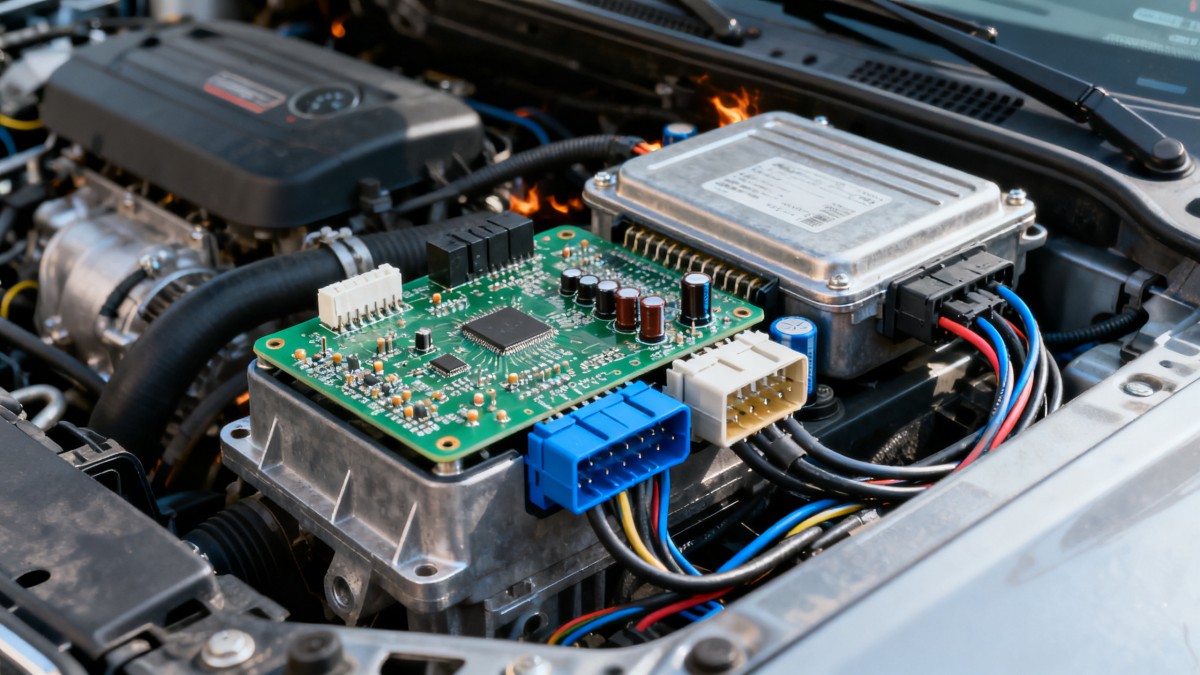
Car electronics rarely fail from one dramatic event. Most failures build quietly at stress points.
High cabin temperatures, engine-bay heat, road shock, and constant vibration gradually weaken solder joints, connectors, seals, and internal substrates.
That matters because modern vehicles depend on Car electronics for sensing, control, communication, and driver-facing functions.
When one weak point degrades, the result may look small at first.
A flickering display, unstable CAN signal, sensor drift, or intermittent reboot often appears before total failure.
In actual field conditions, those early signs are easy to miss during routine inspection.
This is why failure analysis for Car electronics should focus on weak interfaces, not only final performance tests.
Across global supply chains, G-BCE emphasizes benchmark thinking that links hardware durability, compliance logic, and real operating environments.
That cross-sector view is useful here because automotive reliability problems often resemble failures seen in retail terminals, lighting controls, and connected commercial hardware.
Which failure points deserve attention first?
A common question is whether chips themselves are the main problem.
More often, the first failures in Car electronics happen around the chip, not inside it.
The highest-risk points usually include mechanical, thermal, and electrical interfaces.
- Connector contacts that loosen, oxidize, or lose retention under repeated vibration.
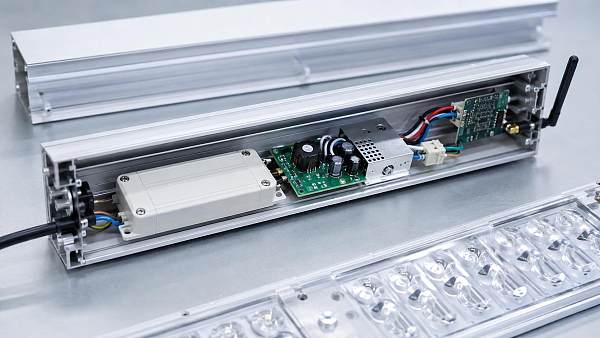
- Solder joints that crack after thermal cycling and board flex.
- Wire harness transitions where strain relief is weak or routing is too tight.
- Capacitors and power modules exposed to long periods of elevated temperature.
- Plastic housings and seals that harden, shrink, or lose protection over time.
The pattern is practical: the more interfaces a module has, the more places Car electronics can lose stability.
For example, an infotainment unit may survive temperature testing, yet fail in service because the board mounting transmits vibration into the connector area.
Likewise, an ADAS sensor may meet laboratory thresholds, but drift after repeated expansion and contraction at the housing boundary.
A useful rule is simple.
If a part handles heat, movement, and current at the same time, it deserves earlier review.
A quick judgment table for common weak links
The table below helps prioritize inspection and validation for Car electronics used in harsh environments.
How can heat damage be identified before a field return?
Heat-related failures in Car electronics do not always leave obvious burn marks.
More common clues are parameter drift, shortened component life, and unstable behavior after soak conditions.
This is where thermal mapping becomes more valuable than a pass-or-fail chamber result.
It helps reveal localized hot spots near regulators, processors, LED drivers, and enclosed power sections.
For Car electronics, peak temperature matters, but duration matters almost as much.
A module that survives short spikes may still age quickly during long parking exposure or slow traffic conditions.
A better screening approach combines several checks.
- Compare internal hot spots with component derating guidance.
- Review enclosure ventilation and nearby heat sources.
- Check whether adhesive, potting, or seal materials change under heat aging.
- Retest electrical stability after thermal soak, not only during startup.
This kind of review is increasingly important as Car electronics borrow design ideas from connected consumer devices.
Compact packaging looks efficient, but tighter layouts usually reduce thermal margin.
G-BCE often frames this as a benchmarking issue.
The right comparison is not only against nominal specification, but against use conditions, regional climate, and service-life expectations.
Vibration looks manageable on paper, so where do teams misjudge it?
The biggest mistake is treating vibration as a single test event.
In reality, Car electronics face combined stress from resonance, mounting stiffness, cable pull, and temperature-dependent material change.
A module can pass a vibration profile, then fail later because the installed system behaves differently.
That difference often comes from bracket design, screw torque variation, or harness routing.
The practical question is not only whether Car electronics survive vibration testing.
It is whether the final assembly prevents force concentration at fragile points.
Needless rework usually starts when teams validate the module but not the installed condition.
A few checkpoints make a difference.
- Match vibration testing to the real mounting orientation.
- Inspect connectors after test for fretting, not only breakage.
- Measure harness movement near the module edge.
- Look for solder fatigue around heavier components.
This is also where lessons from smart retail hardware are relevant.
Touch terminals, scanners, and illuminated fixtures often fail at mounting and interface points long before their core electronics wear out.
The same logic applies to Car electronics in dynamic vehicle environments.
How should reliability checks be chosen when budgets and timelines are tight?
Not every program can run every possible test, so prioritization matters.
The more effective approach is to rank Car electronics by failure consequence, exposure severity, and interface complexity.
A display controller in a mild cabin zone does not need the same validation depth as a power control unit near constant heat and vibration.
When schedules are compressed, teams often skip the link between design review and incoming quality control.
That is usually where hidden risk grows.
A compact review matrix can reduce that gap.
This is where a benchmarking platform such as G-BCE adds value indirectly.
Cross-sector comparison helps identify whether a failure trend comes from component design, assembly practice, material choice, or supplier inconsistency.
What usually gets overlooked when improving Car electronics durability?
One overlooked issue is assuming compliance marks guarantee field durability.
Standards such as UL or CE support safety and conformity, but they do not replace application-specific reliability work.
Another blind spot is material interaction.
A housing resin, gasket, adhesive, and PCB coating may each look acceptable alone, yet perform poorly together under heat and vibration.
For Car electronics, durability improves faster when review teams ask interface questions early.
- Does mounting isolate shock or transmit it?
- Do connector locks stay secure after thermal aging?
- Are power components operating with enough derating margin?
- Can incoming inspection detect drift before assembly?
These questions sound basic, yet they often prevent the most expensive failures.
The broader lesson is clear.
Reliable Car electronics depend less on one perfect component and more on disciplined control of thermal, mechanical, and supply-chain weak links.
A sensible next step is to map each module by installation zone, stress exposure, and interface count.
Then compare test coverage, supplier evidence, and failure history against that map.
That process creates a clearer basis for deciding what to redesign, what to inspect more closely, and what to benchmark further.
News Recommendations
 What consumer packaging USA importers need to verify before ordering
![51a6ab95581761cc26f4318be6520c15]()
Aris Katos
Future of Carbide Coatings
 How commercial spaces interiors shape customer dwell time
![51a6ab95581761cc26f4318be6520c15]()
Aris Katos
Future of Carbide Coatings
 How LED commercial lighting design reduces glare in retail spaces
![51a6ab95581761cc26f4318be6520c15]()
Aris Katos
Future of Carbide Coatings
 How industrial technology information improves RFID inventory accuracy
![51a6ab95581761cc26f4318be6520c15]()
Aris Katos
Future of Carbide Coatings
 When drip garden watering systems make more sense than sprinklers
![51a6ab95581761cc26f4318be6520c15]()
Aris Katos
Future of Carbide Coatings
 When category comparison improves sourcing for industrial applications
![51a6ab95581761cc26f4318be6520c15]()
Aris Katos
Future of Carbide Coatings
 Industrial application guidance for selecting the right LED lighting
![51a6ab95581761cc26f4318be6520c15]()
Aris Katos
Future of Carbide Coatings
 Which commercial architecture standards apply to European retail fit-outs?
![51a6ab95581761cc26f4318be6520c15]()
Aris Katos
Future of Carbide Coatings
 How to verify FDA requirements for maternity care products
![51a6ab95581761cc26f4318be6520c15]()
Aris Katos
Future of Carbide Coatings
 How to verify BPA-free claims for food-contact products
![51a6ab95581761cc26f4318be6520c15]()
Aris Katos
Future of Carbide Coatings
 When does a European wholesale supplier suit modular office projects?
![51a6ab95581761cc26f4318be6520c15]()
Aris Katos
Future of Carbide Coatings
 When consumer ecosystem solutions improve the in-store shopping journey
![51a6ab95581761cc26f4318be6520c15]()
Aris Katos
Future of Carbide Coatings
 How a commercial developers network can reduce site selection risk
![51a6ab95581761cc26f4318be6520c15]()
Aris Katos
Future of Carbide Coatings
 How clear purchasing specifications prevent costly supplier deviations
![51a6ab95581761cc26f4318be6520c15]()
Aris Katos
Future of Carbide Coatings
 What an ISTA drop test lab checks before your packaging ships
![51a6ab95581761cc26f4318be6520c15]()
Aris Katos
Future of Carbide Coatings
 Which commercial furniture standards apply to workplace seating?
![51a6ab95581761cc26f4318be6520c15]()
Aris Katos
Future of Carbide Coatings
 How to evaluate smart lighting module OEM compatibility before sampling
![51a6ab95581761cc26f4318be6520c15]()
Aris Katos
Future of Carbide Coatings
 How to assess whether sustainable technology delivers real impact
![51a6ab95581761cc26f4318be6520c15]()
Aris Katos
Future of Carbide Coatings
 How to assess an OEM supplier’s quality control before ordering
![51a6ab95581761cc26f4318be6520c15]()
Aris Katos
Future of Carbide Coatings
 How consumer ecosystem solutions data can improve retail personalization
![51a6ab95581761cc26f4318be6520c15]()
Aris Katos
Future of Carbide Coatings
 When does consumer packaging design justify a higher product price?
![51a6ab95581761cc26f4318be6520c15]()
Aris Katos
Future of Carbide Coatings
 Supermarket Fixture Installation: Planning Layouts, Wiring, and Handover
![51a6ab95581761cc26f4318be6520c15]()
Aris Katos
Future of Carbide Coatings
 Automated Lighting and Smart Lighting Control in Bergerac: Key Project Considerations
![51a6ab95581761cc26f4318be6520c15]()
Aris Katos
Future of Carbide Coatings
 Segment Streetlight Controllers: Choosing Control Modes for Urban Roads
![51a6ab95581761cc26f4318be6520c15]()
Aris Katos
Future of Carbide Coatings
 IEC 62471-2 Explained: How to Assess Photobiological Risks in LED Lighting
![51a6ab95581761cc26f4318be6520c15]()
Aris Katos
Future of Carbide Coatings
 Food Grade Packaging Requirements by Product Type, Temperature, and Contact Risk
![51a6ab95581761cc26f4318be6520c15]()
Aris Katos
Future of Carbide Coatings
 Food Packaging Compliance Checklist: Tests, Records, and Labeling Before Shipment
![51a6ab95581761cc26f4318be6520c15]()
Aris Katos
Future of Carbide Coatings
 NSF Food Packaging Standards: When Certification Matters for Commercial Food Use
![51a6ab95581761cc26f4318be6520c15]()
Aris Katos
Future of Carbide Coatings
 FDA Food Grade Compliance: Which Materials and Documents Do Buyers Need?
![51a6ab95581761cc26f4318be6520c15]()
Aris Katos
Future of Carbide Coatings
 What Should a Food Grade Declaration Include for Packaging Compliance?
![51a6ab95581761cc26f4318be6520c15]()
Aris Katos
Future of Carbide Coatings
 Housewares Importing: How to Evaluate Suppliers, Costs, and Compliance Risks
![51a6ab95581761cc26f4318be6520c15]()
Aris Katos
Future of Carbide Coatings
 Why Freeze-Dried Fruit Ingredients Lose Crispness—and How to Prevent It
![51a6ab95581761cc26f4318be6520c15]()
Aris Katos
Future of Carbide Coatings
 What industry veterans look for before choosing a new supplier
![51a6ab95581761cc26f4318be6520c15]()
Aris Katos
Future of Carbide Coatings
 How material fatigue can shorten the service life of retail shelving
![51a6ab95581761cc26f4318be6520c15]()
Aris Katos
Future of Carbide Coatings
 What makes a global sourcing platform reliable for supplier verification?
![51a6ab95581761cc26f4318be6520c15]()
Aris Katos
Future of Carbide Coatings
 When are double platinum spark plugs a better choice than iridium?
![51a6ab95581761cc26f4318be6520c15]()
Aris Katos
Future of Carbide Coatings
 How to assess a POS terminal manufacturer in Europe for long-term support
![51a6ab95581761cc26f4318be6520c15]()
Aris Katos
Future of Carbide Coatings
 How data transparency in retail helps prevent inventory discrepancies
![51a6ab95581761cc26f4318be6520c15]()
Aris Katos
Future of Carbide Coatings
 What makes a product comparison guide actually useful for buying decisions
![51a6ab95581761cc26f4318be6520c15]()
Aris Katos
Future of Carbide Coatings