Commercial LED Lighting Energy-Saving Solutions That Cut Operating Costs
Time
Click Count
Why Commercial LED Lighting Energy-Saving Solutions Matter More in Real Operations
Rising energy costs rarely affect every commercial site in the same way.
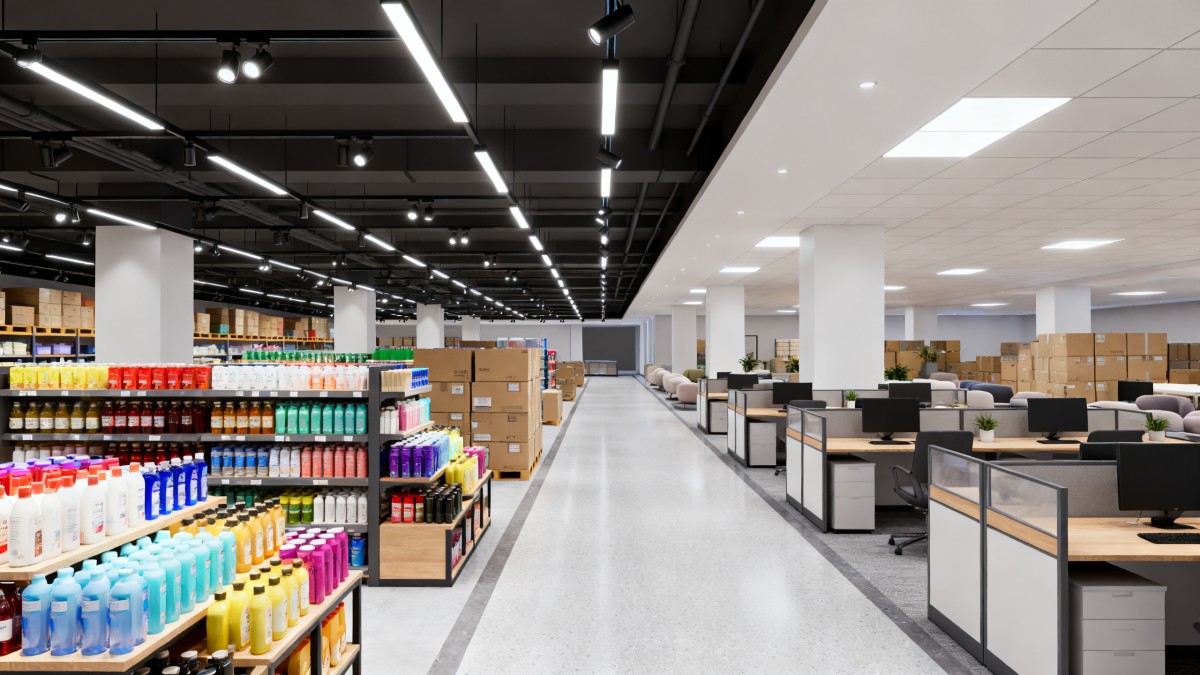
A flagship store, office tower, warehouse showroom, and mixed-use complex all consume light differently.
That is why Commercial LED lighting energy-saving solutions should be judged by operating patterns, not by wattage claims alone.
In practice, the strongest savings come from matching fixture performance, controls, maintenance cycles, and compliance needs to the site itself.
This is especially relevant in global commercial environments where design expectations, digital systems, and sustainability targets now overlap.
Within that context, G-BCE’s benchmarking perspective is useful because lighting decisions rarely stand alone.
They connect with smart retail technology, fixture layouts, signage visibility, and the broader performance standards shaping modern commercial spaces.
The Same LED Upgrade Delivers Different Results Depending on the Space
Many retrofit plans fail because similar-looking properties are treated as identical lighting environments.
A chain store focused on merchandise contrast needs a different approach from an office floor prioritizing visual comfort and screen-based work.
Even when both use Commercial LED lighting energy-saving solutions, the judgment criteria shift.
In retail, beam control, color consistency, and dimming flexibility often matter as much as reduced kilowatt-hours.
In offices, glare management, occupancy scheduling, and integration with building controls usually have greater cost impact over time.
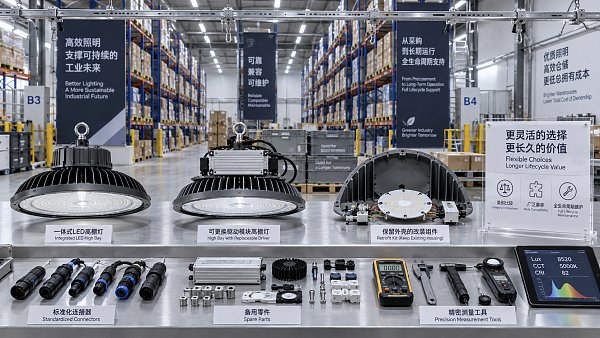
Industrial-commercial hybrid spaces add another variable: long operating hours make driver reliability and replacement access far more important.
A practical way to compare scenario priorities
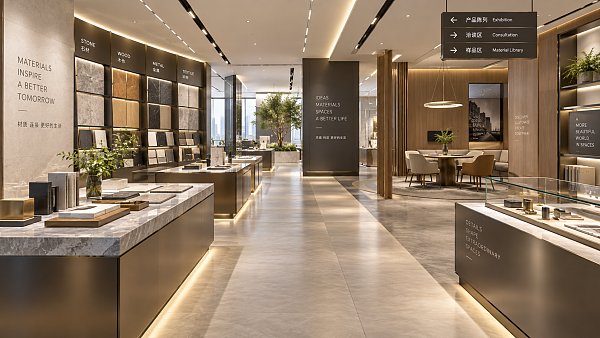
Retail Floors Usually Need More Than a Basic Retrofit
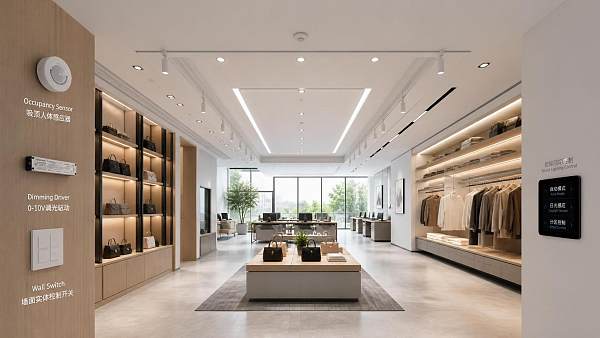
Retail is one of the clearest examples where Commercial LED lighting energy-saving solutions must support both cost control and customer perception.
A lower energy bill has limited value if product colors look flat or store navigation becomes less intuitive.
In high-turnover retail formats, adaptable track lights and zoned controls often outperform simple fixture swaps.
Seasonal displays, promotional islands, and window zones change too often for rigid layouts.
More useful decisions come from asking where brightness drives sales and where it only adds excess load.
Another frequent oversight is signage coordination.
If ambient lighting overpowers digital signage or branded lightboxes, the site may consume more energy while delivering weaker visual hierarchy.
This is where technical benchmarking matters.
Retail lighting should be considered alongside fixtures, smart displays, and circulation patterns rather than selected as an isolated utility upgrade.
Office and Shared Workspaces Benefit From Smarter Control Logic
Office environments often appear easier because the lighting plan looks uniform.
In reality, they are highly sensitive to occupancy variation, daylight exposure, and employee comfort.
Commercial LED lighting energy-saving solutions in offices usually perform best when paired with scheduling, sensors, and task-specific zoning.
Meeting rooms, circulation corridors, reception areas, and open-plan desks do not need the same operating profile.
Where daylight is available, dimmable systems can cut energy use substantially.
Where tenancy changes often, modular fixtures reduce future rework costs.
A common mistake is specifying high-efficiency fixtures without checking compatibility with existing control infrastructure.
That can create commissioning delays, unstable dimming, or patchy automation results that erode the expected savings.
What to confirm before rollout
- Whether existing wiring and control protocols support the selected LED drivers.
- Whether glare ratings suit monitor-heavy work areas.
- Whether cleaning and maintenance teams can access fixtures safely.
- Whether operating schedules reflect real occupancy instead of fixed assumptions.
Mixed-Use Properties Need Flexible Lighting, Not One Uniform Rule
Commercial campuses and mixed-use developments usually combine retail, office, hospitality, and transitional areas.
That blend changes how Commercial LED lighting energy-saving solutions should be specified.
The entrance lobby may need premium ambiance.
Shared corridors may depend more on occupancy response.
Parking access zones may prioritize durability and security visibility.
In these projects, flexible controls and standardized components can reduce long-term complexity.
That does not mean every area should use the same lumen package or color temperature.
It means the lighting family should be easy to manage across different use cases while preserving distinct visual outcomes.
This approach aligns with broader commercial modernization goals, where lighting supports experience, operations, and data-driven facility planning at once.
Where Cost-Saving Claims Are Often Misread
Not every energy-saving promise translates into lower operating costs.
One of the most common misreads is focusing on fixture efficacy while ignoring runtime behavior.
A moderately efficient luminaire with good controls may outperform a higher-rated fixture left on all day.
Another issue is treating procurement cost as the main benchmark.
Commercial LED lighting energy-saving solutions should be assessed through lifecycle cost, not unit price alone.
Driver replacement rates, installation downtime, spare part availability, and certification compliance all influence total value.
Cross-border commercial projects also need attention to UL, CE, and related standards.
Certification gaps can delay fit-outs, complicate inspections, or force late design substitutions.
Typical judgment errors to avoid
- Choosing by watt reduction without checking light quality at task level.
- Assuming similar floor plans have identical operating schedules.
- Ignoring how controls interact with signage, displays, or tenant systems.
- Overlooking service access in high ceilings or dense ceiling layouts.
- Specifying one generic solution for every zone in a complex property.
How to Build a Better Fit Before Final Specification
A stronger selection process starts with mapping the real operating profile of each space.
That includes hours of use, daylight conditions, merchandising changes, ceiling constraints, and maintenance access.
From there, Commercial LED lighting energy-saving solutions can be ranked by fit instead of by headline claims.
In many projects, the most effective path is to create a simple comparison matrix.
Score each zone against visual requirements, energy targets, control compatibility, certification needs, and replacement complexity.
That method also makes it easier to compare suppliers from different manufacturing bases.
For global projects, this is where a benchmarking platform such as G-BCE adds value.
It helps align manufacturing precision with the visual and operational standards expected in international commercial environments.
The next practical step is not a blanket retrofit decision.
It is a structured review of scene types, controls, compliance, maintenance demands, and long-term operating cost assumptions.
When those conditions are clear, Commercial LED lighting energy-saving solutions become far easier to justify and far more likely to deliver lasting savings.
News Recommendations
 What consumer packaging USA importers need to verify before ordering
![51a6ab95581761cc26f4318be6520c15]()
Aris Katos
Future of Carbide Coatings
 How commercial spaces interiors shape customer dwell time
![51a6ab95581761cc26f4318be6520c15]()
Aris Katos
Future of Carbide Coatings
 How LED commercial lighting design reduces glare in retail spaces
![51a6ab95581761cc26f4318be6520c15]()
Aris Katos
Future of Carbide Coatings
 How industrial technology information improves RFID inventory accuracy
![51a6ab95581761cc26f4318be6520c15]()
Aris Katos
Future of Carbide Coatings
 When drip garden watering systems make more sense than sprinklers
![51a6ab95581761cc26f4318be6520c15]()
Aris Katos
Future of Carbide Coatings
 When category comparison improves sourcing for industrial applications
![51a6ab95581761cc26f4318be6520c15]()
Aris Katos
Future of Carbide Coatings
 Industrial application guidance for selecting the right LED lighting
![51a6ab95581761cc26f4318be6520c15]()
Aris Katos
Future of Carbide Coatings
 Which commercial architecture standards apply to European retail fit-outs?
![51a6ab95581761cc26f4318be6520c15]()
Aris Katos
Future of Carbide Coatings
 How to verify FDA requirements for maternity care products
![51a6ab95581761cc26f4318be6520c15]()
Aris Katos
Future of Carbide Coatings
 How to verify BPA-free claims for food-contact products
![51a6ab95581761cc26f4318be6520c15]()
Aris Katos
Future of Carbide Coatings
 When does a European wholesale supplier suit modular office projects?
![51a6ab95581761cc26f4318be6520c15]()
Aris Katos
Future of Carbide Coatings
 When consumer ecosystem solutions improve the in-store shopping journey
![51a6ab95581761cc26f4318be6520c15]()
Aris Katos
Future of Carbide Coatings
 How a commercial developers network can reduce site selection risk
![51a6ab95581761cc26f4318be6520c15]()
Aris Katos
Future of Carbide Coatings
 How clear purchasing specifications prevent costly supplier deviations
![51a6ab95581761cc26f4318be6520c15]()
Aris Katos
Future of Carbide Coatings
 What an ISTA drop test lab checks before your packaging ships
![51a6ab95581761cc26f4318be6520c15]()
Aris Katos
Future of Carbide Coatings
 Which commercial furniture standards apply to workplace seating?
![51a6ab95581761cc26f4318be6520c15]()
Aris Katos
Future of Carbide Coatings
 How to evaluate smart lighting module OEM compatibility before sampling
![51a6ab95581761cc26f4318be6520c15]()
Aris Katos
Future of Carbide Coatings
 How to assess whether sustainable technology delivers real impact
![51a6ab95581761cc26f4318be6520c15]()
Aris Katos
Future of Carbide Coatings
 How to assess an OEM supplier’s quality control before ordering
![51a6ab95581761cc26f4318be6520c15]()
Aris Katos
Future of Carbide Coatings
 How consumer ecosystem solutions data can improve retail personalization
![51a6ab95581761cc26f4318be6520c15]()
Aris Katos
Future of Carbide Coatings
 When does consumer packaging design justify a higher product price?
![51a6ab95581761cc26f4318be6520c15]()
Aris Katos
Future of Carbide Coatings
 Supermarket Fixture Installation: Planning Layouts, Wiring, and Handover
![51a6ab95581761cc26f4318be6520c15]()
Aris Katos
Future of Carbide Coatings
 Automated Lighting and Smart Lighting Control in Bergerac: Key Project Considerations
![51a6ab95581761cc26f4318be6520c15]()
Aris Katos
Future of Carbide Coatings
 Segment Streetlight Controllers: Choosing Control Modes for Urban Roads
![51a6ab95581761cc26f4318be6520c15]()
Aris Katos
Future of Carbide Coatings
 IEC 62471-2 Explained: How to Assess Photobiological Risks in LED Lighting
![51a6ab95581761cc26f4318be6520c15]()
Aris Katos
Future of Carbide Coatings
 Food Grade Packaging Requirements by Product Type, Temperature, and Contact Risk
![51a6ab95581761cc26f4318be6520c15]()
Aris Katos
Future of Carbide Coatings
 Food Packaging Compliance Checklist: Tests, Records, and Labeling Before Shipment
![51a6ab95581761cc26f4318be6520c15]()
Aris Katos
Future of Carbide Coatings
 NSF Food Packaging Standards: When Certification Matters for Commercial Food Use
![51a6ab95581761cc26f4318be6520c15]()
Aris Katos
Future of Carbide Coatings
 FDA Food Grade Compliance: Which Materials and Documents Do Buyers Need?
![51a6ab95581761cc26f4318be6520c15]()
Aris Katos
Future of Carbide Coatings
 What Should a Food Grade Declaration Include for Packaging Compliance?
![51a6ab95581761cc26f4318be6520c15]()
Aris Katos
Future of Carbide Coatings
 Housewares Importing: How to Evaluate Suppliers, Costs, and Compliance Risks
![51a6ab95581761cc26f4318be6520c15]()
Aris Katos
Future of Carbide Coatings
 Why Freeze-Dried Fruit Ingredients Lose Crispness—and How to Prevent It
![51a6ab95581761cc26f4318be6520c15]()
Aris Katos
Future of Carbide Coatings
 What industry veterans look for before choosing a new supplier
![51a6ab95581761cc26f4318be6520c15]()
Aris Katos
Future of Carbide Coatings
 How material fatigue can shorten the service life of retail shelving
![51a6ab95581761cc26f4318be6520c15]()
Aris Katos
Future of Carbide Coatings
 What makes a global sourcing platform reliable for supplier verification?
![51a6ab95581761cc26f4318be6520c15]()
Aris Katos
Future of Carbide Coatings
 When are double platinum spark plugs a better choice than iridium?
![51a6ab95581761cc26f4318be6520c15]()
Aris Katos
Future of Carbide Coatings
 How to assess a POS terminal manufacturer in Europe for long-term support
![51a6ab95581761cc26f4318be6520c15]()
Aris Katos
Future of Carbide Coatings
 How data transparency in retail helps prevent inventory discrepancies
![51a6ab95581761cc26f4318be6520c15]()
Aris Katos
Future of Carbide Coatings
 What makes a product comparison guide actually useful for buying decisions
![51a6ab95581761cc26f4318be6520c15]()
Aris Katos
Future of Carbide Coatings