Lighting OEM vs ODM: Which Model Lowers Cost and Lead Time?
Time
Click Count
Lighting OEM vs ODM: Which Model Lowers Cost and Lead Time?
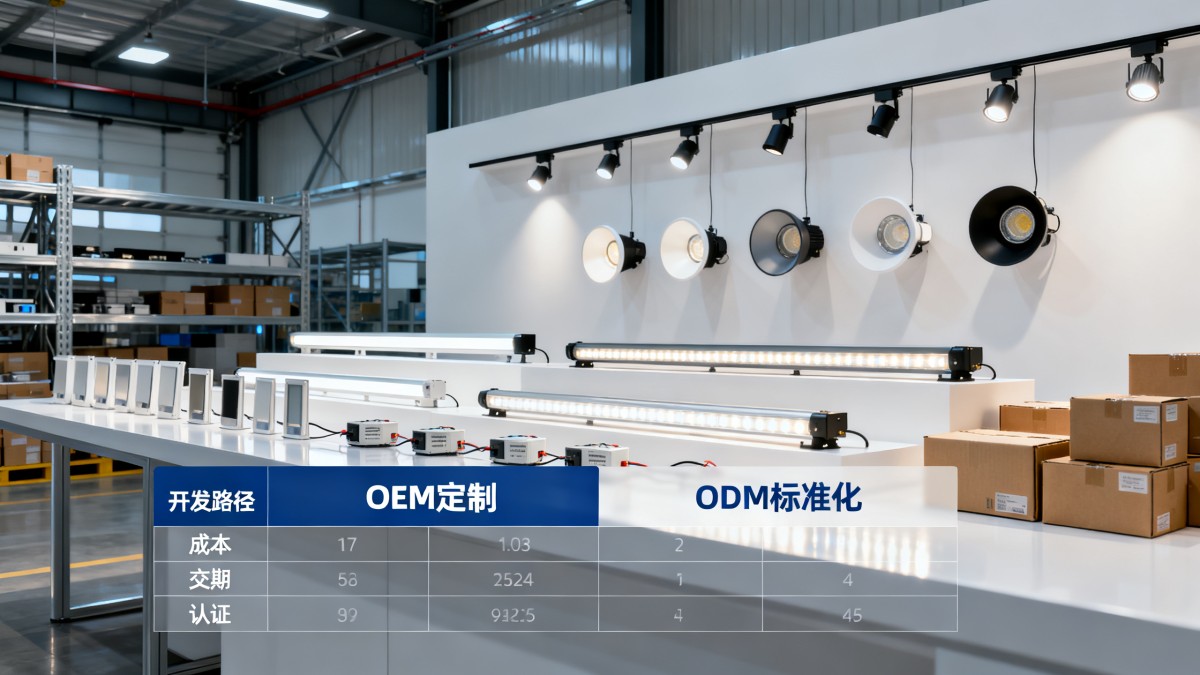
For procurement teams evaluating manufacturing strategies, choosing between OEM and ODM can directly affect cost, lead time, and product control.
In commercial lighting, the gap between lighting OEM and ODM often shapes pricing, compliance, and launch timing.
That makes this decision more than a sourcing detail.
It becomes a cost and risk strategy.
In practice, buyers compare tooling, unit price, certification, engineering support, and replenishment speed.
A lower quote on day one does not always create the lowest total cost after revisions, testing, and shipment delays.
This guide explains where lighting OEM works best, where ODM moves faster, and how to choose the right path with fewer surprises.
What Lighting OEM Really Means
Lighting OEM usually means the buyer owns the product concept, specifications, and brand direction.
The factory manufactures according to those requirements.
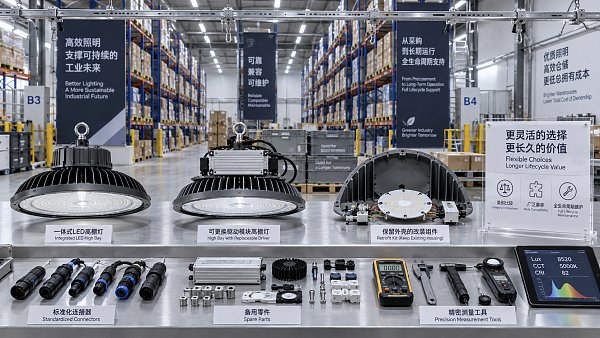
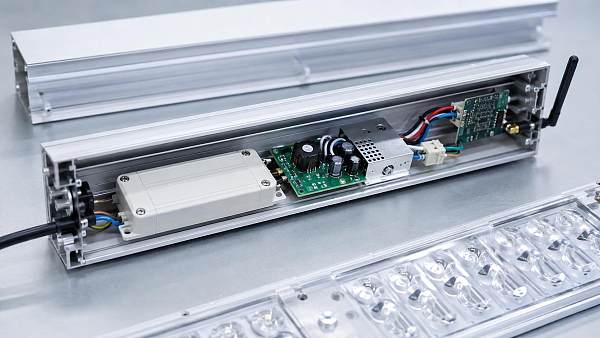
This model fits projects that need unique optics, housing design, control compatibility, or branded performance features.
For example, a retail chain may need exact beam angles, color consistency, and fixture finishes across hundreds of stores.
In that case, lighting OEM supports tighter alignment with the project brief.
The tradeoff is time.
Custom engineering, sample rounds, tooling, and validation can stretch the development calendar.
Costs also appear earlier, especially when new molds, drivers, or thermal structures are required.
Key strengths of lighting OEM
- Greater product differentiation for tenders, chain rollouts, and branded environments.
- Better control over materials, dimensions, lumen output, and smart control integration.
- Stronger long-term value when the same design scales across multiple regions.
- More room to align with internal quality standards and compliance roadmaps.
How ODM Changes the Cost Equation
ODM starts from an existing factory-developed product.
The buyer selects, adjusts, and brands a solution that is already engineered.
That usually cuts development cost and lead time.
For standard downlights, track lights, panel lights, and signage lighting, ODM often wins on speed.
This is especially true when the factory already holds test data or certifications.
A lighting OEM project may need fresh validation.
An ODM product may only need limited adjustments.
That difference matters when a project opening date is fixed.
Why ODM often lowers short-term cost
- Less upfront engineering and fewer prototype rounds.
- Lower or no tooling charges for existing platforms.
- Faster quoting because the bill of materials already exists.
- Shorter production planning cycles for repeatable configurations.
Still, lower entry cost does not mean zero compromise.
The same platform may be offered to many buyers.
That can limit exclusivity and reduce room for deep technical customization.
Lighting OEM vs ODM on Lead Time
Lead time is where the difference becomes very visible.
A lighting OEM workflow often includes concept review, design confirmation, tooling, sampling, pilot run, and compliance checks.
Each stage adds coordination.
If design changes happen late, delays multiply quickly.
ODM usually removes several of those steps.
The product architecture is already proven, so the path to mass production is shorter.
However, lead time is not just factory time.
Component sourcing, driver availability, LED binning, packaging approval, and shipping windows also matter.
Typical lead time factors to compare
If the calendar is tight, ODM often has the edge.
If the product will run for years, lighting OEM may recover that time investment through better fit and lower redesign risk.
Where Hidden Costs Usually Appear
The real sourcing challenge is not the visible quote.
It is the hidden cost around the quote.
A lighting OEM project may carry tooling, photometric testing, prototype freight, and design revision expense.
An ODM project may carry compromise cost if the product does not fully match application needs.
That can show up later as installation issues, visual inconsistency, or reduced energy performance.
In commercial lighting, hidden cost often comes from four areas.
Four cost traps to check early
- Specification drift between design drawings and factory production files.
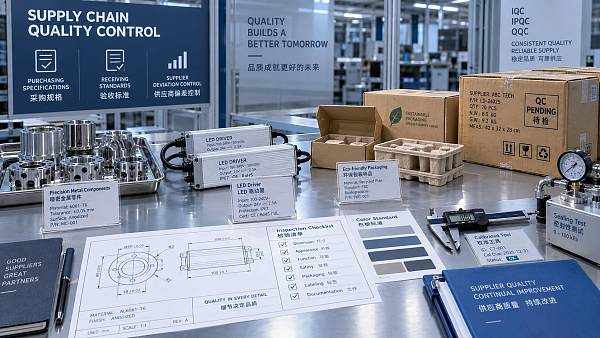
- Retesting caused by component substitutions or incomplete compliance documents.
- Low MOQ pressure that forces overbuying on niche lighting OEM designs.
- After-sales claims linked to heat management, driver failure, or color shift.
This is why total landed cost should be the comparison baseline.
Not just unit price.
When Lighting OEM Is the Better Choice
Lighting OEM makes sense when the product itself creates competitive value.
That is common in branded retail, hospitality, architectural projects, and smart commercial upgrades.
These projects need more than a generic fixture.
They need visual consistency, control compatibility, and installation accuracy.
A lighting OEM model also helps when internal teams want stronger IP separation or long-term supply continuity.
From a procurement view, this can reduce supplier switching risk later.
Choose lighting OEM if you need
- Unique fixture design or exclusive market positioning.
- Specific compliance paths for UL, CE, or project-level standards.
- Custom dimming, sensors, or building system integration.
- Stable replenishment for a long product lifecycle.
When ODM Delivers Better Procurement Efficiency
ODM is often the better move when speed, budget control, and acceptable standardization matter most.
For rollout programs with repeatable lighting needs, the model is practical.
It works well for supermarkets, offices, convenience stores, and basic refurbishment packages.
In these cases, the buyer benefits from faster decisions and clearer cost forecasting.
A factory with mature ODM lines can also simplify documentation and packaging adaptation.
That reduces management load across multiple SKUs.
Choose ODM if your priority is
- Fast launch with limited technical revision cycles.
- Lower upfront cash commitment and simpler approval flow.
- Standard lighting performance that already meets the application.
- Quicker replenishment for high-volume recurring demand.
A Practical Decision Framework
A useful sourcing decision starts with three questions.
How unique must the product be?
How fixed is the launch date?
How costly would a performance mismatch become after installation?
If uniqueness and long-term control matter most, lighting OEM usually justifies the extra setup work.
If timing and cash efficiency matter more, ODM often provides the cleaner route.
In actual sourcing, many buyers use a mixed model.
They apply lighting OEM to signature fixtures and ODM to standard supporting products.
That approach balances differentiation with speed.
Checklist before supplier nomination
- Confirm whether quoted lead time includes testing, packaging, and export documentation.
- Check if certifications remain valid after component or branding changes.
- Review MOQ, spare parts policy, and engineering change control.
- Ask for failure data, warranty terms, and driver brand consistency.
- Map total landed cost over the full project cycle.
The choice between lighting OEM and ODM is rarely about one being universally better.
It is about fit.
The right model depends on your cost target, delivery pressure, compliance demands, and level of design control.
When buyers compare total cost, lead time risk, and application needs side by side, the decision becomes much clearer.
Use that framework early, and your next lighting OEM decision will be faster, safer, and easier to scale.
News Recommendations
 What consumer packaging USA importers need to verify before ordering
![51a6ab95581761cc26f4318be6520c15]()
Aris Katos
Future of Carbide Coatings
 How commercial spaces interiors shape customer dwell time
![51a6ab95581761cc26f4318be6520c15]()
Aris Katos
Future of Carbide Coatings
 How LED commercial lighting design reduces glare in retail spaces
![51a6ab95581761cc26f4318be6520c15]()
Aris Katos
Future of Carbide Coatings
 How industrial technology information improves RFID inventory accuracy
![51a6ab95581761cc26f4318be6520c15]()
Aris Katos
Future of Carbide Coatings
 When drip garden watering systems make more sense than sprinklers
![51a6ab95581761cc26f4318be6520c15]()
Aris Katos
Future of Carbide Coatings
 When category comparison improves sourcing for industrial applications
![51a6ab95581761cc26f4318be6520c15]()
Aris Katos
Future of Carbide Coatings
 Industrial application guidance for selecting the right LED lighting
![51a6ab95581761cc26f4318be6520c15]()
Aris Katos
Future of Carbide Coatings
 Which commercial architecture standards apply to European retail fit-outs?
![51a6ab95581761cc26f4318be6520c15]()
Aris Katos
Future of Carbide Coatings
 How to verify FDA requirements for maternity care products
![51a6ab95581761cc26f4318be6520c15]()
Aris Katos
Future of Carbide Coatings
 How to verify BPA-free claims for food-contact products
![51a6ab95581761cc26f4318be6520c15]()
Aris Katos
Future of Carbide Coatings
 When does a European wholesale supplier suit modular office projects?
![51a6ab95581761cc26f4318be6520c15]()
Aris Katos
Future of Carbide Coatings
 When consumer ecosystem solutions improve the in-store shopping journey
![51a6ab95581761cc26f4318be6520c15]()
Aris Katos
Future of Carbide Coatings
 How a commercial developers network can reduce site selection risk
![51a6ab95581761cc26f4318be6520c15]()
Aris Katos
Future of Carbide Coatings
 How clear purchasing specifications prevent costly supplier deviations
![51a6ab95581761cc26f4318be6520c15]()
Aris Katos
Future of Carbide Coatings
 What an ISTA drop test lab checks before your packaging ships
![51a6ab95581761cc26f4318be6520c15]()
Aris Katos
Future of Carbide Coatings
 Which commercial furniture standards apply to workplace seating?
![51a6ab95581761cc26f4318be6520c15]()
Aris Katos
Future of Carbide Coatings
 How to evaluate smart lighting module OEM compatibility before sampling
![51a6ab95581761cc26f4318be6520c15]()
Aris Katos
Future of Carbide Coatings
 How to assess whether sustainable technology delivers real impact
![51a6ab95581761cc26f4318be6520c15]()
Aris Katos
Future of Carbide Coatings
 How to assess an OEM supplier’s quality control before ordering
![51a6ab95581761cc26f4318be6520c15]()
Aris Katos
Future of Carbide Coatings
 How consumer ecosystem solutions data can improve retail personalization
![51a6ab95581761cc26f4318be6520c15]()
Aris Katos
Future of Carbide Coatings
 When does consumer packaging design justify a higher product price?
![51a6ab95581761cc26f4318be6520c15]()
Aris Katos
Future of Carbide Coatings
 Supermarket Fixture Installation: Planning Layouts, Wiring, and Handover
![51a6ab95581761cc26f4318be6520c15]()
Aris Katos
Future of Carbide Coatings
 Automated Lighting and Smart Lighting Control in Bergerac: Key Project Considerations
![51a6ab95581761cc26f4318be6520c15]()
Aris Katos
Future of Carbide Coatings
 Segment Streetlight Controllers: Choosing Control Modes for Urban Roads
![51a6ab95581761cc26f4318be6520c15]()
Aris Katos
Future of Carbide Coatings
 IEC 62471-2 Explained: How to Assess Photobiological Risks in LED Lighting
![51a6ab95581761cc26f4318be6520c15]()
Aris Katos
Future of Carbide Coatings
 Food Grade Packaging Requirements by Product Type, Temperature, and Contact Risk
![51a6ab95581761cc26f4318be6520c15]()
Aris Katos
Future of Carbide Coatings
 Food Packaging Compliance Checklist: Tests, Records, and Labeling Before Shipment
![51a6ab95581761cc26f4318be6520c15]()
Aris Katos
Future of Carbide Coatings
 NSF Food Packaging Standards: When Certification Matters for Commercial Food Use
![51a6ab95581761cc26f4318be6520c15]()
Aris Katos
Future of Carbide Coatings
 FDA Food Grade Compliance: Which Materials and Documents Do Buyers Need?
![51a6ab95581761cc26f4318be6520c15]()
Aris Katos
Future of Carbide Coatings
 What Should a Food Grade Declaration Include for Packaging Compliance?
![51a6ab95581761cc26f4318be6520c15]()
Aris Katos
Future of Carbide Coatings
 Housewares Importing: How to Evaluate Suppliers, Costs, and Compliance Risks
![51a6ab95581761cc26f4318be6520c15]()
Aris Katos
Future of Carbide Coatings
 Why Freeze-Dried Fruit Ingredients Lose Crispness—and How to Prevent It
![51a6ab95581761cc26f4318be6520c15]()
Aris Katos
Future of Carbide Coatings
 What industry veterans look for before choosing a new supplier
![51a6ab95581761cc26f4318be6520c15]()
Aris Katos
Future of Carbide Coatings
 How material fatigue can shorten the service life of retail shelving
![51a6ab95581761cc26f4318be6520c15]()
Aris Katos
Future of Carbide Coatings
 What makes a global sourcing platform reliable for supplier verification?
![51a6ab95581761cc26f4318be6520c15]()
Aris Katos
Future of Carbide Coatings
 When are double platinum spark plugs a better choice than iridium?
![51a6ab95581761cc26f4318be6520c15]()
Aris Katos
Future of Carbide Coatings
 How to assess a POS terminal manufacturer in Europe for long-term support
![51a6ab95581761cc26f4318be6520c15]()
Aris Katos
Future of Carbide Coatings
 How data transparency in retail helps prevent inventory discrepancies
![51a6ab95581761cc26f4318be6520c15]()
Aris Katos
Future of Carbide Coatings
 What makes a product comparison guide actually useful for buying decisions
![51a6ab95581761cc26f4318be6520c15]()
Aris Katos
Future of Carbide Coatings