Offset Printing Services: When the Unit Cost Beats Digital Printing
Time
Click Count
Offset Printing Services: When the Unit Cost Beats Digital Printing
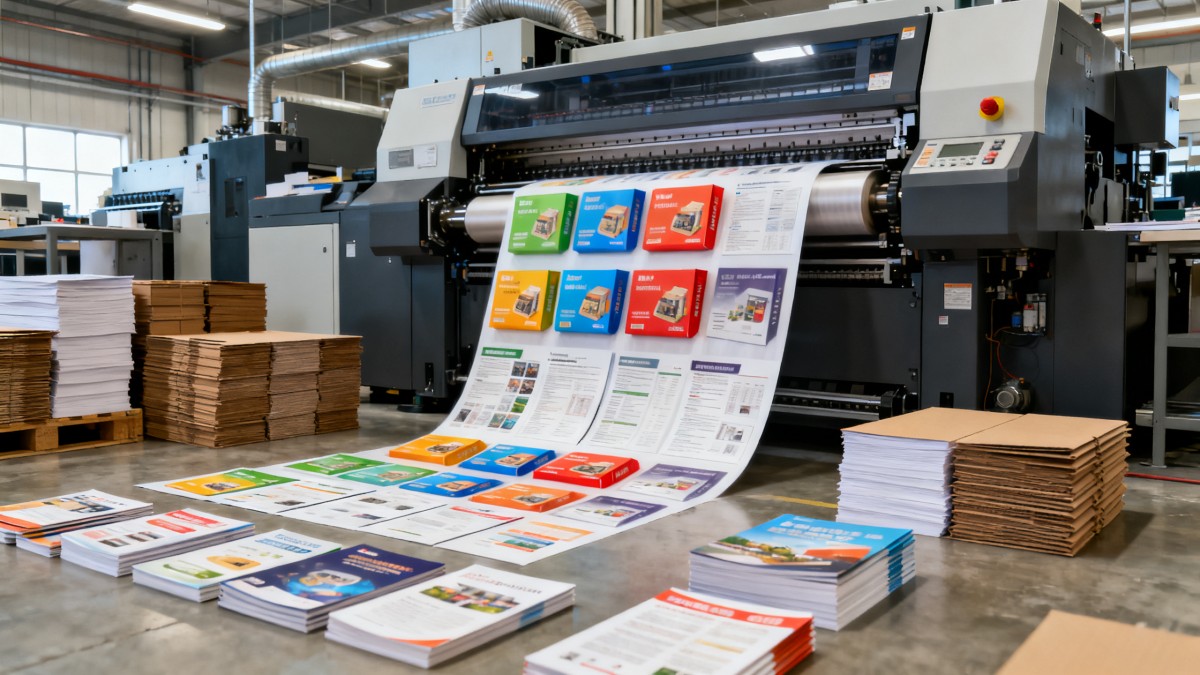
For procurement teams, print cost is rarely just a line item. It affects launch timing, brand consistency, inventory planning, and vendor strategy.
That is why offsetprintingservices often become more attractive once volumes move beyond digital printing’s comfort zone.
The shift is not only about price per sheet. It also involves color stability, substrate flexibility, finishing efficiency, and reduced rework.
In practical sourcing, the question is simple. At what point does offset deliver a lower unit cost without creating unnecessary setup waste?
The answer depends on artwork complexity, order size, material choice, and how often the printed item repeats across locations or campaigns.
For buyers managing packaging, retail collateral, manuals, inserts, or branded commercial materials, that crossover point matters a lot.
Why Offsetprintingservices Gain an Edge at Higher Volumes
Digital printing usually wins on short runs. Setup is fast, versioning is easy, and there are fewer upfront charges.
However, unit economics change as quantities rise. Digital devices maintain relatively stable costs per piece, while offset spreads setup costs over larger runs.
This is where offsetprintingservices start to outperform. Plate creation, press setup, and make-ready cost more at the beginning, but much less per unit later.
The bigger the repeat order, the stronger the cost advantage becomes. That pattern is especially clear in standardized brand materials.
From a procurement view, this means total spend can drop even if the first quotation looks higher than a digital alternative.
- Higher quantities reduce the impact of press setup cost.
- Gang runs and sheet optimization improve material efficiency.
- Longer production runs stabilize color and registration.
- Inline finishing can lower handling and post-press labor.
In other words, offsetprintingservices reward predictability. If designs remain stable, the economics usually improve with every repeated batch.
Where the Unit Cost Crossover Usually Happens
There is no universal break-even quantity. Still, most sourcing decisions follow a similar pattern across commercial print categories.
For simple flyers or inserts, digital may stay competitive for small and mid-size runs. Once volume grows, offsetprintingservices often take the lead.
For folding cartons, retail signage, product sleeves, catalogs, and branded literature, the crossover can arrive sooner because substrate and finishing matter more.
Recent market behavior shows a stronger preference for hybrid sourcing. Teams use digital for pilots and offset for scaled deployment.
In actual business settings, a smart RFQ compares total landed cost at several volume bands, not only one quantity.
That approach reveals when offsetprintingservices move from a premium option to the more economical sourcing decision.
Cost Factors Buyers Should Check Beyond the Printed Sheet
Unit price alone can be misleading. The better signal is cost per usable, approved, and delivered unit.
This is where offsetprintingservices often create hidden savings that are easy to miss during early quotation reviews.
One example is color consistency. If a global brand needs stable Pantone matching, offset reduces variation between batches and facilities.
Another factor is substrate performance. Offset can handle a broader range of papers, boards, and specialty finishes with reliable throughput.
This also matters for downstream operations. Better sheet stability can improve converting, folding, gluing, and packing efficiency.
- Lower reject rates from tighter color control.
- Reduced redesign pressure caused by print limitations.
- Fewer vendor changes across repeated purchasing cycles.
- Better compatibility with coatings, embossing, and varnish.
- More predictable lead times for recurring high-volume programs.
When these items are added into total cost analysis, offsetprintingservices often look stronger than a basic per-piece quote suggests.
Best-Fit Applications for Offsetprintingservices
Not every project belongs on an offset press. The best candidates share repeatability, scale, and brand sensitivity.
That makes offsetprintingservices especially useful for organizations managing multiple stores, product lines, or market rollouts.
Common applications include retail packaging, shelf-ready printed materials, product brochures, instruction leaflets, and branded point-of-sale pieces.
They also work well for corporate stationery systems, publication runs, event collateral, and premium marketing kits.
- Standardized packaging for repeat SKUs.
- Retail launch materials distributed across many locations.
- Catalogs needing consistent photography and brand color.
- Commercial print projects using special coatings or heavy stock.
- Programs requiring benchmarked quality against UL, CE, or brand documentation standards.
Within global supply chains, the value of offsetprintingservices rises further when technical control and visual consistency must scale together.
That fits well with cross-border sourcing models where manufacturing precision must match premium commercial presentation.
How to Evaluate Suppliers Without Missing Cost Risks
Choosing offsetprintingservices requires more than requesting three quotes. The real savings come from structured supplier evaluation.
Start with technical capability. Press size, color stations, coating options, and finishing equipment directly affect efficiency and waste.
Then review process control. Ask about proofing standards, color measurement, inspection routines, and changeover discipline.
A reliable supplier should also explain how they optimize imposition, manage substrate yield, and reduce make-ready loss.
- Request pricing at multiple quantity tiers.
- Compare proofing, plate, and setup charges separately.
- Check tolerances for color, trim, and finishing.
- Review lead time for reruns, not only first production.
- Confirm compliance with relevant material and safety standards.
- Assess whether the plant supports future scale, not only current demand.
A more obvious signal today is supplier transparency. Strong partners can show where offsetprintingservices save money and where they do not.
That kind of clarity reduces sourcing risk and makes internal approval easier.
A Practical Buying Framework for Smarter Print Sourcing
If the goal is better procurement performance, compare digital and offset using a repeatable framework rather than assumptions.
First, segment jobs by volume, revision frequency, and quality sensitivity. That quickly identifies which items suit offsetprintingservices.
Second, model annual demand instead of one-time demand. Many projects look digital-friendly only because repeat orders are ignored.
Third, measure total delivered value. Include waste, approvals, freight efficiency, and the cost of inconsistency.
Finally, build a dual-path sourcing strategy. Use digital for testing and offsetprintingservices for validated, scalable production.
This balanced approach supports cost control without sacrificing speed. It also helps procurement teams stay flexible during product updates.
In a market where commercial presentation and supply chain efficiency increasingly overlap, better print sourcing becomes a strategic advantage.
When volumes are rising, specifications are stable, and brand quality matters, offsetprintingservices often become the smarter economic choice.
The next step is straightforward: benchmark current print categories, test break-even volumes, and shift repeat programs where offset can clearly lower total cost.
News Recommendations
 What consumer packaging USA importers need to verify before ordering
![51a6ab95581761cc26f4318be6520c15]()
Aris Katos
Future of Carbide Coatings
 How commercial spaces interiors shape customer dwell time
![51a6ab95581761cc26f4318be6520c15]()
Aris Katos
Future of Carbide Coatings
 How LED commercial lighting design reduces glare in retail spaces
![51a6ab95581761cc26f4318be6520c15]()
Aris Katos
Future of Carbide Coatings
 How industrial technology information improves RFID inventory accuracy
![51a6ab95581761cc26f4318be6520c15]()
Aris Katos
Future of Carbide Coatings
 When drip garden watering systems make more sense than sprinklers
![51a6ab95581761cc26f4318be6520c15]()
Aris Katos
Future of Carbide Coatings
 When category comparison improves sourcing for industrial applications
![51a6ab95581761cc26f4318be6520c15]()
Aris Katos
Future of Carbide Coatings
 Industrial application guidance for selecting the right LED lighting
![51a6ab95581761cc26f4318be6520c15]()
Aris Katos
Future of Carbide Coatings
 Which commercial architecture standards apply to European retail fit-outs?
![51a6ab95581761cc26f4318be6520c15]()
Aris Katos
Future of Carbide Coatings
 How to verify FDA requirements for maternity care products
![51a6ab95581761cc26f4318be6520c15]()
Aris Katos
Future of Carbide Coatings
 How to verify BPA-free claims for food-contact products
![51a6ab95581761cc26f4318be6520c15]()
Aris Katos
Future of Carbide Coatings
 When does a European wholesale supplier suit modular office projects?
![51a6ab95581761cc26f4318be6520c15]()
Aris Katos
Future of Carbide Coatings
 When consumer ecosystem solutions improve the in-store shopping journey
![51a6ab95581761cc26f4318be6520c15]()
Aris Katos
Future of Carbide Coatings
 How a commercial developers network can reduce site selection risk
![51a6ab95581761cc26f4318be6520c15]()
Aris Katos
Future of Carbide Coatings
 How clear purchasing specifications prevent costly supplier deviations
![51a6ab95581761cc26f4318be6520c15]()
Aris Katos
Future of Carbide Coatings
 What an ISTA drop test lab checks before your packaging ships
![51a6ab95581761cc26f4318be6520c15]()
Aris Katos
Future of Carbide Coatings
 Which commercial furniture standards apply to workplace seating?
![51a6ab95581761cc26f4318be6520c15]()
Aris Katos
Future of Carbide Coatings
 How to evaluate smart lighting module OEM compatibility before sampling
![51a6ab95581761cc26f4318be6520c15]()
Aris Katos
Future of Carbide Coatings
 How to assess whether sustainable technology delivers real impact
![51a6ab95581761cc26f4318be6520c15]()
Aris Katos
Future of Carbide Coatings
 How to assess an OEM supplier’s quality control before ordering
![51a6ab95581761cc26f4318be6520c15]()
Aris Katos
Future of Carbide Coatings
 How consumer ecosystem solutions data can improve retail personalization
![51a6ab95581761cc26f4318be6520c15]()
Aris Katos
Future of Carbide Coatings
 When does consumer packaging design justify a higher product price?
![51a6ab95581761cc26f4318be6520c15]()
Aris Katos
Future of Carbide Coatings
 Supermarket Fixture Installation: Planning Layouts, Wiring, and Handover
![51a6ab95581761cc26f4318be6520c15]()
Aris Katos
Future of Carbide Coatings
 Automated Lighting and Smart Lighting Control in Bergerac: Key Project Considerations
![51a6ab95581761cc26f4318be6520c15]()
Aris Katos
Future of Carbide Coatings
 Segment Streetlight Controllers: Choosing Control Modes for Urban Roads
![51a6ab95581761cc26f4318be6520c15]()
Aris Katos
Future of Carbide Coatings
 IEC 62471-2 Explained: How to Assess Photobiological Risks in LED Lighting
![51a6ab95581761cc26f4318be6520c15]()
Aris Katos
Future of Carbide Coatings
 Food Grade Packaging Requirements by Product Type, Temperature, and Contact Risk
![51a6ab95581761cc26f4318be6520c15]()
Aris Katos
Future of Carbide Coatings
 Food Packaging Compliance Checklist: Tests, Records, and Labeling Before Shipment
![51a6ab95581761cc26f4318be6520c15]()
Aris Katos
Future of Carbide Coatings
 NSF Food Packaging Standards: When Certification Matters for Commercial Food Use
![51a6ab95581761cc26f4318be6520c15]()
Aris Katos
Future of Carbide Coatings
 FDA Food Grade Compliance: Which Materials and Documents Do Buyers Need?
![51a6ab95581761cc26f4318be6520c15]()
Aris Katos
Future of Carbide Coatings
 What Should a Food Grade Declaration Include for Packaging Compliance?
![51a6ab95581761cc26f4318be6520c15]()
Aris Katos
Future of Carbide Coatings
 Housewares Importing: How to Evaluate Suppliers, Costs, and Compliance Risks
![51a6ab95581761cc26f4318be6520c15]()
Aris Katos
Future of Carbide Coatings
 Why Freeze-Dried Fruit Ingredients Lose Crispness—and How to Prevent It
![51a6ab95581761cc26f4318be6520c15]()
Aris Katos
Future of Carbide Coatings
 What industry veterans look for before choosing a new supplier
![51a6ab95581761cc26f4318be6520c15]()
Aris Katos
Future of Carbide Coatings
 How material fatigue can shorten the service life of retail shelving
![51a6ab95581761cc26f4318be6520c15]()
Aris Katos
Future of Carbide Coatings
 What makes a global sourcing platform reliable for supplier verification?
![51a6ab95581761cc26f4318be6520c15]()
Aris Katos
Future of Carbide Coatings
 When are double platinum spark plugs a better choice than iridium?
![51a6ab95581761cc26f4318be6520c15]()
Aris Katos
Future of Carbide Coatings
 How to assess a POS terminal manufacturer in Europe for long-term support
![51a6ab95581761cc26f4318be6520c15]()
Aris Katos
Future of Carbide Coatings
 How data transparency in retail helps prevent inventory discrepancies
![51a6ab95581761cc26f4318be6520c15]()
Aris Katos
Future of Carbide Coatings
 What makes a product comparison guide actually useful for buying decisions
![51a6ab95581761cc26f4318be6520c15]()
Aris Katos
Future of Carbide Coatings