China Signals Stronger Support for AI-Ready Commercial Terminals
Time
Click Count
On June 18, 2026, a policy signal from China drew industry attention to the connection between AI models, computing infrastructure, and commercial hardware deployment. During Premier Li Qiang’s visit to the Shanghai AI Laboratory, the emphasis on deeper integration between large AI models and commercial-space hardware, together with Vice Premier Ding Xuexiang’s parallel push for a nationwide integrated computing network, is especially relevant for manufacturers, channel partners, procurement teams, and solution providers involved in mini POS devices, self-service terminals, digital signage interaction modules, and intelligent lighting control systems.

What the June 18 policy message explicitly highlighted
Confirmed information from the June 18 development points to two policy directions presented at the same time. First, Premier Li Qiang stressed the need to advance the integration of large AI models with hardware used in commercial spaces during his research visit to the Shanghai AI Laboratory. Second, Vice Premier Ding Xuexiang simultaneously arranged work related to building a nationwide integrated computing network.
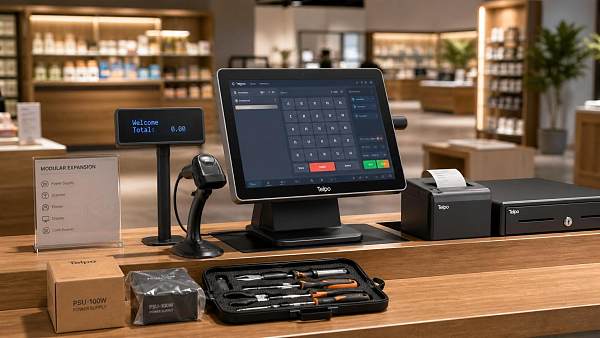
The policy message also strengthens the priority of domestic production capacity and technical verification channels for several product categories: mini POS devices, self-service terminals, AI interaction modules for digital signage, and intelligent lighting control systems. For overseas channel partners, the same signal indicates stronger supply chain support when connecting with highly adaptable, pre-certified AI-ready solutions.
Why different parts of the value chain are paying attention
Manufacturing decisions may shift toward validated AI hardware readiness
From an industry perspective, processing and manufacturing companies are likely to focus on whether their commercial terminal products can align more closely with AI model deployment needs. The potential impact is not only on product design, but also on technical validation, component integration, and delivery planning for AI-ready configurations.
Channel partners may see greater importance in certification and supply continuity
For channel distribution businesses, the policy wording matters because it links product suitability with domestic capacity priority and verification access. Analysis shows that distributors and overseas channel partners may need to watch which product lines are better positioned to offer pre-certified AI-ready solutions, as this can affect sourcing confidence, project matching, and client-facing delivery commitments.
Procurement and deployment teams may need clearer hardware-to-AI alignment
Buyers, commercial integrators, and service providers may be affected because the signal is not about AI software alone. It points to coordination between computing resources, hardware adaptation, and use-case deployment in commercial environments. What deserves closer attention is whether procurement specifications, deployment schedules, and technical review processes start placing greater weight on AI interaction capability and verification readiness.
What companies should watch next in practical terms
Follow how official wording evolves into implementation detail
Companies should distinguish between a high-level policy signal and operational rules. The June 18 message clearly elevates the topic, but businesses still need to track whether later official language introduces more concrete technical, validation, or procurement requirements.
Review priority product categories already named in the signal
Firms active in mini POS, self-service terminals, digital signage AI modules, and intelligent lighting controls should pay close attention to whether these categories gain faster verification access or stronger demand alignment. This is particularly relevant for product planning, supplier coordination, and customer communication.
Prepare supply chain and delivery documentation earlier
For suppliers and channel-facing companies, practical readiness may depend on how clearly they can present product adaptability, certification status, and delivery capability. Analysis shows that documentation, qualification materials, and lead-time communication may become more important where customers are evaluating AI-ready hardware solutions.
Separate policy momentum from immediate commercial conversion
Observably, the policy tone is supportive, but that does not automatically mean all product lines will see immediate order conversion. Companies should prepare scenarios for procurement discussions, verification timelines, and fulfillment planning without assuming that policy emphasis alone resolves commercial rollout timing.
How this signal is best understood at this stage
Analysis shows that this development is best read as a meaningful policy direction rather than a completed market outcome. The combined emphasis on AI-hardware integration and computing network construction suggests that commercial intelligent terminals are being viewed in a more strategic way within the broader AI and advanced manufacturing agenda.
At the same time, it is more appropriate to understand this as an early-to-mid stage signal that still requires follow-through. Industry participants should continue watching whether later announcements clarify technical pathways, validation mechanisms, or implementation priorities tied to the named hardware categories.
A measured reading for the commercial terminal market
The June 18 message matters because it connects industrial policy, AI deployment logic, and hardware execution in one frame. For the commercial terminal ecosystem, the main significance lies in stronger visibility for domestic capacity, technical verification, and AI-ready solution matching.
A neutral reading is that the signal supports closer integration between AI capability and commercial-space devices, but the extent of actual business impact still depends on subsequent policy expression and execution detail. At present, it is more appropriate to understand this as a strategic industry signal that deserves continued monitoring rather than as a fully realized market result.
Basis of this article and points requiring continued verification
This article is generated based on the user-provided news title, event date, and event summary. The discussion relies on the stated June 18, 2026 development involving Premier Li Qiang’s research visit, the call to integrate large AI models with commercial-space hardware, the parallel deployment of a nationwide integrated computing network, and the policy signal affecting specified commercial terminal categories.
For this type of industry update, commonly relevant source categories may include official government releases, company announcements, industry association updates, authoritative media reporting, and standards-related documents. A specific official source link was not provided in the input, so further verification is still needed. Continued observation should focus on any later official wording, rule changes, or implementation details related to verification channels, supply chain priorities, and AI-ready commercial hardware deployment.
News Recommendations
 What consumer packaging USA importers need to verify before ordering
![51a6ab95581761cc26f4318be6520c15]()
Aris Katos
Future of Carbide Coatings
 How commercial spaces interiors shape customer dwell time
![51a6ab95581761cc26f4318be6520c15]()
Aris Katos
Future of Carbide Coatings
 How LED commercial lighting design reduces glare in retail spaces
![51a6ab95581761cc26f4318be6520c15]()
Aris Katos
Future of Carbide Coatings
 How industrial technology information improves RFID inventory accuracy
![51a6ab95581761cc26f4318be6520c15]()
Aris Katos
Future of Carbide Coatings
 When drip garden watering systems make more sense than sprinklers
![51a6ab95581761cc26f4318be6520c15]()
Aris Katos
Future of Carbide Coatings
 When category comparison improves sourcing for industrial applications
![51a6ab95581761cc26f4318be6520c15]()
Aris Katos
Future of Carbide Coatings
 Industrial application guidance for selecting the right LED lighting
![51a6ab95581761cc26f4318be6520c15]()
Aris Katos
Future of Carbide Coatings
 Which commercial architecture standards apply to European retail fit-outs?
![51a6ab95581761cc26f4318be6520c15]()
Aris Katos
Future of Carbide Coatings
 How to verify FDA requirements for maternity care products
![51a6ab95581761cc26f4318be6520c15]()
Aris Katos
Future of Carbide Coatings
 How to verify BPA-free claims for food-contact products
![51a6ab95581761cc26f4318be6520c15]()
Aris Katos
Future of Carbide Coatings
 When does a European wholesale supplier suit modular office projects?
![51a6ab95581761cc26f4318be6520c15]()
Aris Katos
Future of Carbide Coatings
 When consumer ecosystem solutions improve the in-store shopping journey
![51a6ab95581761cc26f4318be6520c15]()
Aris Katos
Future of Carbide Coatings
 How a commercial developers network can reduce site selection risk
![51a6ab95581761cc26f4318be6520c15]()
Aris Katos
Future of Carbide Coatings
 How clear purchasing specifications prevent costly supplier deviations
![51a6ab95581761cc26f4318be6520c15]()
Aris Katos
Future of Carbide Coatings
 What an ISTA drop test lab checks before your packaging ships
![51a6ab95581761cc26f4318be6520c15]()
Aris Katos
Future of Carbide Coatings
 Which commercial furniture standards apply to workplace seating?
![51a6ab95581761cc26f4318be6520c15]()
Aris Katos
Future of Carbide Coatings
 How to evaluate smart lighting module OEM compatibility before sampling
![51a6ab95581761cc26f4318be6520c15]()
Aris Katos
Future of Carbide Coatings
 How to assess whether sustainable technology delivers real impact
![51a6ab95581761cc26f4318be6520c15]()
Aris Katos
Future of Carbide Coatings
 How to assess an OEM supplier’s quality control before ordering
![51a6ab95581761cc26f4318be6520c15]()
Aris Katos
Future of Carbide Coatings
 How consumer ecosystem solutions data can improve retail personalization
![51a6ab95581761cc26f4318be6520c15]()
Aris Katos
Future of Carbide Coatings
 When does consumer packaging design justify a higher product price?
![51a6ab95581761cc26f4318be6520c15]()
Aris Katos
Future of Carbide Coatings
 Supermarket Fixture Installation: Planning Layouts, Wiring, and Handover
![51a6ab95581761cc26f4318be6520c15]()
Aris Katos
Future of Carbide Coatings
 Automated Lighting and Smart Lighting Control in Bergerac: Key Project Considerations
![51a6ab95581761cc26f4318be6520c15]()
Aris Katos
Future of Carbide Coatings
 Segment Streetlight Controllers: Choosing Control Modes for Urban Roads
![51a6ab95581761cc26f4318be6520c15]()
Aris Katos
Future of Carbide Coatings
 IEC 62471-2 Explained: How to Assess Photobiological Risks in LED Lighting
![51a6ab95581761cc26f4318be6520c15]()
Aris Katos
Future of Carbide Coatings
 Food Grade Packaging Requirements by Product Type, Temperature, and Contact Risk
![51a6ab95581761cc26f4318be6520c15]()
Aris Katos
Future of Carbide Coatings
 Food Packaging Compliance Checklist: Tests, Records, and Labeling Before Shipment
![51a6ab95581761cc26f4318be6520c15]()
Aris Katos
Future of Carbide Coatings
 NSF Food Packaging Standards: When Certification Matters for Commercial Food Use
![51a6ab95581761cc26f4318be6520c15]()
Aris Katos
Future of Carbide Coatings
 FDA Food Grade Compliance: Which Materials and Documents Do Buyers Need?
![51a6ab95581761cc26f4318be6520c15]()
Aris Katos
Future of Carbide Coatings
 What Should a Food Grade Declaration Include for Packaging Compliance?
![51a6ab95581761cc26f4318be6520c15]()
Aris Katos
Future of Carbide Coatings
 Housewares Importing: How to Evaluate Suppliers, Costs, and Compliance Risks
![51a6ab95581761cc26f4318be6520c15]()
Aris Katos
Future of Carbide Coatings
 Why Freeze-Dried Fruit Ingredients Lose Crispness—and How to Prevent It
![51a6ab95581761cc26f4318be6520c15]()
Aris Katos
Future of Carbide Coatings
 What industry veterans look for before choosing a new supplier
![51a6ab95581761cc26f4318be6520c15]()
Aris Katos
Future of Carbide Coatings
 How material fatigue can shorten the service life of retail shelving
![51a6ab95581761cc26f4318be6520c15]()
Aris Katos
Future of Carbide Coatings
 What makes a global sourcing platform reliable for supplier verification?
![51a6ab95581761cc26f4318be6520c15]()
Aris Katos
Future of Carbide Coatings
 When are double platinum spark plugs a better choice than iridium?
![51a6ab95581761cc26f4318be6520c15]()
Aris Katos
Future of Carbide Coatings
 How to assess a POS terminal manufacturer in Europe for long-term support
![51a6ab95581761cc26f4318be6520c15]()
Aris Katos
Future of Carbide Coatings
 How data transparency in retail helps prevent inventory discrepancies
![51a6ab95581761cc26f4318be6520c15]()
Aris Katos
Future of Carbide Coatings
 What makes a product comparison guide actually useful for buying decisions
![51a6ab95581761cc26f4318be6520c15]()
Aris Katos
Future of Carbide Coatings