
Search News
Hot Articles
IATA Updates UN3481 Lithium Battery Declaration Template
Time
Click Count
On May 10, 2026, the International Air Transport Association (IATA) released the 2nd edition of its Lithium Battery Air Transport Guidelines, updating the UN3481 declaration template to include a new purpose code — ‘MP-2026’ — for lithium-powered maternity and pet supplies. This change directly affects exporters, logistics providers, and manufacturers handling smart devices such as temperature-controlled baby bottles and GPS-enabled pet collars. The update signals stricter enforcement of cargo documentation compliance and introduces tangible operational risks for supply chains reliant on air freight.
Event Overview
On May 10, 2026, IATA published the 2026 2nd edition of its Lithium Battery Air Transport Guidelines. The revision updates the UN3481 shipping declaration template by introducing a dedicated purpose code — ‘MP-2026’ — for lithium battery–equipped products classified under ‘Maternity & Pet Supplies’. All air shipments containing such items must now accurately declare this code on the air waybill. Failure to do so triggers mandatory full-container physical inspection, resulting in a documented 40% increase in shipment delays.
Which Subsectors Are Affected
Direct Exporters & Brand Owners
Exporters shipping lithium-powered maternity or pet care devices face immediate documentation liability. Since the MP-2026 code applies specifically to end-use categories — not battery chemistry or watt-hour rating — classification decisions now require product-level functional assessment rather than technical specification alone. Misclassification may lead to rejected shipments at origin or destination airports, with no grace period specified in the guideline update.
Contract Manufacturers & OEMs
OEMs producing white-label smart baby or pet devices must verify whether their clients’ branding and intended use fall under the ‘Maternity & Pet Supplies’ category. Even if batteries are identical across multiple product lines, the declared purpose determines applicability of MP-2026. This adds a layer of commercial documentation coordination between manufacturer and brand owner prior to shipment.
Freight Forwarders & Cargo Agents
Forwarders handling mixed consignments — especially those consolidating consumer electronics, health tech, and pet tech — must now implement pre-shipment screening for functional categorization. The 40% delay uplift cited in the update reflects real-world inspection throughput constraints; forwarders lacking internal classification protocols risk cascading schedule impacts across shared cargo space allocations.
Retail & E-commerce Fulfillment Providers
Third-party logistics (3PL) providers fulfilling cross-border DTC orders for smart nursery or pet wellness brands must adjust warehouse documentation workflows. Air waybill generation systems need MP-2026 field integration, and staff training must cover use-case–based classification — e.g., distinguishing a Bluetooth-enabled pet feeder (subject to MP-2026) from a generic rechargeable power bank (not subject).
What Relevant Enterprises or Practitioners Should Focus On and How to Respond Now
Monitor official IATA clarifications on scope boundaries
IATA has not yet published a definitive list of SKUs or functional criteria qualifying for MP-2026. Enterprises should track IATA’s official communications — particularly upcoming updates to the Dangerous Goods Regulations (DGR) supplemental guidance — for thresholds such as minimum battery capacity, device autonomy level, or regulatory alignment with regional definitions (e.g., FDA vs. EU CE classification of ‘maternity devices’).
Review current air-freighted SKUs by end-use function, not just battery specs
Companies should audit active air-shipments using lithium cells to identify any items marketed or labeled for maternity or pet use — regardless of battery size or configuration. Examples include wearable infant monitors, heated pet carriers, or app-connected feeding scales. Functional labeling (packaging, manuals, online listings) now carries regulatory weight alongside technical data sheets.
Distinguish between policy signal and operational requirement
The MP-2026 code is effective as of May 10, 2026, per the published guideline version. However, enforcement timelines may vary by airline and ground handling agent. Enterprises should treat the code as mandatory for all new air waybills issued on or after that date, while verifying implementation readiness with key carriers — especially those operating major Asia–North America or Europe–Asia corridors where lithium-sensitive cargo volumes are highest.
Update internal documentation templates and train frontline staff
Revise standard operating procedures for air waybill preparation to include MP-2026 validation checkpoints. Train export documentation clerks, customer service teams, and fulfillment supervisors on how to identify qualifying products using publicly available marketing materials — not engineering specifications. Maintain records of classification rationale to support audit requests.
Editorial Perspective / Industry Observation
Observably, this update reflects IATA’s shift toward use-case–driven hazard classification — moving beyond battery chemistry or packaging format to incorporate how end users deploy devices. Analysis shows the MP-2026 code functions less as a standalone safety measure and more as a traceability lever: it enables targeted inspection protocols and post-incident forensic tracking within complex consumer electronics supply chains. From an industry perspective, the 40% delay statistic suggests enforcement is already operational, not merely prospective. It is better understood as a near-term compliance checkpoint than a long-term regulatory trend — though sustained delays may prompt further harmonization efforts with IMDG Code or national transport authorities.
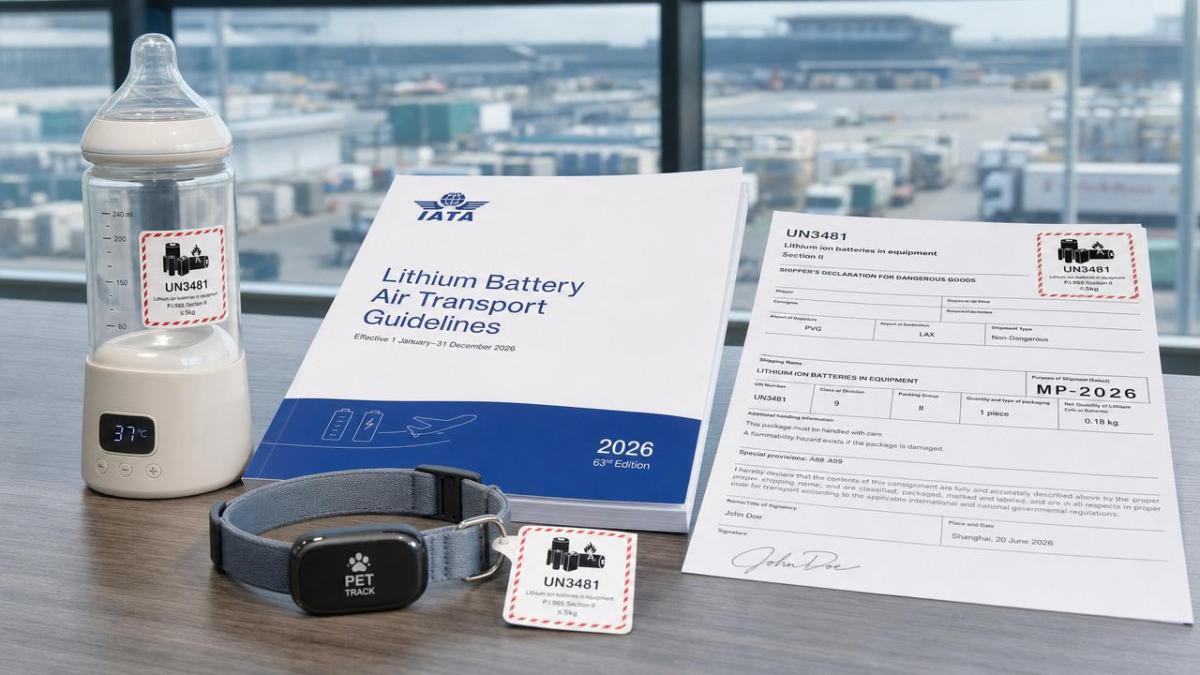
Concluding, this IATA update does not introduce new transportation restrictions but significantly raises the bar for documentation accuracy in a high-volume, low-margin segment of air cargo. Its practical significance lies in converting previously implicit classification practices into auditable, enforceable requirements. Currently, it is most appropriately interpreted as a procedural tightening — one demanding immediate operational attention, not strategic repositioning.
Source: International Air Transport Association (IATA), 2026 2nd Edition Lithium Battery Air Transport Guidelines, published May 10, 2026.
Note: Ongoing observation is required for IATA’s forthcoming DGR Supplemental Guidance and carrier-specific implementation notices, which have not yet been released.
News Recommendations
 Tillage Equipment Selection Guide for Soil Type, Fuel Use, and Field Efficiency
![51a6ab95581761cc26f4318be6520c15]()
Aris Katos
Future of Carbide Coatings
 Eco Pet Supplies Manufacturer Checklist: Materials, Compliance, and MOQ
![51a6ab95581761cc26f4318be6520c15]()
Aris Katos
Future of Carbide Coatings
 How to Compare HDMI Video Wall Controller Suppliers for Multi-Screen Stability
![51a6ab95581761cc26f4318be6520c15]()
Aris Katos
Future of Carbide Coatings
 Aluminum Extrusion Profiles for Facades: Key Performance Checks Before Specification
![51a6ab95581761cc26f4318be6520c15]()
Aris Katos
Future of Carbide Coatings
 How Commercial Developers in the Middle East Assess Mixed-Use Project Risk
![51a6ab95581761cc26f4318be6520c15]()
Aris Katos
Future of Carbide Coatings
 RFID Chip Shortage Eases as Lead Times Fall to 6 Weeks
![51a6ab95581761cc26f4318be6520c15]()
Aris Katos
Future of Carbide Coatings
 Vietnam Tightens Import Rules for Retail Shelving
![51a6ab95581761cc26f4318be6520c15]()
Aris Katos
Future of Carbide Coatings
 EU Opens Review of Digital Signage Energy Label Shift
![51a6ab95581761cc26f4318be6520c15]()
Aris Katos
Future of Carbide Coatings
 RCEP Launches Green Mutual Recognition for Smart Lighting Controls
![51a6ab95581761cc26f4318be6520c15]()
Aris Katos
Future of Carbide Coatings
 FDA Draft Update Targets Microbial Migration in RTE Packaging
![51a6ab95581761cc26f4318be6520c15]()
Aris Katos
Future of Carbide Coatings
 Modular Shelving Load Capacity USA: Limits, Codes, and Safety Mistakes
![51a6ab95581761cc26f4318be6520c15]()
Aris Katos
Future of Carbide Coatings
 Glucometers Explained: Accuracy, Strip Cost, and Daily Use Differences
![51a6ab95581761cc26f4318be6520c15]()
Aris Katos
Future of Carbide Coatings
 How to Compare a Commercial High Bay Light Supplier for Large Facilities
![51a6ab95581761cc26f4318be6520c15]()
Aris Katos
Future of Carbide Coatings
 LFGB Testing Europe: What Products Need It and Common Failure Risks
![51a6ab95581761cc26f4318be6520c15]()
Aris Katos
Future of Carbide Coatings
 Retail Integration Solutions: 7 Costly Gaps to Check Before You Scale
![51a6ab95581761cc26f4318be6520c15]()
Aris Katos
Future of Carbide Coatings
 TUV Rheinland Adds IoT Energy Checks to LED Labels
![51a6ab95581761cc26f4318be6520c15]()
Aris Katos
Future of Carbide Coatings
 Ningbo Delays Lift E-commerce Packaging Risk
![51a6ab95581761cc26f4318be6520c15]()
Aris Katos
Future of Carbide Coatings
 RCEP Origin Rules Tighten for Smart Lighting Controls
![51a6ab95581761cc26f4318be6520c15]()
Aris Katos
Future of Carbide Coatings
 CPSC Tightens Heat Limit for Silicone Kitchenware Handles
![51a6ab95581761cc26f4318be6520c15]()
Aris Katos
Future of Carbide Coatings
 EU EPR Rule Takes Effect July 1 for Biodegradable Packaging
![51a6ab95581761cc26f4318be6520c15]()
Aris Katos
Future of Carbide Coatings
 Polycarbonate Roofing vs Metal Sheets: Cost, Light, and Lifespan
![51a6ab95581761cc26f4318be6520c15]()
Aris Katos
Future of Carbide Coatings
 Wellness Tips That Actually Improve Daily Energy and Focus
![51a6ab95581761cc26f4318be6520c15]()
Aris Katos
Future of Carbide Coatings
 Ergonomic Workspace Design for Home Offices: Setup Mistakes to Avoid
![51a6ab95581761cc26f4318be6520c15]()
Aris Katos
Future of Carbide Coatings
 How to Compare Supply Chain Options for the Automotive Industry
![51a6ab95581761cc26f4318be6520c15]()
Aris Katos
Future of Carbide Coatings
 Retail Rack Production Factory: 7 Quality Checks Before You Order
![51a6ab95581761cc26f4318be6520c15]()
Aris Katos
Future of Carbide Coatings
 RCEP Tightens Origin Rules for Digital Signage
![51a6ab95581761cc26f4318be6520c15]()
Aris Katos
Future of Carbide Coatings
 Middle East Retail Fit-Out Buying Shifts to Modular Systems
![51a6ab95581761cc26f4318be6520c15]()
Aris Katos
Future of Carbide Coatings
 Q2 POS Prices Rise 12.7% as Supply and CE-RED Rules Tighten
![51a6ab95581761cc26f4318be6520c15]()
Aris Katos
Future of Carbide Coatings
 FDA Tightens Silicone Kitchenware Testing for U.S. Exports
![51a6ab95581761cc26f4318be6520c15]()
Aris Katos
Future of Carbide Coatings
 EU Tightens EN 13432 Rules for Biodegradable Exports
![51a6ab95581761cc26f4318be6520c15]()
Aris Katos
Future of Carbide Coatings
 Track Lighting Systems OEM: Common Cost Risks and Spec Mistakes
![51a6ab95581761cc26f4318be6520c15]()
Aris Katos
Future of Carbide Coatings
 What to Check When Choosing a Video Wall Controller Supplier
![51a6ab95581761cc26f4318be6520c15]()
Aris Katos
Future of Carbide Coatings
 How to Compare Upholstery Fabrics for Durability, Cleanability, and Cost
![51a6ab95581761cc26f4318be6520c15]()
Aris Katos
Future of Carbide Coatings
 Food Grade Eco Packaging: Key Compliance Checks Before You Source
![51a6ab95581761cc26f4318be6520c15]()
Aris Katos
Future of Carbide Coatings
 How Human Centric Lighting Controls Improve Focus and Energy Use
![51a6ab95581761cc26f4318be6520c15]()
Aris Katos
Future of Carbide Coatings
 IAL Report Signals Shift in Middle East LED Tenders
![51a6ab95581761cc26f4318be6520c15]()
Aris Katos
Future of Carbide Coatings
 Yantian Port Launches AI RFID Customs Channel
![51a6ab95581761cc26f4318be6520c15]()
Aris Katos
Future of Carbide Coatings
 Indonesia BPOM Requires Digital Shelf Life on E-Commerce Fulfillment Packs
![51a6ab95581761cc26f4318be6520c15]()
Aris Katos
Future of Carbide Coatings
 CPSC Moves to Detain Non-Compliant ASTM F963-24 Nursery Goods
![51a6ab95581761cc26f4318be6520c15]()
Aris Katos
Future of Carbide Coatings