CPSC Tightens Heat Limit for Silicone Kitchenware Handles
Time
Click Count
On June 29, 2026, the U.S. Consumer Product Safety Commission (CPSC) issued an interim safety guide that immediately raises compliance expectations for imported silicone kitchenware used in Kitchenware & Home Goods. The change centers on handle and grip components in products such as spatulas, baking molds, and heat pads, and it matters most to importers, manufacturers, sourcing teams, testing providers, and distribution businesses because it directly affects product qualification, supporting documentation, and burn-risk review in the U.S. market.
What the interim guide now requires
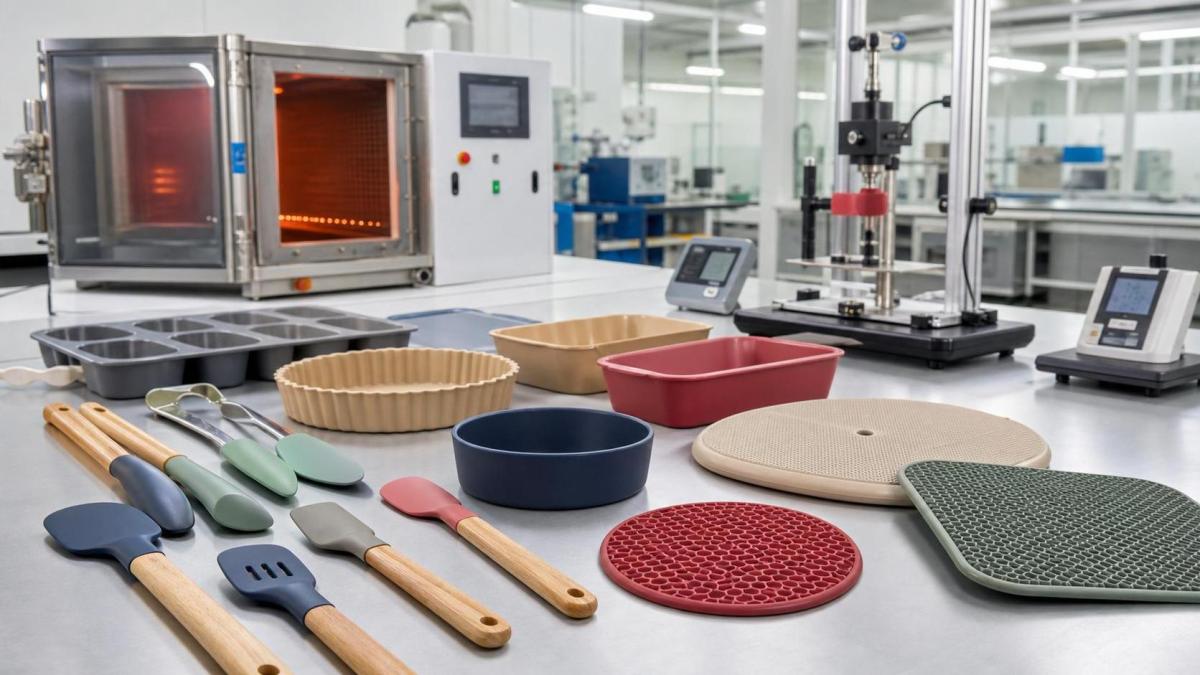
According to the information provided, the CPSC released the interim guide on June 29, 2026. Under that guide, all imported silicone kitchenware, including spatulas, baking molds, and heat pads, must have handle or grip sections that pass a continuous heat-resistance test at 220 degrees Celsius for 15 minutes. If that threshold is not met, the product is regarded as presenting a burn risk. The requirement took effect immediately. Importers are also required to provide supplementary verification reports issued by a third-party laboratory under either UL 94 V-0 or ASTM F2200.
Where the pressure is likely to appear in the supply chain
Imported product programs face an immediate documentation burden
From an industry perspective, importers and direct trading companies are the first parties likely to feel the change because the rule is already in force and explicitly ties market access to third-party verification. The operational impact is likely to show up in shipment readiness, document collection, and product file review, especially where existing test materials do not clearly address the 220 degrees Celsius for 15 minutes requirement for handle or grip parts.
Manufacturing and processing teams may need to reassess product configurations
Analysis shows that manufacturers of silicone kitchenware may be affected at the product-design and production-control level. The guide is specific to handle and grip components, which means attention is likely to focus not only on the overall item category but on the heat performance of the parts that users hold directly. What deserves closer attention is whether current product specifications, material combinations, and validation records can support the stated threshold and the required supplementary reports.
Sourcing and procurement functions may need tighter supplier screening
For sourcing teams and procurement functions, the issue is likely to move beyond price and lead time into qualification depth. The immediate concern is whether suppliers can provide compliant third-party laboratory reports linked to the relevant products. Businesses that purchase for U.S.-bound orders may need to pay closer attention to document availability, consistency between product models and test records, and the risk of delays where supporting materials are incomplete.
Channel and distribution businesses may face downstream communication tasks
Distributors and channel operators may also be affected, particularly where imported kitchenware is already in ordering or delivery pipelines. Observably, the practical issue here is less about policy interpretation and more about product status confirmation, order communication, and evidence retention. Businesses handling retailer or buyer relationships may need to clarify which SKUs are covered, what reports are available, and whether additional verification is pending.
Practical points companies should watch now
Separate confirmed requirements from pending interpretation
The confirmed requirement is clear: imported silicone kitchenware handle or grip components must pass the stated heat test, and supplementary third-party reports under UL 94 V-0 or ASTM F2200 are required. Analysis shows that companies should be careful not to assume broader conclusions beyond that text until further official clarification appears.
Check high-exposure product lines first
What deserves closer attention is the product mix most directly named in the guide, including spatulas, baking molds, and heat pads. Businesses with similar imported silicone kitchenware lines may need to review whether their held-contact parts are clearly covered by existing testing and whether product documentation can be matched quickly to customer or customs-facing requirements.
Prepare for timing issues in supply and delivery
Because the rule is effective immediately, companies should closely monitor lead times tied to supplementary testing, report issuance, and shipment release decisions. Observably, the commercial risk may arise not only from technical nonconformity but also from gaps between production completion and documentation readiness.
Align supplier, laboratory, and customer communication
From an industry perspective, a practical priority is coordination. Importers, suppliers, and service providers may need to confirm report formats, testing scope, and model-to-document correspondence early, while customer-facing teams may need a consistent explanation of what has been verified, what is being updated, and what remains under review.
Why this should be read as more than a routine product note
Analysis shows that this development is best understood as an immediate compliance trigger with broader signaling value. In the short term, it has direct consequences for imported silicone kitchenware entering the U.S. market because the standard is already active and tied to supporting test evidence. At the same time, it is more appropriate to understand this as a regulatory signal worth continued observation rather than a fully settled long-term framework, because the information provided identifies an interim guide, not a final expanded regime across all related product questions.
How to read the current significance
At this stage, the industry significance lies in the combination of three factors: a defined heat-resistance threshold for handle and grip components, immediate implementation, and a documentary requirement tied to third-party verification. That makes this update relevant not only for compliance teams but also for sourcing, production planning, shipment control, and buyer communication. It is more appropriate to understand the notice as a near-term operational requirement and a continuing regulatory signal that still merits follow-up attention.
Basis of this article and what still needs verification
This article is based on the user-provided news title, event date, and event summary concerning the CPSC interim safety guide issued on June 29, 2026. For this type of industry update, commonly relevant source categories may include official notices, company statements, industry association materials, authoritative media coverage, and standards-related documents. The specific official source link was not provided in the input, so continued verification is still necessary. Observably, follow-up attention should focus on any updated official wording, further implementation clarification, and any later changes affecting scope, documentation, or enforcement practice.
News Recommendations
 What makes LED lights durable in high-use commercial spaces?
![51a6ab95581761cc26f4318be6520c15]()
Aris Katos
Future of Carbide Coatings
 Which industry categories offer the strongest export potential in Latin America?
![51a6ab95581761cc26f4318be6520c15]()
Aris Katos
Future of Carbide Coatings
 How to choose an ultra bright waterproof window display for storefronts
![51a6ab95581761cc26f4318be6520c15]()
Aris Katos
Future of Carbide Coatings
 How to verify suppliers on a trade portal for global sourcing
![51a6ab95581761cc26f4318be6520c15]()
Aris Katos
Future of Carbide Coatings
 How RoHS requirements should be stated in product specifications
![51a6ab95581761cc26f4318be6520c15]()
Aris Katos
Future of Carbide Coatings
 What affects the lead time for custom retail counter displays?
![51a6ab95581761cc26f4318be6520c15]()
Aris Katos
Future of Carbide Coatings
 What consumer packaging USA importers need to verify before ordering
![51a6ab95581761cc26f4318be6520c15]()
Aris Katos
Future of Carbide Coatings
 How commercial spaces interiors shape customer dwell time
![51a6ab95581761cc26f4318be6520c15]()
Aris Katos
Future of Carbide Coatings
 How LED commercial lighting design reduces glare in retail spaces
![51a6ab95581761cc26f4318be6520c15]()
Aris Katos
Future of Carbide Coatings
 How industrial technology information improves RFID inventory accuracy
![51a6ab95581761cc26f4318be6520c15]()
Aris Katos
Future of Carbide Coatings
 When drip garden watering systems make more sense than sprinklers
![51a6ab95581761cc26f4318be6520c15]()
Aris Katos
Future of Carbide Coatings
 When category comparison improves sourcing for industrial applications
![51a6ab95581761cc26f4318be6520c15]()
Aris Katos
Future of Carbide Coatings
 Industrial application guidance for selecting the right LED lighting
![51a6ab95581761cc26f4318be6520c15]()
Aris Katos
Future of Carbide Coatings
 Which commercial architecture standards apply to European retail fit-outs?
![51a6ab95581761cc26f4318be6520c15]()
Aris Katos
Future of Carbide Coatings
 How to verify FDA requirements for maternity care products
![51a6ab95581761cc26f4318be6520c15]()
Aris Katos
Future of Carbide Coatings
 How to verify BPA-free claims for food-contact products
![51a6ab95581761cc26f4318be6520c15]()
Aris Katos
Future of Carbide Coatings
 When does a European wholesale supplier suit modular office projects?
![51a6ab95581761cc26f4318be6520c15]()
Aris Katos
Future of Carbide Coatings
 When consumer ecosystem solutions improve the in-store shopping journey
![51a6ab95581761cc26f4318be6520c15]()
Aris Katos
Future of Carbide Coatings
 How a commercial developers network can reduce site selection risk
![51a6ab95581761cc26f4318be6520c15]()
Aris Katos
Future of Carbide Coatings
 How clear purchasing specifications prevent costly supplier deviations
![51a6ab95581761cc26f4318be6520c15]()
Aris Katos
Future of Carbide Coatings
 What an ISTA drop test lab checks before your packaging ships
![51a6ab95581761cc26f4318be6520c15]()
Aris Katos
Future of Carbide Coatings
 Which commercial furniture standards apply to workplace seating?
![51a6ab95581761cc26f4318be6520c15]()
Aris Katos
Future of Carbide Coatings
 How to evaluate smart lighting module OEM compatibility before sampling
![51a6ab95581761cc26f4318be6520c15]()
Aris Katos
Future of Carbide Coatings
 How to assess whether sustainable technology delivers real impact
![51a6ab95581761cc26f4318be6520c15]()
Aris Katos
Future of Carbide Coatings
 How to assess an OEM supplier’s quality control before ordering
![51a6ab95581761cc26f4318be6520c15]()
Aris Katos
Future of Carbide Coatings
 How consumer ecosystem solutions data can improve retail personalization
![51a6ab95581761cc26f4318be6520c15]()
Aris Katos
Future of Carbide Coatings
 When does consumer packaging design justify a higher product price?
![51a6ab95581761cc26f4318be6520c15]()
Aris Katos
Future of Carbide Coatings
 Supermarket Fixture Installation: Planning Layouts, Wiring, and Handover
![51a6ab95581761cc26f4318be6520c15]()
Aris Katos
Future of Carbide Coatings
 Automated Lighting and Smart Lighting Control in Bergerac: Key Project Considerations
![51a6ab95581761cc26f4318be6520c15]()
Aris Katos
Future of Carbide Coatings
 Segment Streetlight Controllers: Choosing Control Modes for Urban Roads
![51a6ab95581761cc26f4318be6520c15]()
Aris Katos
Future of Carbide Coatings
 IEC 62471-2 Explained: How to Assess Photobiological Risks in LED Lighting
![51a6ab95581761cc26f4318be6520c15]()
Aris Katos
Future of Carbide Coatings
 Food Grade Packaging Requirements by Product Type, Temperature, and Contact Risk
![51a6ab95581761cc26f4318be6520c15]()
Aris Katos
Future of Carbide Coatings
 Food Packaging Compliance Checklist: Tests, Records, and Labeling Before Shipment
![51a6ab95581761cc26f4318be6520c15]()
Aris Katos
Future of Carbide Coatings
 NSF Food Packaging Standards: When Certification Matters for Commercial Food Use
![51a6ab95581761cc26f4318be6520c15]()
Aris Katos
Future of Carbide Coatings
 FDA Food Grade Compliance: Which Materials and Documents Do Buyers Need?
![51a6ab95581761cc26f4318be6520c15]()
Aris Katos
Future of Carbide Coatings
 What Should a Food Grade Declaration Include for Packaging Compliance?
![51a6ab95581761cc26f4318be6520c15]()
Aris Katos
Future of Carbide Coatings
 Housewares Importing: How to Evaluate Suppliers, Costs, and Compliance Risks
![51a6ab95581761cc26f4318be6520c15]()
Aris Katos
Future of Carbide Coatings
 Why Freeze-Dried Fruit Ingredients Lose Crispness—and How to Prevent It
![51a6ab95581761cc26f4318be6520c15]()
Aris Katos
Future of Carbide Coatings
 What industry veterans look for before choosing a new supplier
![51a6ab95581761cc26f4318be6520c15]()
Aris Katos
Future of Carbide Coatings