TUV Rheinland Adds IoT Energy Checks to LED Labels
Time
Click Count
On October 1, 2026, an updated assessment rule from TUV Rheinland takes effect for Architectural LED Lighting products headed to the EU market. The change matters because energy labeling is no longer limited to the lighting unit itself: connected functions under Zigbee and Matter are now part of the required review. For exporters of track lights, linear light strips, and smart downlights, as well as certification, compliance, product, and supply chain teams, this is a practical shift in how product readiness for CE-EMC and ErP needs to be understood.
What the Updated Guideline Actually Changes
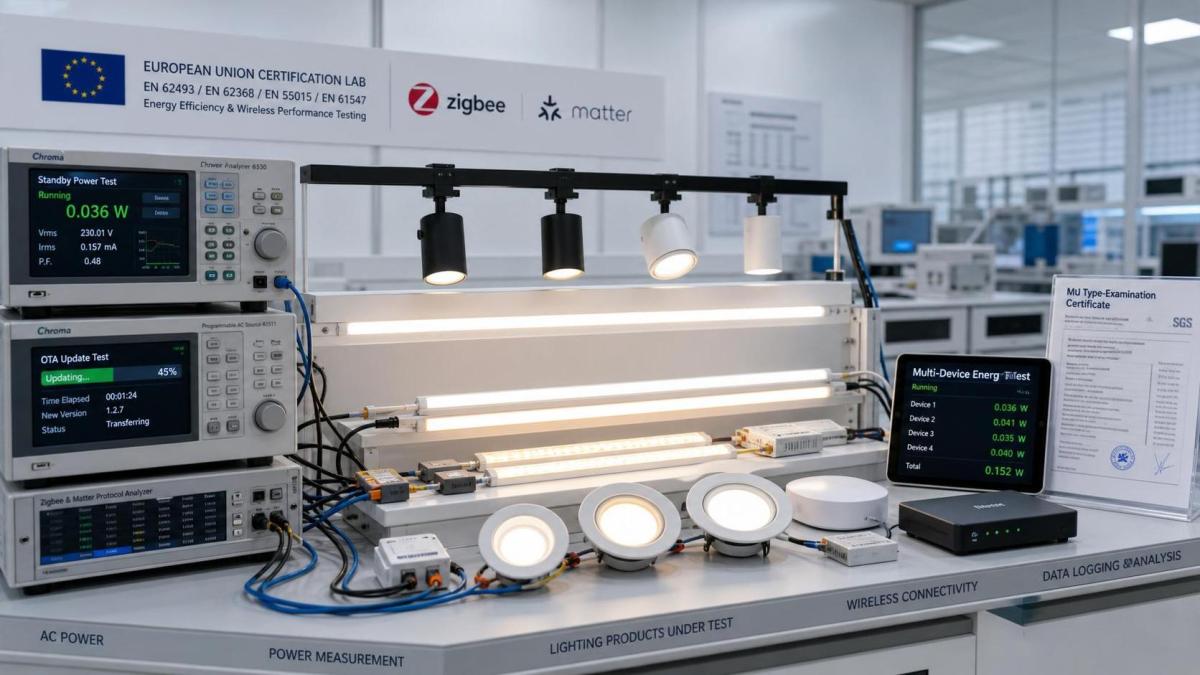
TUV Rheinland released the LED Architectural Lighting Product Energy Efficiency and Smart Connectivity Assessment Guide V2.1 on June 29, 2026. According to the information provided, the update brings three energy-use items into mandatory assessment for the first time under Zigbee and Matter-based connected functions: standby power consumption, energy used during OTA upgrades, and power consumption arising from multi-device coordination.
The scope mentioned in the event summary covers Architectural LED Lighting products exported to the European Union, including track lights, linear light strips, and smart downlights. From October 1, 2026, this assessment becomes a prerequisite for CE-EMC and ErP certification.
Where the Pressure Will Be Felt Across the Value Chain
For exporters, the compliance path becomes more front-loaded
From an industry perspective, direct trading companies and export-oriented brands may be affected first because the new assessment sits before CE-EMC and ErP certification. The immediate impact is likely to appear in product filing, certification scheduling, and customer delivery planning. What deserves closer attention is whether connected lighting models already positioned for EU shipment have documentation and test preparation aligned with the updated rule.
For manufacturers, connected functions now sit closer to the energy review
Analysis shows that manufacturers of track lights, linear light strips, and smart downlights may need to pay closer attention to how smart control features are evaluated alongside lighting performance. The practical effect is not only on final testing, but also on how product teams organize design verification for standby status, OTA-related energy use, and multi-device operation under Zigbee or Matter conditions.
For certification and service partners, the workload may shift toward coordination detail
Service providers involved in testing, certification support, and technical file preparation may see the impact in project sequencing and communication. Because the update is described as a prerequisite for CE-EMC and ErP, the business risk is less about a single label change and more about whether certification workflows, submission materials, and timing assumptions still match the new requirement.
For buyers and project-side procurement, product comparability may tighten
Observably, procurement teams and downstream buyers sourcing connected architectural lighting for EU-facing business may need to look more closely at certification readiness rather than product category alone. The issue is not simply whether a lamp supports Zigbee or Matter, but whether the energy impact of those connected functions has been assessed under the updated guideline.
What Companies Should Watch Now
Check which SKUs fall inside the affected scope
Companies should first review whether their EU-bound Architectural LED Lighting portfolio includes the product types explicitly mentioned in the event summary, especially track lights, linear light strips, and smart downlights. This is a practical screening step for deciding which projects may need immediate certification review.
Separate protocol support from assessment readiness
What deserves closer attention is the difference between offering Zigbee or Matter connectivity and being ready for mandatory energy assessment of that connectivity. In business terms, product claims, certification preparation, and shipment expectations should not be treated as the same thing.
Review timelines for OTA and multi-device scenarios
Analysis shows that companies should pay attention to whether internal testing and supplier communication already cover OTA upgrade energy use and coordinated multi-device power consumption. Even where a product is technically complete, supporting records and test arrangements may become a bottleneck if these scenarios were not previously treated as required items.
Prepare customer and supplier communication early
Export teams, sourcing teams, and certification coordinators may need to align on lead times, submission materials, and customer-facing explanations. The key issue is not broad operational change, but whether partners share the same understanding of the October 1, 2026 effective date and the new prerequisite position before CE-EMC and ErP.
Why This Looks Like More Than a Routine Label Update
Analysis shows that this development is better understood as a targeted compliance signal rather than a standalone technical revision. The addition of standby, OTA, and multi-device coordination energy assessment under Zigbee and Matter suggests that connected behavior is being treated as part of the product's energy profile, not as a secondary software feature.
At the same time, it is more appropriate to understand this as a concrete near-term rule change with longer-term implications, not as a fully settled industry endpoint. The confirmed fact is the updated guideline and its October 1, 2026 prerequisite role. The broader meaning for product design, certification sequencing, and customer requirements still needs continued observation as companies implement against the rule in practice.
How the Industry Should Read This Moment
A measured reading of this update is that EU-facing connected architectural lighting products are entering a stricter compliance stage where smart features carry direct energy-assessment consequences. For the industry, the immediate issue is operational: affected products and certification plans need to be checked against the updated requirement. For the longer view, this is best understood as a meaningful compliance signal that deserves ongoing attention, rather than a basis for broad market conclusions.
Basis of This Article and What Still Needs Verification
This article is based on the user-provided news title, event date, and event summary concerning TUV Rheinland's updated guideline for Architectural LED Lighting products. For this type of industry development, relevant source categories would usually include official notices, company announcements, industry association updates, standards-related documents, and reporting by authoritative trade media.
No specific official source link was provided in the input, so the exact primary publication path still needs to be verified on an ongoing basis. Follow-up attention should focus on any later official wording, implementation clarifications, and practical certification guidance related to the October 1, 2026 effective date.
News Recommendations
 What makes LED lights durable in high-use commercial spaces?
![51a6ab95581761cc26f4318be6520c15]()
Aris Katos
Future of Carbide Coatings
 Which industry categories offer the strongest export potential in Latin America?
![51a6ab95581761cc26f4318be6520c15]()
Aris Katos
Future of Carbide Coatings
 How to choose an ultra bright waterproof window display for storefronts
![51a6ab95581761cc26f4318be6520c15]()
Aris Katos
Future of Carbide Coatings
 How to verify suppliers on a trade portal for global sourcing
![51a6ab95581761cc26f4318be6520c15]()
Aris Katos
Future of Carbide Coatings
 How RoHS requirements should be stated in product specifications
![51a6ab95581761cc26f4318be6520c15]()
Aris Katos
Future of Carbide Coatings
 What affects the lead time for custom retail counter displays?
![51a6ab95581761cc26f4318be6520c15]()
Aris Katos
Future of Carbide Coatings
 What consumer packaging USA importers need to verify before ordering
![51a6ab95581761cc26f4318be6520c15]()
Aris Katos
Future of Carbide Coatings
 How commercial spaces interiors shape customer dwell time
![51a6ab95581761cc26f4318be6520c15]()
Aris Katos
Future of Carbide Coatings
 How LED commercial lighting design reduces glare in retail spaces
![51a6ab95581761cc26f4318be6520c15]()
Aris Katos
Future of Carbide Coatings
 How industrial technology information improves RFID inventory accuracy
![51a6ab95581761cc26f4318be6520c15]()
Aris Katos
Future of Carbide Coatings
 When drip garden watering systems make more sense than sprinklers
![51a6ab95581761cc26f4318be6520c15]()
Aris Katos
Future of Carbide Coatings
 When category comparison improves sourcing for industrial applications
![51a6ab95581761cc26f4318be6520c15]()
Aris Katos
Future of Carbide Coatings
 Industrial application guidance for selecting the right LED lighting
![51a6ab95581761cc26f4318be6520c15]()
Aris Katos
Future of Carbide Coatings
 Which commercial architecture standards apply to European retail fit-outs?
![51a6ab95581761cc26f4318be6520c15]()
Aris Katos
Future of Carbide Coatings
 How to verify FDA requirements for maternity care products
![51a6ab95581761cc26f4318be6520c15]()
Aris Katos
Future of Carbide Coatings
 How to verify BPA-free claims for food-contact products
![51a6ab95581761cc26f4318be6520c15]()
Aris Katos
Future of Carbide Coatings
 When does a European wholesale supplier suit modular office projects?
![51a6ab95581761cc26f4318be6520c15]()
Aris Katos
Future of Carbide Coatings
 When consumer ecosystem solutions improve the in-store shopping journey
![51a6ab95581761cc26f4318be6520c15]()
Aris Katos
Future of Carbide Coatings
 How a commercial developers network can reduce site selection risk
![51a6ab95581761cc26f4318be6520c15]()
Aris Katos
Future of Carbide Coatings
 How clear purchasing specifications prevent costly supplier deviations
![51a6ab95581761cc26f4318be6520c15]()
Aris Katos
Future of Carbide Coatings
 What an ISTA drop test lab checks before your packaging ships
![51a6ab95581761cc26f4318be6520c15]()
Aris Katos
Future of Carbide Coatings
 Which commercial furniture standards apply to workplace seating?
![51a6ab95581761cc26f4318be6520c15]()
Aris Katos
Future of Carbide Coatings
 How to evaluate smart lighting module OEM compatibility before sampling
![51a6ab95581761cc26f4318be6520c15]()
Aris Katos
Future of Carbide Coatings
 How to assess whether sustainable technology delivers real impact
![51a6ab95581761cc26f4318be6520c15]()
Aris Katos
Future of Carbide Coatings
 How to assess an OEM supplier’s quality control before ordering
![51a6ab95581761cc26f4318be6520c15]()
Aris Katos
Future of Carbide Coatings
 How consumer ecosystem solutions data can improve retail personalization
![51a6ab95581761cc26f4318be6520c15]()
Aris Katos
Future of Carbide Coatings
 When does consumer packaging design justify a higher product price?
![51a6ab95581761cc26f4318be6520c15]()
Aris Katos
Future of Carbide Coatings
 Supermarket Fixture Installation: Planning Layouts, Wiring, and Handover
![51a6ab95581761cc26f4318be6520c15]()
Aris Katos
Future of Carbide Coatings
 Automated Lighting and Smart Lighting Control in Bergerac: Key Project Considerations
![51a6ab95581761cc26f4318be6520c15]()
Aris Katos
Future of Carbide Coatings
 Segment Streetlight Controllers: Choosing Control Modes for Urban Roads
![51a6ab95581761cc26f4318be6520c15]()
Aris Katos
Future of Carbide Coatings
 IEC 62471-2 Explained: How to Assess Photobiological Risks in LED Lighting
![51a6ab95581761cc26f4318be6520c15]()
Aris Katos
Future of Carbide Coatings
 Food Grade Packaging Requirements by Product Type, Temperature, and Contact Risk
![51a6ab95581761cc26f4318be6520c15]()
Aris Katos
Future of Carbide Coatings
 Food Packaging Compliance Checklist: Tests, Records, and Labeling Before Shipment
![51a6ab95581761cc26f4318be6520c15]()
Aris Katos
Future of Carbide Coatings
 NSF Food Packaging Standards: When Certification Matters for Commercial Food Use
![51a6ab95581761cc26f4318be6520c15]()
Aris Katos
Future of Carbide Coatings
 FDA Food Grade Compliance: Which Materials and Documents Do Buyers Need?
![51a6ab95581761cc26f4318be6520c15]()
Aris Katos
Future of Carbide Coatings
 What Should a Food Grade Declaration Include for Packaging Compliance?
![51a6ab95581761cc26f4318be6520c15]()
Aris Katos
Future of Carbide Coatings
 Housewares Importing: How to Evaluate Suppliers, Costs, and Compliance Risks
![51a6ab95581761cc26f4318be6520c15]()
Aris Katos
Future of Carbide Coatings
 Why Freeze-Dried Fruit Ingredients Lose Crispness—and How to Prevent It
![51a6ab95581761cc26f4318be6520c15]()
Aris Katos
Future of Carbide Coatings
 What industry veterans look for before choosing a new supplier
![51a6ab95581761cc26f4318be6520c15]()
Aris Katos
Future of Carbide Coatings