
How to Compare Upholstery Fabrics for Durability, Cleanability, and Cost
Time
Click Count
Comparing upholstery fabrics for durability, cleanability, and cost is rarely a decorative exercise in commercial work. Fabric choices affect maintenance cycles, replacement timing, guest perception, compliance planning, and the total life cost of furniture across retail, hospitality, office, and mixed-use environments.
That is why upholstery fabrics now sit inside broader sourcing decisions. In a market shaped by performance standards, sustainability pressure, and tighter operational control, the right specification has to work on the floor, in the cleaning schedule, and in the budget model at the same time.
What a useful fabric comparison really looks like
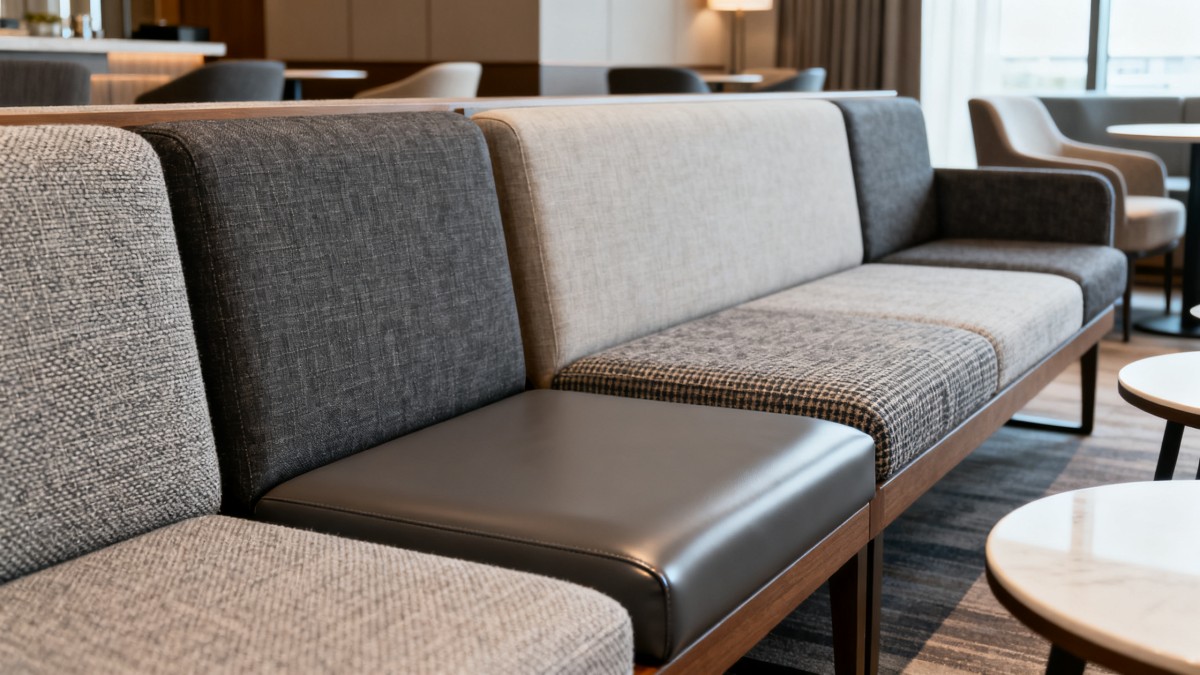
At first glance, upholstery fabrics may seem easy to sort by color, texture, or price per yard. In practice, those indicators reveal very little about how a chair, banquette, or lounge seat will perform after months of heavy use.
A reliable comparison starts with three linked questions. How long will the material hold its appearance? How easily can stains and soil be removed? What does the fabric cost over its full service life, not only at installation?
This approach aligns with the kind of benchmarking used across commercial furniture and fixtures. Platforms such as G-BCE frame material decisions within larger performance systems, where sourcing quality, standards alignment, and operational resilience matter as much as finish selection.
Durability is more than a rub count
Durability is often reduced to abrasion testing, especially double rub figures from Wyzenbeek or Martindale results. Those tests are useful, but they are not a complete forecast of real-world performance.
High-traffic upholstery fabrics should also be checked for seam slippage, pilling resistance, tensile strength, colorfastness, and backing stability. A fabric that survives abrasion can still fail visually if it fuzzes, stretches, or shows uneven wear.
Construction matters as much as fiber content. Woven polyester, vinyl, coated fabrics, olefin blends, wool blends, and performance-treated textiles each behave differently under repeated friction, body oils, sunlight, and cleaning chemicals.
Pattern and surface also influence perceived durability. Textures that hide minor compression or soil can look newer for longer, while smooth, light-colored surfaces may reveal wear earlier even when the base material remains structurally sound.
Key durability checks during specification
- Abrasion rating suitable for the expected traffic level.
- Pilling and snag resistance for public touchpoints.
- Colorfastness to light and cleaning agents.
- Seam performance on tight upholstery forms.
- Fire code and regional compliance requirements.
In other words, durable upholstery fabrics are not simply the toughest materials on paper. They are the ones that stay acceptable in appearance and structure under the exact conditions of the site.
Cleanability has become a frontline decision factor
Cleanability now carries more weight than it once did. Commercial interiors are expected to support faster turnover, stricter hygiene routines, and fewer service disruptions, especially in food service, healthcare-adjacent waiting areas, and high-volume retail seating.
The cleanability of upholstery fabrics depends on both surface behavior and maintenance protocol. Some materials repel spills at first contact. Others absorb slowly but recover well with regular extraction or spot treatment.
Performance finishes can improve stain resistance, but they should be reviewed carefully. A finish may help with coffee, ink, or oil, yet perform poorly after repeated disinfection cycles or aggressive detergents.
Coated fabrics and vinyl alternatives often clean quickly, which is attractive for busy locations. Still, they may create tradeoffs in breathability, hand feel, or long-term cracking if the formulation is weak.
For that reason, cleaning instructions should be treated as specification data, not an afterthought. If the approved cleaning method is unrealistic for site operations, the fabric may underperform even if its lab data looks strong.
Questions worth asking suppliers
- Which stains were tested, and under what dwell time?
- Can the fabric tolerate bleach solutions or hospital-grade disinfectants?
- Does cleaning reduce color depth, coating integrity, or softness?
- Are there field references in comparable commercial settings?
Cost should be measured across the asset lifecycle
Price per meter is the easiest number to compare, but it is often the least useful one. Low upfront cost can lead to early replacement, higher labor, more cleaning intervention, and inconsistent brand presentation across locations.
A more realistic cost model considers installed cost, expected lifespan, cleaning frequency, downtime risk, replacement logistics, and visual retention. This is especially relevant in multi-site programs where even small maintenance differences scale quickly.
The table below shows how upholstery fabrics can shift in value when compared beyond purchase price.
The lowest cost upholstery fabrics are not always the most economical. The right answer usually comes from the fit between performance profile and use intensity.
Different spaces require different tradeoffs
One reason fabric decisions become difficult is that commercial environments rarely behave the same way. A lobby chair, restaurant booth, office focus pod, and fitting-room bench may sit inside one project but demand different priorities.
Front-of-house retail seating often needs strong cleanability and color consistency. Hospitality lounges may place more value on tactile quality and visual depth, while still needing commercial-grade abrasion performance.
Workplace applications usually benefit from upholstery fabrics that balance appearance retention, acoustic softness, and manageable maintenance. In public waiting areas, stain resistance and fast turnover cleaning often move to the top of the list.
This is where cross-sector benchmarking helps. G-BCE’s broader perspective on commercial fixtures, supply chains, and standards makes it easier to compare materials not as isolated samples, but as parts of an operating environment.
A practical way to segment choices
- High-contact, high-cleaning zones: prioritize wipeability and chemical resistance.
- Brand-led customer areas: balance texture, color depth, and wear masking.
- Long-dwell seating: consider comfort, heat buildup, and visual aging.
- Multi-site rollouts: prioritize supply consistency and replacement continuity.
How to judge samples before approval
Sample review should simulate use, not just appearance boards. A fabric memo can look convincing under showroom lighting and still become a weak choice once it faces friction, spills, and cleaning schedules.
It helps to compare upholstery fabrics through a short approval matrix. Rate each option against traffic level, staining risk, cleanability protocol, lead time, compliance documentation, and total installed cost.
Mockups are especially useful when several finishes must work together. Seat fabric, wall color, lighting temperature, and surrounding materials can change how wear becomes visible over time.
Supplier transparency also matters. Reliable partners should provide test data, cleaning guidance, environmental claims, and realistic replenishment timelines. Without those details, fabric comparison remains incomplete.
A short pre-approval checklist
- Verify test methods, not only headline ratings.
- Review maintenance instructions with facility operations.
- Confirm minimum order quantities and dye lot consistency.
- Check whether replacement stock can be secured later.
- Test the fabric under actual site lighting where possible.
Where the next decision should go
The best upholstery fabrics are rarely the most expensive or the most heavily marketed. They are the options that fit the use case, support the cleaning reality of the site, and hold their value over time.
A strong next step is to narrow the field with a simple comparison framework. Define traffic intensity, identify cleaning exposure, set compliance requirements, and model replacement timing before the final finish approval.
That process turns upholstery fabrics from a subjective finish choice into a controlled project variable. In commercial environments, that shift usually leads to fewer surprises, better lifecycle performance, and more consistent outcomes across locations.
When fabric options are reviewed through performance data, operational context, and supply chain clarity, the decision becomes much easier to defend and much more likely to perform as intended.
News Recommendations
 Report: Global Kraft Paper Market Forecast to Reach $20.5 Billion by 2033
![51a6ab95581761cc26f4318be6520c15]()
Aris Katos
Future of Carbide Coatings
 How to verify Zigbee compatibility when sourcing lighting sensors
![51a6ab95581761cc26f4318be6520c15]()
Aris Katos
Future of Carbide Coatings
 How do packaging customization options affect minimum order quantities in Europe?
![51a6ab95581761cc26f4318be6520c15]()
Aris Katos
Future of Carbide Coatings
 Transom to Acquire Cree LED in Commercial Lighting Ownership Change
![51a6ab95581761cc26f4318be6520c15]()
Aris Katos
Future of Carbide Coatings
 How to plan customer flow in commercial design planning
![51a6ab95581761cc26f4318be6520c15]()
Aris Katos
Future of Carbide Coatings
 USTR Urged to Permanently Suspend Fees on China-Linked Ships
![51a6ab95581761cc26f4318be6520c15]()
Aris Katos
Future of Carbide Coatings
 How to choose comparable stores for retail benchmarking
![51a6ab95581761cc26f4318be6520c15]()
Aris Katos
Future of Carbide Coatings
 How does anchoring affect modular building wind load resistance?
![51a6ab95581761cc26f4318be6520c15]()
Aris Katos
Future of Carbide Coatings
 Amazon Raises European FBA Surcharge to 2% in Ten Markets From November 2
![51a6ab95581761cc26f4318be6520c15]()
Aris Katos
Future of Carbide Coatings
 How to verify a BPA-free test report for baby products
![51a6ab95581761cc26f4318be6520c15]()
Aris Katos
Future of Carbide Coatings
 China's Mandatory Classroom Lighting Standard GB 7793-2025 Takes Effect November 1
![51a6ab95581761cc26f4318be6520c15]()
Aris Katos
Future of Carbide Coatings
 How order volume affects the price of wholesale poly mailers
![51a6ab95581761cc26f4318be6520c15]()
Aris Katos
Future of Carbide Coatings
 US Imposes 50% Tariff on Certain Canadian PET Resin Imports
![51a6ab95581761cc26f4318be6520c15]()
Aris Katos
Future of Carbide Coatings
 How to read the maximum ratings in a semiconductor datasheet
![51a6ab95581761cc26f4318be6520c15]()
Aris Katos
Future of Carbide Coatings
 University of Maryland Develops Bio-Based Packaging to Extend Avocado and Cucumber Shelf Life
![51a6ab95581761cc26f4318be6520c15]()
Aris Katos
Future of Carbide Coatings
 How to verify a cookware manufacturer's induction compatibility claims
![51a6ab95581761cc26f4318be6520c15]()
Aris Katos
Future of Carbide Coatings
 Omdia Forecasts 11.6% Annual Growth in LED Display Revenue Through 2030
![51a6ab95581761cc26f4318be6520c15]()
Aris Katos
Future of Carbide Coatings
 How to verify a pulp molding packaging factory's production capacity
![51a6ab95581761cc26f4318be6520c15]()
Aris Katos
Future of Carbide Coatings
 Curion Survey: Half of Consumers Frustrated by Sustainable Packaging
![51a6ab95581761cc26f4318be6520c15]()
Aris Katos
Future of Carbide Coatings
 How to assess the credibility of market insight content
![51a6ab95581761cc26f4318be6520c15]()
Aris Katos
Future of Carbide Coatings
 US Removes 50% Additional Tariff on Selected Canadian Packaging Products
![51a6ab95581761cc26f4318be6520c15]()
Aris Katos
Future of Carbide Coatings
 Will a waterproof dimmable LED driver work with your existing dimmer?
![51a6ab95581761cc26f4318be6520c15]()
Aris Katos
Future of Carbide Coatings
 Charter Next Generation Raises Film PCR Use 30%, Advances Food-Grade Applications
![51a6ab95581761cc26f4318be6520c15]()
Aris Katos
Future of Carbide Coatings
 How to choose a dog harness and leash for a dog that pulls hard
![51a6ab95581761cc26f4318be6520c15]()
Aris Katos
Future of Carbide Coatings
 How to respect local customs when negotiating with overseas suppliers
![51a6ab95581761cc26f4318be6520c15]()
Aris Katos
Future of Carbide Coatings
 RFID Recycling Challenges Bring Paper-Based and Chipless Tags Into Focus
![51a6ab95581761cc26f4318be6520c15]()
Aris Katos
Future of Carbide Coatings
 How to choose commercial lighting for offices that reduces glare
![51a6ab95581761cc26f4318be6520c15]()
Aris Katos
Future of Carbide Coatings
 Queue Launches Fully Automated Robotic Pharmacy Kiosk for 30-Second Dispensing
![51a6ab95581761cc26f4318be6520c15]()
Aris Katos
Future of Carbide Coatings
 Can your supermarket store fixtures supplier meet your opening date?
![51a6ab95581761cc26f4318be6520c15]()
Aris Katos
Future of Carbide Coatings
 Shopify POS UI Extensions 2026-10 Adds Virtual Lists and Custom Row Templates
![51a6ab95581761cc26f4318be6520c15]()
Aris Katos
Future of Carbide Coatings
 How to assess smart office furniture suppliers’ North American support
![51a6ab95581761cc26f4318be6520c15]()
Aris Katos
Future of Carbide Coatings
 Aqara Launches Smart Lighting Range to Advance AI Spatial Intelligence
![51a6ab95581761cc26f4318be6520c15]()
Aris Katos
Future of Carbide Coatings
 How to assess demand forecasts in a lighting intelligence report
![51a6ab95581761cc26f4318be6520c15]()
Aris Katos
Future of Carbide Coatings
 Billerud推出PharmaKraft纤维基医药包装材料
![51a6ab95581761cc26f4318be6520c15]()
Aris Katos
Future of Carbide Coatings
 How to assess supplier reliability in global supply chain sourcing
![51a6ab95581761cc26f4318be6520c15]()
Aris Katos
Future of Carbide Coatings
 Omdia Forecasts 11.6% CAGR for Global LED Video Display Market in 2026–2030
![51a6ab95581761cc26f4318be6520c15]()
Aris Katos
Future of Carbide Coatings
 How to verify an LFGB testing laboratory's accreditation scope
![51a6ab95581761cc26f4318be6520c15]()
Aris Katos
Future of Carbide Coatings
 How to assess a workplace interior supplier's installation scope
![51a6ab95581761cc26f4318be6520c15]()
Aris Katos
Future of Carbide Coatings
 What records are needed for an ISO 9001 furniture factory audit?
![51a6ab95581761cc26f4318be6520c15]()
Aris Katos
Future of Carbide Coatings







































