Retail Integration Solutions: 7 Costly Gaps to Check Before You Scale
Time
Click Count
Retail Integration Solutions: 7 Costly Gaps to Check Before You Scale

Retail integration solutions often look strongest during pilot phases. The real test starts when more stores, channels, and suppliers enter the system.
A setup that works for ten locations can break at one hundred. Small disconnects turn into expensive delays, blind spots, and customer friction.
That is why retail integration solutions should be reviewed as operating infrastructure, not just software deployment. Scale exposes what pilots usually hide.
From recent market shifts, the pattern is clear. Connected stores need data discipline, supply chain visibility, compliant hardware, and durable commercial environments.
For organizations comparing retail integration solutions, the smarter question is not only what features exist. It is where failures will appear first.
Why Retail Integration Solutions Fail During Expansion
Most breakdowns do not begin with one dramatic event. They start with weak links between systems, vendors, store hardware, and reporting structures.
In practical terms, retail integration solutions fail when digital intelligence is added faster than commercial infrastructure can support it.
This matters across store fixtures, POS terminals, lighting controls, packaging data, and sourcing workflows. Every layer affects speed, accuracy, and brand consistency.
G-BCE tracks this issue across commercial furniture, smart retail technology, consumer goods supply chains, commercial lighting, signage, and sustainable packaging.
That broader benchmarking view is useful because expansion rarely fails in one department. It usually fails in the handoff between departments.
Gap 1: Disconnected Data Between Store and Supply Chain
Many retail integration solutions promise a single view of operations. In reality, inventory, sales, returns, and replenishment data often remain loosely connected.
When systems update at different speeds, buyers see one stock level while stores see another. Forecasting quality drops quickly after that.
The cost is larger than stockouts. Margin leaks appear through emergency transfers, markdowns, duplicate safety stock, and poor promotional timing.
Before selecting retail integration solutions, verify how item data, supplier data, and store execution data are synchronized across regions and channels.
- Check update frequency for inventory and order status.
- Review exception handling when data conflicts appear.
- Confirm whether supplier feeds follow shared standards.
Gap 2: Smart Hardware That Does Not Fit the Physical Environment
A common mistake is evaluating retail integration solutions only at the software layer. Physical deployment conditions are often treated as secondary.
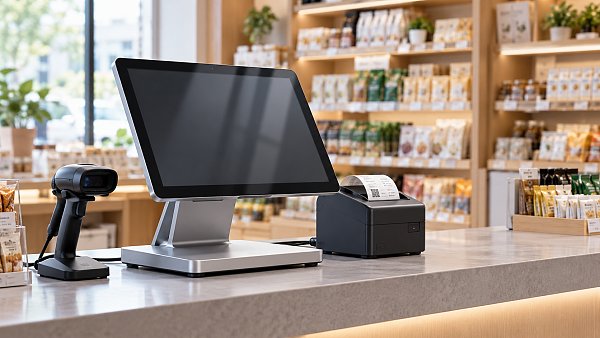
That creates trouble when AI POS terminals, kiosks, sensors, or digital signage are installed into stores with incompatible power layouts or fixture dimensions.
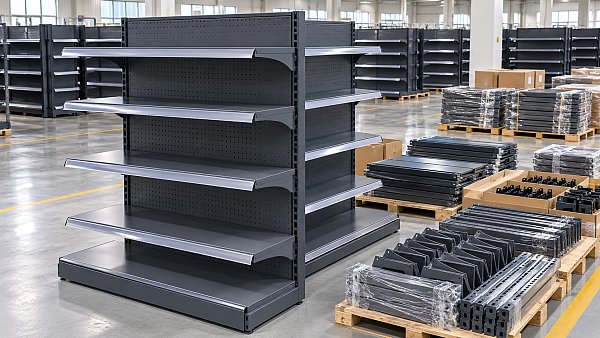
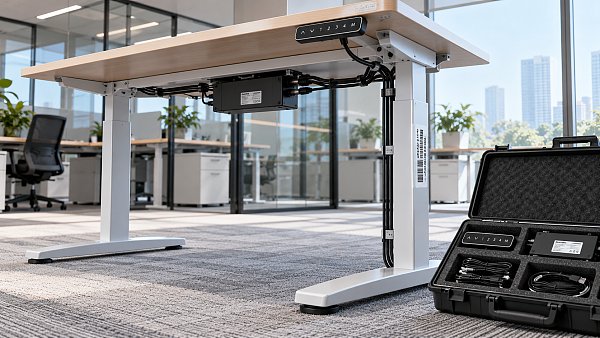
Commercial furniture and fixtures matter here. Poor ergonomics, cable management, mounting tolerances, and service access all affect uptime.
Better retail integration solutions account for hardware fit, maintenance cycles, and traffic patterns before rollout, not after service tickets begin.
- Map hardware requirements against store formats.
- Validate fixture compatibility and technician access.
- Check thermal, electrical, and durability performance.
Gap 3: Weak Standards and Compliance Control
Expansion across markets raises a harder question. Can the chosen retail integration solutions hold up under regional compliance requirements and commercial standards?
This is especially important when hardware, lighting systems, packaging components, and display materials come from multiple manufacturing sources.
Benchmarks such as UL, CE, and BIFMA are not paperwork details. They reduce procurement risk and improve operational predictability.
Retail integration solutions should therefore include compliance visibility, component traceability, and approval workflows that support cross-border execution.
If compliance checks live in separate spreadsheets, the integration strategy is already weaker than it looks.
Gap 4: Incomplete Customer Experience Integration
Retail integration solutions should connect operations and experience at the same time. Many platforms handle transactions well but miss customer journey continuity.
That gap appears when pricing, promotions, loyalty data, or click-and-collect status differ between digital and physical touchpoints.
A shopper may receive a personalized offer online, then encounter inconsistent signage, unavailable stock, or disconnected service tools in store.
This is not only a marketing problem. It signals that the retail integration solutions were not designed around real operating journeys.
- Test price and promotion consistency across channels.
- Audit fulfillment status visibility for staff and customers.
- Align signage, packaging, and service workflows.
Gap 5: Poor Supplier Collaboration and Benchmarking
Scaling retail integration solutions without strong supplier alignment creates hidden volatility. Lead times, quality thresholds, and revision control start drifting apart.
This problem becomes sharper in categories involving custom fixtures, smart devices, branded packaging, and lighting systems sourced from different regions.
Benchmarking is the missing discipline in many sourcing programs. Without shared technical baselines, vendor comparisons stay too subjective.
G-BCE addresses this by linking Asian manufacturing precision with the aesthetic and functional demands of global commercial environments.
That approach helps retail integration solutions move beyond vendor claims toward measurable fit, compliance, and long-term performance.
Gap 6: Sustainability Goals That Are Operationally Isolated
Sustainability is now part of expansion planning, but it often sits outside core integration logic. That separation creates cost and reporting issues later.
For example, sustainable packaging choices may change cube efficiency, labeling processes, return handling, or shelf presentation without being modeled early.
Retail integration solutions should connect environmental targets with sourcing data, product specifications, logistics rules, and store execution.
The stronger signal is this: sustainable decisions become expensive when they are managed as separate initiatives instead of integrated operating choices.
Gap 7: No Clear Decision Framework for Scaling
The final gap is governance. Many organizations invest in retail integration solutions before defining how scale decisions will actually be made.
That leaves technology teams, procurement teams, store development teams, and supply chain leaders using different success metrics.
A stronger approach uses a common scorecard before rollout approval. It should cover performance, compliance, lifecycle cost, supplier readiness, and customer impact.
How to Compare Retail Integration Solutions More Effectively
A better evaluation process starts with operating scenarios, not product demos. Ask vendors to prove performance under store, sourcing, and fulfillment complexity.
- Define the highest-risk scaling scenarios first.
- Map every required system and physical dependency.
- Request benchmark evidence tied to standards and field conditions.
- Score lifecycle cost, not just implementation cost.
- Run a cross-functional review before final selection.
This method makes retail integration solutions easier to compare because it forces operational reality into the selection process.
In most cases, the best option is not the platform with the longest feature list. It is the one with the fewest scaling surprises.
Final Check Before You Commit
Retail integration solutions can absolutely accelerate growth. But only when digital systems, commercial hardware, supplier networks, and store experience evolve together.
The seven gaps above are where scale usually becomes expensive. Each one is visible earlier than most teams expect, if the review framework is strong enough.
Before approving the next rollout phase, pressure-test assumptions across data, standards, sourcing, sustainability, and customer execution.
That is where retail integration solutions stop being a technology purchase and become a durable growth decision.
- commercial furniture
- smart retail
- POS terminals
- supply chain
- consumer goods
- commercial lighting
- signage
- sustainable packaging
- commercial hardware
- retail technology
- manufacturing precision
- commercial environments
- retail integration
- smart retail technology
- commercial furniture and fixtures
- retail integration solutions
- supply chain visibility
News Recommendations
 How to verify Zigbee compatibility when sourcing lighting sensors
![51a6ab95581761cc26f4318be6520c15]()
Aris Katos
Future of Carbide Coatings
 How do packaging customization options affect minimum order quantities in Europe?
![51a6ab95581761cc26f4318be6520c15]()
Aris Katos
Future of Carbide Coatings
 Transom to Acquire Cree LED in Commercial Lighting Ownership Change
![51a6ab95581761cc26f4318be6520c15]()
Aris Katos
Future of Carbide Coatings
 How to plan customer flow in commercial design planning
![51a6ab95581761cc26f4318be6520c15]()
Aris Katos
Future of Carbide Coatings
 USTR Urged to Permanently Suspend Fees on China-Linked Ships
![51a6ab95581761cc26f4318be6520c15]()
Aris Katos
Future of Carbide Coatings
 How to choose comparable stores for retail benchmarking
![51a6ab95581761cc26f4318be6520c15]()
Aris Katos
Future of Carbide Coatings
 How does anchoring affect modular building wind load resistance?
![51a6ab95581761cc26f4318be6520c15]()
Aris Katos
Future of Carbide Coatings
 Amazon Raises European FBA Surcharge to 2% in Ten Markets From November 2
![51a6ab95581761cc26f4318be6520c15]()
Aris Katos
Future of Carbide Coatings
 How to verify a BPA-free test report for baby products
![51a6ab95581761cc26f4318be6520c15]()
Aris Katos
Future of Carbide Coatings
 China's Mandatory Classroom Lighting Standard GB 7793-2025 Takes Effect November 1
![51a6ab95581761cc26f4318be6520c15]()
Aris Katos
Future of Carbide Coatings
 How order volume affects the price of wholesale poly mailers
![51a6ab95581761cc26f4318be6520c15]()
Aris Katos
Future of Carbide Coatings
 US Imposes 50% Tariff on Certain Canadian PET Resin Imports
![51a6ab95581761cc26f4318be6520c15]()
Aris Katos
Future of Carbide Coatings
 How to read the maximum ratings in a semiconductor datasheet
![51a6ab95581761cc26f4318be6520c15]()
Aris Katos
Future of Carbide Coatings
 University of Maryland Develops Bio-Based Packaging to Extend Avocado and Cucumber Shelf Life
![51a6ab95581761cc26f4318be6520c15]()
Aris Katos
Future of Carbide Coatings
 How to verify a cookware manufacturer's induction compatibility claims
![51a6ab95581761cc26f4318be6520c15]()
Aris Katos
Future of Carbide Coatings
 Omdia Forecasts 11.6% Annual Growth in LED Display Revenue Through 2030
![51a6ab95581761cc26f4318be6520c15]()
Aris Katos
Future of Carbide Coatings
 How to verify a pulp molding packaging factory's production capacity
![51a6ab95581761cc26f4318be6520c15]()
Aris Katos
Future of Carbide Coatings
 Curion Survey: Half of Consumers Frustrated by Sustainable Packaging
![51a6ab95581761cc26f4318be6520c15]()
Aris Katos
Future of Carbide Coatings
 How to assess the credibility of market insight content
![51a6ab95581761cc26f4318be6520c15]()
Aris Katos
Future of Carbide Coatings
 US Removes 50% Additional Tariff on Selected Canadian Packaging Products
![51a6ab95581761cc26f4318be6520c15]()
Aris Katos
Future of Carbide Coatings
 Will a waterproof dimmable LED driver work with your existing dimmer?
![51a6ab95581761cc26f4318be6520c15]()
Aris Katos
Future of Carbide Coatings
 Charter Next Generation Raises Film PCR Use 30%, Advances Food-Grade Applications
![51a6ab95581761cc26f4318be6520c15]()
Aris Katos
Future of Carbide Coatings
 How to choose a dog harness and leash for a dog that pulls hard
![51a6ab95581761cc26f4318be6520c15]()
Aris Katos
Future of Carbide Coatings
 How to respect local customs when negotiating with overseas suppliers
![51a6ab95581761cc26f4318be6520c15]()
Aris Katos
Future of Carbide Coatings
 RFID Recycling Challenges Bring Paper-Based and Chipless Tags Into Focus
![51a6ab95581761cc26f4318be6520c15]()
Aris Katos
Future of Carbide Coatings
 How to choose commercial lighting for offices that reduces glare
![51a6ab95581761cc26f4318be6520c15]()
Aris Katos
Future of Carbide Coatings
 Queue Launches Fully Automated Robotic Pharmacy Kiosk for 30-Second Dispensing
![51a6ab95581761cc26f4318be6520c15]()
Aris Katos
Future of Carbide Coatings
 Can your supermarket store fixtures supplier meet your opening date?
![51a6ab95581761cc26f4318be6520c15]()
Aris Katos
Future of Carbide Coatings
 Shopify POS UI Extensions 2026-10 Adds Virtual Lists and Custom Row Templates
![51a6ab95581761cc26f4318be6520c15]()
Aris Katos
Future of Carbide Coatings
 How to assess smart office furniture suppliers’ North American support
![51a6ab95581761cc26f4318be6520c15]()
Aris Katos
Future of Carbide Coatings
 Aqara Launches Smart Lighting Range to Advance AI Spatial Intelligence
![51a6ab95581761cc26f4318be6520c15]()
Aris Katos
Future of Carbide Coatings
 How to assess demand forecasts in a lighting intelligence report
![51a6ab95581761cc26f4318be6520c15]()
Aris Katos
Future of Carbide Coatings
 Billerud推出PharmaKraft纤维基医药包装材料
![51a6ab95581761cc26f4318be6520c15]()
Aris Katos
Future of Carbide Coatings
 How to assess supplier reliability in global supply chain sourcing
![51a6ab95581761cc26f4318be6520c15]()
Aris Katos
Future of Carbide Coatings
 Omdia Forecasts 11.6% CAGR for Global LED Video Display Market in 2026–2030
![51a6ab95581761cc26f4318be6520c15]()
Aris Katos
Future of Carbide Coatings
 How to verify an LFGB testing laboratory's accreditation scope
![51a6ab95581761cc26f4318be6520c15]()
Aris Katos
Future of Carbide Coatings
 How to assess a workplace interior supplier's installation scope
![51a6ab95581761cc26f4318be6520c15]()
Aris Katos
Future of Carbide Coatings
 What records are needed for an ISO 9001 furniture factory audit?
![51a6ab95581761cc26f4318be6520c15]()
Aris Katos
Future of Carbide Coatings
 How to choose AI marketing tools that work with your existing CRM
![51a6ab95581761cc26f4318be6520c15]()
Aris Katos
Future of Carbide Coatings