Cinema Ticketing Kiosk Manufacturer Checklist for Reliable Deployment
Time
Click Count
Cinema Ticketing Kiosk Manufacturer Checklist for Reliable Deployment
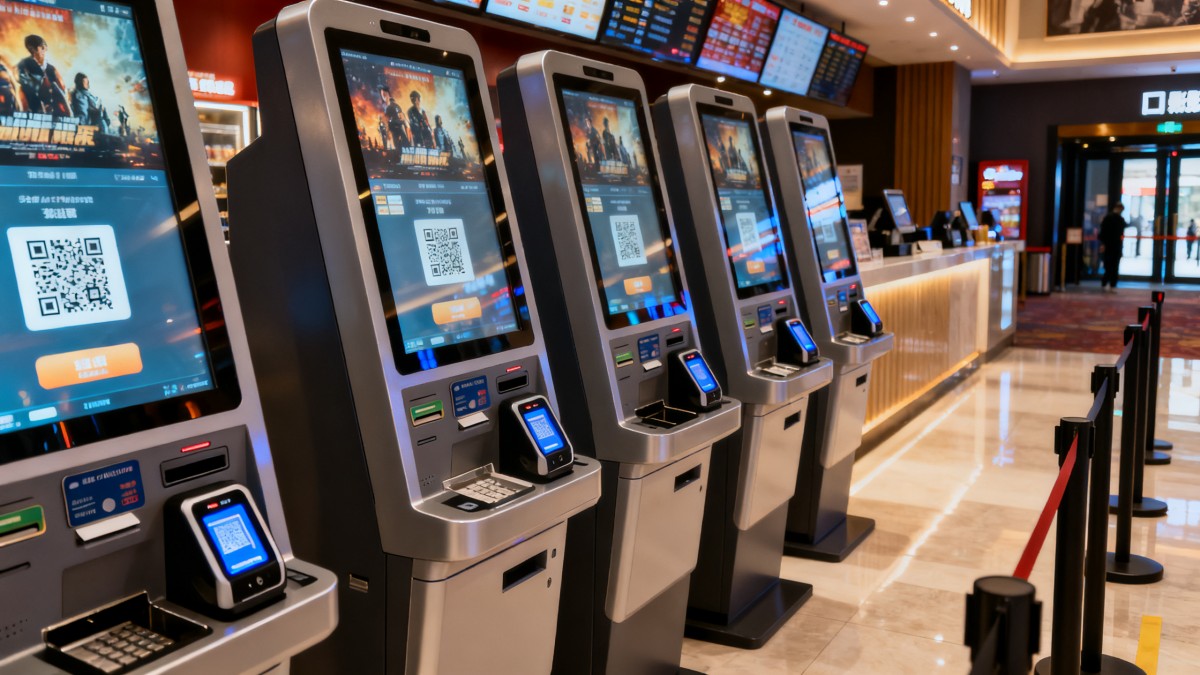
Choosing the right ticketing kiosk manufacturer cinema buyers can trust affects far more than the hardware itself.
It shapes queue speed, payment stability, staffing pressure, and the customer impression at the entrance.
In real projects, a kiosk that looks impressive on paper can still fail during daily peak traffic.
That is why vendor selection needs a practical checklist, not just a price comparison.
A reliable ticketing kiosk manufacturer cinema operators approve should support long operating hours, clean software integration, and predictable service response.
The stronger signal in today’s market is clear.
Cinema kiosk procurement is no longer about buying a screen and a printer.
It is about securing a dependable front-end transaction system for a demanding commercial environment.
Start with Deployment Reality, Not Brochure Claims
Before shortlisting any ticketing kiosk manufacturer cinema teams should map the deployment context first.
A multiplex lobby, boutique cinema, and mixed-use entertainment complex do not share the same risk profile.
Traffic volume, payment behavior, language needs, and staffing models all change the right specification.
Ask each supplier to respond to your actual site conditions.
- Average and peak daily ticket transactions
- Indoor temperature, dust exposure, and cleaning frequency
- Card, mobile wallet, QR, and cash acceptance needs
- Accessibility requirements and multilingual interface demands
- Integration with POS, CRM, loyalty, and seat-mapping systems
This step quickly exposes weak vendors.
A capable ticketing kiosk manufacturer cinema buyers rely on will ask detailed operational questions before proposing a model.
Check the Core Hardware for Commercial Endurance
Hardware durability is the first hard filter.
Cinema kiosks operate in public spaces with repeated touch, long open hours, and frequent cleaning.
The cabinet, screen, printer, scanner, and payment modules must hold up under that routine.
What to verify
- Steel or aluminum enclosure quality and anti-corrosion treatment
- Industrial-grade touchscreen with strong brightness and stable response
- Thermal printer life, jam rate, and cutter durability
- Barcode or QR scanner speed under different ticket media
- EMV-capable payment device compatibility
- Cooling design, cable management, and service access doors
It is worth asking for component brands and replacement cycles.
A serious ticketing kiosk manufacturer cinema projects can depend on should disclose this without hesitation.
If the vendor avoids component transparency, future maintenance costs usually rise.
Evaluate Software Integration as a Business Risk
Many cinema kiosk failures come from software mismatches, not broken hardware.
That makes integration one of the most important checkpoints in ticketing kiosk manufacturer cinema selection.
The kiosk should connect smoothly with ticketing platforms, payment gateways, tax logic, promotions, and reporting tools.
Questions worth asking
- Does the supplier have proven API integration experience with cinema systems?
- Can the kiosk support seat selection, upselling, and loyalty redemption?
- How are software updates tested and deployed across multiple sites?
- What happens when payment, printer, or network modules go offline?
- Is remote monitoring available for status, logs, and failure alerts?
In practice, these details decide whether the kiosk becomes an asset or a support burden.
A strong ticketing kiosk manufacturer cinema buyers shortlist should offer documentation, test protocols, and integration references.
Do Not Treat Compliance as a Paper Exercise
Compliance affects import clearance, site approval, insurance posture, and operational safety.
For that reason, any ticketing kiosk manufacturer cinema buyers review should be checked against target-market standards.
Key areas to confirm
- CE, UL, or equivalent electrical and safety compliance
- EMC test records for public commercial operation
- Payment security alignment, including PCI-related requirements
- Accessibility support for height, readability, and interaction flow
- Material and environmental declarations where required
Ask to see valid certificates tied to the exact configuration you plan to purchase.
Generic claims are not enough.
A reliable ticketing kiosk manufacturer cinema contracts should include formal compliance documentation in the quotation stage.
Measure User Experience in Seconds, Not Concepts
Cinema self-service works only when the journey feels fast and obvious.
Even a technically advanced kiosk can underperform if the interface slows simple purchases.
This is where ticketing kiosk manufacturer cinema comparisons should include live workflow testing.
Benchmark these experience points
- Average taps from home screen to payment confirmation
- Time required for seat map loading
- Clarity of add-on offers like snacks or premium formats
- Error recovery when users change language or payment method
- Receipt, e-ticket, and printed ticket options
Shorter flows usually improve conversion and reduce staff intervention.
That matters during evening peaks, weekend releases, and holiday surges.
Review Service Capacity Before You Review Price
Procurement teams often focus on unit cost first.
Yet the better decision is to assess lifetime support from the ticketing kiosk manufacturer cinema operations will depend on.
Downtime at the entrance directly affects revenue and customer satisfaction.
Look for these support benchmarks
This is often where low-cost suppliers become expensive.
A good ticketing kiosk manufacturer cinema buyers choose should make support measurable, not vague.
Compare Total Cost of Ownership, Not Purchase Price Alone
A smart sourcing decision weighs total cost over three to five years.
This gives a clearer view of the real value offered by a ticketing kiosk manufacturer cinema stakeholders are considering.
Include more than the hardware line item.
- Integration and setup costs
- Software licensing or subscription fees
- Payment device certification costs
- Spare parts and maintenance visits
- Downtime risk and lost transaction value
- Future expansion or retrofit flexibility
From a decision standpoint, the best supplier is rarely the cheapest initial quote.
It is the one that keeps operations stable while lowering avoidable support events.
A Practical Shortlist for Final Supplier Evaluation
When narrowing options, use a final screening checklist.
It helps keep the ticketing kiosk manufacturer cinema review grounded in deployment facts.
- Verify reference projects in comparable cinema environments.
- Request a sample unit or live demonstration with your workflow.
- Confirm hardware brands, certifications, and change control policy.
- Review integration ownership between kiosk vendor and software partners.
- Check spare parts strategy for your region.
- Test service responsiveness before signing.
- Model three-year total cost under realistic usage assumptions.
Reliable deployment starts with disciplined evaluation.
If a ticketing kiosk manufacturer cinema buyers consider can answer these points clearly, the project risk drops fast.
That is the standard worth using when the goal is not just installation, but long-term commercial performance.
News Recommendations
 How energy-efficient design reduces operating costs in retail lighting
![51a6ab95581761cc26f4318be6520c15]()
Aris Katos
Future of Carbide Coatings
 When commercial aluminum storefronts make sense for a retail renovation
![51a6ab95581761cc26f4318be6520c15]()
Aris Katos
Future of Carbide Coatings
 What makes LED lights durable in high-use commercial spaces?
![51a6ab95581761cc26f4318be6520c15]()
Aris Katos
Future of Carbide Coatings
 Which industry categories offer the strongest export potential in Latin America?
![51a6ab95581761cc26f4318be6520c15]()
Aris Katos
Future of Carbide Coatings
 How to choose an ultra bright waterproof window display for storefronts
![51a6ab95581761cc26f4318be6520c15]()
Aris Katos
Future of Carbide Coatings
 How to verify suppliers on a trade portal for global sourcing
![51a6ab95581761cc26f4318be6520c15]()
Aris Katos
Future of Carbide Coatings
 How RoHS requirements should be stated in product specifications
![51a6ab95581761cc26f4318be6520c15]()
Aris Katos
Future of Carbide Coatings
 What affects the lead time for custom retail counter displays?
![51a6ab95581761cc26f4318be6520c15]()
Aris Katos
Future of Carbide Coatings
 What consumer packaging USA importers need to verify before ordering
![51a6ab95581761cc26f4318be6520c15]()
Aris Katos
Future of Carbide Coatings
 How commercial spaces interiors shape customer dwell time
![51a6ab95581761cc26f4318be6520c15]()
Aris Katos
Future of Carbide Coatings
 How LED commercial lighting design reduces glare in retail spaces
![51a6ab95581761cc26f4318be6520c15]()
Aris Katos
Future of Carbide Coatings
 How industrial technology information improves RFID inventory accuracy
![51a6ab95581761cc26f4318be6520c15]()
Aris Katos
Future of Carbide Coatings
 When drip garden watering systems make more sense than sprinklers
![51a6ab95581761cc26f4318be6520c15]()
Aris Katos
Future of Carbide Coatings
 When category comparison improves sourcing for industrial applications
![51a6ab95581761cc26f4318be6520c15]()
Aris Katos
Future of Carbide Coatings
 Industrial application guidance for selecting the right LED lighting
![51a6ab95581761cc26f4318be6520c15]()
Aris Katos
Future of Carbide Coatings
 Which commercial architecture standards apply to European retail fit-outs?
![51a6ab95581761cc26f4318be6520c15]()
Aris Katos
Future of Carbide Coatings
 How to verify FDA requirements for maternity care products
![51a6ab95581761cc26f4318be6520c15]()
Aris Katos
Future of Carbide Coatings
 How to verify BPA-free claims for food-contact products
![51a6ab95581761cc26f4318be6520c15]()
Aris Katos
Future of Carbide Coatings
 When does a European wholesale supplier suit modular office projects?
![51a6ab95581761cc26f4318be6520c15]()
Aris Katos
Future of Carbide Coatings
 When consumer ecosystem solutions improve the in-store shopping journey
![51a6ab95581761cc26f4318be6520c15]()
Aris Katos
Future of Carbide Coatings
 How a commercial developers network can reduce site selection risk
![51a6ab95581761cc26f4318be6520c15]()
Aris Katos
Future of Carbide Coatings
 How clear purchasing specifications prevent costly supplier deviations
![51a6ab95581761cc26f4318be6520c15]()
Aris Katos
Future of Carbide Coatings
 What an ISTA drop test lab checks before your packaging ships
![51a6ab95581761cc26f4318be6520c15]()
Aris Katos
Future of Carbide Coatings
 Which commercial furniture standards apply to workplace seating?
![51a6ab95581761cc26f4318be6520c15]()
Aris Katos
Future of Carbide Coatings
 How to evaluate smart lighting module OEM compatibility before sampling
![51a6ab95581761cc26f4318be6520c15]()
Aris Katos
Future of Carbide Coatings
 How to assess whether sustainable technology delivers real impact
![51a6ab95581761cc26f4318be6520c15]()
Aris Katos
Future of Carbide Coatings
 How to assess an OEM supplier’s quality control before ordering
![51a6ab95581761cc26f4318be6520c15]()
Aris Katos
Future of Carbide Coatings
 How consumer ecosystem solutions data can improve retail personalization
![51a6ab95581761cc26f4318be6520c15]()
Aris Katos
Future of Carbide Coatings
 When does consumer packaging design justify a higher product price?
![51a6ab95581761cc26f4318be6520c15]()
Aris Katos
Future of Carbide Coatings
 Supermarket Fixture Installation: Planning Layouts, Wiring, and Handover
![51a6ab95581761cc26f4318be6520c15]()
Aris Katos
Future of Carbide Coatings
 Automated Lighting and Smart Lighting Control in Bergerac: Key Project Considerations
![51a6ab95581761cc26f4318be6520c15]()
Aris Katos
Future of Carbide Coatings
 Segment Streetlight Controllers: Choosing Control Modes for Urban Roads
![51a6ab95581761cc26f4318be6520c15]()
Aris Katos
Future of Carbide Coatings
 IEC 62471-2 Explained: How to Assess Photobiological Risks in LED Lighting
![51a6ab95581761cc26f4318be6520c15]()
Aris Katos
Future of Carbide Coatings
 Food Grade Packaging Requirements by Product Type, Temperature, and Contact Risk
![51a6ab95581761cc26f4318be6520c15]()
Aris Katos
Future of Carbide Coatings
 Food Packaging Compliance Checklist: Tests, Records, and Labeling Before Shipment
![51a6ab95581761cc26f4318be6520c15]()
Aris Katos
Future of Carbide Coatings
 NSF Food Packaging Standards: When Certification Matters for Commercial Food Use
![51a6ab95581761cc26f4318be6520c15]()
Aris Katos
Future of Carbide Coatings
 FDA Food Grade Compliance: Which Materials and Documents Do Buyers Need?
![51a6ab95581761cc26f4318be6520c15]()
Aris Katos
Future of Carbide Coatings
 What Should a Food Grade Declaration Include for Packaging Compliance?
![51a6ab95581761cc26f4318be6520c15]()
Aris Katos
Future of Carbide Coatings
 Housewares Importing: How to Evaluate Suppliers, Costs, and Compliance Risks
![51a6ab95581761cc26f4318be6520c15]()
Aris Katos
Future of Carbide Coatings