Smart Textiles: Performance, Washability, and Safety Standards
Time
Click Count
Smart textiles now sit at the intersection of materials engineering, connected products, and commercial usability. For evaluation work, the real question is no longer whether a fabric can sense, heat, illuminate, or transmit data. It is whether that function survives repeated use, cleaning cycles, and regulatory scrutiny across retail, workplace, hospitality, healthcare, and consumer settings.
That shift matters across the broader commercial ecosystem. As physical environments absorb more digital intelligence and supply chains face tighter sustainability and compliance demands, textile performance has become a sourcing issue, not just a design detail. In the context of G-BCE, smart textiles are best understood as a benchmark category where manufacturing precision, user experience, and global standards must align.
What smart textiles really include
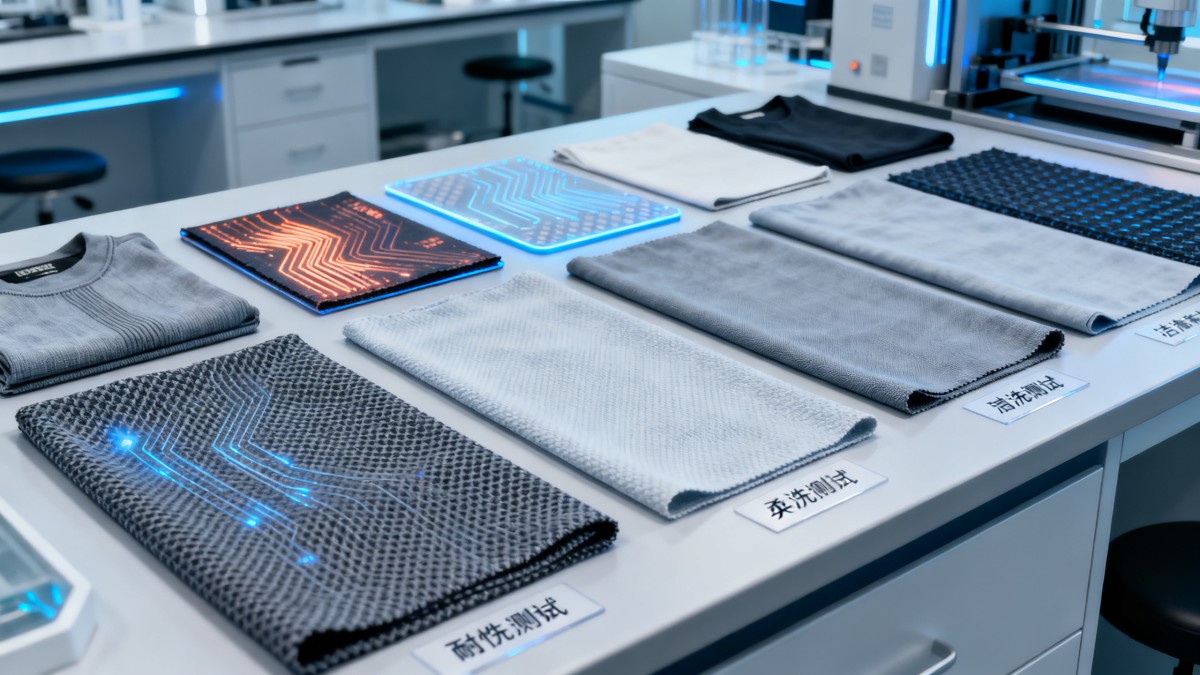
A useful evaluation starts by separating appearance from function. Some smart textiles are passive, using coatings or structures to improve moisture management, thermal response, antimicrobial behavior, or conductivity. Others are active, integrating sensors, power paths, LEDs, heating elements, or communication modules.
The category is broader than wearable gadgets. It includes seating upholstery with occupancy sensing, retail fixtures with illuminated fabric panels, bedding with temperature regulation, automotive interiors, rehabilitation garments, and branded consumer goods that combine tactile quality with embedded performance.
In practice, a smart textile is not judged only by what it does on day one. It is judged by how reliably the textile layer, conductive path, electronics interface, and finishing system work together over time.
Why performance is under closer review
Commercial buyers increasingly expect fabrics to do more without introducing new service problems. A heated panel in a lounge seat, for example, may improve comfort. Yet poor flex endurance, uneven thermal output, or failure after cleaning can erase that value quickly.
This is why smart textiles are receiving more attention in technical benchmarking. They sit inside products that must already meet aesthetic, ergonomic, electrical, and durability expectations. Once intelligence is woven into the material, the textile becomes part of the system risk.
From a cross-sector perspective, that concern mirrors what G-BCE tracks in other categories. Performance claims must translate into measurable outcomes, and those outcomes must remain stable under realistic operating conditions.
Performance means more than one test result
A high-performing textile may look impressive in a lab prototype but still fail in deployment. Evaluation usually works better when performance is broken into layered criteria.
Mechanical and functional stability
Repeated bending, stretching, abrasion, and compression affect conductive yarns, printed circuits, and laminated layers. A stable result requires low signal drift, controlled resistance changes, and intact bonding after cyclical stress.
User-facing consistency
Comfort cannot be treated as secondary. Stiffness, heat concentration, surface roughness, and weight distribution shape adoption in real environments. If a sensor-enabled fabric performs technically but feels intrusive, it will struggle in commercial use.
Environmental resistance
Humidity, sweat, UV exposure, cleaning chemicals, and temperature variation can alter conductive behavior and degrade encapsulation. Smart textiles intended for public spaces need a stronger margin than products used occasionally at home.
Washability is often the turning point
Many promising smart textiles fail not because the concept is weak, but because cleaning protocols were treated too late. Washability is not a cosmetic matter. It directly affects life-cycle cost, hygiene, warranty exposure, and the credibility of performance claims.
For garments and soft consumer goods, laundering is obvious. In commercial interiors, the cleaning challenge is broader. Upholstery may be spot-cleaned, disinfected, steam treated, or exposed to frequent chemical maintenance. Each method interacts differently with coatings, adhesives, conductive traces, and embedded modules.
A credible washability review should examine more than whether the item still powers on. It should look at signal stability, visible wear, dimensional change, corrosion, connector integrity, surface cracking, and thermal behavior after repeated care cycles.
Questions that usually clarify washability claims
- Was the textile tested as a full assembly or only as a material sample?
- How many wash or cleaning cycles were completed before retesting function?
- Did the care process reflect actual market conditions?
- Were performance losses gradual, sudden, or concentrated at connectors?
- Was appearance retention acceptable alongside technical retention?
These questions matter because smart textiles often fail at interfaces. Conductive fibers may remain intact while attachment points, encapsulated components, or stitching paths weaken first.
Safety standards shape market readiness
Safety evaluation depends on the textile’s function, its electrical architecture, and where it will be used. A heated blanket, an illuminated retail panel, and a sensor layer in office seating do not present the same risks or follow the same route to compliance.
Still, several themes appear repeatedly. Electrical safety, flammability, chemical compliance, skin contact safety, and electromagnetic considerations often sit at the center of review. Regional standards and category-specific requirements may differ, but the underlying logic is consistent: the textile must remain safe during normal use, foreseeable misuse, and maintenance.
This is where benchmarking against frameworks such as UL and CE becomes useful. The value is not in displaying a label alone. The value is in tracing whether the product design, material stack, and manufacturing controls genuinely support the declared compliance path.
Safety areas that deserve early review
- Surface temperature limits and hotspot control
- Insulation integrity under flex and moisture exposure
- Flame behavior of base fabric and added components
- Restricted substances in coatings, inks, and adhesives
- Detachment risk for small electronic parts
Where smart textiles create practical value
The strongest applications are usually the ones where the textile format solves a real limitation. Soft integration, distributed sensing, surface-level interaction, and spatial flexibility are the reasons to use smart textiles instead of rigid hardware.
In commercial interiors, they can support adaptive seating, climate-responsive zones, acoustic surfaces with embedded feedback, or branded environments that combine lighting and soft finishes. In consumer product supply chains, they can support wellness wear, connected bedding, travel accessories, and premium packaging elements with traceability or condition sensing.
What matters is fit between the technology and the service environment. A smart function that reduces maintenance visibility, improves comfort data, or supports sustainable product life extension will often justify complexity better than novelty alone.
A practical framework for evaluation
In sourcing and technical comparison, smart textiles are easier to assess when the review moves from claim to evidence. A structured framework also helps compare suppliers working with very different material platforms.
Start with the use case
Define contact frequency, cleaning method, expected lifetime, environmental stress, and acceptable failure mode. A product for a luxury lounge has different tolerances than one for healthcare circulation areas.
Then test the full stack
Evaluate substrate, conductive elements, protective layers, connectors, and control components together. Performance that looks strong in isolated material data may not survive assembly-level testing.
Review documentation quality
Reliable suppliers usually provide traceable care instructions, test conditions, tolerance ranges, and compliance references. Gaps in documentation often point to future uncertainty in deployment.
Balance innovation with maintainability
A simpler smart textile with proven cleaning durability may be a stronger commercial choice than a feature-rich option that needs special handling or frequent replacement.
What to compare before moving forward
Before selecting a direction, it helps to compare smart textiles across a few non-negotiable dimensions. This avoids overvaluing impressive demos and undervaluing operational reliability.
- Function retention after realistic cleaning and aging
- Safety pathway aligned with destination market requirements
- Repairability, replaceability, or modular component access
- Aesthetic stability across production batches
- Supplier transparency on test methods and limitations
For many organizations, the next useful step is not to widen the search, but to narrow the benchmark. Focus on the use conditions that matter most, request assembly-level evidence, and compare smart textiles by retained performance rather than launch-stage features. That approach creates a clearer bridge between material innovation, commercial reliability, and global compliance expectations.
News Recommendations
 What consumer packaging USA importers need to verify before ordering
![51a6ab95581761cc26f4318be6520c15]()
Aris Katos
Future of Carbide Coatings
 How commercial spaces interiors shape customer dwell time
![51a6ab95581761cc26f4318be6520c15]()
Aris Katos
Future of Carbide Coatings
 How LED commercial lighting design reduces glare in retail spaces
![51a6ab95581761cc26f4318be6520c15]()
Aris Katos
Future of Carbide Coatings
 How industrial technology information improves RFID inventory accuracy
![51a6ab95581761cc26f4318be6520c15]()
Aris Katos
Future of Carbide Coatings
 When drip garden watering systems make more sense than sprinklers
![51a6ab95581761cc26f4318be6520c15]()
Aris Katos
Future of Carbide Coatings
 When category comparison improves sourcing for industrial applications
![51a6ab95581761cc26f4318be6520c15]()
Aris Katos
Future of Carbide Coatings
 Industrial application guidance for selecting the right LED lighting
![51a6ab95581761cc26f4318be6520c15]()
Aris Katos
Future of Carbide Coatings
 Which commercial architecture standards apply to European retail fit-outs?
![51a6ab95581761cc26f4318be6520c15]()
Aris Katos
Future of Carbide Coatings
 How to verify FDA requirements for maternity care products
![51a6ab95581761cc26f4318be6520c15]()
Aris Katos
Future of Carbide Coatings
 How to verify BPA-free claims for food-contact products
![51a6ab95581761cc26f4318be6520c15]()
Aris Katos
Future of Carbide Coatings
 When does a European wholesale supplier suit modular office projects?
![51a6ab95581761cc26f4318be6520c15]()
Aris Katos
Future of Carbide Coatings
 When consumer ecosystem solutions improve the in-store shopping journey
![51a6ab95581761cc26f4318be6520c15]()
Aris Katos
Future of Carbide Coatings
 How a commercial developers network can reduce site selection risk
![51a6ab95581761cc26f4318be6520c15]()
Aris Katos
Future of Carbide Coatings
 How clear purchasing specifications prevent costly supplier deviations
![51a6ab95581761cc26f4318be6520c15]()
Aris Katos
Future of Carbide Coatings
 What an ISTA drop test lab checks before your packaging ships
![51a6ab95581761cc26f4318be6520c15]()
Aris Katos
Future of Carbide Coatings
 Which commercial furniture standards apply to workplace seating?
![51a6ab95581761cc26f4318be6520c15]()
Aris Katos
Future of Carbide Coatings
 How to evaluate smart lighting module OEM compatibility before sampling
![51a6ab95581761cc26f4318be6520c15]()
Aris Katos
Future of Carbide Coatings
 How to assess whether sustainable technology delivers real impact
![51a6ab95581761cc26f4318be6520c15]()
Aris Katos
Future of Carbide Coatings
 How to assess an OEM supplier’s quality control before ordering
![51a6ab95581761cc26f4318be6520c15]()
Aris Katos
Future of Carbide Coatings
 How consumer ecosystem solutions data can improve retail personalization
![51a6ab95581761cc26f4318be6520c15]()
Aris Katos
Future of Carbide Coatings
 When does consumer packaging design justify a higher product price?
![51a6ab95581761cc26f4318be6520c15]()
Aris Katos
Future of Carbide Coatings
 Supermarket Fixture Installation: Planning Layouts, Wiring, and Handover
![51a6ab95581761cc26f4318be6520c15]()
Aris Katos
Future of Carbide Coatings
 Automated Lighting and Smart Lighting Control in Bergerac: Key Project Considerations
![51a6ab95581761cc26f4318be6520c15]()
Aris Katos
Future of Carbide Coatings
 Segment Streetlight Controllers: Choosing Control Modes for Urban Roads
![51a6ab95581761cc26f4318be6520c15]()
Aris Katos
Future of Carbide Coatings
 IEC 62471-2 Explained: How to Assess Photobiological Risks in LED Lighting
![51a6ab95581761cc26f4318be6520c15]()
Aris Katos
Future of Carbide Coatings
 Food Grade Packaging Requirements by Product Type, Temperature, and Contact Risk
![51a6ab95581761cc26f4318be6520c15]()
Aris Katos
Future of Carbide Coatings
 Food Packaging Compliance Checklist: Tests, Records, and Labeling Before Shipment
![51a6ab95581761cc26f4318be6520c15]()
Aris Katos
Future of Carbide Coatings
 NSF Food Packaging Standards: When Certification Matters for Commercial Food Use
![51a6ab95581761cc26f4318be6520c15]()
Aris Katos
Future of Carbide Coatings
 FDA Food Grade Compliance: Which Materials and Documents Do Buyers Need?
![51a6ab95581761cc26f4318be6520c15]()
Aris Katos
Future of Carbide Coatings
 What Should a Food Grade Declaration Include for Packaging Compliance?
![51a6ab95581761cc26f4318be6520c15]()
Aris Katos
Future of Carbide Coatings
 Housewares Importing: How to Evaluate Suppliers, Costs, and Compliance Risks
![51a6ab95581761cc26f4318be6520c15]()
Aris Katos
Future of Carbide Coatings
 Why Freeze-Dried Fruit Ingredients Lose Crispness—and How to Prevent It
![51a6ab95581761cc26f4318be6520c15]()
Aris Katos
Future of Carbide Coatings
 What industry veterans look for before choosing a new supplier
![51a6ab95581761cc26f4318be6520c15]()
Aris Katos
Future of Carbide Coatings
 How material fatigue can shorten the service life of retail shelving
![51a6ab95581761cc26f4318be6520c15]()
Aris Katos
Future of Carbide Coatings
 What makes a global sourcing platform reliable for supplier verification?
![51a6ab95581761cc26f4318be6520c15]()
Aris Katos
Future of Carbide Coatings
 When are double platinum spark plugs a better choice than iridium?
![51a6ab95581761cc26f4318be6520c15]()
Aris Katos
Future of Carbide Coatings
 How to assess a POS terminal manufacturer in Europe for long-term support
![51a6ab95581761cc26f4318be6520c15]()
Aris Katos
Future of Carbide Coatings
 How data transparency in retail helps prevent inventory discrepancies
![51a6ab95581761cc26f4318be6520c15]()
Aris Katos
Future of Carbide Coatings
 What makes a product comparison guide actually useful for buying decisions
![51a6ab95581761cc26f4318be6520c15]()
Aris Katos
Future of Carbide Coatings