Industry Forecast 2026: Cost, Demand, and Supply Signals
Time
Click Count
Why the 2026 industry forecast looks more structural than cyclical

The 2026 industry forecast points to a market that is not simply slowing or rebounding. It is being rebuilt around cost discipline, compliance pressure, and more selective demand.
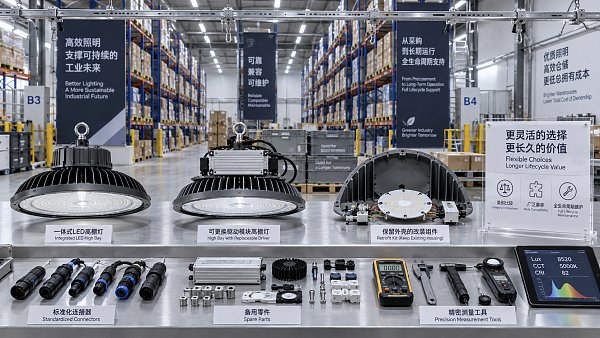
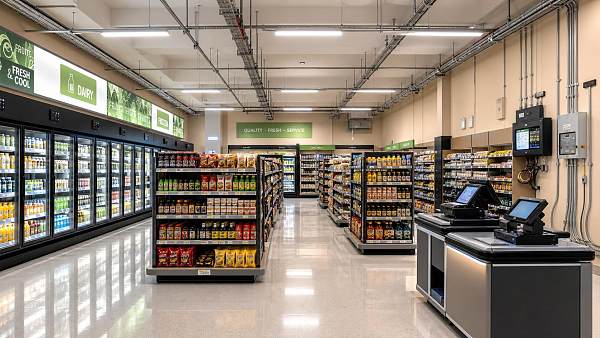
That shift is visible across commercial furniture, smart retail systems, consumer goods sourcing, lighting programs, and sustainable packaging.
What makes this industry forecast especially relevant is the way these sectors now influence one another. A fixture decision affects store energy use, installation lead time, data capture, and packaging waste.
In practical terms, business evaluation now depends on reading connected signals rather than isolated cost lines.
From the recent market pattern, the strongest message is clear. Buyers still want modernization, but they want it with lower risk, faster proof, and clearer lifecycle value.
This is where cross-sector intelligence matters. Platforms such as G-BCE have become useful not because they promise speed alone, but because they connect technical benchmarks, sourcing visibility, and international standards into one decision framework.
Cost pressure is no longer limited to raw materials
Earlier industry forecast models often focused on commodity swings. The 2026 picture is broader.
Costs now build up through certification, design revisions, freight volatility, system integration, and sustainability reporting. In some categories, these hidden layers move faster than core material prices.
Commercial environments show this clearly. A lighting or signage package may appear stable at unit level, yet total project cost rises when local compliance, smart controls, and installation sequencing are added.
The same applies to consumer packaging. Lower-impact materials may reduce long-term waste exposure, but they can introduce short-term testing and conversion expense.
A stronger industry forecast therefore requires a full-cost view. The useful question is no longer what a unit costs today, but what the system costs to qualify, deploy, maintain, and update.
Demand is holding, but it is becoming harder to win
Demand in 2026 is unlikely to disappear across the broader commercial and consumer ecosystem. It is becoming more filtered.
Projects with visible operational payback are moving forward. Projects built mainly on visual novelty are facing deeper scrutiny.
This creates an important divide in the industry forecast. Spending continues, but it flows toward programs that combine durability, measurable efficiency, digital readiness, and environmental credibility.
In retail and commercial interiors, flexible fixtures and ergonomic systems gain attention because they support changing layouts and workforce expectations.
In smart retail technology, buyers increasingly prefer tools that improve data capture, queue flow, or labor visibility without creating major retraining burden.
Packaging demand follows a similar logic. The market rewards formats that improve transport efficiency, shelf presence, and sustainability reporting at the same time.
- Demand favors modular systems over fixed designs with limited upgrade paths.
- Demand favors verified performance over broad marketing claims.
- Demand favors suppliers that can explain compliance and lifecycle data clearly.
- Demand favors sourcing models that reduce disruption across regions.
That is why this industry forecast should not be read as a volume story alone. It is also a quality-of-demand story.
Supply signals are improving, but resilience still matters more than speed
Some supply indicators are stabilizing compared with the disruption of recent years. Lead times in several categories have become more predictable, and multi-country sourcing is more common.
Even so, the 2026 industry forecast does not support complacency. Supply resilience remains uneven by category, especially where electronics, engineered materials, or custom finishes are involved.
A useful signal to watch is not just whether goods can be sourced, but whether they can be sourced to the same specification across markets.
This is where the bridge between Asian manufacturing precision and global commercial requirements becomes more valuable. Stable production capacity matters, but documented consistency matters more.
Benchmarking repositories such as G-BCE help reduce uncertainty because they place technical comparability beside supply chain visibility.
That changes evaluation behavior. Instead of treating sourcing as a final purchasing step, many organizations now bring supply signals into early design and investment review.
The signals worth tracking most closely
- Specification stability across factories and regions.
- Availability of certified components, not just finished assemblies.
- Ability to absorb design changes without resetting lead times.
- Packaging and logistics readiness for lower-waste distribution models.
Why standards and technical proof are moving closer to the center
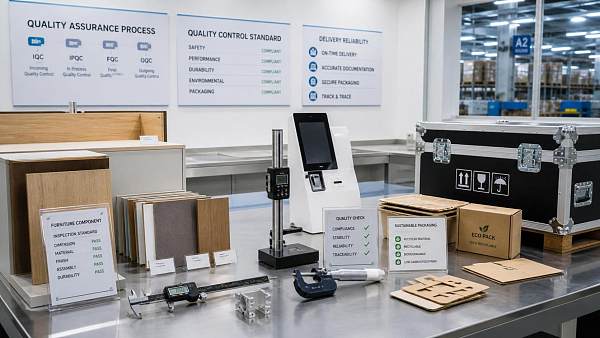
A notable feature of the current industry forecast is the rising value of technical proof. Market confidence is shifting away from generic assurances and toward measurable conformity.
That matters across all five G-BCE pillars. Furniture and fixtures need performance credibility. Smart retail hardware needs interoperability. Lighting and signage require safety and energy alignment. Packaging needs traceable sustainability claims.
More importantly, standards are no longer just a legal checkpoint. They influence brand trust, rollout timing, maintenance cost, and resale or reuse potential.
In real projects, this means a product with a lower entry price can still become the weaker option if its documentation is thin, its compliance path is uncertain, or its upgrade route is unclear.
The industry forecast for 2026 therefore rewards technical transparency. It shortens decision cycles where evidence is strong and slows them where claims are difficult to validate.
Impact spreads across spaces, systems, and sourcing decisions
The effect of these trends is not isolated. It moves across commercial planning, operating models, and investment screening.
For physical spaces, the industry forecast suggests higher demand for assets that can support hybrid usage, phased upgrades, and better energy performance.
For technology, it suggests fewer experimental deployments and more tightly scoped systems with clear business outcomes.
For supply chains, it suggests a stronger preference for traceability, benchmarked quality, and sourcing diversification that does not sacrifice specification control.
For consumer-facing brands, it suggests that aesthetic value alone is no longer enough. Material choices, packaging logic, and compliance posture increasingly shape perceived quality.
This is why the next phase of market evaluation will likely favor integrated scoring models. Cost, demand, supply, and standards now reinforce one another.
How to read the next phase of the industry forecast
The most useful response is not to chase every signal at once. It is to identify which signals can alter project viability within the next planning cycle.
A disciplined reading of the industry forecast starts with a few practical checks.
- Separate visible price changes from hidden implementation costs.
- Test whether demand is driven by image, utility, or compliance.
- Compare supply options by repeatable specification, not only lead time.
- Review whether standards documentation supports cross-market rollout.
- Check whether sustainability claims can survive technical and regulatory review.
From there, it becomes easier to rank opportunity. Some categories will benefit from selective expansion. Others may require redesign, supplier restructuring, or phased investment.
The 2026 industry forecast is less about predicting a single market direction and more about identifying where confidence can still be built.
The strongest next step is to keep watching cost composition, demand quality, and supply consistency together. Then align those findings with technical benchmarks and the standards that shape real deployment.
That approach supports clearer risk judgment, better opportunity comparison, and more resilient planning across the modern commercial and consumer ecosystem.
News Recommendations
 How to verify suppliers on a trade portal for global sourcing
![51a6ab95581761cc26f4318be6520c15]()
Aris Katos
Future of Carbide Coatings
 How RoHS requirements should be stated in product specifications
![51a6ab95581761cc26f4318be6520c15]()
Aris Katos
Future of Carbide Coatings
 What affects the lead time for custom retail counter displays?
![51a6ab95581761cc26f4318be6520c15]()
Aris Katos
Future of Carbide Coatings
 What consumer packaging USA importers need to verify before ordering
![51a6ab95581761cc26f4318be6520c15]()
Aris Katos
Future of Carbide Coatings
 How commercial spaces interiors shape customer dwell time
![51a6ab95581761cc26f4318be6520c15]()
Aris Katos
Future of Carbide Coatings
 How LED commercial lighting design reduces glare in retail spaces
![51a6ab95581761cc26f4318be6520c15]()
Aris Katos
Future of Carbide Coatings
 How industrial technology information improves RFID inventory accuracy
![51a6ab95581761cc26f4318be6520c15]()
Aris Katos
Future of Carbide Coatings
 When drip garden watering systems make more sense than sprinklers
![51a6ab95581761cc26f4318be6520c15]()
Aris Katos
Future of Carbide Coatings
 When category comparison improves sourcing for industrial applications
![51a6ab95581761cc26f4318be6520c15]()
Aris Katos
Future of Carbide Coatings
 Industrial application guidance for selecting the right LED lighting
![51a6ab95581761cc26f4318be6520c15]()
Aris Katos
Future of Carbide Coatings
 Which commercial architecture standards apply to European retail fit-outs?
![51a6ab95581761cc26f4318be6520c15]()
Aris Katos
Future of Carbide Coatings
 How to verify FDA requirements for maternity care products
![51a6ab95581761cc26f4318be6520c15]()
Aris Katos
Future of Carbide Coatings
 How to verify BPA-free claims for food-contact products
![51a6ab95581761cc26f4318be6520c15]()
Aris Katos
Future of Carbide Coatings
 When does a European wholesale supplier suit modular office projects?
![51a6ab95581761cc26f4318be6520c15]()
Aris Katos
Future of Carbide Coatings
 When consumer ecosystem solutions improve the in-store shopping journey
![51a6ab95581761cc26f4318be6520c15]()
Aris Katos
Future of Carbide Coatings
 How a commercial developers network can reduce site selection risk
![51a6ab95581761cc26f4318be6520c15]()
Aris Katos
Future of Carbide Coatings
 How clear purchasing specifications prevent costly supplier deviations
![51a6ab95581761cc26f4318be6520c15]()
Aris Katos
Future of Carbide Coatings
 What an ISTA drop test lab checks before your packaging ships
![51a6ab95581761cc26f4318be6520c15]()
Aris Katos
Future of Carbide Coatings
 Which commercial furniture standards apply to workplace seating?
![51a6ab95581761cc26f4318be6520c15]()
Aris Katos
Future of Carbide Coatings
 How to evaluate smart lighting module OEM compatibility before sampling
![51a6ab95581761cc26f4318be6520c15]()
Aris Katos
Future of Carbide Coatings
 How to assess whether sustainable technology delivers real impact
![51a6ab95581761cc26f4318be6520c15]()
Aris Katos
Future of Carbide Coatings
 How to assess an OEM supplier’s quality control before ordering
![51a6ab95581761cc26f4318be6520c15]()
Aris Katos
Future of Carbide Coatings
 How consumer ecosystem solutions data can improve retail personalization
![51a6ab95581761cc26f4318be6520c15]()
Aris Katos
Future of Carbide Coatings
 When does consumer packaging design justify a higher product price?
![51a6ab95581761cc26f4318be6520c15]()
Aris Katos
Future of Carbide Coatings
 Supermarket Fixture Installation: Planning Layouts, Wiring, and Handover
![51a6ab95581761cc26f4318be6520c15]()
Aris Katos
Future of Carbide Coatings
 Automated Lighting and Smart Lighting Control in Bergerac: Key Project Considerations
![51a6ab95581761cc26f4318be6520c15]()
Aris Katos
Future of Carbide Coatings
 Segment Streetlight Controllers: Choosing Control Modes for Urban Roads
![51a6ab95581761cc26f4318be6520c15]()
Aris Katos
Future of Carbide Coatings
 IEC 62471-2 Explained: How to Assess Photobiological Risks in LED Lighting
![51a6ab95581761cc26f4318be6520c15]()
Aris Katos
Future of Carbide Coatings
 Food Grade Packaging Requirements by Product Type, Temperature, and Contact Risk
![51a6ab95581761cc26f4318be6520c15]()
Aris Katos
Future of Carbide Coatings
 Food Packaging Compliance Checklist: Tests, Records, and Labeling Before Shipment
![51a6ab95581761cc26f4318be6520c15]()
Aris Katos
Future of Carbide Coatings
 NSF Food Packaging Standards: When Certification Matters for Commercial Food Use
![51a6ab95581761cc26f4318be6520c15]()
Aris Katos
Future of Carbide Coatings
 FDA Food Grade Compliance: Which Materials and Documents Do Buyers Need?
![51a6ab95581761cc26f4318be6520c15]()
Aris Katos
Future of Carbide Coatings
 What Should a Food Grade Declaration Include for Packaging Compliance?
![51a6ab95581761cc26f4318be6520c15]()
Aris Katos
Future of Carbide Coatings
 Housewares Importing: How to Evaluate Suppliers, Costs, and Compliance Risks
![51a6ab95581761cc26f4318be6520c15]()
Aris Katos
Future of Carbide Coatings
 Why Freeze-Dried Fruit Ingredients Lose Crispness—and How to Prevent It
![51a6ab95581761cc26f4318be6520c15]()
Aris Katos
Future of Carbide Coatings
 What industry veterans look for before choosing a new supplier
![51a6ab95581761cc26f4318be6520c15]()
Aris Katos
Future of Carbide Coatings
 How material fatigue can shorten the service life of retail shelving
![51a6ab95581761cc26f4318be6520c15]()
Aris Katos
Future of Carbide Coatings
 What makes a global sourcing platform reliable for supplier verification?
![51a6ab95581761cc26f4318be6520c15]()
Aris Katos
Future of Carbide Coatings
 When are double platinum spark plugs a better choice than iridium?
![51a6ab95581761cc26f4318be6520c15]()
Aris Katos
Future of Carbide Coatings