Carbon Steel Angle Bar OEM: Cost, Tolerance, and Lead Time
Time
Click Count
Why does carbon steel angle bar OEM selection matter so much?
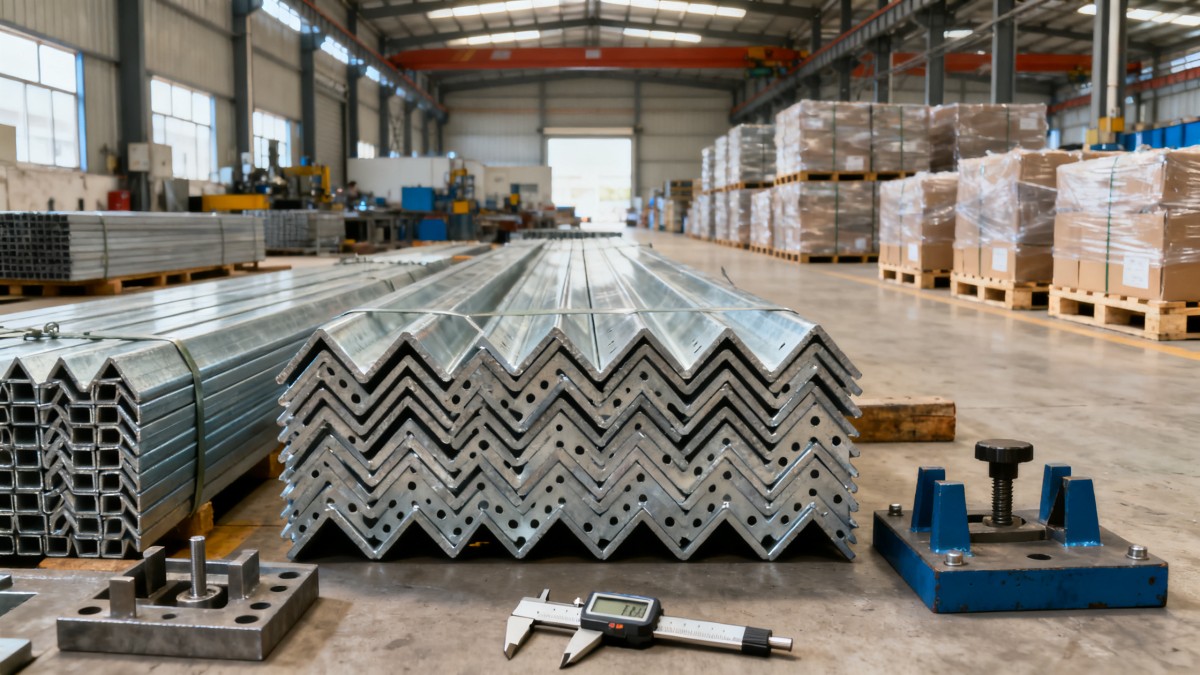
Carbon steel angle bar OEM decisions affect more than unit price.
They influence fabrication fit, coating results, installation speed, and the reliability of later replenishment orders.
That is why cost, tolerance, and lead time usually sit at the center of supplier comparison.
In commercial interiors, retail structures, storage systems, signage frames, and fixture supports, small dimensional errors can multiply downstream.
A low quote loses value fast when hole alignment fails or welding distortion exceeds assembly limits.
The more practical question is not simply who offers the cheapest carbon steel angle bar OEM service.
It is who can maintain stable quality across repeated batches without stretching lead time.
This is especially relevant in global supply chains serving commercial furniture, store fixtures, equipment housings, and structural accessories.
G-BCE often frames sourcing around measurable benchmarks rather than brochure claims.
That approach helps teams compare Asian manufacturing precision against international performance expectations in real operating environments.
What actually drives carbon steel angle bar OEM cost?
Price usually starts with steel grade, section size, thickness, and order volume.
Yet the final carbon steel angle bar OEM cost often rises because of secondary processes, not raw material alone.
Punching, slotting, drilling, miter cutting, deburring, galvanizing, and powder coating all change the cost structure.
Packaging requirements also matter.
Export cartons, rust prevention, pallet layout, and mixed-SKU labeling can add meaningful overhead.
More importantly, very low offers may hide unstable scrap rates or weak process control.
That risk appears later as rework, claims, or delayed site installation.
A clearer way to compare quotes is to separate visible and hidden cost elements.
When reviewing a carbon steel angle bar OEM quote, ask for a process-level breakdown.
That makes supplier differences easier to understand and harder to disguise.
How tight should tolerance be for real projects?
Tolerance should match the application, not a generic promise.
For basic structural bracing, standard mill tolerance may be acceptable.
For retail fixtures, modular frames, equipment supports, or visible assemblies, tighter control often becomes necessary.
The common mistake is asking for strict tolerance everywhere.
That increases cost without improving the final result.
A better method is to define critical-to-fit dimensions first.
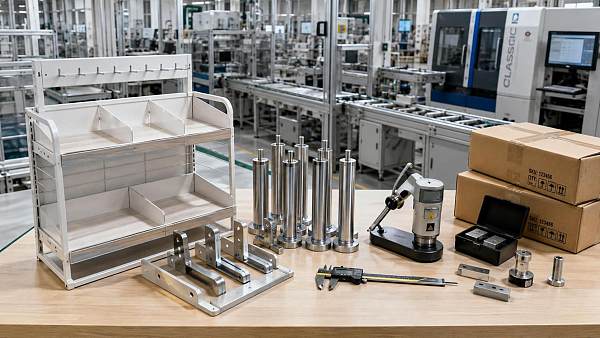
These often include leg length, thickness, length cut accuracy, twist, straightness, and hole location.
If the part connects to laser-cut plates or predrilled assemblies, positional tolerance becomes more important than cosmetic edge variation.
In practice, reliable carbon steel angle bar OEM partners will confirm measuring methods, inspection frequency, and batch traceability.
They should also clarify whether tolerance is based on raw profile supply or post-processing output.
- Use drawings with datum references for hole patterns and cut lengths.
- Identify visible surfaces if coating quality matters.
- Request first-article approval before mass production.
- Set acceptance rules for critical and non-critical dimensions separately.
This reduces arguments later and keeps the carbon steel angle bar OEM program commercially realistic.
Lead time looks simple on paper, so where do delays usually start?
Most delays begin before production starts.
Incomplete drawings, unclear finish specifications, and slow sample sign-off can easily consume a week or more.
After that, steel availability, tooling queue, galvanizing capacity, and shipping consolidation become the main variables.
A supplier may quote a short factory cycle but ignore outside finishing bottlenecks.
That is why a true carbon steel angle bar OEM lead time should be split into stages.
A practical lead time breakdown
- Engineering review: drawing confirmation, tolerances, finish notes, packaging details.
- Material preparation: steel sourcing, incoming inspection, cutting plan.
- Fabrication: sawing, punching, drilling, welding, deburring.
- Surface treatment: galvanizing or coating queue and curing time.
- Final inspection and packing: dimension check, label control, palletization.
- Outbound logistics: booking, customs documents, port transfer.
When a supplier can explain each stage clearly, the schedule usually proves more dependable.
This matters in sectors connected to store rollout, fixture refresh, and multi-site construction where timing affects several linked trades.
G-BCE’s cross-sector lens is useful here because component lead time should be judged within the wider project chain, not in isolation.
How can one quote be cheaper, yet still create more total risk?
This happens when the quote excludes control points that matter later.
For example, a lower-priced carbon steel angle bar OEM supplier may use broader tolerance bands, thinner coating, or mixed-source steel.
Those choices might not be obvious in a spreadsheet.
They become obvious when batches assemble poorly or rust appears earlier than expected.
A useful comparison is to score suppliers on operational fit, not just piece price.
The cheaper quote is not automatically wrong.
It simply needs more technical scrutiny before it becomes the safer choice.
What should be confirmed before placing a carbon steel angle bar OEM order?
This is where many sourcing problems can still be prevented.
Before release, confirm the commercial terms and the production assumptions behind them.
That includes revision-controlled drawings, steel grade, finish standard, inspection plan, packing method, and shipment split if partial delivery is possible.
It also helps to define what happens if a dimension falls outside tolerance.
Without that agreement, corrective action becomes slow and expensive.
A short pre-order checklist
- Confirm the latest drawing revision and issue date.
- Match tolerance notes to the actual assembly requirement.
- Approve finish samples if appearance is visible in use.
- Request first-article photos or reports for custom parts.
- Align incoterms, packaging labels, and pallet limits.
- Clarify buffer time for coating, inspection, and shipment booking.
For multi-country programs, it is wise to compare suppliers through benchmark-style criteria.
That discipline reflects the G-BCE approach of linking technical detail with wider supply chain resilience.
In the end, a strong carbon steel angle bar OEM partner is not defined by a quote alone.
The better signal is consistent execution across cost transparency, tolerance discipline, and realistic lead time control.
If the next step is supplier comparison, start by ranking critical dimensions, processing steps, and delivery milestones.
That makes discussions clearer, reduces sourcing risk, and leads to decisions grounded in measurable fit rather than assumptions.
News Recommendations
 What consumer packaging USA importers need to verify before ordering
![51a6ab95581761cc26f4318be6520c15]()
Aris Katos
Future of Carbide Coatings
 How commercial spaces interiors shape customer dwell time
![51a6ab95581761cc26f4318be6520c15]()
Aris Katos
Future of Carbide Coatings
 How LED commercial lighting design reduces glare in retail spaces
![51a6ab95581761cc26f4318be6520c15]()
Aris Katos
Future of Carbide Coatings
 How industrial technology information improves RFID inventory accuracy
![51a6ab95581761cc26f4318be6520c15]()
Aris Katos
Future of Carbide Coatings
 When drip garden watering systems make more sense than sprinklers
![51a6ab95581761cc26f4318be6520c15]()
Aris Katos
Future of Carbide Coatings
 When category comparison improves sourcing for industrial applications
![51a6ab95581761cc26f4318be6520c15]()
Aris Katos
Future of Carbide Coatings
 Industrial application guidance for selecting the right LED lighting
![51a6ab95581761cc26f4318be6520c15]()
Aris Katos
Future of Carbide Coatings
 Which commercial architecture standards apply to European retail fit-outs?
![51a6ab95581761cc26f4318be6520c15]()
Aris Katos
Future of Carbide Coatings
 How to verify FDA requirements for maternity care products
![51a6ab95581761cc26f4318be6520c15]()
Aris Katos
Future of Carbide Coatings
 How to verify BPA-free claims for food-contact products
![51a6ab95581761cc26f4318be6520c15]()
Aris Katos
Future of Carbide Coatings
 When does a European wholesale supplier suit modular office projects?
![51a6ab95581761cc26f4318be6520c15]()
Aris Katos
Future of Carbide Coatings
 When consumer ecosystem solutions improve the in-store shopping journey
![51a6ab95581761cc26f4318be6520c15]()
Aris Katos
Future of Carbide Coatings
 How a commercial developers network can reduce site selection risk
![51a6ab95581761cc26f4318be6520c15]()
Aris Katos
Future of Carbide Coatings
 How clear purchasing specifications prevent costly supplier deviations
![51a6ab95581761cc26f4318be6520c15]()
Aris Katos
Future of Carbide Coatings
 What an ISTA drop test lab checks before your packaging ships
![51a6ab95581761cc26f4318be6520c15]()
Aris Katos
Future of Carbide Coatings
 Which commercial furniture standards apply to workplace seating?
![51a6ab95581761cc26f4318be6520c15]()
Aris Katos
Future of Carbide Coatings
 How to evaluate smart lighting module OEM compatibility before sampling
![51a6ab95581761cc26f4318be6520c15]()
Aris Katos
Future of Carbide Coatings
 How to assess whether sustainable technology delivers real impact
![51a6ab95581761cc26f4318be6520c15]()
Aris Katos
Future of Carbide Coatings
 How to assess an OEM supplier’s quality control before ordering
![51a6ab95581761cc26f4318be6520c15]()
Aris Katos
Future of Carbide Coatings
 How consumer ecosystem solutions data can improve retail personalization
![51a6ab95581761cc26f4318be6520c15]()
Aris Katos
Future of Carbide Coatings
 When does consumer packaging design justify a higher product price?
![51a6ab95581761cc26f4318be6520c15]()
Aris Katos
Future of Carbide Coatings
 Supermarket Fixture Installation: Planning Layouts, Wiring, and Handover
![51a6ab95581761cc26f4318be6520c15]()
Aris Katos
Future of Carbide Coatings
 Automated Lighting and Smart Lighting Control in Bergerac: Key Project Considerations
![51a6ab95581761cc26f4318be6520c15]()
Aris Katos
Future of Carbide Coatings
 Segment Streetlight Controllers: Choosing Control Modes for Urban Roads
![51a6ab95581761cc26f4318be6520c15]()
Aris Katos
Future of Carbide Coatings
 IEC 62471-2 Explained: How to Assess Photobiological Risks in LED Lighting
![51a6ab95581761cc26f4318be6520c15]()
Aris Katos
Future of Carbide Coatings
 Food Grade Packaging Requirements by Product Type, Temperature, and Contact Risk
![51a6ab95581761cc26f4318be6520c15]()
Aris Katos
Future of Carbide Coatings
 Food Packaging Compliance Checklist: Tests, Records, and Labeling Before Shipment
![51a6ab95581761cc26f4318be6520c15]()
Aris Katos
Future of Carbide Coatings
 NSF Food Packaging Standards: When Certification Matters for Commercial Food Use
![51a6ab95581761cc26f4318be6520c15]()
Aris Katos
Future of Carbide Coatings
 FDA Food Grade Compliance: Which Materials and Documents Do Buyers Need?
![51a6ab95581761cc26f4318be6520c15]()
Aris Katos
Future of Carbide Coatings
 What Should a Food Grade Declaration Include for Packaging Compliance?
![51a6ab95581761cc26f4318be6520c15]()
Aris Katos
Future of Carbide Coatings
 Housewares Importing: How to Evaluate Suppliers, Costs, and Compliance Risks
![51a6ab95581761cc26f4318be6520c15]()
Aris Katos
Future of Carbide Coatings
 Why Freeze-Dried Fruit Ingredients Lose Crispness—and How to Prevent It
![51a6ab95581761cc26f4318be6520c15]()
Aris Katos
Future of Carbide Coatings
 What industry veterans look for before choosing a new supplier
![51a6ab95581761cc26f4318be6520c15]()
Aris Katos
Future of Carbide Coatings
 How material fatigue can shorten the service life of retail shelving
![51a6ab95581761cc26f4318be6520c15]()
Aris Katos
Future of Carbide Coatings
 What makes a global sourcing platform reliable for supplier verification?
![51a6ab95581761cc26f4318be6520c15]()
Aris Katos
Future of Carbide Coatings
 When are double platinum spark plugs a better choice than iridium?
![51a6ab95581761cc26f4318be6520c15]()
Aris Katos
Future of Carbide Coatings
 How to assess a POS terminal manufacturer in Europe for long-term support
![51a6ab95581761cc26f4318be6520c15]()
Aris Katos
Future of Carbide Coatings
 How data transparency in retail helps prevent inventory discrepancies
![51a6ab95581761cc26f4318be6520c15]()
Aris Katos
Future of Carbide Coatings
 What makes a product comparison guide actually useful for buying decisions
![51a6ab95581761cc26f4318be6520c15]()
Aris Katos
Future of Carbide Coatings