What to Check Before Choosing a Streetwear Distributor
Time
Click Count
What to Check Before Choosing a Streetwear Distributor
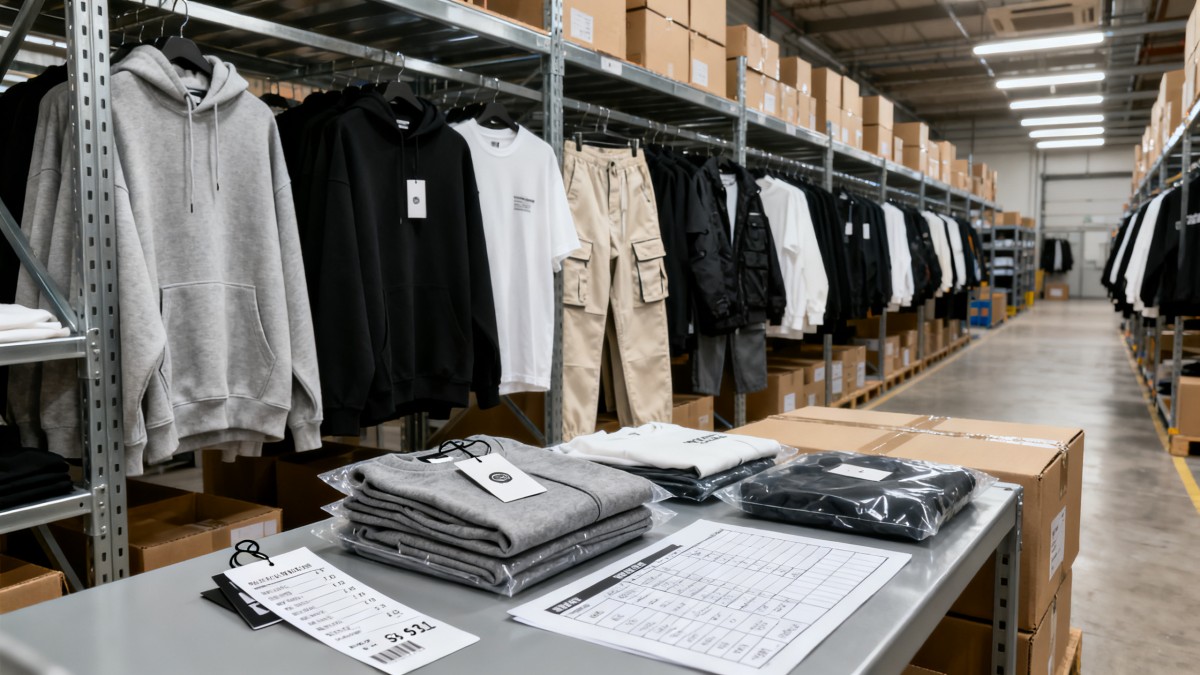
Choosing the right streetwear distributor can shape growth, cash flow, and market speed. A weak partner often creates delays, uneven stock, and damaged brand positioning.
That is why distributor selection should go beyond quotes. A reliable streetwear distributor must support demand planning, product quality, compliance, and long-term channel performance.
In practice, the best decision comes from checking operational depth. You need proof of consistency, not just promises during early discussions.
The streetwear market moves quickly. New drops, micro trends, and social-led demand can pressure even an experienced streetwear distributor.
This guide covers the main checkpoints before choosing a streetwear distributor, with a focus on risk control, sourcing efficiency, and scalable channel execution.
Start with Category Fit and Market Understanding
Not every apparel supplier understands streetwear. This matters because streetwear depends on timing, subculture relevance, and product storytelling.
A capable streetwear distributor should know the difference between basics and hype-driven lines. They should also understand seasonal capsules, graphic programs, and limited-run launches.
Ask how they segment their portfolio. If they treat all casual apparel the same, that is usually a warning sign.
Look for evidence in these areas:
- Experience with oversized tees, hoodies, cargos, varsity jackets, and street-led accessories.
- Understanding of trend cycles, color directions, and drop-based inventory planning.
- Ability to support both evergreen SKUs and short-life seasonal items.
- Knowledge of regional streetwear preferences across North America, Europe, and Asia.
A streetwear distributor with category fit usually gives sharper recommendations. They can also reduce overbuying on items that look good in samples but fail in real sell-through.
Check Supply Chain Stability Before You Compare Prices
Price matters, but supply chain reliability matters more. A low-cost streetwear distributor can become expensive when shipments slip or replenishment fails.
Recent market changes make this even more important. Fabric volatility, freight disruptions, and factory concentration can affect delivery windows without much warning.
Ask direct questions about sourcing structure. You want visibility into how products move from material procurement to final shipment.
- Where are key factories located, and are there backup production sites?
- Which fabrics are stocked, and which are made to order?
- What are average lead times for repeat orders and new developments?
- How do they handle sudden volume spikes or urgent replenishment requests?
A professional streetwear distributor should provide realistic lead times, not optimistic guesses. Clear capacity planning usually signals a healthier operation.
This is also where business continuity matters. If one mill, trim source, or factory goes offline, the distributor should already have alternatives.
Review Product Quality and Consistency in Detail
Streetwear buyers often notice details fast. Fabric hand feel, print durability, fit balance, and stitching quality all affect repeat orders.
A good streetwear distributor should show consistency across batches. One strong sample does not prove stable production.
Request a full quality review process, including inspection points and defect thresholds. Better partners are usually transparent here.
- Fabric weight tolerance and shrinkage control.
- Colorfastness for garment dye, washed effects, and prints.
- Seam strength, rib recovery, and zipper or hardware durability.
- Size grading consistency across production runs.
- Packaging quality to protect presentation during transit.
In real sourcing situations, size inconsistency creates costly returns. So does print cracking after limited wear.
If the streetwear distributor cannot provide past inspection records, test results, or clear sample revision history, proceed carefully.
Verify Compliance, Labeling, and Documentation Readiness
Compliance is often ignored until goods are blocked, relabeled, or rejected. That delay can damage launch timing and margins.
A reliable streetwear distributor should understand destination-market rules. This includes fiber content labeling, care instructions, country-of-origin rules, and relevant chemical restrictions.
For some programs, buyers may also ask for testing related to REACH, CPSIA, or other applicable standards. The exact requirement depends on market and product type.
Check whether the distributor can support:
- Label approval before mass production.
- Barcode, carton mark, and packing list accuracy.
- Testing coordination with third-party labs.
- Complete shipping and customs documentation.
This checkpoint may seem administrative, but it directly affects launch reliability. A prepared streetwear distributor saves time before problems escalate.
Assess Logistics Capability and Delivery Performance
Streetwear distribution depends on timing. Missing a seasonal window can reduce demand, force markdowns, or hurt relationships with retail channels.
This means delivery performance should be measured, not assumed. The right streetwear distributor should track on-time shipment rates and order accuracy.
A strong streetwear distributor should also communicate quickly when delays appear. Early warning is often more valuable than silence followed by excuses.
Look at Data Visibility and Forecast Collaboration
A modern streetwear distributor should not operate blindly. Better partners use data to improve replenishment, reduce dead stock, and support smarter launch timing.
This is becoming more important as demand gets less predictable. Social media spikes can push a style from slow to sold out in days.
Ask what information they can share regularly. Even simple reporting can improve decisions across buying and inventory teams.
- Stock status by SKU and color.
- Production milestone updates.
- Sales trend feedback by region or channel.
- Suggested reorder points for core items.
A streetwear distributor that works collaboratively becomes more than a vendor. They help reduce risk while improving speed to market.
Measure Brand Alignment and Commercial Flexibility
Commercial fit matters just as much as operational fit. The right streetwear distributor should match your product positioning, customer tier, and channel strategy.
For example, a distributor built for mass volume may struggle with premium storytelling. A boutique-focused operator may not scale for wider regional coverage.
Review their flexibility on business terms as well. This includes MOQs, payment terms, sample development, exclusivity boundaries, and launch support.
Useful questions include:
- Can the streetwear distributor support phased expansion by market?
- Are they open to pilot orders before annual commitments?
- How do they manage channel conflict or territory overlap?
- Can they adapt packaging or labeling for different retail partners?
More often than not, long-term success depends on flexibility. Streetwear demand is dynamic, so rigid terms can create unnecessary pressure.
Use a Practical Evaluation Framework Before Signing
Before choosing a streetwear distributor, score each candidate against the same decision criteria. This keeps emotion and sales language from shaping the final call.
A simple evaluation framework may include category expertise, supply stability, quality control, compliance support, logistics strength, reporting transparency, and commercial fit.
You can also request a trial program. A pilot order often reveals more than a polished presentation ever will.
- Test communication speed.
- Review sample accuracy versus production output.
- Measure adherence to timeline commitments.
- Track claim handling if minor issues appear.
Choosing a streetwear distributor is ultimately a risk decision as much as a sourcing decision. The best partner protects quality, timing, and commercial credibility at the same time.
If you evaluate each streetwear distributor through that lens, the final choice becomes clearer, more practical, and far more scalable.
News Recommendations
 What consumer packaging USA importers need to verify before ordering
![51a6ab95581761cc26f4318be6520c15]()
Aris Katos
Future of Carbide Coatings
 How commercial spaces interiors shape customer dwell time
![51a6ab95581761cc26f4318be6520c15]()
Aris Katos
Future of Carbide Coatings
 How LED commercial lighting design reduces glare in retail spaces
![51a6ab95581761cc26f4318be6520c15]()
Aris Katos
Future of Carbide Coatings
 How industrial technology information improves RFID inventory accuracy
![51a6ab95581761cc26f4318be6520c15]()
Aris Katos
Future of Carbide Coatings
 When drip garden watering systems make more sense than sprinklers
![51a6ab95581761cc26f4318be6520c15]()
Aris Katos
Future of Carbide Coatings
 When category comparison improves sourcing for industrial applications
![51a6ab95581761cc26f4318be6520c15]()
Aris Katos
Future of Carbide Coatings
 Industrial application guidance for selecting the right LED lighting
![51a6ab95581761cc26f4318be6520c15]()
Aris Katos
Future of Carbide Coatings
 Which commercial architecture standards apply to European retail fit-outs?
![51a6ab95581761cc26f4318be6520c15]()
Aris Katos
Future of Carbide Coatings
 How to verify FDA requirements for maternity care products
![51a6ab95581761cc26f4318be6520c15]()
Aris Katos
Future of Carbide Coatings
 How to verify BPA-free claims for food-contact products
![51a6ab95581761cc26f4318be6520c15]()
Aris Katos
Future of Carbide Coatings
 When does a European wholesale supplier suit modular office projects?
![51a6ab95581761cc26f4318be6520c15]()
Aris Katos
Future of Carbide Coatings
 When consumer ecosystem solutions improve the in-store shopping journey
![51a6ab95581761cc26f4318be6520c15]()
Aris Katos
Future of Carbide Coatings
 How a commercial developers network can reduce site selection risk
![51a6ab95581761cc26f4318be6520c15]()
Aris Katos
Future of Carbide Coatings
 How clear purchasing specifications prevent costly supplier deviations
![51a6ab95581761cc26f4318be6520c15]()
Aris Katos
Future of Carbide Coatings
 What an ISTA drop test lab checks before your packaging ships
![51a6ab95581761cc26f4318be6520c15]()
Aris Katos
Future of Carbide Coatings
 Which commercial furniture standards apply to workplace seating?
![51a6ab95581761cc26f4318be6520c15]()
Aris Katos
Future of Carbide Coatings
 How to evaluate smart lighting module OEM compatibility before sampling
![51a6ab95581761cc26f4318be6520c15]()
Aris Katos
Future of Carbide Coatings
 How to assess whether sustainable technology delivers real impact
![51a6ab95581761cc26f4318be6520c15]()
Aris Katos
Future of Carbide Coatings
 How to assess an OEM supplier’s quality control before ordering
![51a6ab95581761cc26f4318be6520c15]()
Aris Katos
Future of Carbide Coatings
 How consumer ecosystem solutions data can improve retail personalization
![51a6ab95581761cc26f4318be6520c15]()
Aris Katos
Future of Carbide Coatings
 When does consumer packaging design justify a higher product price?
![51a6ab95581761cc26f4318be6520c15]()
Aris Katos
Future of Carbide Coatings
 Supermarket Fixture Installation: Planning Layouts, Wiring, and Handover
![51a6ab95581761cc26f4318be6520c15]()
Aris Katos
Future of Carbide Coatings
 Automated Lighting and Smart Lighting Control in Bergerac: Key Project Considerations
![51a6ab95581761cc26f4318be6520c15]()
Aris Katos
Future of Carbide Coatings
 Segment Streetlight Controllers: Choosing Control Modes for Urban Roads
![51a6ab95581761cc26f4318be6520c15]()
Aris Katos
Future of Carbide Coatings
 IEC 62471-2 Explained: How to Assess Photobiological Risks in LED Lighting
![51a6ab95581761cc26f4318be6520c15]()
Aris Katos
Future of Carbide Coatings
 Food Grade Packaging Requirements by Product Type, Temperature, and Contact Risk
![51a6ab95581761cc26f4318be6520c15]()
Aris Katos
Future of Carbide Coatings
 Food Packaging Compliance Checklist: Tests, Records, and Labeling Before Shipment
![51a6ab95581761cc26f4318be6520c15]()
Aris Katos
Future of Carbide Coatings
 NSF Food Packaging Standards: When Certification Matters for Commercial Food Use
![51a6ab95581761cc26f4318be6520c15]()
Aris Katos
Future of Carbide Coatings
 FDA Food Grade Compliance: Which Materials and Documents Do Buyers Need?
![51a6ab95581761cc26f4318be6520c15]()
Aris Katos
Future of Carbide Coatings
 What Should a Food Grade Declaration Include for Packaging Compliance?
![51a6ab95581761cc26f4318be6520c15]()
Aris Katos
Future of Carbide Coatings
 Housewares Importing: How to Evaluate Suppliers, Costs, and Compliance Risks
![51a6ab95581761cc26f4318be6520c15]()
Aris Katos
Future of Carbide Coatings
 Why Freeze-Dried Fruit Ingredients Lose Crispness—and How to Prevent It
![51a6ab95581761cc26f4318be6520c15]()
Aris Katos
Future of Carbide Coatings
 What industry veterans look for before choosing a new supplier
![51a6ab95581761cc26f4318be6520c15]()
Aris Katos
Future of Carbide Coatings
 How material fatigue can shorten the service life of retail shelving
![51a6ab95581761cc26f4318be6520c15]()
Aris Katos
Future of Carbide Coatings
 What makes a global sourcing platform reliable for supplier verification?
![51a6ab95581761cc26f4318be6520c15]()
Aris Katos
Future of Carbide Coatings
 When are double platinum spark plugs a better choice than iridium?
![51a6ab95581761cc26f4318be6520c15]()
Aris Katos
Future of Carbide Coatings
 How to assess a POS terminal manufacturer in Europe for long-term support
![51a6ab95581761cc26f4318be6520c15]()
Aris Katos
Future of Carbide Coatings
 How data transparency in retail helps prevent inventory discrepancies
![51a6ab95581761cc26f4318be6520c15]()
Aris Katos
Future of Carbide Coatings
 What makes a product comparison guide actually useful for buying decisions
![51a6ab95581761cc26f4318be6520c15]()
Aris Katos
Future of Carbide Coatings