Office Furniture Manufacturer Comparison: Lead Time vs. Cost
Time
Click Count
Choosing an office furniture manufacturer is rarely a simple price check. Lead time, production flexibility, certification, freight structure, and installation risk all influence the real project outcome. In global commercial fit-outs, a lower quoted cost can become expensive when delivery slips, finishes are inconsistent, or compliance documents are incomplete. This guide compares how an office furniture manufacturer should be evaluated when lead time and cost appear to conflict, helping commercial space planners, sourcing teams, and developers make decisions that protect budget, timeline, and long-term workspace performance.
What does lead time really include when comparing an office furniture manufacturer?
Many buyers compare only factory production days, but the true lead time of an office furniture manufacturer starts much earlier and ends much later. It includes design confirmation, material sourcing, sample approval, production scheduling, quality inspection, export packing, inland transport, customs clearance, ocean or air freight, and final delivery. For customized workstations, executive desks, modular storage, or acoustic pods, each step can add uncertainty.

A domestic supplier may quote a shorter delivery cycle because shipping is simpler, while an overseas office furniture manufacturer may offer lower unit cost but longer transit exposure. However, long lead time is not always a disadvantage. If project planning is stable and the supplier has disciplined production management, a longer but predictable schedule may be safer than a short promise with weak execution.
When reviewing schedules, it helps to separate lead time into three layers:
- Pre-production time: shop drawings, finish confirmation, mockups, engineering review
- Factory time: raw material preparation, manufacturing, assembly, testing, packaging
- Post-production time: freight booking, customs, local distribution, installation readiness
The best comparison is not “Who is fastest?” but “Which office furniture manufacturer can provide the most reliable end-to-end delivery date?” Reliability often matters more than a headline production promise.
Why can a lower-cost office furniture manufacturer become more expensive overall?
Quoted price is only one part of total acquisition cost. A low-cost office furniture manufacturer may still create higher spend through rework, replacement, damaged shipment, slow response to design changes, or installation delays on site. In office environments, where furniture must align with flooring, power access, circulation paths, and brand aesthetics, small manufacturing errors can affect multiple trades.
Cost comparison should include at least the following elements:
An experienced office furniture manufacturer often reduces total cost through engineering accuracy, stable finishes, efficient carton design, and clear documentation. That value is especially visible in multinational rollouts, hybrid office projects, and premium commercial interiors where consistency matters across multiple locations.
How does manufacturing location affect lead time, pricing, and risk?
Location shapes labor cost, access to raw materials, export logistics, and communication rhythm. An Asia-based office furniture manufacturer may benefit from deep component ecosystems, strong metal and wood processing capacity, and competitive pricing for large volumes. Regional or local suppliers may offer easier site coordination, faster replenishment, and simpler quality visits.
The comparison should not rely on geography alone. Instead, evaluate how location interacts with project type:
- For standardized office systems, offshore sourcing can deliver strong value if lead time is planned early.
- For urgent renovations, a nearby office furniture manufacturer may justify a higher price through faster deployment.
- For high customization, choose the source with proven engineering communication and sample control, not simply the nearest plant.
- For multi-country programs, prioritize suppliers with export experience, harmonized documentation, and repeatable production standards.
Global sourcing also brings exposure to port congestion, tariff changes, exchange-rate swings, and container availability. A qualified office furniture manufacturer should explain contingency planning, not just baseline pricing. In many cases, a blended model works best: core volume from a cost-efficient overseas plant and urgent or replacement items from a regional source.
What should be checked before choosing a custom office furniture manufacturer?
Customization changes the lead time versus cost equation significantly. A standard catalog chair or desk can be compared quickly, but a custom office furniture manufacturer must translate concepts into manufacturable details. That includes dimensions, edge profiles, cable routing, laminate matching, powder-coat consistency, hardware tolerances, and packaging suited to the installation sequence.
Before approval, review these practical checkpoints:
- Technical drawings: Confirm dimensions, fixing points, and interaction with building conditions.
- Material availability: Ask whether selected finishes are stocked, imported, or made to order.
- Prototype policy: Determine if a sample, mockup, or first-article inspection is required.
- Change management: Understand how revisions affect schedule and pricing.
- Batch consistency: Verify whether the same finish can be repeated for future phases.
A dependable office furniture manufacturer will be transparent about what can be customized without destabilizing timeline or cost. That honesty is valuable. Promising unlimited flexibility often signals future delays, especially when engineering, sourcing, and production planning are not tightly integrated.
How important are certifications, testing, and compliance in the comparison?
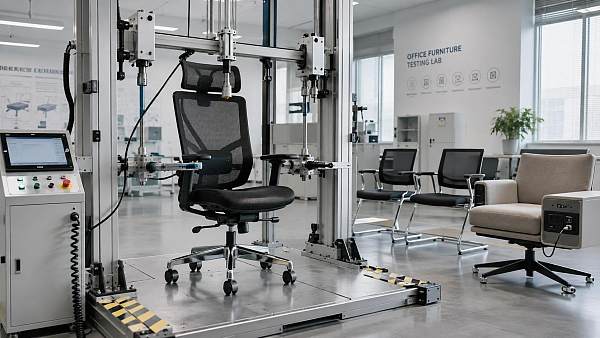
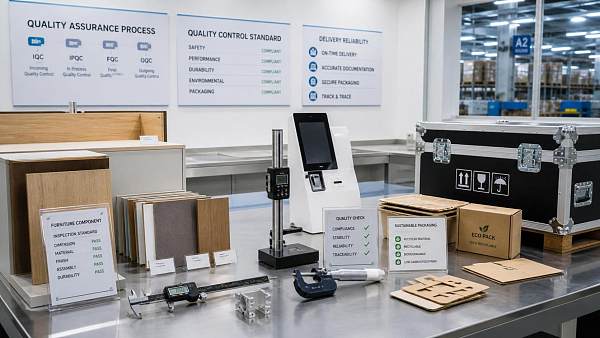
Compliance is not a secondary feature; it is part of value. A professional office furniture manufacturer should be able to support testing and documentation relevant to the market and application. For example, BIFMA performance standards may be crucial for durability and safety, UL may matter for powered furniture or integrated electrical components, and CE may be required in specific markets. VOC and material declarations may also affect sustainability targets and indoor environmental quality.
This matters because non-compliant products can trigger site rejection, insurance issues, user safety concerns, or expensive replacement. In flexible workplaces, height-adjustable desks, ergonomic seating, collaborative booths, and integrated charging stations often require more than visual approval. Documentation should match the exact product configuration being ordered, not a vaguely similar model.
When comparing one office furniture manufacturer against another, ask for:
- Current test reports and issuing laboratories
- Warranty terms tied to actual commercial use
- Material traceability for wood, metal, foam, and coatings
- Sustainability claims supported by evidence rather than marketing language
What is a practical way to compare office furniture manufacturer options side by side?
A useful method is to score each office furniture manufacturer across weighted criteria rather than relying on a single quote. This approach works especially well for headquarters projects, serviced offices, education-adjacent workspaces, and retail back-office environments where furniture must balance aesthetics, durability, and operational speed.
The strongest choice is usually the office furniture manufacturer that performs consistently across all five areas, even if it is not the cheapest or the fastest in isolation.
Which common mistakes distort the lead time vs. cost comparison?
Several mistakes appear repeatedly in office furniture sourcing. The first is comparing quotations with different specifications. The second is ignoring installation complexity. The third is assuming certifications apply automatically to modified products. Another common issue is approving customization too late, which forces rushed production or expensive air freight.
A more disciplined process includes early technical alignment, milestone-based approvals, and a documented risk register. If one office furniture manufacturer asks more questions about finish codes, carton labels, field dimensions, or power integration, that usually indicates stronger control rather than unnecessary delay.
In summary, the right office furniture manufacturer is the one that delivers dependable value across price, timing, compliance, and execution quality. Compare total landed cost instead of unit price alone, validate real lead time from design approval to final delivery, and confirm whether customization and certification can be sustained at scale. For the next step, build a side-by-side evaluation sheet using the criteria above, request evidence instead of promises, and test one pilot package before committing to full rollout.
News Recommendations
 What consumer packaging USA importers need to verify before ordering
![51a6ab95581761cc26f4318be6520c15]()
Aris Katos
Future of Carbide Coatings
 How commercial spaces interiors shape customer dwell time
![51a6ab95581761cc26f4318be6520c15]()
Aris Katos
Future of Carbide Coatings
 How LED commercial lighting design reduces glare in retail spaces
![51a6ab95581761cc26f4318be6520c15]()
Aris Katos
Future of Carbide Coatings
 How industrial technology information improves RFID inventory accuracy
![51a6ab95581761cc26f4318be6520c15]()
Aris Katos
Future of Carbide Coatings
 When drip garden watering systems make more sense than sprinklers
![51a6ab95581761cc26f4318be6520c15]()
Aris Katos
Future of Carbide Coatings
 When category comparison improves sourcing for industrial applications
![51a6ab95581761cc26f4318be6520c15]()
Aris Katos
Future of Carbide Coatings
 Industrial application guidance for selecting the right LED lighting
![51a6ab95581761cc26f4318be6520c15]()
Aris Katos
Future of Carbide Coatings
 Which commercial architecture standards apply to European retail fit-outs?
![51a6ab95581761cc26f4318be6520c15]()
Aris Katos
Future of Carbide Coatings
 How to verify FDA requirements for maternity care products
![51a6ab95581761cc26f4318be6520c15]()
Aris Katos
Future of Carbide Coatings
 How to verify BPA-free claims for food-contact products
![51a6ab95581761cc26f4318be6520c15]()
Aris Katos
Future of Carbide Coatings
 When does a European wholesale supplier suit modular office projects?
![51a6ab95581761cc26f4318be6520c15]()
Aris Katos
Future of Carbide Coatings
 When consumer ecosystem solutions improve the in-store shopping journey
![51a6ab95581761cc26f4318be6520c15]()
Aris Katos
Future of Carbide Coatings
 How a commercial developers network can reduce site selection risk
![51a6ab95581761cc26f4318be6520c15]()
Aris Katos
Future of Carbide Coatings
 How clear purchasing specifications prevent costly supplier deviations
![51a6ab95581761cc26f4318be6520c15]()
Aris Katos
Future of Carbide Coatings
 What an ISTA drop test lab checks before your packaging ships
![51a6ab95581761cc26f4318be6520c15]()
Aris Katos
Future of Carbide Coatings
 Which commercial furniture standards apply to workplace seating?
![51a6ab95581761cc26f4318be6520c15]()
Aris Katos
Future of Carbide Coatings
 How to evaluate smart lighting module OEM compatibility before sampling
![51a6ab95581761cc26f4318be6520c15]()
Aris Katos
Future of Carbide Coatings
 How to assess whether sustainable technology delivers real impact
![51a6ab95581761cc26f4318be6520c15]()
Aris Katos
Future of Carbide Coatings
 How to assess an OEM supplier’s quality control before ordering
![51a6ab95581761cc26f4318be6520c15]()
Aris Katos
Future of Carbide Coatings
 How consumer ecosystem solutions data can improve retail personalization
![51a6ab95581761cc26f4318be6520c15]()
Aris Katos
Future of Carbide Coatings
 When does consumer packaging design justify a higher product price?
![51a6ab95581761cc26f4318be6520c15]()
Aris Katos
Future of Carbide Coatings
 Supermarket Fixture Installation: Planning Layouts, Wiring, and Handover
![51a6ab95581761cc26f4318be6520c15]()
Aris Katos
Future of Carbide Coatings
 Automated Lighting and Smart Lighting Control in Bergerac: Key Project Considerations
![51a6ab95581761cc26f4318be6520c15]()
Aris Katos
Future of Carbide Coatings
 Segment Streetlight Controllers: Choosing Control Modes for Urban Roads
![51a6ab95581761cc26f4318be6520c15]()
Aris Katos
Future of Carbide Coatings
 IEC 62471-2 Explained: How to Assess Photobiological Risks in LED Lighting
![51a6ab95581761cc26f4318be6520c15]()
Aris Katos
Future of Carbide Coatings
 Food Grade Packaging Requirements by Product Type, Temperature, and Contact Risk
![51a6ab95581761cc26f4318be6520c15]()
Aris Katos
Future of Carbide Coatings
 Food Packaging Compliance Checklist: Tests, Records, and Labeling Before Shipment
![51a6ab95581761cc26f4318be6520c15]()
Aris Katos
Future of Carbide Coatings
 NSF Food Packaging Standards: When Certification Matters for Commercial Food Use
![51a6ab95581761cc26f4318be6520c15]()
Aris Katos
Future of Carbide Coatings
 FDA Food Grade Compliance: Which Materials and Documents Do Buyers Need?
![51a6ab95581761cc26f4318be6520c15]()
Aris Katos
Future of Carbide Coatings
 What Should a Food Grade Declaration Include for Packaging Compliance?
![51a6ab95581761cc26f4318be6520c15]()
Aris Katos
Future of Carbide Coatings
 Housewares Importing: How to Evaluate Suppliers, Costs, and Compliance Risks
![51a6ab95581761cc26f4318be6520c15]()
Aris Katos
Future of Carbide Coatings
 Why Freeze-Dried Fruit Ingredients Lose Crispness—and How to Prevent It
![51a6ab95581761cc26f4318be6520c15]()
Aris Katos
Future of Carbide Coatings
 What industry veterans look for before choosing a new supplier
![51a6ab95581761cc26f4318be6520c15]()
Aris Katos
Future of Carbide Coatings
 How material fatigue can shorten the service life of retail shelving
![51a6ab95581761cc26f4318be6520c15]()
Aris Katos
Future of Carbide Coatings
 What makes a global sourcing platform reliable for supplier verification?
![51a6ab95581761cc26f4318be6520c15]()
Aris Katos
Future of Carbide Coatings
 When are double platinum spark plugs a better choice than iridium?
![51a6ab95581761cc26f4318be6520c15]()
Aris Katos
Future of Carbide Coatings
 How to assess a POS terminal manufacturer in Europe for long-term support
![51a6ab95581761cc26f4318be6520c15]()
Aris Katos
Future of Carbide Coatings
 How data transparency in retail helps prevent inventory discrepancies
![51a6ab95581761cc26f4318be6520c15]()
Aris Katos
Future of Carbide Coatings
 What makes a product comparison guide actually useful for buying decisions
![51a6ab95581761cc26f4318be6520c15]()
Aris Katos
Future of Carbide Coatings