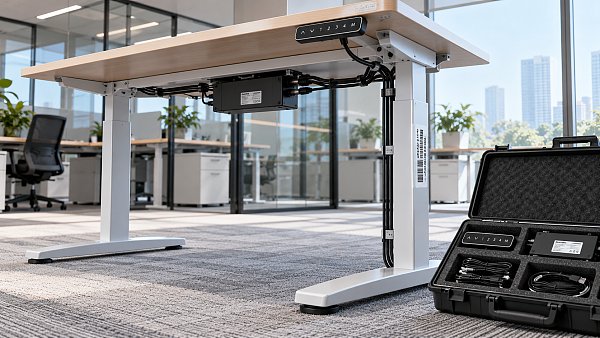
Vietnam Extends BIFMA X5.9-2025 Structural Safety Compliance Deadline to Dec 31, 2026
Time
Click Count
Vietnam’s General Department of Standards, Metrology and Quality (STAMEQ) announced on May 10, 2026, a six-month extension of the mandatory implementation date for the BIFMA X5.9-2025 standard on structural safety for office furniture — now effective December 31, 2026. This update directly affects manufacturers, exporters, and importers engaged in the Vietnam-bound office furniture supply chain, particularly those based in China. The delay addresses operational pressures related to production line adjustments and third-party testing capacity, yet introduces new contractual obligations for new orders — making it a pivotal development for trade compliance and supply chain planning.
Event Overview
On May 10, 2026, STAMEQ issued an official notice extending the enforcement deadline for the BIFMA X5.9-2025 structural safety standard for office furniture from June 1, 2026, to December 31, 2026. The notice confirms that all new export orders must include contractual language specifying compliance with BIFMA X5.9-2025; otherwise, Vietnamese importers retain the right to reject shipments.
Industries Affected by This Update
Direct Exporters (China-based)
These enterprises face immediate pressure to align contracts, documentation, and product specifications with the updated requirement. While the deadline is extended, the contractual clause requirement takes effect immediately for new orders — affecting quotation terms, order confirmations, and liability clauses.
Contract Manufacturers & OEM/ODM Factories
Factories supplying finished goods or sub-assemblies to export brands must verify whether their current structural designs, material specifications, and assembly methods meet X5.9-2025 test criteria — especially load-bearing components, joint integrity, and stability under dynamic loading. Testing lead times and lab availability remain bottlenecks.
Component & Raw Material Suppliers
Suppliers of critical parts — such as gas lifts, casters, frame tubing, and mechanical linkages — may see revised technical specifications from downstream clients. Though not directly certified under X5.9-2025, their components contribute to final product compliance; thus, traceability and performance data become more relevant.
Distribution & Import Agents in Vietnam
Local importers and distributors must update internal compliance checklists and pre-shipment verification protocols. They bear commercial risk if goods arrive without documented X5.9-2025 conformity statements or valid test reports — even during the grace period.
Key Points for Enterprises and Practitioners to Monitor and Act On
Track official STAMEQ guidance on transitional arrangements
While the deadline is extended, STAMEQ has not published detailed transitional rules — e.g., whether partial testing, phased certification, or grandfathering of existing stock applies. Enterprises should monitor STAMEQ’s website and official gazettes for supplementary notices.
Review and revise contract templates for new orders immediately
All sales contracts, pro forma invoices, and order acknowledgments issued after May 10, 2026, must explicitly state compliance with BIFMA X5.9-2025. Legal teams should update boilerplate language and ensure alignment across departments — including sales, logistics, and quality assurance.
Distinguish between policy signal and enforceable obligation
The extension reflects administrative flexibility but does not relax technical requirements. The ‘compliance clause’ in contracts is enforceable upon signing — meaning non-compliant deliveries may be rejected regardless of the December 2026 deadline. This signals that market access is increasingly tied to contractual commitment, not just post-facto verification.
Initiate pre-testing and supplier alignment now — not later
Third-party testing labs report high demand and lead times exceeding 8–10 weeks. Companies should prioritize high-volume SKUs and initiate structural validation early. Concurrently, engage component suppliers to obtain updated performance data and material certifications supporting full-system compliance.
Editorial Perspective / Industry Observation
Observably, this extension functions less as a reprieve and more as a calibrated transition mechanism: it defers enforcement while accelerating contractual accountability. Analysis shows that STAMEQ is prioritizing verifiability over timing — shifting compliance responsibility upstream into commercial agreements rather than relying solely on port-of-entry inspections. From an industry perspective, the move underscores Vietnam’s gradual alignment with international furniture safety frameworks, with implications beyond office furniture — potentially informing future updates to standards for educational or healthcare furniture categories. Current developments are better understood as a procedural calibration than a substantive policy shift; however, the linkage between contract language and market access represents a meaningful escalation in commercial due diligence requirements.

This update marks a refinement in regulatory implementation — not a reversal or relaxation. It highlights how technical standards are increasingly enforced through commercial instruments (e.g., contracts) alongside formal certification. For affected enterprises, the priority remains operational readiness: verifying design compliance, updating documentation, and securing testing capacity before year-end. The extension offers time — but only for structured, coordinated action.
Source: General Department of Standards, Metrology and Quality (STAMEQ), Vietnam — Official Notice dated May 10, 2026.
Note: Further details on transitional provisions, scope exclusions, or enforcement protocols remain pending official clarification and are subject to ongoing monitoring.
News Recommendations
 How to verify Zigbee compatibility when sourcing lighting sensors
![51a6ab95581761cc26f4318be6520c15]()
Aris Katos
Future of Carbide Coatings
 How do packaging customization options affect minimum order quantities in Europe?
![51a6ab95581761cc26f4318be6520c15]()
Aris Katos
Future of Carbide Coatings
 Transom to Acquire Cree LED in Commercial Lighting Ownership Change
![51a6ab95581761cc26f4318be6520c15]()
Aris Katos
Future of Carbide Coatings
 How to plan customer flow in commercial design planning
![51a6ab95581761cc26f4318be6520c15]()
Aris Katos
Future of Carbide Coatings
 USTR Urged to Permanently Suspend Fees on China-Linked Ships
![51a6ab95581761cc26f4318be6520c15]()
Aris Katos
Future of Carbide Coatings
 How to choose comparable stores for retail benchmarking
![51a6ab95581761cc26f4318be6520c15]()
Aris Katos
Future of Carbide Coatings
 How does anchoring affect modular building wind load resistance?
![51a6ab95581761cc26f4318be6520c15]()
Aris Katos
Future of Carbide Coatings
 Amazon Raises European FBA Surcharge to 2% in Ten Markets From November 2
![51a6ab95581761cc26f4318be6520c15]()
Aris Katos
Future of Carbide Coatings
 How to verify a BPA-free test report for baby products
![51a6ab95581761cc26f4318be6520c15]()
Aris Katos
Future of Carbide Coatings
 China's Mandatory Classroom Lighting Standard GB 7793-2025 Takes Effect November 1
![51a6ab95581761cc26f4318be6520c15]()
Aris Katos
Future of Carbide Coatings
 How order volume affects the price of wholesale poly mailers
![51a6ab95581761cc26f4318be6520c15]()
Aris Katos
Future of Carbide Coatings
 US Imposes 50% Tariff on Certain Canadian PET Resin Imports
![51a6ab95581761cc26f4318be6520c15]()
Aris Katos
Future of Carbide Coatings
 How to read the maximum ratings in a semiconductor datasheet
![51a6ab95581761cc26f4318be6520c15]()
Aris Katos
Future of Carbide Coatings
 University of Maryland Develops Bio-Based Packaging to Extend Avocado and Cucumber Shelf Life
![51a6ab95581761cc26f4318be6520c15]()
Aris Katos
Future of Carbide Coatings
 How to verify a cookware manufacturer's induction compatibility claims
![51a6ab95581761cc26f4318be6520c15]()
Aris Katos
Future of Carbide Coatings
 Omdia Forecasts 11.6% Annual Growth in LED Display Revenue Through 2030
![51a6ab95581761cc26f4318be6520c15]()
Aris Katos
Future of Carbide Coatings
 How to verify a pulp molding packaging factory's production capacity
![51a6ab95581761cc26f4318be6520c15]()
Aris Katos
Future of Carbide Coatings
 Curion Survey: Half of Consumers Frustrated by Sustainable Packaging
![51a6ab95581761cc26f4318be6520c15]()
Aris Katos
Future of Carbide Coatings
 How to assess the credibility of market insight content
![51a6ab95581761cc26f4318be6520c15]()
Aris Katos
Future of Carbide Coatings
 US Removes 50% Additional Tariff on Selected Canadian Packaging Products
![51a6ab95581761cc26f4318be6520c15]()
Aris Katos
Future of Carbide Coatings
 Will a waterproof dimmable LED driver work with your existing dimmer?
![51a6ab95581761cc26f4318be6520c15]()
Aris Katos
Future of Carbide Coatings
 Charter Next Generation Raises Film PCR Use 30%, Advances Food-Grade Applications
![51a6ab95581761cc26f4318be6520c15]()
Aris Katos
Future of Carbide Coatings
 How to choose a dog harness and leash for a dog that pulls hard
![51a6ab95581761cc26f4318be6520c15]()
Aris Katos
Future of Carbide Coatings
 How to respect local customs when negotiating with overseas suppliers
![51a6ab95581761cc26f4318be6520c15]()
Aris Katos
Future of Carbide Coatings
 RFID Recycling Challenges Bring Paper-Based and Chipless Tags Into Focus
![51a6ab95581761cc26f4318be6520c15]()
Aris Katos
Future of Carbide Coatings
 How to choose commercial lighting for offices that reduces glare
![51a6ab95581761cc26f4318be6520c15]()
Aris Katos
Future of Carbide Coatings
 Queue Launches Fully Automated Robotic Pharmacy Kiosk for 30-Second Dispensing
![51a6ab95581761cc26f4318be6520c15]()
Aris Katos
Future of Carbide Coatings
 Can your supermarket store fixtures supplier meet your opening date?
![51a6ab95581761cc26f4318be6520c15]()
Aris Katos
Future of Carbide Coatings
 Shopify POS UI Extensions 2026-10 Adds Virtual Lists and Custom Row Templates
![51a6ab95581761cc26f4318be6520c15]()
Aris Katos
Future of Carbide Coatings
 How to assess smart office furniture suppliers’ North American support
![51a6ab95581761cc26f4318be6520c15]()
Aris Katos
Future of Carbide Coatings
 Aqara Launches Smart Lighting Range to Advance AI Spatial Intelligence
![51a6ab95581761cc26f4318be6520c15]()
Aris Katos
Future of Carbide Coatings
 How to assess demand forecasts in a lighting intelligence report
![51a6ab95581761cc26f4318be6520c15]()
Aris Katos
Future of Carbide Coatings
 Billerud推出PharmaKraft纤维基医药包装材料
![51a6ab95581761cc26f4318be6520c15]()
Aris Katos
Future of Carbide Coatings
 How to assess supplier reliability in global supply chain sourcing
![51a6ab95581761cc26f4318be6520c15]()
Aris Katos
Future of Carbide Coatings
 Omdia Forecasts 11.6% CAGR for Global LED Video Display Market in 2026–2030
![51a6ab95581761cc26f4318be6520c15]()
Aris Katos
Future of Carbide Coatings
 How to verify an LFGB testing laboratory's accreditation scope
![51a6ab95581761cc26f4318be6520c15]()
Aris Katos
Future of Carbide Coatings
 How to assess a workplace interior supplier's installation scope
![51a6ab95581761cc26f4318be6520c15]()
Aris Katos
Future of Carbide Coatings
 What records are needed for an ISO 9001 furniture factory audit?
![51a6ab95581761cc26f4318be6520c15]()
Aris Katos
Future of Carbide Coatings
 How to choose AI marketing tools that work with your existing CRM
![51a6ab95581761cc26f4318be6520c15]()
Aris Katos
Future of Carbide Coatings