Chicago AMS 2026 Opens as AI POS Demand Surges
Time
Click Count
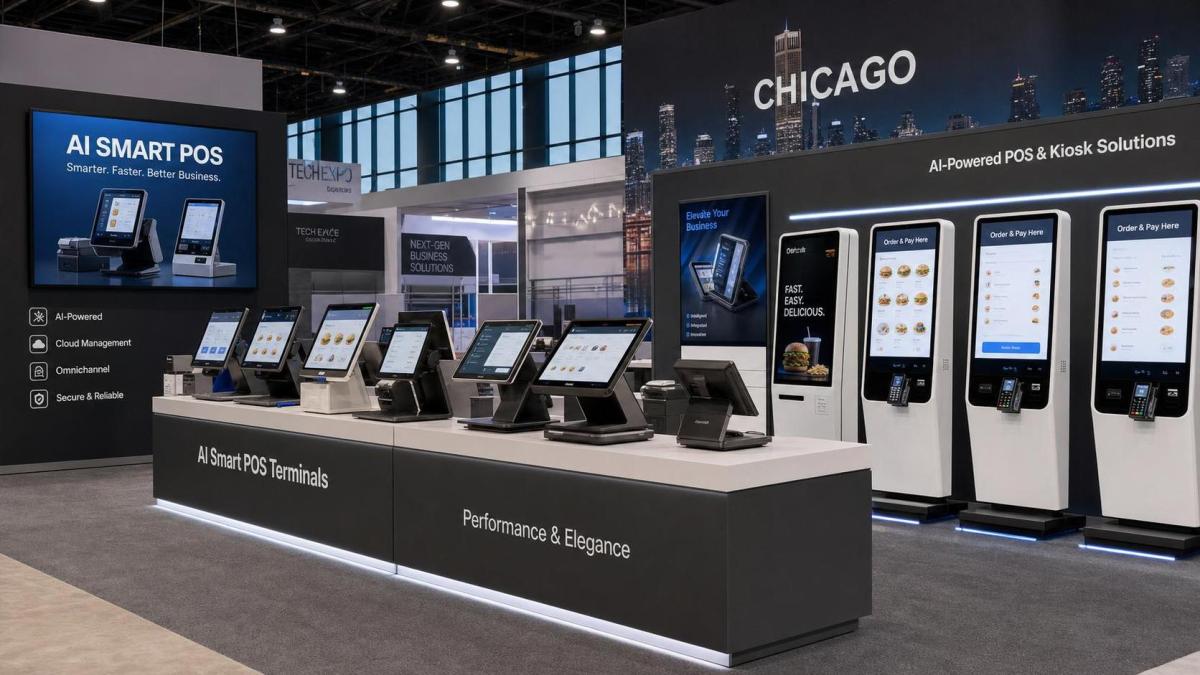
At the June 18–21, 2026 AMS Expo in Chicago, demand concentrated around POS and self-service kiosks with AI visual recognition, multimodal interaction, and remote content management, alongside digital signage solutions. For the industry, the more relevant signal is not only stronger buying interest, but also how procurement expectations are shifting toward smarter commercial hardware that brings added compliance, documentation, delivery, and after-sales requirements into purchasing and trade decisions.
What the show data clearly confirms
The event took place from June 18 to 21, 2026, at the American vending and micro market exhibition, AMS Expo, in Chicago. During the show, POS and self-service kiosks integrating AI visual recognition, multimodal interaction, and remote content management, as well as digital signage solutions, became core sourcing categories.
A total of 73 Chinese exhibitors from Shenzhen and Dongguan participated in this trend. Their average order intake reached US$3.2 million, up 42% from 2025. At the same time, delivery cycles generally extended to 14–18 weeks, indicating that North American channel buyers are accelerating restocking of intelligent commercial hardware.
Where the pressure may build across the transaction chain
Export-facing manufacturers may face tighter buyer-side requirements
From an industry perspective, manufacturers supplying AI-enabled POS terminals, kiosks, and digital signage may be affected first because these products combine hardware, software, and remote management functions. The practical impact may appear in technical documentation, product specification alignment, shipment preparation, and after-sales support commitments. What deserves closer attention is whether buyers begin asking for more detailed compliance files, configuration records, and function descriptions before confirming orders.
Distributors and channel buyers may need to reassess procurement timing
For channel operators and procurement teams, the reported extension of delivery lead times to 14–18 weeks may directly affect replenishment planning, model selection, and order sequencing. Analysis shows that when demand rises around intelligent commercial hardware, purchasing decisions may increasingly incorporate delivery reliability, service response expectations, and supplier qualification checks, rather than unit price alone.
Supply-chain and service partners may see more document-driven coordination
Suppliers involved in fulfillment, testing support, installation, or post-sales service may also feel the impact. Observably, products with AI recognition, multimodal interfaces, and remote content functions often require clearer version control, operating documentation, and handover records during delivery. Even without a stated new rule in the event summary, the buying pattern itself suggests closer scrutiny of product readiness across logistics, installation, and service coordination.
Operational issues companies should track now
Review compliance files before orders convert into shipments
Analysis shows that companies in these product categories should pay closer attention to whether their existing technical files, test materials, product descriptions, and export documents are consistent across quotation, contracting, and delivery stages. This is especially relevant when buyers focus on AI-related functions and remote management capabilities.
Prepare for longer lead times in contracts and procurement schedules
The reported 14–18 week delivery cycle matters operationally. Exporters, buyers, and supply partners may need to reflect longer production and fulfillment windows in order schedules, delivery clauses, and procurement forecasts. It is more appropriate to understand this as a current execution signal rather than a stable long-term pattern.
Pay attention to qualification and after-sales expectations
Where products are used in commercial self-service environments, procurement attention may extend beyond the device itself to supplier stability, service response, and traceability of delivered configurations. Companies should therefore watch for changing buyer requests related to qualification review, maintenance commitments, and records needed for post-delivery support.
Monitor whether buyer documents begin to change
Because the event summary does not provide formal regulatory text or execution details, companies should not assume a completed rule shift. What deserves closer attention is whether subsequent RFQs, bid documents, specification sheets, or buyer compliance checklists begin to place more explicit requirements on smart hardware functions, delivery assurance, or supporting records.
Why this matters as a market signal
Observably, this development is better understood as an execution-level signal from the market rather than proof of a fully defined new regulatory framework. The combination of higher order intake and longer lead times points to a practical change in procurement behavior: buyers appear more willing to commit to intelligent commercial hardware, but that also tends to raise expectations around product clarity, fulfillment discipline, and service coordination.
Analysis shows that the most important follow-up is not to overstate the event as a standalone policy shift, but to track whether market demand is gradually translated into firmer compliance language, certification expectations, or procurement documentation standards in subsequent transactions.
How the industry should read this stage
For now, the Chicago AMS 2026 signal suggests that smart POS terminals, self-service kiosks, and digital signage are moving closer to the center of commercial purchasing decisions. The notable increase in orders for Chinese exhibitors and the extension in lead times together indicate pressure on supply, delivery, and documentation readiness.
It is more appropriate to understand this event as a live market indicator with possible rule and compliance implications, rather than as a settled policy outcome. Companies involved in manufacturing, exporting, sourcing, distribution, and service should continue watching how procurement language, delivery requirements, and supporting documentation evolve in actual execution.
Basis of this article and what still needs verification
This article is based on the user-provided news title, event date, and event summary. For developments of this kind, relevant source categories often include official announcements, regulatory publications, customs or trade authority information, industry association updates, standards body documents, and reporting by authoritative media.
No specific official source link was provided in the input, so further verification is still required. What should continue to be monitored includes any later clarification in procurement documents, possible changes in certification or compliance expectations, buyer-side execution standards, industry feedback, and how companies implement delivery and after-sales requirements in practice.
News Recommendations
 What consumer packaging USA importers need to verify before ordering
![51a6ab95581761cc26f4318be6520c15]()
Aris Katos
Future of Carbide Coatings
 How commercial spaces interiors shape customer dwell time
![51a6ab95581761cc26f4318be6520c15]()
Aris Katos
Future of Carbide Coatings
 How LED commercial lighting design reduces glare in retail spaces
![51a6ab95581761cc26f4318be6520c15]()
Aris Katos
Future of Carbide Coatings
 How industrial technology information improves RFID inventory accuracy
![51a6ab95581761cc26f4318be6520c15]()
Aris Katos
Future of Carbide Coatings
 When drip garden watering systems make more sense than sprinklers
![51a6ab95581761cc26f4318be6520c15]()
Aris Katos
Future of Carbide Coatings
 When category comparison improves sourcing for industrial applications
![51a6ab95581761cc26f4318be6520c15]()
Aris Katos
Future of Carbide Coatings
 Industrial application guidance for selecting the right LED lighting
![51a6ab95581761cc26f4318be6520c15]()
Aris Katos
Future of Carbide Coatings
 Which commercial architecture standards apply to European retail fit-outs?
![51a6ab95581761cc26f4318be6520c15]()
Aris Katos
Future of Carbide Coatings
 How to verify FDA requirements for maternity care products
![51a6ab95581761cc26f4318be6520c15]()
Aris Katos
Future of Carbide Coatings
 How to verify BPA-free claims for food-contact products
![51a6ab95581761cc26f4318be6520c15]()
Aris Katos
Future of Carbide Coatings
 When does a European wholesale supplier suit modular office projects?
![51a6ab95581761cc26f4318be6520c15]()
Aris Katos
Future of Carbide Coatings
 When consumer ecosystem solutions improve the in-store shopping journey
![51a6ab95581761cc26f4318be6520c15]()
Aris Katos
Future of Carbide Coatings
 How a commercial developers network can reduce site selection risk
![51a6ab95581761cc26f4318be6520c15]()
Aris Katos
Future of Carbide Coatings
 How clear purchasing specifications prevent costly supplier deviations
![51a6ab95581761cc26f4318be6520c15]()
Aris Katos
Future of Carbide Coatings
 What an ISTA drop test lab checks before your packaging ships
![51a6ab95581761cc26f4318be6520c15]()
Aris Katos
Future of Carbide Coatings
 Which commercial furniture standards apply to workplace seating?
![51a6ab95581761cc26f4318be6520c15]()
Aris Katos
Future of Carbide Coatings
 How to evaluate smart lighting module OEM compatibility before sampling
![51a6ab95581761cc26f4318be6520c15]()
Aris Katos
Future of Carbide Coatings
 How to assess whether sustainable technology delivers real impact
![51a6ab95581761cc26f4318be6520c15]()
Aris Katos
Future of Carbide Coatings
 How to assess an OEM supplier’s quality control before ordering
![51a6ab95581761cc26f4318be6520c15]()
Aris Katos
Future of Carbide Coatings
 How consumer ecosystem solutions data can improve retail personalization
![51a6ab95581761cc26f4318be6520c15]()
Aris Katos
Future of Carbide Coatings
 When does consumer packaging design justify a higher product price?
![51a6ab95581761cc26f4318be6520c15]()
Aris Katos
Future of Carbide Coatings
 Supermarket Fixture Installation: Planning Layouts, Wiring, and Handover
![51a6ab95581761cc26f4318be6520c15]()
Aris Katos
Future of Carbide Coatings
 Automated Lighting and Smart Lighting Control in Bergerac: Key Project Considerations
![51a6ab95581761cc26f4318be6520c15]()
Aris Katos
Future of Carbide Coatings
 Segment Streetlight Controllers: Choosing Control Modes for Urban Roads
![51a6ab95581761cc26f4318be6520c15]()
Aris Katos
Future of Carbide Coatings
 IEC 62471-2 Explained: How to Assess Photobiological Risks in LED Lighting
![51a6ab95581761cc26f4318be6520c15]()
Aris Katos
Future of Carbide Coatings
 Food Grade Packaging Requirements by Product Type, Temperature, and Contact Risk
![51a6ab95581761cc26f4318be6520c15]()
Aris Katos
Future of Carbide Coatings
 Food Packaging Compliance Checklist: Tests, Records, and Labeling Before Shipment
![51a6ab95581761cc26f4318be6520c15]()
Aris Katos
Future of Carbide Coatings
 NSF Food Packaging Standards: When Certification Matters for Commercial Food Use
![51a6ab95581761cc26f4318be6520c15]()
Aris Katos
Future of Carbide Coatings
 FDA Food Grade Compliance: Which Materials and Documents Do Buyers Need?
![51a6ab95581761cc26f4318be6520c15]()
Aris Katos
Future of Carbide Coatings
 What Should a Food Grade Declaration Include for Packaging Compliance?
![51a6ab95581761cc26f4318be6520c15]()
Aris Katos
Future of Carbide Coatings
 Housewares Importing: How to Evaluate Suppliers, Costs, and Compliance Risks
![51a6ab95581761cc26f4318be6520c15]()
Aris Katos
Future of Carbide Coatings
 Why Freeze-Dried Fruit Ingredients Lose Crispness—and How to Prevent It
![51a6ab95581761cc26f4318be6520c15]()
Aris Katos
Future of Carbide Coatings
 What industry veterans look for before choosing a new supplier
![51a6ab95581761cc26f4318be6520c15]()
Aris Katos
Future of Carbide Coatings
 How material fatigue can shorten the service life of retail shelving
![51a6ab95581761cc26f4318be6520c15]()
Aris Katos
Future of Carbide Coatings
 What makes a global sourcing platform reliable for supplier verification?
![51a6ab95581761cc26f4318be6520c15]()
Aris Katos
Future of Carbide Coatings
 When are double platinum spark plugs a better choice than iridium?
![51a6ab95581761cc26f4318be6520c15]()
Aris Katos
Future of Carbide Coatings
 How to assess a POS terminal manufacturer in Europe for long-term support
![51a6ab95581761cc26f4318be6520c15]()
Aris Katos
Future of Carbide Coatings
 How data transparency in retail helps prevent inventory discrepancies
![51a6ab95581761cc26f4318be6520c15]()
Aris Katos
Future of Carbide Coatings
 What makes a product comparison guide actually useful for buying decisions
![51a6ab95581761cc26f4318be6520c15]()
Aris Katos
Future of Carbide Coatings