Commercial Materials Innovation Trends in Biodegradable Product Packaging
Time
Click Count
As sustainability reshapes global retail and supply chains, commercial materials innovation is becoming a decisive factor in biodegradable product packaging. From material performance and compliance to branding and cost efficiency, businesses need clearer benchmarks to evaluate emerging solutions. This article explores the latest innovation trends helping commercial decision-makers identify scalable, high-value packaging strategies for modern consumer markets.
Why a checklist approach matters before evaluating innovation claims
For information researchers, the main challenge is not a lack of new packaging ideas. It is the overload of claims around compostability, fiber substitution, barrier coatings, bio-based polymers, and circular design. In practice, commercial materials innovation only creates value when a packaging solution performs across the full business chain: sourcing, conversion, filling, transport, shelf presentation, disposal, and regulatory review.
A checklist method helps separate marketable language from commercially reliable progress. It also supports clearer comparisons between suppliers, regions, and retail formats. For global operators, this is critical because biodegradable product packaging can succeed in one channel and fail in another due to humidity, sealing conditions, waste infrastructure, or labeling rules. The fastest way to assess trends is to begin with key judgment criteria instead of broad theory.
The first signals to confirm in commercial materials innovation
Before reviewing material samples or trend reports, prioritize the following signals. These are the indicators most likely to reveal whether a biodegradable packaging concept has real commercial relevance.
- Is the innovation reducing dependence on conventional fossil-based plastics, or simply blending a small bio-content into an otherwise unchanged structure?
- Does the material maintain functional performance for moisture, grease, oxygen, puncture resistance, and seal integrity in the intended use case?
- Are end-of-life claims matched to actual disposal pathways such as industrial composting, home composting, or controlled biodegradation under specific conditions?
- Can the solution scale within current converting and packing lines, or will it require major process redesign and added cost?
- Is there documentation aligned with recognized standards, testing protocols, migration rules, and market access requirements?
- Does the packaging support premium shelf appearance, print quality, and brand storytelling without sacrificing supply stability?
These checks create a practical filter for reviewing commercial materials innovation trends. If a supplier or report cannot answer these points clearly, the trend may still be interesting, but it is not yet decision-ready.
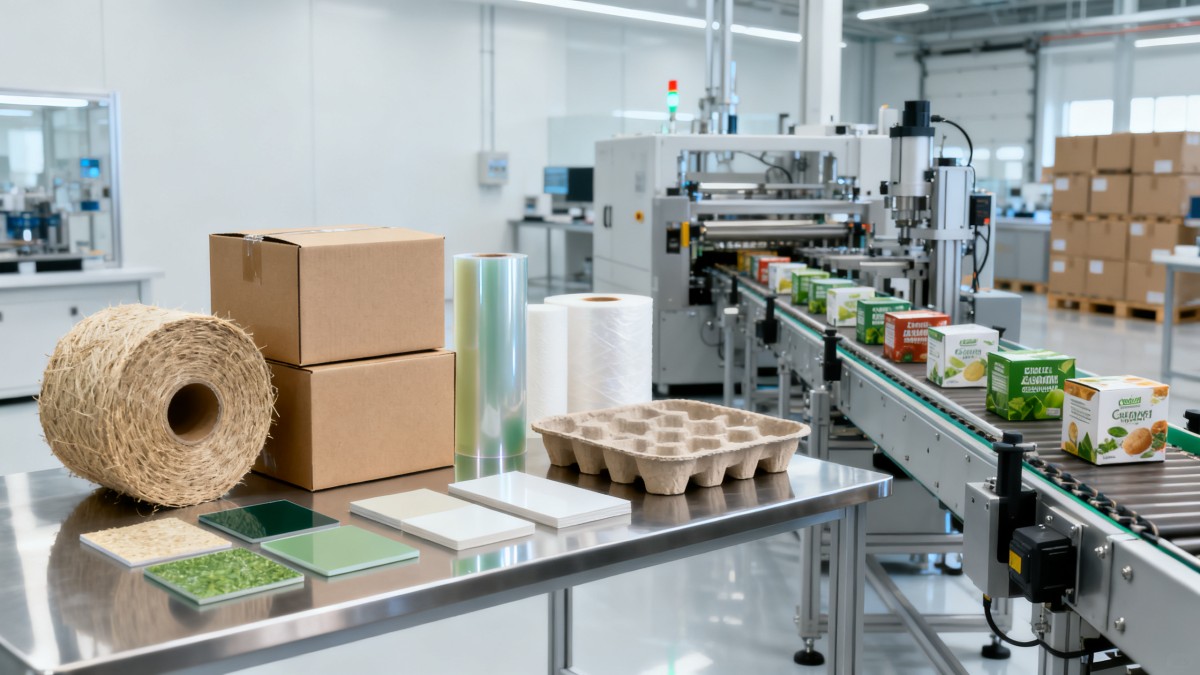
Core trend checklist: what businesses should evaluate now
1. Fiber-based structures are moving from simple substitution to engineered performance
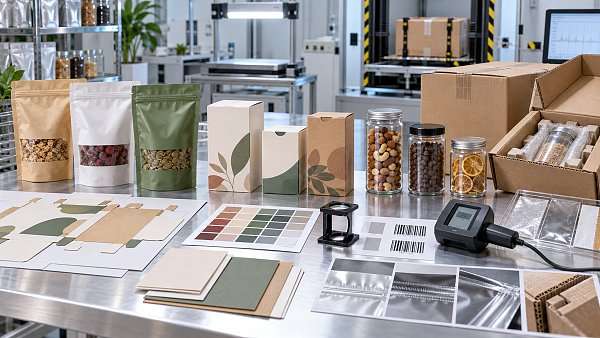
Paper, molded fiber, and cellulose formats remain central to commercial materials innovation, but the trend is no longer about replacing plastic with paper alone. The more important shift is engineered fiber packaging with stronger wet resistance, grease barriers, smoother surfaces for premium graphics, and better structural consistency in automated packing environments.
Priority checks include coating composition, recyclability compatibility, compression strength, and how the package performs in chilled, takeaway, or humidity-sensitive conditions. Researchers should also check whether barrier performance comes from fluorine-free, water-based, mineral, or bio-derived systems, because these differences affect compliance and sustainability positioning.
2. Compostable biopolymers are improving, but use-case fit still determines success
PLA, PHA, starch blends, and other compostable polymers continue to attract attention in commercial materials innovation. Their strongest potential appears in formats where food contamination makes conventional recycling difficult, such as produce bags, food-service items, and selected flexible packaging applications.
The key judgment standard is not whether a polymer is plant-based or compostable in abstract terms. It is whether the material can tolerate real operating temperatures, maintain sealability, and enter a disposal route that exists in target markets. A packaging material that composts only under industrial conditions may still be viable, but only if collection, sorting, and communication are designed accordingly.
3. Mono-material simplification and biodegradable hybrids are competing design paths
Another important trend is the strategic choice between simplifying material structures and developing biodegradable multi-layer alternatives. Mono-material packaging often improves recyclability, while biodegradable hybrids may deliver stronger barriers or better tactile quality. For researchers, the task is to compare which route creates lower total risk for the intended category.
In sectors with strict freshness requirements, barrier complexity may still be justified. In fast-turn retail and promotional packaging, simpler structures can offer faster implementation and easier consumer communication. Commercial materials innovation should therefore be measured against category realities, not broad sustainability slogans.
4. Coating innovation is becoming a decisive value driver
One of the most commercially relevant innovation trends is in coatings and surface treatments. Water-based barriers, bio-waxes, dispersion coatings, and mineral-enhanced layers are making fiber packaging more competitive in applications that once depended on laminated plastic. These technologies influence seal strength, print adhesion, migration safety, and end-of-life behavior.
When reviewing coating-led commercial materials innovation, check whether the coating can be separated, composted, or processed without contaminating recycling systems. Also examine whether the coating adds hidden complexity in procurement, storage, or converting equipment.
5. Digital traceability and material data transparency are becoming part of packaging value
Biodegradable product packaging is no longer judged only by physical attributes. Large retailers and sourcing teams increasingly want traceability data on fiber origin, resin composition, carbon indicators, compliance testing, and disposal instructions. This means commercial materials innovation now includes documentation quality and digital transparency as part of the product itself.
Solutions with stronger specification sheets, batch consistency reporting, and standards alignment often move faster through commercial review than materials with exciting narratives but weak technical records.
Quick comparison table for trend evaluation
Use this table as a fast screening tool when comparing suppliers or material directions in commercial materials innovation projects.
Scenario-based checks: what changes by market and application
Food service and takeaway
Here, commercial materials innovation must prioritize heat tolerance, grease resistance, stacking stability, and disposal clarity. Products that look sustainable but fail during transport quickly damage both brand trust and operational efficiency.
Premium retail and gift packaging
In this segment, tactile quality, rigidity, color consistency, embossing compatibility, and premium finishing matter as much as sustainability claims. Researchers should check whether biodegradable materials can preserve visual impact without creating dusting, warping, or print limitations.
E-commerce and shipping
Mailers, void fill, and protective inserts need shock absorption, lightweight performance, and dimensional consistency. Biodegradable innovation has to compete not only on environmental appeal but also on freight cost and return damage reduction.
Global multi-market programs
For cross-border supply chains, the most important issue is standardization. A material approved in one region may face different labeling, food-contact, or waste-management expectations elsewhere. Commercial materials innovation should therefore be screened for regional adaptability early in the sourcing process.
Common blind spots that weaken biodegradable packaging decisions
- Assuming bio-based automatically means biodegradable, and biodegradable automatically means infrastructure-ready.
- Overlooking machine compatibility, especially sealing temperature windows, feed behavior, and storage sensitivity.
- Ignoring how inks, adhesives, and labels can undermine the sustainability profile of the full pack.
- Evaluating unit price without reviewing damage rates, shelf-life effects, or disposal-related brand risk.
- Using general certifications as a substitute for application-specific testing.
These blind spots are where many commercial materials innovation projects lose momentum. The material itself may be promising, but weak integration planning turns innovation into procurement friction.
Execution guide: what to prepare before supplier discussions
If a business wants to move from trend tracking to action, the preparation stage should be disciplined. Bring a defined requirement set into supplier conversations so comparisons are meaningful.
- Map the packaging function: protection, shelf life, display quality, transport load, and disposal route.
- Set mandatory standards: food-contact rules, migration limits, market labeling requirements, and any internal sustainability thresholds.
- Request technical data: composition, barrier values, sealing range, storage conditions, and test method references.
- Ask for pilot evidence: line trials, drop tests, humidity testing, and case examples from similar industries.
- Review commercial scalability: lead time, MOQ, regional supply resilience, and changeover costs.
This process gives information researchers a stronger basis for shortlisting viable options in commercial materials innovation, especially when supporting sourcing directors, brand teams, or commercial developers.
Final decision prompts for commercial teams
The strongest biodegradable packaging strategies are not built on one trend alone. They come from aligning material science, operational fit, compliance confidence, and customer-facing value. For that reason, commercial materials innovation should be reviewed as a business system rather than a single material upgrade.
If the next step is deeper evaluation, prioritize these questions: Which packaging formats create the highest sustainability pressure or brand opportunity? Which performance criteria are non-negotiable? Which regions require separate compliance pathways? What disposal behavior can realistically be expected from end users? And what documentation is needed to compare suppliers on equal terms?
For organizations seeking better packaging decisions, the most effective starting point is a structured brief covering parameters, application scenarios, budget range, expected rollout timeline, and validation requirements. With those inputs defined early, commercial materials innovation becomes easier to benchmark, easier to scale, and far more likely to deliver measurable value across the modern consumer ecosystem.
News Recommendations
 How to choose an ultra bright waterproof window display for storefronts
![51a6ab95581761cc26f4318be6520c15]()
Aris Katos
Future of Carbide Coatings
 How to verify suppliers on a trade portal for global sourcing
![51a6ab95581761cc26f4318be6520c15]()
Aris Katos
Future of Carbide Coatings
 How RoHS requirements should be stated in product specifications
![51a6ab95581761cc26f4318be6520c15]()
Aris Katos
Future of Carbide Coatings
 What affects the lead time for custom retail counter displays?
![51a6ab95581761cc26f4318be6520c15]()
Aris Katos
Future of Carbide Coatings
 What consumer packaging USA importers need to verify before ordering
![51a6ab95581761cc26f4318be6520c15]()
Aris Katos
Future of Carbide Coatings
 How commercial spaces interiors shape customer dwell time
![51a6ab95581761cc26f4318be6520c15]()
Aris Katos
Future of Carbide Coatings
 How LED commercial lighting design reduces glare in retail spaces
![51a6ab95581761cc26f4318be6520c15]()
Aris Katos
Future of Carbide Coatings
 How industrial technology information improves RFID inventory accuracy
![51a6ab95581761cc26f4318be6520c15]()
Aris Katos
Future of Carbide Coatings
 When drip garden watering systems make more sense than sprinklers
![51a6ab95581761cc26f4318be6520c15]()
Aris Katos
Future of Carbide Coatings
 When category comparison improves sourcing for industrial applications
![51a6ab95581761cc26f4318be6520c15]()
Aris Katos
Future of Carbide Coatings
 Industrial application guidance for selecting the right LED lighting
![51a6ab95581761cc26f4318be6520c15]()
Aris Katos
Future of Carbide Coatings
 Which commercial architecture standards apply to European retail fit-outs?
![51a6ab95581761cc26f4318be6520c15]()
Aris Katos
Future of Carbide Coatings
 How to verify FDA requirements for maternity care products
![51a6ab95581761cc26f4318be6520c15]()
Aris Katos
Future of Carbide Coatings
 How to verify BPA-free claims for food-contact products
![51a6ab95581761cc26f4318be6520c15]()
Aris Katos
Future of Carbide Coatings
 When does a European wholesale supplier suit modular office projects?
![51a6ab95581761cc26f4318be6520c15]()
Aris Katos
Future of Carbide Coatings
 When consumer ecosystem solutions improve the in-store shopping journey
![51a6ab95581761cc26f4318be6520c15]()
Aris Katos
Future of Carbide Coatings
 How a commercial developers network can reduce site selection risk
![51a6ab95581761cc26f4318be6520c15]()
Aris Katos
Future of Carbide Coatings
 How clear purchasing specifications prevent costly supplier deviations
![51a6ab95581761cc26f4318be6520c15]()
Aris Katos
Future of Carbide Coatings
 What an ISTA drop test lab checks before your packaging ships
![51a6ab95581761cc26f4318be6520c15]()
Aris Katos
Future of Carbide Coatings
 Which commercial furniture standards apply to workplace seating?
![51a6ab95581761cc26f4318be6520c15]()
Aris Katos
Future of Carbide Coatings
 How to evaluate smart lighting module OEM compatibility before sampling
![51a6ab95581761cc26f4318be6520c15]()
Aris Katos
Future of Carbide Coatings
 How to assess whether sustainable technology delivers real impact
![51a6ab95581761cc26f4318be6520c15]()
Aris Katos
Future of Carbide Coatings
 How to assess an OEM supplier’s quality control before ordering
![51a6ab95581761cc26f4318be6520c15]()
Aris Katos
Future of Carbide Coatings
 How consumer ecosystem solutions data can improve retail personalization
![51a6ab95581761cc26f4318be6520c15]()
Aris Katos
Future of Carbide Coatings
 When does consumer packaging design justify a higher product price?
![51a6ab95581761cc26f4318be6520c15]()
Aris Katos
Future of Carbide Coatings
 Supermarket Fixture Installation: Planning Layouts, Wiring, and Handover
![51a6ab95581761cc26f4318be6520c15]()
Aris Katos
Future of Carbide Coatings
 Automated Lighting and Smart Lighting Control in Bergerac: Key Project Considerations
![51a6ab95581761cc26f4318be6520c15]()
Aris Katos
Future of Carbide Coatings
 Segment Streetlight Controllers: Choosing Control Modes for Urban Roads
![51a6ab95581761cc26f4318be6520c15]()
Aris Katos
Future of Carbide Coatings
 IEC 62471-2 Explained: How to Assess Photobiological Risks in LED Lighting
![51a6ab95581761cc26f4318be6520c15]()
Aris Katos
Future of Carbide Coatings
 Food Grade Packaging Requirements by Product Type, Temperature, and Contact Risk
![51a6ab95581761cc26f4318be6520c15]()
Aris Katos
Future of Carbide Coatings
 Food Packaging Compliance Checklist: Tests, Records, and Labeling Before Shipment
![51a6ab95581761cc26f4318be6520c15]()
Aris Katos
Future of Carbide Coatings
 NSF Food Packaging Standards: When Certification Matters for Commercial Food Use
![51a6ab95581761cc26f4318be6520c15]()
Aris Katos
Future of Carbide Coatings
 FDA Food Grade Compliance: Which Materials and Documents Do Buyers Need?
![51a6ab95581761cc26f4318be6520c15]()
Aris Katos
Future of Carbide Coatings
 What Should a Food Grade Declaration Include for Packaging Compliance?
![51a6ab95581761cc26f4318be6520c15]()
Aris Katos
Future of Carbide Coatings
 Housewares Importing: How to Evaluate Suppliers, Costs, and Compliance Risks
![51a6ab95581761cc26f4318be6520c15]()
Aris Katos
Future of Carbide Coatings
 Why Freeze-Dried Fruit Ingredients Lose Crispness—and How to Prevent It
![51a6ab95581761cc26f4318be6520c15]()
Aris Katos
Future of Carbide Coatings
 What industry veterans look for before choosing a new supplier
![51a6ab95581761cc26f4318be6520c15]()
Aris Katos
Future of Carbide Coatings
 How material fatigue can shorten the service life of retail shelving
![51a6ab95581761cc26f4318be6520c15]()
Aris Katos
Future of Carbide Coatings
 What makes a global sourcing platform reliable for supplier verification?
![51a6ab95581761cc26f4318be6520c15]()
Aris Katos
Future of Carbide Coatings