RCEP GreenMark Expands: Chinese PLA Tableware Gains Indonesia Duty-Free Clearance
Time
Click Count
On May 6, 2026, the RCEP Sustainable Materials Mutual Recognition Platform (RCEP-GreenMark) expanded its scope to include Indonesia’s BPOM Green Materials White List — enabling Chinese PLA foodservice products certified by CNAS to enter Indonesia without inspection, provided they are accompanied by a valid green declaration and third-party biodegradation report. This development directly impacts exporters, manufacturers, and supply chain stakeholders in the biodegradable materials sector, particularly those engaged in cross-border trade between China and ASEAN markets.
Event Overview
On May 6, 2026, RCEP-GreenMark announced the inclusion of Indonesia’s National Agency of Drug and Food Control (BPOM) Green Materials White List. Under this update, Chinese PLA tableware — including plates, cup lids, and trays — that hold valid CNAS accreditation, a verified green declaration, and an accredited third-party biodegradation report qualify for zero-inspection import clearance into Indonesia. As confirmed, average customs clearance time for such goods has decreased from seven days to 1.5 days.
Industries Affected
Direct Exporters and Trading Enterprises
These entities face immediate operational impact: reduced customs delays lower logistics costs and improve order fulfillment predictability. The change also shifts compliance responsibility toward documentation accuracy — especially green declarations and test report validity — rather than physical inspection readiness.
PLA Resin and Raw Material Suppliers
Suppliers must ensure traceability and alignment with downstream certification requirements. While the policy does not mandate upstream certification, buyers may increasingly request batch-level degradation data or CNAS-aligned test references to support their own green declarations — potentially affecting quotation cycles and technical documentation practices.
Foodservice Product Manufacturers (PLA Tableware)
Manufacturers now benefit from faster market access but must maintain strict control over declaration consistency across SKUs. Since eligibility hinges on product-level conformity (not facility-level approval), each exported item type — e.g., lid vs. tray — requires matching documentation, increasing internal coordination needs between production, QA, and export departments.
Logistics and Customs Compliance Service Providers
Freight forwarders and customs brokers handling China–Indonesia biodegradable goods must update internal checklists to verify green declaration format, report accreditation status (e.g., ISO/IEC 17025), and BPOM white list referencing. Misalignment may trigger manual review despite policy eligibility — making documentation pre-checks more critical than before.
What Enterprises and Practitioners Should Focus On Now
Monitor official implementation guidance from BPOM and RCEP-GreenMark
While the May 6 announcement confirms eligibility criteria, BPOM has not yet published detailed procedural guidelines (e.g., declaration templates, report validity windows, or digital submission channels). Stakeholders should track updates from both BPOM and the RCEP Secretariat, especially regarding whether paper-based or electronic submissions are accepted.
Verify third-party lab accreditation scope and report validity period
The policy requires “third-party degradation reports” but does not specify minimum test standards (e.g., ISO 14855, ASTM D6400) or report age limits. Enterprises should confirm whether labs used are accredited under ISO/IEC 17025 *for the specific test method applied*, and whether reports older than six months remain acceptable under current BPOM interpretation.
Distinguish between policy eligibility and actual port-level execution
Zero-inspection clearance applies only when all three conditions are met: CNAS-accredited manufacturer, valid green declaration, and compliant third-party report. Any deviation — e.g., mismatched product names between declaration and commercial invoice — may still trigger inspection. Pre-shipment document reconciliation is therefore essential, not optional.
Prepare for potential documentation scaling across SKUs and export batches
Since eligibility is product-specific, companies exporting multiple PLA items (e.g., 12 lid variants + 8 tray designs) may need separate declarations and reports per SKU group. Internal teams should audit current documentation workflows and assess whether template automation or centralized declaration management is needed ahead of volume ramp-up.
Editorial Perspective / Industry Observation
Observably, this expansion signals a maturing phase in RCEP’s technical barriers reduction framework — shifting from broad tariff cuts to targeted regulatory harmonization in sustainability-critical sectors. Analysis shows it functions less as a fully operationalized outcome and more as a conditional gateway: eligibility is defined, but consistent enforcement depends on local customs training, BPOM system integration, and importer diligence. From an industry perspective, it reflects growing alignment on biodegradability verification as a trade enabler — yet remains contingent on documentation discipline rather than automatic recognition. Continued observation is warranted on whether similar pathways emerge for other RCEP members’ regulatory bodies (e.g., Thailand FDA or Vietnam MOH).
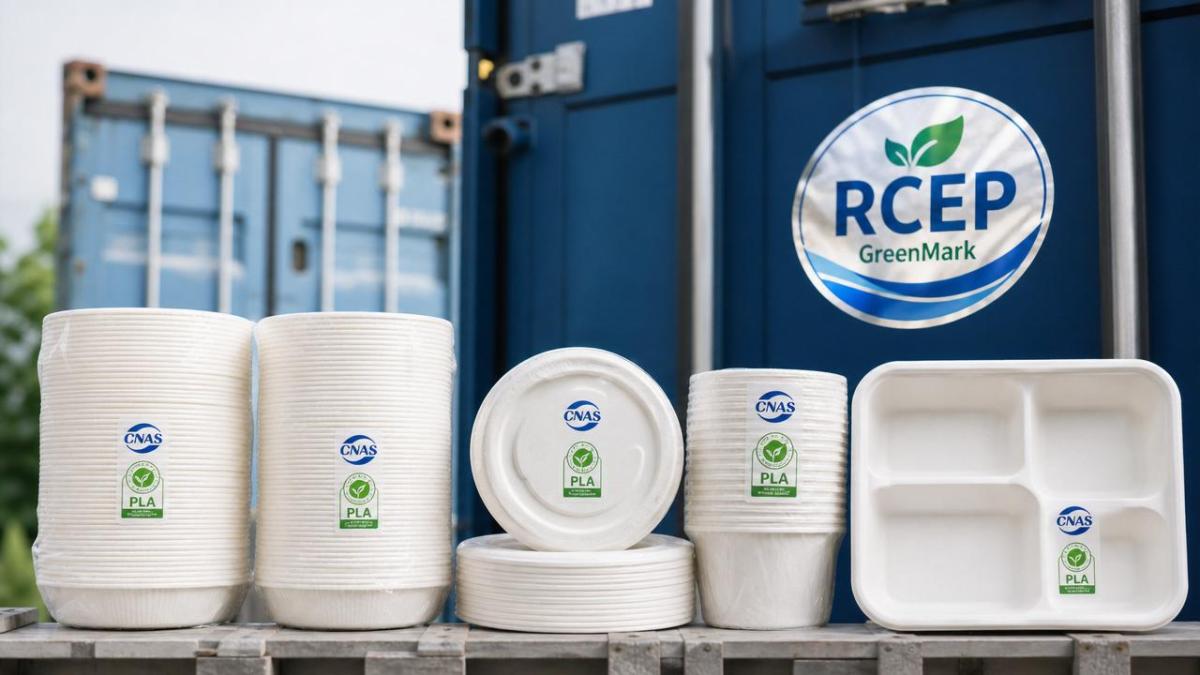
In summary, the RCEP-GreenMark expansion introduces a concrete, documentation-driven efficiency gain for Chinese PLA tableware exporters targeting Indonesia — but one that demands precision in compliance execution rather than passive benefit. It is better understood not as a blanket simplification, but as a new layer of verifiable responsibility within existing trade processes.
Source: Official RCEP-GreenMark announcement (May 6, 2026); BPOM Green Materials White List framework (publicly referenced, full implementation details pending). Note: BPOM’s operational procedures and acceptance criteria for green declarations remain under observation and are not yet publicly finalized.
News Recommendations
 How to choose an ultra bright waterproof window display for storefronts
![51a6ab95581761cc26f4318be6520c15]()
Aris Katos
Future of Carbide Coatings
 How to verify suppliers on a trade portal for global sourcing
![51a6ab95581761cc26f4318be6520c15]()
Aris Katos
Future of Carbide Coatings
 How RoHS requirements should be stated in product specifications
![51a6ab95581761cc26f4318be6520c15]()
Aris Katos
Future of Carbide Coatings
 What affects the lead time for custom retail counter displays?
![51a6ab95581761cc26f4318be6520c15]()
Aris Katos
Future of Carbide Coatings
 What consumer packaging USA importers need to verify before ordering
![51a6ab95581761cc26f4318be6520c15]()
Aris Katos
Future of Carbide Coatings
 How commercial spaces interiors shape customer dwell time
![51a6ab95581761cc26f4318be6520c15]()
Aris Katos
Future of Carbide Coatings
 How LED commercial lighting design reduces glare in retail spaces
![51a6ab95581761cc26f4318be6520c15]()
Aris Katos
Future of Carbide Coatings
 How industrial technology information improves RFID inventory accuracy
![51a6ab95581761cc26f4318be6520c15]()
Aris Katos
Future of Carbide Coatings
 When drip garden watering systems make more sense than sprinklers
![51a6ab95581761cc26f4318be6520c15]()
Aris Katos
Future of Carbide Coatings
 When category comparison improves sourcing for industrial applications
![51a6ab95581761cc26f4318be6520c15]()
Aris Katos
Future of Carbide Coatings
 Industrial application guidance for selecting the right LED lighting
![51a6ab95581761cc26f4318be6520c15]()
Aris Katos
Future of Carbide Coatings
 Which commercial architecture standards apply to European retail fit-outs?
![51a6ab95581761cc26f4318be6520c15]()
Aris Katos
Future of Carbide Coatings
 How to verify FDA requirements for maternity care products
![51a6ab95581761cc26f4318be6520c15]()
Aris Katos
Future of Carbide Coatings
 How to verify BPA-free claims for food-contact products
![51a6ab95581761cc26f4318be6520c15]()
Aris Katos
Future of Carbide Coatings
 When does a European wholesale supplier suit modular office projects?
![51a6ab95581761cc26f4318be6520c15]()
Aris Katos
Future of Carbide Coatings
 When consumer ecosystem solutions improve the in-store shopping journey
![51a6ab95581761cc26f4318be6520c15]()
Aris Katos
Future of Carbide Coatings
 How a commercial developers network can reduce site selection risk
![51a6ab95581761cc26f4318be6520c15]()
Aris Katos
Future of Carbide Coatings
 How clear purchasing specifications prevent costly supplier deviations
![51a6ab95581761cc26f4318be6520c15]()
Aris Katos
Future of Carbide Coatings
 What an ISTA drop test lab checks before your packaging ships
![51a6ab95581761cc26f4318be6520c15]()
Aris Katos
Future of Carbide Coatings
 Which commercial furniture standards apply to workplace seating?
![51a6ab95581761cc26f4318be6520c15]()
Aris Katos
Future of Carbide Coatings
 How to evaluate smart lighting module OEM compatibility before sampling
![51a6ab95581761cc26f4318be6520c15]()
Aris Katos
Future of Carbide Coatings
 How to assess whether sustainable technology delivers real impact
![51a6ab95581761cc26f4318be6520c15]()
Aris Katos
Future of Carbide Coatings
 How to assess an OEM supplier’s quality control before ordering
![51a6ab95581761cc26f4318be6520c15]()
Aris Katos
Future of Carbide Coatings
 How consumer ecosystem solutions data can improve retail personalization
![51a6ab95581761cc26f4318be6520c15]()
Aris Katos
Future of Carbide Coatings
 When does consumer packaging design justify a higher product price?
![51a6ab95581761cc26f4318be6520c15]()
Aris Katos
Future of Carbide Coatings
 Supermarket Fixture Installation: Planning Layouts, Wiring, and Handover
![51a6ab95581761cc26f4318be6520c15]()
Aris Katos
Future of Carbide Coatings
 Automated Lighting and Smart Lighting Control in Bergerac: Key Project Considerations
![51a6ab95581761cc26f4318be6520c15]()
Aris Katos
Future of Carbide Coatings
 Segment Streetlight Controllers: Choosing Control Modes for Urban Roads
![51a6ab95581761cc26f4318be6520c15]()
Aris Katos
Future of Carbide Coatings
 IEC 62471-2 Explained: How to Assess Photobiological Risks in LED Lighting
![51a6ab95581761cc26f4318be6520c15]()
Aris Katos
Future of Carbide Coatings
 Food Grade Packaging Requirements by Product Type, Temperature, and Contact Risk
![51a6ab95581761cc26f4318be6520c15]()
Aris Katos
Future of Carbide Coatings
 Food Packaging Compliance Checklist: Tests, Records, and Labeling Before Shipment
![51a6ab95581761cc26f4318be6520c15]()
Aris Katos
Future of Carbide Coatings
 NSF Food Packaging Standards: When Certification Matters for Commercial Food Use
![51a6ab95581761cc26f4318be6520c15]()
Aris Katos
Future of Carbide Coatings
 FDA Food Grade Compliance: Which Materials and Documents Do Buyers Need?
![51a6ab95581761cc26f4318be6520c15]()
Aris Katos
Future of Carbide Coatings
 What Should a Food Grade Declaration Include for Packaging Compliance?
![51a6ab95581761cc26f4318be6520c15]()
Aris Katos
Future of Carbide Coatings
 Housewares Importing: How to Evaluate Suppliers, Costs, and Compliance Risks
![51a6ab95581761cc26f4318be6520c15]()
Aris Katos
Future of Carbide Coatings
 Why Freeze-Dried Fruit Ingredients Lose Crispness—and How to Prevent It
![51a6ab95581761cc26f4318be6520c15]()
Aris Katos
Future of Carbide Coatings
 What industry veterans look for before choosing a new supplier
![51a6ab95581761cc26f4318be6520c15]()
Aris Katos
Future of Carbide Coatings
 How material fatigue can shorten the service life of retail shelving
![51a6ab95581761cc26f4318be6520c15]()
Aris Katos
Future of Carbide Coatings
 What makes a global sourcing platform reliable for supplier verification?
![51a6ab95581761cc26f4318be6520c15]()
Aris Katos
Future of Carbide Coatings