Solar Rack Mounting: Choosing the Right Structure
Time
Click Count
Selecting a solar rack mounting system is rarely a simple hardware choice. It shapes structural reliability, installation speed, energy yield, and long-term maintenance exposure. For commercial properties, logistics parks, retail developments, and utility-scale assets, the structure underneath the module often determines whether a project remains efficient after commissioning. In a market that increasingly values compliance, supply chain transparency, and measurable lifecycle performance, solar rack mounting deserves the same scrutiny as modules, inverters, and electrical design.
Why structure decisions matter more now
The solar sector is no longer judged only by installed capacity. It is also evaluated by resilience, material efficiency, visual integration, and procurement discipline.
That shift is especially relevant across mixed commercial environments, where energy systems must align with architectural intent, safety codes, and asset management goals.
G-BCE’s wider benchmarking perspective makes this easier to understand. Across commercial hardware categories, durable performance usually depends on the hidden structure, not only the visible finish.
Solar rack mounting follows the same pattern. A poorly matched frame can increase ballast loads, complicate waterproofing, slow labor, and raise future service costs.
A well-matched system, by contrast, supports faster deployment, cleaner documentation, and more predictable operating conditions over many years.
What solar rack mounting actually includes
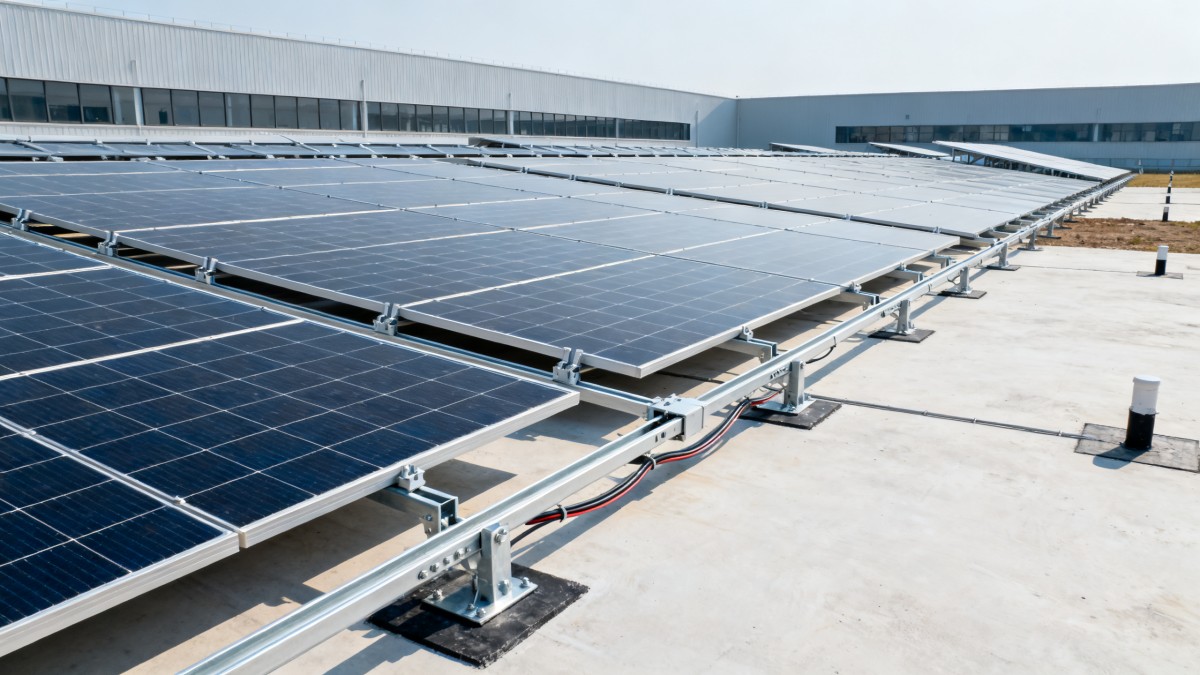
Solar rack mounting refers to the structural framework that secures photovoltaic modules in position. It includes rails, clamps, supports, fasteners, foundations, and connection points.
Depending on the site, the system may be attached to a roof, fixed into the ground, ballasted on a flat surface, or integrated into a canopy or facade.
The right structure must do several jobs at once. It has to resist wind uplift, handle snow loads, limit corrosion, maintain module spacing, and support safe access.
It also affects cable routing, drainage behavior, thermal expansion, and installation sequencing. In other words, solar rack mounting is both a structural and an operational decision.
Common structure types and where they fit
Different projects call for different mounting strategies. The best option depends less on preference and more on site realities.
These categories often overlap. A portfolio may use several solar rack mounting formats across warehouses, stores, distribution centers, and public-facing commercial assets.
The factors that drive a better choice
A strong decision process starts with site conditions, not catalog preference. Climate, roof age, soil conditions, span requirements, and building operations all influence the answer.
Structural load and environmental exposure
Wind and snow data should shape the structure from the beginning. Coastal corrosion, high UV exposure, and freeze-thaw cycles also affect material selection and coating durability.
Aluminum remains popular for its weight and corrosion behavior. Steel may offer strength and cost advantages, but protection strategy becomes more important.
Roof condition and building interface
For rooftop projects, the existing building envelope can be the deciding factor. Membrane compatibility, warranty implications, drainage paths, and attachment spacing need careful coordination.
A lower-cost solar rack mounting option may become expensive if it creates waterproofing risk or forces roof reinforcement late in the project.
Labor efficiency and logistics
Pre-assembled components, fewer fastener types, and clear installation tolerances can reduce field delays. This matters when labor availability is tight or site access is restricted.
In multi-site rollouts, repeatable solar rack mounting details often produce more value than minor unit-price savings.
How mounting choice connects to broader commercial performance
The structure does more than hold modules in place. It influences how a project performs as a business asset.
For retail and branded environments, appearance can matter alongside output. Cleaner edges, concealed hardware, and orderly cable management may support a stronger built environment.
For logistics or industrial sites, maintenance access and standardized replacement parts may matter more. In both cases, solar rack mounting affects lifecycle clarity.
This is where G-BCE’s cross-sector lens is useful. The same procurement discipline applied to lighting, fixtures, and smart retail equipment also improves structural solar decisions.
Benchmarking against documented standards, material traceability, and installation practicality helps reduce downstream surprises across global supply chains.
Warning signs during evaluation
Some mounting proposals look efficient on paper but create issues during execution. Several signals deserve closer review.
- Load assumptions are generic and not linked to the actual site location.
- Corrosion strategy is vague, especially for coastal or chemically exposed areas.
- Attachment details are incomplete, leaving roof interface questions unresolved.
- Bill of materials relies on too many unique parts for field teams.
- Testing, certification, or engineering documentation is inconsistent.
- Future maintenance access is not considered in array spacing.
When these issues appear early, the right response is not only technical review. It is also commercial review, because the risk usually affects schedule and cost.
A practical framework for comparing options
A useful comparison method balances engineering, procurement, and operations. Looking at one variable alone can distort the decision.
Key dimensions to compare
- Structural suitability for local loads and substrate conditions.
- Material durability, coating quality, and expected corrosion resistance.
- Installation speed, crew complexity, and rework sensitivity.
- Documentation quality, certifications, and engineering support.
- Compatibility with maintenance planning and future retrofit needs.
- Supply chain consistency across regions or repeat projects.
This framework helps clarify whether a solar rack mounting system is merely compliant or genuinely aligned with the project’s operational model.
What to do before the final selection
Before locking the specification, it is worth creating a short decision record. That record should connect structural assumptions, site constraints, and commercial priorities.
Confirm load cases, roof or ground conditions, drainage implications, material finish, and spare part strategy. Review how the chosen solar rack mounting approach affects installation sequencing.
Then compare documentation quality across suppliers, not just headline pricing. In many projects, the strongest option is the one that remains clear under real construction pressure.
A well-judged structure creates fewer surprises later. That is often the difference between a solar installation that simply exists and one that performs cleanly over time.
News Recommendations
 How to verify suppliers on a trade portal for global sourcing
![51a6ab95581761cc26f4318be6520c15]()
Aris Katos
Future of Carbide Coatings
 How RoHS requirements should be stated in product specifications
![51a6ab95581761cc26f4318be6520c15]()
Aris Katos
Future of Carbide Coatings
 What affects the lead time for custom retail counter displays?
![51a6ab95581761cc26f4318be6520c15]()
Aris Katos
Future of Carbide Coatings
 What consumer packaging USA importers need to verify before ordering
![51a6ab95581761cc26f4318be6520c15]()
Aris Katos
Future of Carbide Coatings
 How commercial spaces interiors shape customer dwell time
![51a6ab95581761cc26f4318be6520c15]()
Aris Katos
Future of Carbide Coatings
 How LED commercial lighting design reduces glare in retail spaces
![51a6ab95581761cc26f4318be6520c15]()
Aris Katos
Future of Carbide Coatings
 How industrial technology information improves RFID inventory accuracy
![51a6ab95581761cc26f4318be6520c15]()
Aris Katos
Future of Carbide Coatings
 When drip garden watering systems make more sense than sprinklers
![51a6ab95581761cc26f4318be6520c15]()
Aris Katos
Future of Carbide Coatings
 When category comparison improves sourcing for industrial applications
![51a6ab95581761cc26f4318be6520c15]()
Aris Katos
Future of Carbide Coatings
 Industrial application guidance for selecting the right LED lighting
![51a6ab95581761cc26f4318be6520c15]()
Aris Katos
Future of Carbide Coatings
 Which commercial architecture standards apply to European retail fit-outs?
![51a6ab95581761cc26f4318be6520c15]()
Aris Katos
Future of Carbide Coatings
 How to verify FDA requirements for maternity care products
![51a6ab95581761cc26f4318be6520c15]()
Aris Katos
Future of Carbide Coatings
 How to verify BPA-free claims for food-contact products
![51a6ab95581761cc26f4318be6520c15]()
Aris Katos
Future of Carbide Coatings
 When does a European wholesale supplier suit modular office projects?
![51a6ab95581761cc26f4318be6520c15]()
Aris Katos
Future of Carbide Coatings
 When consumer ecosystem solutions improve the in-store shopping journey
![51a6ab95581761cc26f4318be6520c15]()
Aris Katos
Future of Carbide Coatings
 How a commercial developers network can reduce site selection risk
![51a6ab95581761cc26f4318be6520c15]()
Aris Katos
Future of Carbide Coatings
 How clear purchasing specifications prevent costly supplier deviations
![51a6ab95581761cc26f4318be6520c15]()
Aris Katos
Future of Carbide Coatings
 What an ISTA drop test lab checks before your packaging ships
![51a6ab95581761cc26f4318be6520c15]()
Aris Katos
Future of Carbide Coatings
 Which commercial furniture standards apply to workplace seating?
![51a6ab95581761cc26f4318be6520c15]()
Aris Katos
Future of Carbide Coatings
 How to evaluate smart lighting module OEM compatibility before sampling
![51a6ab95581761cc26f4318be6520c15]()
Aris Katos
Future of Carbide Coatings
 How to assess whether sustainable technology delivers real impact
![51a6ab95581761cc26f4318be6520c15]()
Aris Katos
Future of Carbide Coatings
 How to assess an OEM supplier’s quality control before ordering
![51a6ab95581761cc26f4318be6520c15]()
Aris Katos
Future of Carbide Coatings
 How consumer ecosystem solutions data can improve retail personalization
![51a6ab95581761cc26f4318be6520c15]()
Aris Katos
Future of Carbide Coatings
 When does consumer packaging design justify a higher product price?
![51a6ab95581761cc26f4318be6520c15]()
Aris Katos
Future of Carbide Coatings
 Supermarket Fixture Installation: Planning Layouts, Wiring, and Handover
![51a6ab95581761cc26f4318be6520c15]()
Aris Katos
Future of Carbide Coatings
 Automated Lighting and Smart Lighting Control in Bergerac: Key Project Considerations
![51a6ab95581761cc26f4318be6520c15]()
Aris Katos
Future of Carbide Coatings
 Segment Streetlight Controllers: Choosing Control Modes for Urban Roads
![51a6ab95581761cc26f4318be6520c15]()
Aris Katos
Future of Carbide Coatings
 IEC 62471-2 Explained: How to Assess Photobiological Risks in LED Lighting
![51a6ab95581761cc26f4318be6520c15]()
Aris Katos
Future of Carbide Coatings
 Food Grade Packaging Requirements by Product Type, Temperature, and Contact Risk
![51a6ab95581761cc26f4318be6520c15]()
Aris Katos
Future of Carbide Coatings
 Food Packaging Compliance Checklist: Tests, Records, and Labeling Before Shipment
![51a6ab95581761cc26f4318be6520c15]()
Aris Katos
Future of Carbide Coatings
 NSF Food Packaging Standards: When Certification Matters for Commercial Food Use
![51a6ab95581761cc26f4318be6520c15]()
Aris Katos
Future of Carbide Coatings
 FDA Food Grade Compliance: Which Materials and Documents Do Buyers Need?
![51a6ab95581761cc26f4318be6520c15]()
Aris Katos
Future of Carbide Coatings
 What Should a Food Grade Declaration Include for Packaging Compliance?
![51a6ab95581761cc26f4318be6520c15]()
Aris Katos
Future of Carbide Coatings
 Housewares Importing: How to Evaluate Suppliers, Costs, and Compliance Risks
![51a6ab95581761cc26f4318be6520c15]()
Aris Katos
Future of Carbide Coatings
 Why Freeze-Dried Fruit Ingredients Lose Crispness—and How to Prevent It
![51a6ab95581761cc26f4318be6520c15]()
Aris Katos
Future of Carbide Coatings
 What industry veterans look for before choosing a new supplier
![51a6ab95581761cc26f4318be6520c15]()
Aris Katos
Future of Carbide Coatings
 How material fatigue can shorten the service life of retail shelving
![51a6ab95581761cc26f4318be6520c15]()
Aris Katos
Future of Carbide Coatings
 What makes a global sourcing platform reliable for supplier verification?
![51a6ab95581761cc26f4318be6520c15]()
Aris Katos
Future of Carbide Coatings
 When are double platinum spark plugs a better choice than iridium?
![51a6ab95581761cc26f4318be6520c15]()
Aris Katos
Future of Carbide Coatings