Miniature Circuit Breakers: How to Size Them Safely
Time
Click Count
Selecting miniaturecircuitbreakers safely is not a narrow electrical task. It affects uptime, fire risk, equipment life, and compliance across commercial interiors, retail technology, lighting networks, and consumer-facing facilities.
That matters even more in environments shaped by G-BCE benchmarks, where electrical hardware must support reliable operations, clean design integration, and international performance expectations.
In practice, sizing miniature circuit breakers means looking beyond the number printed on the device. Load behavior, fault levels, ambient conditions, conductor limits, and coordination all influence whether protection is actually safe.
Why breaker sizing deserves closer attention
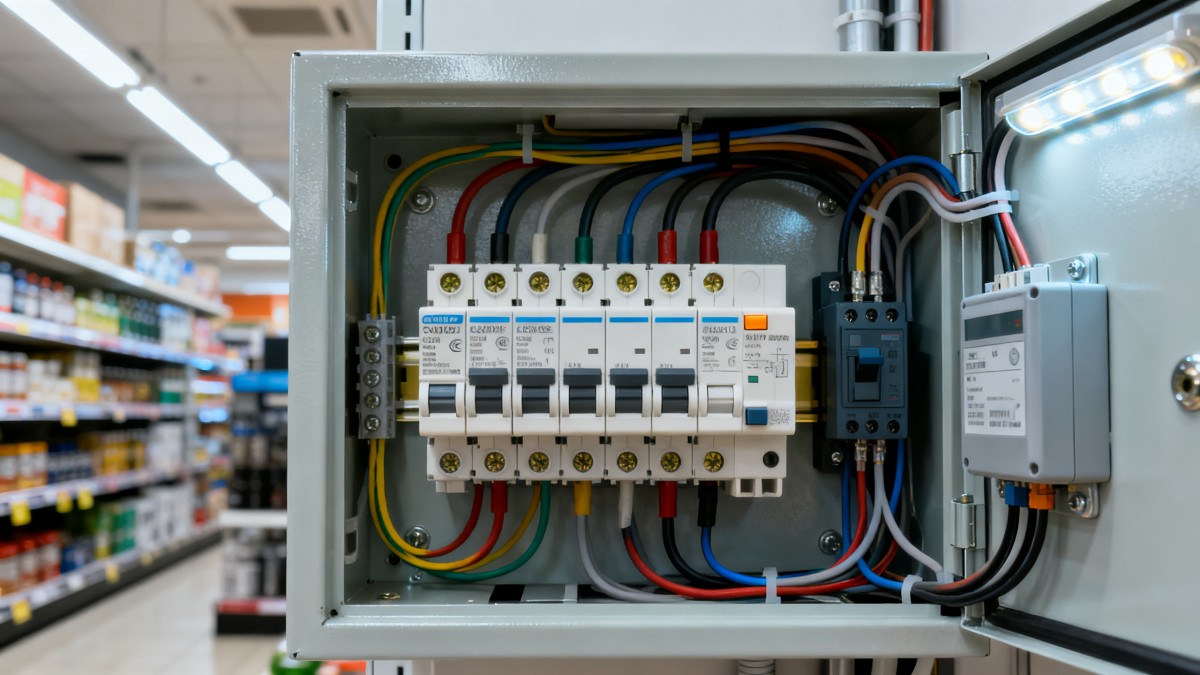
Miniaturecircuitbreakers are designed to interrupt overloads and short circuits in final distribution circuits. They look simple, but poor sizing can create hidden operational and safety problems.
An oversized breaker may fail to trip before cables overheat. An undersized one may nuisance-trip, interrupting lighting, point-of-sale systems, refrigeration, or digital signage.
For mixed-use commercial spaces, the cost of incorrect selection is rarely limited to component replacement. It can disrupt customer experience, energy strategy, and maintenance planning.
This is why miniaturecircuitbreakers are increasingly reviewed as part of broader technical benchmarking, especially where global sourcing, fit-out consistency, and code alignment matter.
The basic rule is simple, but the context is not
At a basic level, breaker sizing starts with the circuit load current. The selected rating must carry normal operating current without unnecessary tripping.
At the same time, the breaker must protect the cable. That means its rating cannot exceed what the conductor and installation method can safely handle.
A sound decision usually balances three values: design load, conductor ampacity, and device trip behavior. If one is reviewed in isolation, the result can be misleading.
Simple current matching is not enough for miniaturecircuitbreakers used with electronic loads, motors, LED drivers, or circuits that experience repeated inrush current.
What the current rating does not tell you
The ampere rating indicates continuous current capacity under defined conditions. It does not automatically reflect startup surges, enclosure heat buildup, altitude effects, or fault interruption limits.
That is where many sizing errors begin. A 20 A circuit is not always best served by a 20 A breaker if real operating conditions differ from the catalog assumptions.
The sizing factors that change real-world performance
When evaluating miniaturecircuitbreakers, several technical factors should be reviewed together rather than one by one.
- Load profile: steady, cyclic, motor-driven, electronic, resistive, or mixed.
- Starting or inrush current: common in compressors, LED drivers, and switched-mode power supplies.
- Ambient temperature: warmer panels reduce effective current-carrying performance.
- Grouping and enclosure density: adjacent devices increase heat stress.
- Cable characteristics: conductor material, insulation type, and installation route.
- Prospective fault current: the breaker must safely interrupt the available short-circuit level.
Trip curve selection is also crucial. B, C, and D curves respond differently to instantaneous current peaks, and the wrong curve can create either nuisance tripping or inadequate discrimination.
A practical comparison point
This combination is often more useful than focusing on a single catalog number.
Where sizing mistakes appear most often
Commercial projects rarely use one type of load. That is why miniaturecircuitbreakers must be matched to the actual circuit role, not just the panel schedule.
Lighting circuits are a common example. LED systems draw modest running current, yet drivers can produce significant inrush. Breakers sized only by steady-state current may trip at energization.
Retail technology circuits present another challenge. POS terminals, displays, routers, and edge devices create sensitive, electronics-heavy loads that depend on stable protection and selective coordination.
Small motors in shutters, fans, refrigeration cases, and service equipment also complicate selection. Startup demand can exceed normal current several times over for short intervals.
From G-BCE’s cross-sector perspective, these details matter because modern commercial environments mix aesthetics, energy efficiency, and digital systems within tighter electrical footprints.
Typical circuit contexts
- Lighting and signage branches with high driver inrush.
- Smart retail equipment circuits with sensitive electronics.
- Back-of-house outlets serving mixed portable loads.
- Dedicated equipment feeders with motor starting events.
- Low-profile fit-out panels with limited ventilation space.
How to evaluate miniaturecircuitbreakers more safely
A safer method starts with the load, then checks the installation, then confirms protective performance. Reversing that order often leads to assumptions based on stock availability alone.
Step one: establish the real load condition
Use measured or well-documented design current where possible. Distinguish continuous demand from intermittent peaks and identify any startup or charging surges.
Step two: verify conductor protection
Check cable size, insulation, routing, and grouping factors. The breaker must protect the conductor under actual installation conditions, not only under ideal laboratory ratings.
Step three: match the trip characteristic
Choose a curve that tolerates normal inrush without compromising fault response. For many commercial electronic or light motor loads, this is where refinement matters most.
Step four: confirm interrupting capacity
Miniaturecircuitbreakers must have adequate breaking capacity for the available fault current at the installation point. This check is essential, especially near transformers or main distribution points.
Step five: review standards and coordination
UL, CE-related conformity pathways, and local code requirements influence acceptable selections. Upstream and downstream protective coordination should also be reviewed to prevent unnecessary broad outages.
Why benchmarking and sourcing discipline matter
Not all miniaturecircuitbreakers with the same nominal rating behave the same way. Thermal performance, endurance, terminal quality, certification scope, and curve consistency can vary between sources.
That is especially relevant in international supply chains, where equivalent-looking products may differ in documentation depth and tested performance.
G-BCE’s emphasis on technical benchmarking is useful here. Comparing hardware against recognized standards and real application requirements reduces the risk of selecting on price or label similarity alone.
For commercial developers and specification teams, this approach supports consistency across sites, helps avoid fit-out surprises, and improves lifecycle planning.
What to check before making a final decision
Before approving miniaturecircuitbreakers for a project or product platform, a short review can prevent larger downstream issues.
- Confirm design current and actual load type.
- Review cable ampacity with derating factors included.
- Check trip curve against inrush behavior.
- Verify short-circuit breaking capacity at the installation point.
- Compare certification, test evidence, and manufacturer data quality.
- Assess coordination with upstream devices and panel thermal conditions.
If any of these points remain uncertain, the breaker is not fully sized yet, even if a nominal rating has already been chosen.
A better next step than choosing by habit
Safe sizing of miniaturecircuitbreakers is really a structured comparison exercise. The goal is not only to prevent faults, but to match protection behavior to the realities of the circuit and the business environment.
A useful next move is to map each circuit by load type, inrush profile, conductor limit, and available fault level, then compare candidate devices against verified standard data.
That kind of disciplined review supports safer installations, cleaner sourcing decisions, and more resilient commercial systems over time.
News Recommendations
 How to verify suppliers on a trade portal for global sourcing
![51a6ab95581761cc26f4318be6520c15]()
Aris Katos
Future of Carbide Coatings
 How RoHS requirements should be stated in product specifications
![51a6ab95581761cc26f4318be6520c15]()
Aris Katos
Future of Carbide Coatings
 What affects the lead time for custom retail counter displays?
![51a6ab95581761cc26f4318be6520c15]()
Aris Katos
Future of Carbide Coatings
 What consumer packaging USA importers need to verify before ordering
![51a6ab95581761cc26f4318be6520c15]()
Aris Katos
Future of Carbide Coatings
 How commercial spaces interiors shape customer dwell time
![51a6ab95581761cc26f4318be6520c15]()
Aris Katos
Future of Carbide Coatings
 How LED commercial lighting design reduces glare in retail spaces
![51a6ab95581761cc26f4318be6520c15]()
Aris Katos
Future of Carbide Coatings
 How industrial technology information improves RFID inventory accuracy
![51a6ab95581761cc26f4318be6520c15]()
Aris Katos
Future of Carbide Coatings
 When drip garden watering systems make more sense than sprinklers
![51a6ab95581761cc26f4318be6520c15]()
Aris Katos
Future of Carbide Coatings
 When category comparison improves sourcing for industrial applications
![51a6ab95581761cc26f4318be6520c15]()
Aris Katos
Future of Carbide Coatings
 Industrial application guidance for selecting the right LED lighting
![51a6ab95581761cc26f4318be6520c15]()
Aris Katos
Future of Carbide Coatings
 Which commercial architecture standards apply to European retail fit-outs?
![51a6ab95581761cc26f4318be6520c15]()
Aris Katos
Future of Carbide Coatings
 How to verify FDA requirements for maternity care products
![51a6ab95581761cc26f4318be6520c15]()
Aris Katos
Future of Carbide Coatings
 How to verify BPA-free claims for food-contact products
![51a6ab95581761cc26f4318be6520c15]()
Aris Katos
Future of Carbide Coatings
 When does a European wholesale supplier suit modular office projects?
![51a6ab95581761cc26f4318be6520c15]()
Aris Katos
Future of Carbide Coatings
 When consumer ecosystem solutions improve the in-store shopping journey
![51a6ab95581761cc26f4318be6520c15]()
Aris Katos
Future of Carbide Coatings
 How a commercial developers network can reduce site selection risk
![51a6ab95581761cc26f4318be6520c15]()
Aris Katos
Future of Carbide Coatings
 How clear purchasing specifications prevent costly supplier deviations
![51a6ab95581761cc26f4318be6520c15]()
Aris Katos
Future of Carbide Coatings
 What an ISTA drop test lab checks before your packaging ships
![51a6ab95581761cc26f4318be6520c15]()
Aris Katos
Future of Carbide Coatings
 Which commercial furniture standards apply to workplace seating?
![51a6ab95581761cc26f4318be6520c15]()
Aris Katos
Future of Carbide Coatings
 How to evaluate smart lighting module OEM compatibility before sampling
![51a6ab95581761cc26f4318be6520c15]()
Aris Katos
Future of Carbide Coatings
 How to assess whether sustainable technology delivers real impact
![51a6ab95581761cc26f4318be6520c15]()
Aris Katos
Future of Carbide Coatings
 How to assess an OEM supplier’s quality control before ordering
![51a6ab95581761cc26f4318be6520c15]()
Aris Katos
Future of Carbide Coatings
 How consumer ecosystem solutions data can improve retail personalization
![51a6ab95581761cc26f4318be6520c15]()
Aris Katos
Future of Carbide Coatings
 When does consumer packaging design justify a higher product price?
![51a6ab95581761cc26f4318be6520c15]()
Aris Katos
Future of Carbide Coatings
 Supermarket Fixture Installation: Planning Layouts, Wiring, and Handover
![51a6ab95581761cc26f4318be6520c15]()
Aris Katos
Future of Carbide Coatings
 Automated Lighting and Smart Lighting Control in Bergerac: Key Project Considerations
![51a6ab95581761cc26f4318be6520c15]()
Aris Katos
Future of Carbide Coatings
 Segment Streetlight Controllers: Choosing Control Modes for Urban Roads
![51a6ab95581761cc26f4318be6520c15]()
Aris Katos
Future of Carbide Coatings
 IEC 62471-2 Explained: How to Assess Photobiological Risks in LED Lighting
![51a6ab95581761cc26f4318be6520c15]()
Aris Katos
Future of Carbide Coatings
 Food Grade Packaging Requirements by Product Type, Temperature, and Contact Risk
![51a6ab95581761cc26f4318be6520c15]()
Aris Katos
Future of Carbide Coatings
 Food Packaging Compliance Checklist: Tests, Records, and Labeling Before Shipment
![51a6ab95581761cc26f4318be6520c15]()
Aris Katos
Future of Carbide Coatings
 NSF Food Packaging Standards: When Certification Matters for Commercial Food Use
![51a6ab95581761cc26f4318be6520c15]()
Aris Katos
Future of Carbide Coatings
 FDA Food Grade Compliance: Which Materials and Documents Do Buyers Need?
![51a6ab95581761cc26f4318be6520c15]()
Aris Katos
Future of Carbide Coatings
 What Should a Food Grade Declaration Include for Packaging Compliance?
![51a6ab95581761cc26f4318be6520c15]()
Aris Katos
Future of Carbide Coatings
 Housewares Importing: How to Evaluate Suppliers, Costs, and Compliance Risks
![51a6ab95581761cc26f4318be6520c15]()
Aris Katos
Future of Carbide Coatings
 Why Freeze-Dried Fruit Ingredients Lose Crispness—and How to Prevent It
![51a6ab95581761cc26f4318be6520c15]()
Aris Katos
Future of Carbide Coatings
 What industry veterans look for before choosing a new supplier
![51a6ab95581761cc26f4318be6520c15]()
Aris Katos
Future of Carbide Coatings
 How material fatigue can shorten the service life of retail shelving
![51a6ab95581761cc26f4318be6520c15]()
Aris Katos
Future of Carbide Coatings
 What makes a global sourcing platform reliable for supplier verification?
![51a6ab95581761cc26f4318be6520c15]()
Aris Katos
Future of Carbide Coatings
 When are double platinum spark plugs a better choice than iridium?
![51a6ab95581761cc26f4318be6520c15]()
Aris Katos
Future of Carbide Coatings