Ticketing Kiosk Manufacturer Guide for Lower Failure Rates
Time
Click Count
Choosing the right ticketing kiosk manufacturer can make the difference between smooth daily operations and costly downtime. For operators and frontline users, lower failure rates mean faster service, fewer disruptions, and a better customer experience. This article explains what to verify before selecting a supplier, with a practical focus on reliability, maintainability, and real-world deployment success.
In transport hubs, cinemas, hospitals, parking facilities, and public venues, kiosks face constant touch, temperature changes, dust, vibration, and heavy daily usage. A dependable ticketing kiosk manufacturer reduces service calls by combining durable hardware, stable software, clean wiring, and responsive technical support.
Why a structured evaluation reduces failure rates
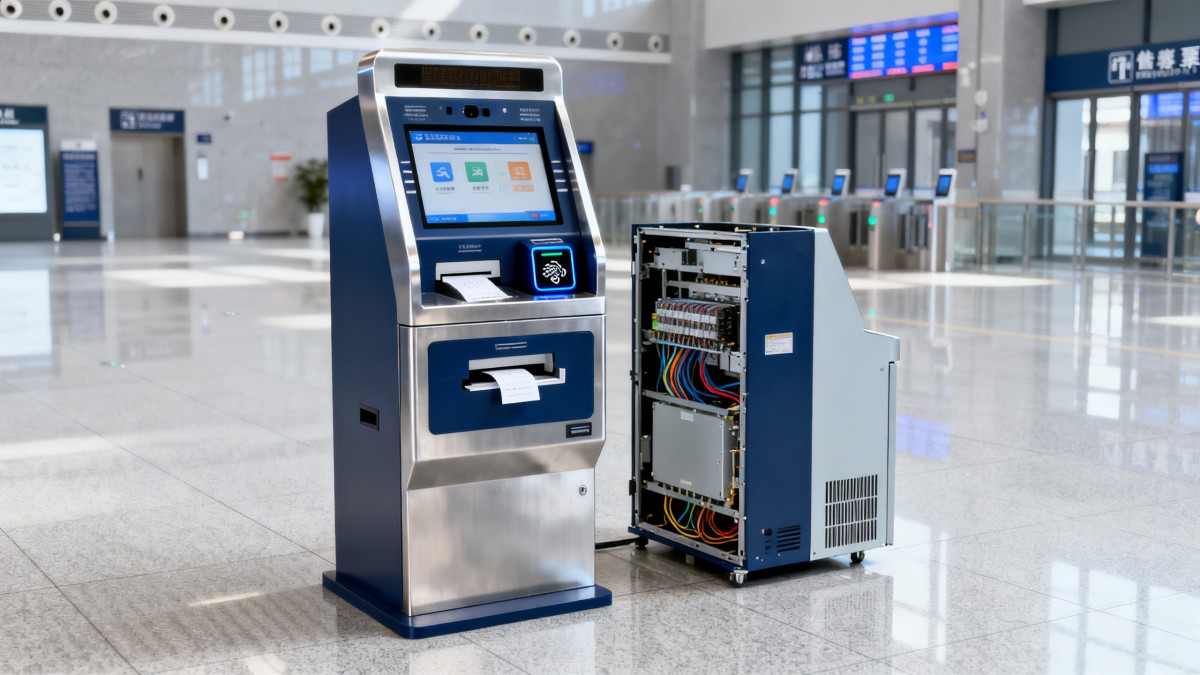
Failure rates rarely come from one weak part alone. They usually result from several small design compromises across enclosure quality, cooling, payment modules, printers, screens, and firmware updates.
A structured review helps compare each ticketing kiosk manufacturer on measurable factors rather than claims. It also makes it easier to predict lifetime cost, not just initial unit price.
This matters across the broader commercial ecosystem. Reliable kiosks support customer flow, labor efficiency, digital service integration, and facility uptime, which are central concerns in modern retail and public infrastructure.
Core points to verify before choosing a ticketing kiosk manufacturer
- Check enclosure strength, internal frame design, and surface finish quality to confirm the kiosk can resist vibration, repeated contact, corrosion, and cosmetic wear in busy public environments.
- Verify thermal management through vent layout, fan selection, dust control, and heat dispersion, because overheating often causes intermittent faults, slow response, and shortened component life.
- Review the display, touch panel, and glass protection stack to ensure visibility, accurate input, and resistance to scratches, impact, and long operating hours under varied lighting conditions.
- Assess printer module quality, cutter durability, jam recovery design, and paper path accessibility, since printing failure is one of the most frequent service issues in ticketing environments.
- Confirm payment and scanning devices come from proven brands with stable drivers, long-term supply continuity, and regional certification support for cards, QR codes, NFC, and barcode workflows.
- Examine cable routing, connector locking, power distribution, and grounding practices, because loose wiring and poor electrical design often create hidden faults that are difficult to diagnose onsite.
- Ask about burn-in testing, incoming quality control, and final inspection records to see whether the ticketing kiosk manufacturer follows a repeatable process instead of relying on random sampling alone.
- Request data on field failure rates, mean time between failures, and module replacement history, which offers stronger evidence than marketing language about product stability and long-term performance.
- Evaluate remote monitoring, device diagnostics, and software update procedures, since proactive maintenance can prevent small issues from turning into long service interruptions across multiple locations.
- Confirm spare parts planning, service manuals, and modular replacement access, because lower downtime depends on how quickly common parts can be swapped without major disassembly.
- Review compliance alignment with UL, CE, and other relevant standards, especially when kiosks operate in regulated commercial spaces or international projects with strict approval requirements.
- Check whether the manufacturer can support future integration with POS, access control, CRM, or cloud reporting tools, reducing the risk of early obsolescence after deployment expands.
How to compare suppliers beyond the quote
A low unit price can hide expensive service exposure. The better comparison is total operating cost across installation, maintenance, parts replacement, software support, and time lost during outages.
A capable ticketing kiosk manufacturer should explain component selection openly. Clear answers about screen bonding, printer life cycle, motherboard sourcing, and industrial PC options are strong positive signs.
Application notes for different operating environments
Transport and mobility sites
Stations and terminals demand fast response, rugged enclosures, and strong printer reliability. Peak-hour stress exposes weak cooling, slow scanners, and unstable payment peripherals very quickly.
In this setting, a ticketing kiosk manufacturer should provide strong remote diagnostics and easy module replacement. Short repair windows are essential when equipment serves nonstop passenger traffic.
Entertainment and event venues
Cinemas, museums, and arenas often focus on speed, branding, and queue reduction. Touch accuracy, screen brightness, and receipt or ticket output consistency strongly affect the visitor experience.
Look for a ticketing kiosk manufacturer that balances appearance with service access. Attractive housing should not make printer maintenance or scanner replacement unnecessarily difficult.
Healthcare and public service spaces
Hospitals and civic facilities need stable uptime, clear interfaces, and hygienic surface materials. Accessibility, privacy screen design, and dependable network communication become especially important here.
The right ticketing kiosk manufacturer should support secure integration, durable finishes, and predictable servicing. Public trust depends on reliable self-service, especially for check-in and queue management.
Commonly overlooked issues that increase failure risk
Ignoring environmental conditions. Indoor kiosks near entrances may still face humidity, dust, and temperature fluctuation. Hardware specifications should reflect the actual site, not the project description.
Over-customizing too early. Excessive customization can introduce unstable drivers, awkward cable layouts, and unsupported parts. A mature base platform usually delivers lower long-term risk.
Underestimating printer maintenance. Even a good printer fails if paper loading, jam clearance, and cutter access are poorly designed. Service ergonomics matter as much as component brand.
Not checking lifecycle planning. Some components disappear quickly from the market. A serious ticketing kiosk manufacturer should offer approved replacements and update pathways.
Weak post-installation support. Failure rates are not only a factory issue. Slow remote troubleshooting, poor documentation, and limited spare stock can turn minor faults into major disruptions.
Practical steps for a stronger selection process
- Define the operating environment, transaction volume, payment methods, and uptime expectation before requesting proposals.
- Ask each ticketing kiosk manufacturer for the same technical data set, including testing, certifications, and parts strategy.
- Run a pilot deployment and track printer jams, reboot frequency, touch response, payment success, and service time.
- Score suppliers on reliability, maintainability, integration, support speed, and lifecycle stability, not just appearance or price.
- Confirm who owns software updates, remote monitoring, and spare parts stocking after handover.
FAQ about ticketing kiosk manufacturer selection
What is the most common source of kiosk failure?
Printer systems, thermal buildup, power issues, and poor cable management are frequent causes. These problems often appear before major computing hardware fails.
How can reliability be verified before large deployment?
Request pilot units, stress-test records, and field references. A credible ticketing kiosk manufacturer should provide measurable evidence, not broad performance claims.
Do certifications guarantee low failure rates?
No. Certifications confirm compliance and safety requirements, but they do not replace practical testing, service design review, and long-term component quality evaluation.
Final considerations and next actions
Selecting a ticketing kiosk manufacturer with lower failure rates is ultimately a systems decision. Hardware strength, software stability, support readiness, and supply continuity all matter together.
Start with a documented checklist, compare suppliers using evidence, and validate performance in a pilot environment. That approach helps reduce downtime, protect customer experience, and improve long-term operational value.
For organizations building smarter commercial environments, reliable kiosk infrastructure supports broader goals in digital service, facility efficiency, and resilient consumer-facing operations.
News Recommendations
 How to choose an ultra bright waterproof window display for storefronts
![51a6ab95581761cc26f4318be6520c15]()
Aris Katos
Future of Carbide Coatings
 How to verify suppliers on a trade portal for global sourcing
![51a6ab95581761cc26f4318be6520c15]()
Aris Katos
Future of Carbide Coatings
 How RoHS requirements should be stated in product specifications
![51a6ab95581761cc26f4318be6520c15]()
Aris Katos
Future of Carbide Coatings
 What affects the lead time for custom retail counter displays?
![51a6ab95581761cc26f4318be6520c15]()
Aris Katos
Future of Carbide Coatings
 What consumer packaging USA importers need to verify before ordering
![51a6ab95581761cc26f4318be6520c15]()
Aris Katos
Future of Carbide Coatings
 How commercial spaces interiors shape customer dwell time
![51a6ab95581761cc26f4318be6520c15]()
Aris Katos
Future of Carbide Coatings
 How LED commercial lighting design reduces glare in retail spaces
![51a6ab95581761cc26f4318be6520c15]()
Aris Katos
Future of Carbide Coatings
 How industrial technology information improves RFID inventory accuracy
![51a6ab95581761cc26f4318be6520c15]()
Aris Katos
Future of Carbide Coatings
 When drip garden watering systems make more sense than sprinklers
![51a6ab95581761cc26f4318be6520c15]()
Aris Katos
Future of Carbide Coatings
 When category comparison improves sourcing for industrial applications
![51a6ab95581761cc26f4318be6520c15]()
Aris Katos
Future of Carbide Coatings
 Industrial application guidance for selecting the right LED lighting
![51a6ab95581761cc26f4318be6520c15]()
Aris Katos
Future of Carbide Coatings
 Which commercial architecture standards apply to European retail fit-outs?
![51a6ab95581761cc26f4318be6520c15]()
Aris Katos
Future of Carbide Coatings
 How to verify FDA requirements for maternity care products
![51a6ab95581761cc26f4318be6520c15]()
Aris Katos
Future of Carbide Coatings
 How to verify BPA-free claims for food-contact products
![51a6ab95581761cc26f4318be6520c15]()
Aris Katos
Future of Carbide Coatings
 When does a European wholesale supplier suit modular office projects?
![51a6ab95581761cc26f4318be6520c15]()
Aris Katos
Future of Carbide Coatings
 When consumer ecosystem solutions improve the in-store shopping journey
![51a6ab95581761cc26f4318be6520c15]()
Aris Katos
Future of Carbide Coatings
 How a commercial developers network can reduce site selection risk
![51a6ab95581761cc26f4318be6520c15]()
Aris Katos
Future of Carbide Coatings
 How clear purchasing specifications prevent costly supplier deviations
![51a6ab95581761cc26f4318be6520c15]()
Aris Katos
Future of Carbide Coatings
 What an ISTA drop test lab checks before your packaging ships
![51a6ab95581761cc26f4318be6520c15]()
Aris Katos
Future of Carbide Coatings
 Which commercial furniture standards apply to workplace seating?
![51a6ab95581761cc26f4318be6520c15]()
Aris Katos
Future of Carbide Coatings
 How to evaluate smart lighting module OEM compatibility before sampling
![51a6ab95581761cc26f4318be6520c15]()
Aris Katos
Future of Carbide Coatings
 How to assess whether sustainable technology delivers real impact
![51a6ab95581761cc26f4318be6520c15]()
Aris Katos
Future of Carbide Coatings
 How to assess an OEM supplier’s quality control before ordering
![51a6ab95581761cc26f4318be6520c15]()
Aris Katos
Future of Carbide Coatings
 How consumer ecosystem solutions data can improve retail personalization
![51a6ab95581761cc26f4318be6520c15]()
Aris Katos
Future of Carbide Coatings
 When does consumer packaging design justify a higher product price?
![51a6ab95581761cc26f4318be6520c15]()
Aris Katos
Future of Carbide Coatings
 Supermarket Fixture Installation: Planning Layouts, Wiring, and Handover
![51a6ab95581761cc26f4318be6520c15]()
Aris Katos
Future of Carbide Coatings
 Automated Lighting and Smart Lighting Control in Bergerac: Key Project Considerations
![51a6ab95581761cc26f4318be6520c15]()
Aris Katos
Future of Carbide Coatings
 Segment Streetlight Controllers: Choosing Control Modes for Urban Roads
![51a6ab95581761cc26f4318be6520c15]()
Aris Katos
Future of Carbide Coatings
 IEC 62471-2 Explained: How to Assess Photobiological Risks in LED Lighting
![51a6ab95581761cc26f4318be6520c15]()
Aris Katos
Future of Carbide Coatings
 Food Grade Packaging Requirements by Product Type, Temperature, and Contact Risk
![51a6ab95581761cc26f4318be6520c15]()
Aris Katos
Future of Carbide Coatings
 Food Packaging Compliance Checklist: Tests, Records, and Labeling Before Shipment
![51a6ab95581761cc26f4318be6520c15]()
Aris Katos
Future of Carbide Coatings
 NSF Food Packaging Standards: When Certification Matters for Commercial Food Use
![51a6ab95581761cc26f4318be6520c15]()
Aris Katos
Future of Carbide Coatings
 FDA Food Grade Compliance: Which Materials and Documents Do Buyers Need?
![51a6ab95581761cc26f4318be6520c15]()
Aris Katos
Future of Carbide Coatings
 What Should a Food Grade Declaration Include for Packaging Compliance?
![51a6ab95581761cc26f4318be6520c15]()
Aris Katos
Future of Carbide Coatings
 Housewares Importing: How to Evaluate Suppliers, Costs, and Compliance Risks
![51a6ab95581761cc26f4318be6520c15]()
Aris Katos
Future of Carbide Coatings
 Why Freeze-Dried Fruit Ingredients Lose Crispness—and How to Prevent It
![51a6ab95581761cc26f4318be6520c15]()
Aris Katos
Future of Carbide Coatings
 What industry veterans look for before choosing a new supplier
![51a6ab95581761cc26f4318be6520c15]()
Aris Katos
Future of Carbide Coatings
 How material fatigue can shorten the service life of retail shelving
![51a6ab95581761cc26f4318be6520c15]()
Aris Katos
Future of Carbide Coatings
 What makes a global sourcing platform reliable for supplier verification?
![51a6ab95581761cc26f4318be6520c15]()
Aris Katos
Future of Carbide Coatings