Outdoor Digital Kiosk Factory Checklist for Weatherproof Performance
Time
Click Count
Selecting the right outdoor digital kiosk factory is critical for project managers responsible for long-term performance in demanding environments. From enclosure sealing and thermal control to corrosion resistance, display visibility, and certification compliance, every detail affects reliability, maintenance costs, and deployment success. This checklist helps you evaluate weatherproof performance with a practical, engineering-focused lens.
Why weatherproof performance should be the first filter when comparing an outdoor digital kiosk factory
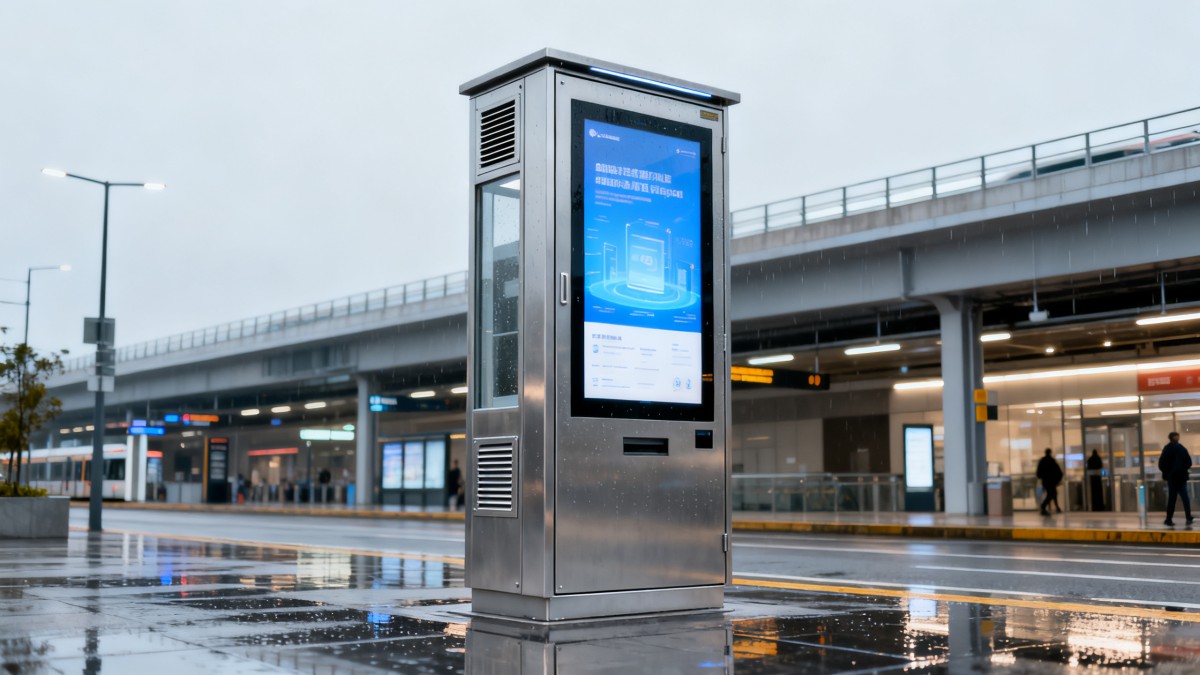
For project managers, outdoor deployment risk rarely comes from the screen alone. Failure usually starts at the interface between electronics and the environment. Rain ingress, UV aging, heat buildup, salt corrosion, dust intrusion, unstable power, and poor drainage can all shorten service life.
That is why an outdoor digital kiosk factory should be assessed as a systems manufacturer, not just a cabinet assembler. The right supplier must show engineering discipline across enclosure design, material selection, thermal architecture, display integration, test validation, and production consistency.
In commercial environments such as transit hubs, retail streets, campuses, drive-through lanes, and mixed-use developments, downtime creates both direct and indirect costs. Direct costs include replacement parts, field labor, and logistics. Indirect costs include poor customer experience, campaign disruption, and brand damage.
- A low initial quote may hide thin sheet metal, weak gasketing, undersized fans, or non-validated coating systems.
- A visually attractive prototype may still fail under prolonged sun exposure, stormwater splash, or winter condensation cycles.
- A factory with broad export experience is often better prepared to align product details with local electrical, safety, and installation requirements.
This is where G-BCE adds value for sourcing teams and engineering leads. By benchmarking smart retail hardware against cross-sector commercial standards and practical deployment requirements, G-BCE helps decision-makers compare factories on evidence, not sales language.
What should be on your outdoor digital kiosk factory checklist?
The checklist below focuses on weatherproof performance factors that most directly affect lifecycle cost, field reliability, and maintenance planning. It is designed for commercial projects where outdoor digital signage, self-service interfaces, or information terminals operate year-round.
A strong outdoor digital kiosk factory should answer each item with drawings, material details, and test logic. If responses stay at the brochure level, the supplier may not be ready for demanding outdoor programs.
Core documents worth requesting early
- Exploded structure drawings or assembly diagrams showing sealing lines and service access.
- Bill of materials for enclosure metals, coatings, glazing, locks, hinges, and external fasteners.
- Thermal design description with fan, filter, heater, or air-conditioner logic where applicable.
- Test plans or validation references for water, dust, temperature, sunlight, and corrosion exposure.
How to judge enclosure sealing, drainage, and pressure balance
Many buyers focus only on the stated IP rating, but project managers should go deeper. A nominal IP target does not guarantee field performance if the gasket path is too long, hinges distort the door, cable glands are weak, or internal pressure changes pull moisture into the cabinet.
Ask the outdoor digital kiosk factory how it manages three separate issues: sealing against direct water entry, draining incidental moisture, and balancing internal pressure caused by temperature swings. These are related, but they are not the same engineering problem.
- Check whether the door uses continuous gaskets and consistent compression rather than interrupted sealing points.
- Confirm that seams, vents, and cable penetrations are designed as weather-critical features, not afterthoughts.
- Review whether the cabinet includes controlled drainage paths for condensation or splash events.
- Ask how filters or membranes are protected from clogging in dusty roadside or construction-adjacent locations.
For coastal, monsoon, or freeze-thaw regions, these details are even more important. A cabinet that resists hose-down testing may still struggle with daily humidity cycling if pressure equalization and moisture management were not considered together.
Which thermal control strategy fits your site conditions?
Thermal failure is one of the biggest hidden risks in outdoor digital signage. Solar gain can raise internal temperatures far above ambient conditions. The wrong thermal design may pass a short indoor demonstration yet fail after hours of direct sun, especially when high-brightness displays and media players generate constant heat.
Instead of asking only for an operating temperature range, ask the outdoor digital kiosk factory what assumptions were used. Was the range based on shaded exposure or direct sun? Was the display running at full brightness? Did the test include internal heat loads from peripheral devices?
The comparison table below helps align cooling strategy with typical deployment environments and maintenance expectations.
No single strategy is right for every project. The best choice depends on sun exposure, duty cycle, local service access, power availability, and expected display brightness. A credible factory should help model these inputs instead of pushing one standard solution.
Questions that expose weak thermal design
- What is the maximum internal heat load the design was built to manage?
- How does the kiosk behave under direct sun during peak daytime operation?
- What maintenance intervals apply to filters, fans, or cooling modules?
- How are cold starts, condensation events, and heater activation controlled?
What materials and finishes matter most for corrosion resistance?
Corrosion is not limited to marine projects. Urban pollution, fertilizer exposure, de-icing salts, and trapped moisture can damage outdoor enclosures in many commercial settings. Project managers should review the full corrosion system, not just the headline material.
An outdoor digital kiosk factory should explain how enclosure metal, surface pretreatment, powder coating or paint, stainless parts, and fasteners work together. Mixed metals without proper separation can accelerate galvanic issues. Poor edge coverage can cause early coating failure even when flat surfaces look acceptable.
- For coastal or humid locations, ask whether marine-adjacent exposure changes the recommended material set.
- Check whether external screws, hinges, and locks match the corrosion strategy of the main cabinet.
- Review whether drainage design prevents standing water around seams, base plates, and mounting interfaces.
Appearance matters too. In premium retail and commercial developments, staining, blistering, and uneven fading can trigger replacement before actual structural failure. G-BCE’s cross-sector perspective is especially useful here because aesthetic durability and technical durability often need to be evaluated together.
How should project teams compare display visibility and touch performance outdoors?
A weatherproof cabinet is not enough if customers cannot read or use the interface. Outdoor visibility depends on brightness, contrast retention, anti-reflection treatment, glass design, and software dimming logic. High brightness helps, but uncontrolled heat and glare can still ruin usability.
Touch performance should also be judged in environmental context. Gloves, moisture, cold weather, and strong sunlight can affect interaction. If the kiosk is for wayfinding, ticketing, pickup verification, or brand engagement, a poor human interface quickly becomes an operations issue.
When reviewing an outdoor digital kiosk factory, compare display and interface decisions against the intended commercial scenario.
This comparison helps teams avoid overbuying brightness where shade dominates, or under-specifying touch resilience where public interaction is frequent. The right configuration is always scenario-specific.
Which standards, certifications, and compliance questions should you raise?
Certification requirements vary by region and project type, so project managers should define compliance needs early. For outdoor digital kiosk procurement, common concerns include electrical safety, EMC compatibility, material safety, and installation-related local code alignment.
Because G-BCE tracks commercial hardware against international benchmarks such as UL and CE frameworks, sourcing teams can use a more structured approach when screening suppliers. The goal is not to request every possible mark. The goal is to confirm that the factory understands which approvals, reports, and product configurations are relevant to your target market.
- Ask whether compliance applies to the full assembled kiosk or only to selected internal components.
- Check whether design changes such as display size, power module, cooling method, or payment hardware affect compliance scope.
- Clarify documentation lead time, especially when the project schedule depends on customs clearance or site approval.
A capable outdoor digital kiosk factory should explain certification boundaries clearly. Ambiguity here can delay rollout more than manufacturing itself.
How to balance cost, serviceability, and deployment speed without compromising weatherproof reliability
Project managers often work under conflicting demands: lower capex, faster delivery, higher reliability, and stricter localization requirements. The best decision usually comes from lifecycle thinking rather than unit-price comparison.
For example, a standard cabinet platform may shorten lead time and simplify spare parts planning. However, if site conditions involve extreme heat, corrosive air, or heavy public use, a more tailored build can reduce total field cost over time. The right outdoor digital kiosk factory should help quantify that trade-off.
Procurement decision tips for engineering-led teams
- Classify sites by environmental severity instead of using one kiosk specification for every location.
- Separate must-have compliance items from optional upgrades to keep quotation comparisons clean.
- Score suppliers on service access, spare strategy, and documentation quality, not only BOM price.
- Request pilot deployment feedback loops before committing to a large multisite rollout.
This structured process is particularly valuable in integrated commercial ecosystems where kiosks must work alongside furniture, lighting, signage, retail technology, and branded architectural elements. Cross-category coordination reduces rework during installation and improves overall site performance.
FAQ: practical questions project managers ask before choosing an outdoor digital kiosk factory
How do I know whether a factory is truly experienced with outdoor deployments?
Look for engineering evidence, not general manufacturing claims. Useful indicators include clear enclosure drawings, thermal design logic, service access planning, structured material specifications, and realistic discussion of environmental limits. A factory that speaks confidently about indoor display assembly but vaguely about moisture, corrosion, and field maintenance may not be ready for outdoor work.
What is the most commonly overlooked issue in outdoor digital kiosk sourcing?
Thermal assumptions are often overlooked. Buyers may accept a broad operating temperature claim without asking whether it reflects direct sun, full display brightness, and enclosed electronics. In practice, those factors determine real-world reliability more than ambient temperature alone.
Are higher IP ratings always better for an outdoor digital kiosk factory proposal?
Not automatically. A higher IP target may support better protection, but it can also complicate ventilation and service design if used without balance. What matters is whether sealing, drainage, pressure management, and thermal control work together for your operating environment.
How should I plan around lead time and customization risk?
Start by freezing the critical variables early: display size, cooling architecture, mounting method, regional compliance scope, and interface hardware. Late changes in these areas can affect enclosure tooling, internal layout, and certification pathways. Ask the factory to identify which design choices have the biggest schedule impact.
Why work with G-BCE when evaluating an outdoor digital kiosk factory?
G-BCE supports project managers and sourcing leaders who need more than a simple product quote. Our value lies in technical benchmarking, cross-sector commercial hardware insight, and practical translation between manufacturing capability and global deployment expectations.
If you are comparing an outdoor digital kiosk factory for retail modernization, public-facing self-service, campus infrastructure, or mixed-use commercial projects, we can help you clarify the factors that affect long-term performance and procurement confidence.
- Confirm weatherproof performance priorities based on site climate, usage intensity, and maintenance conditions.
- Compare enclosure, display, cooling, and corrosion strategies across different factory proposals.
- Review parameter alignment for product selection, customization scope, and delivery planning.
- Discuss certification expectations, sample evaluation, spare planning, and quotation structure before commitment.
Contact us if you need support with specification review, outdoor digital kiosk factory shortlisting, thermal and weatherproof checklist validation, sample assessment, customization feasibility, delivery schedule discussion, or compliance-oriented sourcing communication.
News Recommendations
 Which consumer goods need CE marking in Europe?
![51a6ab95581761cc26f4318be6520c15]()
Aris Katos
Future of Carbide Coatings
 Uniguest and Extreme Networks Partner to Simplify Digital Signage Deployment
![51a6ab95581761cc26f4318be6520c15]()
Aris Katos
Future of Carbide Coatings
 How to assess electronics compliance whitepapers for regulatory accuracy
![51a6ab95581761cc26f4318be6520c15]()
Aris Katos
Future of Carbide Coatings
 Packaging Data Hub Launches With Plastic Recycling Findings for 50 Countries
![51a6ab95581761cc26f4318be6520c15]()
Aris Katos
Future of Carbide Coatings
 How to verify an ergonomic office chair supplier's warranty terms
![51a6ab95581761cc26f4318be6520c15]()
Aris Katos
Future of Carbide Coatings
 Curion Survey: 64% Value Sustainable Beauty Packaging, but Quality Comes First
![51a6ab95581761cc26f4318be6520c15]()
Aris Katos
Future of Carbide Coatings
 Can minimalist fit out solutions make a small office feel larger?
![51a6ab95581761cc26f4318be6520c15]()
Aris Katos
Future of Carbide Coatings
 Kiosk Industry Releases IAAPA 2026 Self-Service Guide
![51a6ab95581761cc26f4318be6520c15]()
Aris Katos
Future of Carbide Coatings
 How to improve global supply chain visibility beyond tier-one suppliers
![51a6ab95581761cc26f4318be6520c15]()
Aris Katos
Future of Carbide Coatings
 Austria’s MM Group to Sell 70% of Packaging Business to KPS for $2.7 Billion
![51a6ab95581761cc26f4318be6520c15]()
Aris Katos
Future of Carbide Coatings
 How to assess delivery reliability of airport terminal seating suppliers in Europe
![51a6ab95581761cc26f4318be6520c15]()
Aris Katos
Future of Carbide Coatings
 USTR Extends China-Linked Vessel Fee Pause and 178 Product Exemptions to January 2027
![51a6ab95581761cc26f4318be6520c15]()
Aris Katos
Future of Carbide Coatings
 How to choose smart sensors for automated lighting
![51a6ab95581761cc26f4318be6520c15]()
Aris Katos
Future of Carbide Coatings
 Shanghai Retail Buyers Sign Deals at Ninth China International Import Expo
![51a6ab95581761cc26f4318be6520c15]()
Aris Katos
Future of Carbide Coatings
 Which toys are subject to EN 71 toy safety requirements?
![51a6ab95581761cc26f4318be6520c15]()
Aris Katos
Future of Carbide Coatings
 Report: Global Kraft Paper Market Forecast to Reach $20.5 Billion by 2033
![51a6ab95581761cc26f4318be6520c15]()
Aris Katos
Future of Carbide Coatings
 How to verify Zigbee compatibility when sourcing lighting sensors
![51a6ab95581761cc26f4318be6520c15]()
Aris Katos
Future of Carbide Coatings
 How do packaging customization options affect minimum order quantities in Europe?
![51a6ab95581761cc26f4318be6520c15]()
Aris Katos
Future of Carbide Coatings
 Transom to Acquire Cree LED in Commercial Lighting Ownership Change
![51a6ab95581761cc26f4318be6520c15]()
Aris Katos
Future of Carbide Coatings
 How to plan customer flow in commercial design planning
![51a6ab95581761cc26f4318be6520c15]()
Aris Katos
Future of Carbide Coatings
 USTR Urged to Permanently Suspend Fees on China-Linked Ships
![51a6ab95581761cc26f4318be6520c15]()
Aris Katos
Future of Carbide Coatings
 How to choose comparable stores for retail benchmarking
![51a6ab95581761cc26f4318be6520c15]()
Aris Katos
Future of Carbide Coatings
 How does anchoring affect modular building wind load resistance?
![51a6ab95581761cc26f4318be6520c15]()
Aris Katos
Future of Carbide Coatings
 Amazon Raises European FBA Surcharge to 2% in Ten Markets From November 2
![51a6ab95581761cc26f4318be6520c15]()
Aris Katos
Future of Carbide Coatings
 How to verify a BPA-free test report for baby products
![51a6ab95581761cc26f4318be6520c15]()
Aris Katos
Future of Carbide Coatings
 China's Mandatory Classroom Lighting Standard GB 7793-2025 Takes Effect November 1
![51a6ab95581761cc26f4318be6520c15]()
Aris Katos
Future of Carbide Coatings
 How order volume affects the price of wholesale poly mailers
![51a6ab95581761cc26f4318be6520c15]()
Aris Katos
Future of Carbide Coatings
 US Imposes 50% Tariff on Certain Canadian PET Resin Imports
![51a6ab95581761cc26f4318be6520c15]()
Aris Katos
Future of Carbide Coatings
 How to read the maximum ratings in a semiconductor datasheet
![51a6ab95581761cc26f4318be6520c15]()
Aris Katos
Future of Carbide Coatings
 University of Maryland Develops Bio-Based Packaging to Extend Avocado and Cucumber Shelf Life
![51a6ab95581761cc26f4318be6520c15]()
Aris Katos
Future of Carbide Coatings
 How to verify a cookware manufacturer's induction compatibility claims
![51a6ab95581761cc26f4318be6520c15]()
Aris Katos
Future of Carbide Coatings
 Omdia Forecasts 11.6% Annual Growth in LED Display Revenue Through 2030
![51a6ab95581761cc26f4318be6520c15]()
Aris Katos
Future of Carbide Coatings
 How to verify a pulp molding packaging factory's production capacity
![51a6ab95581761cc26f4318be6520c15]()
Aris Katos
Future of Carbide Coatings
 Curion Survey: Half of Consumers Frustrated by Sustainable Packaging
![51a6ab95581761cc26f4318be6520c15]()
Aris Katos
Future of Carbide Coatings
 How to assess the credibility of market insight content
![51a6ab95581761cc26f4318be6520c15]()
Aris Katos
Future of Carbide Coatings
 US Removes 50% Additional Tariff on Selected Canadian Packaging Products
![51a6ab95581761cc26f4318be6520c15]()
Aris Katos
Future of Carbide Coatings
 Will a waterproof dimmable LED driver work with your existing dimmer?
![51a6ab95581761cc26f4318be6520c15]()
Aris Katos
Future of Carbide Coatings
 Charter Next Generation Raises Film PCR Use 30%, Advances Food-Grade Applications
![51a6ab95581761cc26f4318be6520c15]()
Aris Katos
Future of Carbide Coatings
 How to choose a dog harness and leash for a dog that pulls hard
![51a6ab95581761cc26f4318be6520c15]()
Aris Katos
Future of Carbide Coatings