How to Compare Payment Terminal Suppliers for Stable Rollouts
Time
Click Count
Choosing a payment terminal supplier is not only a sourcing exercise. It is a stability decision that affects certification, deployment speed, maintenance burden, and payment continuity across physical commercial environments.
When rollouts span multiple regions, formats, or store concepts, weak supplier comparison often creates hidden delays. These include failed certifications, firmware inconsistencies, spare part gaps, and poor middleware compatibility.
A structured evaluation model helps compare each payment terminal supplier beyond brochure claims. The goal is simple: stable rollouts, predictable support, and lower lifecycle risk for connected retail ecosystems.
What should define a reliable payment terminal supplier from the start?
A reliable payment terminal supplier should be measured across technical, operational, and commercial dimensions. Hardware alone never tells the full story for sustained field performance.
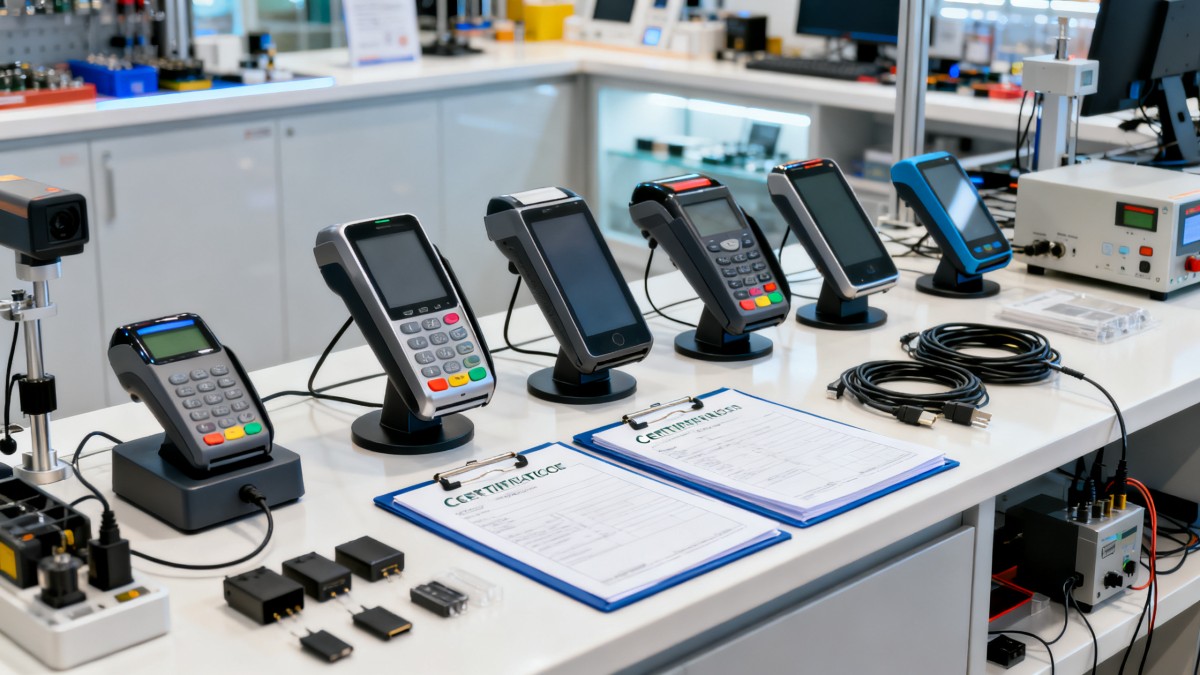
Start with product maturity. Ask how long the device platform has been shipping, in which countries, and under what transaction loads. Field-proven models usually reveal fewer surprises during scaled deployment.
Then review certification readiness. A strong payment terminal supplier should clearly document EMV, PCI, CE, FCC, RoHS, and regional telecom or safety approvals where relevant.
Do not stop at headline certifications. Check certificate validity periods, covered hardware revisions, approved accessories, and software dependencies. Certification drift is a common source of rollout interruption.
Manufacturing control also matters. Request visibility into component traceability, quality sampling, burn-in procedures, and revision control. Stable rollouts depend on consistent builds, not just acceptable prototypes.
- Device platform age and installed base
- Certification scope and expiration status
- Manufacturing consistency and quality records
- Documented failure rates and repair turnaround
- Firmware governance and update controls
How can hardware quality and compliance be compared without guessing?
Comparing hardware quality requires evidence from testing, materials, and real operating conditions. Marketing terms like industrial-grade or enterprise-ready are too broad for technical benchmarking.
Review enclosure durability, screen strength, connector retention, thermal behavior, and ingress resistance. A payment terminal supplier should explain which environments each model is designed to survive.
Ask for test data tied to actual use cases. Countertop retail, hospitality, transit, and semi-outdoor kiosks create different stress patterns. One terminal family rarely fits all conditions equally well.
Compliance comparison should also include accessibility and electrical safety. For international projects, a payment terminal supplier with organized compliance documentation reduces approval friction at every site.
It is useful to compare quality through a scorecard rather than a single pass or fail view.
Why is integration readiness often more important than the terminal itself?
The most attractive device can still fail operationally if integration is weak. Stable rollouts depend on smooth interaction between terminals, POS software, payment gateways, MDM tools, and back-office systems.
A capable payment terminal supplier should provide clear SDKs, APIs, certification guides, and sample code. Good documentation shortens testing cycles and reduces implementation ambiguity.
Check supported operating systems, communication protocols, remote key injection options, tokenization flows, and estate management functions. Integration depth determines how scalable the deployment really becomes.
Firmware updates deserve special attention. Ask whether updates can be staged by region, store group, or device batch. Controlled rollout logic helps prevent estate-wide failures after a single software issue.
Also examine diagnostic capabilities. A payment terminal supplier that offers remote logs, health alerts, and version visibility makes issue isolation much faster during live operations.
Integration questions worth asking
- How many POS platforms already use this device stack?
- What test environments are available before production?
- Can firmware and payment applications be rolled back safely?
- How are encryption keys managed across regions?
- Which monitoring tools expose uptime and transaction errors?
How do support, logistics, and lifecycle planning affect rollout stability?
Many payment terminal supplier comparisons focus too much on unit price. In practice, unstable support models create far higher costs than a slightly higher device quotation.
Assess spare parts availability, depot coverage, RMA workflow, and regional repair capability. A stable rollout needs service continuity from pilot through refresh cycles.
Lead time transparency is essential. Ask for normal production lead times, surge capacity, and shortage mitigation plans. A strong payment terminal supplier can explain allocation logic during supply constraints.
Lifecycle planning should include end-of-life notice periods, successor models, and accessory continuity. Terminal fleets usually outlive initial assumptions, especially in large commercial estates.
Support quality should be tested, not assumed. Review escalation paths, support hours, language coverage, field engineering access, and historical response times for software and hardware incidents.
Common hidden risks
- Single-source critical components with no backup plan
- No local certification support for destination markets
- Slow RMA cycles that exceed store downtime tolerance
- Firmware branches that differ by shipment batch
- Accessories discontinued before fleet expansion ends
What is the best way to compare total cost without ignoring operational risk?
The best comparison method uses total cost of ownership, not purchase price alone. A cheaper payment terminal supplier may produce higher downtime, integration expense, and replacement frequency later.
Build a model covering hardware, accessories, certification work, software integration, logistics, deployment labor, support contracts, repair costs, and refresh timing. This reveals the real economic profile.
Scenario modeling helps. Compare normal rollout conditions against high-volume peak launches, cross-border expansion, and urgent replacement situations. The strongest payment terminal supplier usually performs consistently across scenarios.
Do not ignore failure cost. Even brief transaction disruption can affect revenue, customer flow, and brand trust in busy commercial spaces. Stability often justifies a premium when measured correctly.
Which final checks reduce mistakes before selecting a payment terminal supplier?
Before making a final decision, run a structured proof process. Shortlist suppliers using the same scorecard, the same test scripts, and the same deployment assumptions.
A useful pilot should include installation, payment flow validation, remote updates, fault simulation, and service escalation testing. This reveals how each payment terminal supplier performs under pressure.
Reference checks matter when they are specific. Ask about issue resolution speed, batch consistency, and long-term software support rather than general satisfaction statements.
Contract terms should reflect operational realities. Include version control, notice periods for hardware changes, spare parts commitments, and responsibilities for recertification or security updates.
For global commercial ecosystems, the best payment terminal supplier is usually the one that aligns engineering discipline, compliance clarity, and service resilience across the full deployment lifecycle.
Final evaluation checklist
- Verify certifications by exact model and revision
- Test integration with production-like systems
- Confirm firmware governance and rollback options
- Review support SLAs and local service capacity
- Model total cost over the planned device lifecycle
FAQ summary table: how to compare a payment terminal supplier quickly
A dependable payment terminal supplier supports more than transactions. It supports rollout confidence, service continuity, and long-term adaptability across modern retail and commercial ecosystems.
Use a scorecard, demand evidence, and validate support under realistic conditions. That approach turns supplier comparison into a practical risk-control process with measurable deployment value.
News Recommendations
 How to choose an ultra bright waterproof window display for storefronts
![51a6ab95581761cc26f4318be6520c15]()
Aris Katos
Future of Carbide Coatings
 How to verify suppliers on a trade portal for global sourcing
![51a6ab95581761cc26f4318be6520c15]()
Aris Katos
Future of Carbide Coatings
 How RoHS requirements should be stated in product specifications
![51a6ab95581761cc26f4318be6520c15]()
Aris Katos
Future of Carbide Coatings
 What affects the lead time for custom retail counter displays?
![51a6ab95581761cc26f4318be6520c15]()
Aris Katos
Future of Carbide Coatings
 What consumer packaging USA importers need to verify before ordering
![51a6ab95581761cc26f4318be6520c15]()
Aris Katos
Future of Carbide Coatings
 How commercial spaces interiors shape customer dwell time
![51a6ab95581761cc26f4318be6520c15]()
Aris Katos
Future of Carbide Coatings
 How LED commercial lighting design reduces glare in retail spaces
![51a6ab95581761cc26f4318be6520c15]()
Aris Katos
Future of Carbide Coatings
 How industrial technology information improves RFID inventory accuracy
![51a6ab95581761cc26f4318be6520c15]()
Aris Katos
Future of Carbide Coatings
 When drip garden watering systems make more sense than sprinklers
![51a6ab95581761cc26f4318be6520c15]()
Aris Katos
Future of Carbide Coatings
 When category comparison improves sourcing for industrial applications
![51a6ab95581761cc26f4318be6520c15]()
Aris Katos
Future of Carbide Coatings
 Industrial application guidance for selecting the right LED lighting
![51a6ab95581761cc26f4318be6520c15]()
Aris Katos
Future of Carbide Coatings
 Which commercial architecture standards apply to European retail fit-outs?
![51a6ab95581761cc26f4318be6520c15]()
Aris Katos
Future of Carbide Coatings
 How to verify FDA requirements for maternity care products
![51a6ab95581761cc26f4318be6520c15]()
Aris Katos
Future of Carbide Coatings
 How to verify BPA-free claims for food-contact products
![51a6ab95581761cc26f4318be6520c15]()
Aris Katos
Future of Carbide Coatings
 When does a European wholesale supplier suit modular office projects?
![51a6ab95581761cc26f4318be6520c15]()
Aris Katos
Future of Carbide Coatings
 When consumer ecosystem solutions improve the in-store shopping journey
![51a6ab95581761cc26f4318be6520c15]()
Aris Katos
Future of Carbide Coatings
 How a commercial developers network can reduce site selection risk
![51a6ab95581761cc26f4318be6520c15]()
Aris Katos
Future of Carbide Coatings
 How clear purchasing specifications prevent costly supplier deviations
![51a6ab95581761cc26f4318be6520c15]()
Aris Katos
Future of Carbide Coatings
 What an ISTA drop test lab checks before your packaging ships
![51a6ab95581761cc26f4318be6520c15]()
Aris Katos
Future of Carbide Coatings
 Which commercial furniture standards apply to workplace seating?
![51a6ab95581761cc26f4318be6520c15]()
Aris Katos
Future of Carbide Coatings
 How to evaluate smart lighting module OEM compatibility before sampling
![51a6ab95581761cc26f4318be6520c15]()
Aris Katos
Future of Carbide Coatings
 How to assess whether sustainable technology delivers real impact
![51a6ab95581761cc26f4318be6520c15]()
Aris Katos
Future of Carbide Coatings
 How to assess an OEM supplier’s quality control before ordering
![51a6ab95581761cc26f4318be6520c15]()
Aris Katos
Future of Carbide Coatings
 How consumer ecosystem solutions data can improve retail personalization
![51a6ab95581761cc26f4318be6520c15]()
Aris Katos
Future of Carbide Coatings
 When does consumer packaging design justify a higher product price?
![51a6ab95581761cc26f4318be6520c15]()
Aris Katos
Future of Carbide Coatings
 Supermarket Fixture Installation: Planning Layouts, Wiring, and Handover
![51a6ab95581761cc26f4318be6520c15]()
Aris Katos
Future of Carbide Coatings
 Automated Lighting and Smart Lighting Control in Bergerac: Key Project Considerations
![51a6ab95581761cc26f4318be6520c15]()
Aris Katos
Future of Carbide Coatings
 Segment Streetlight Controllers: Choosing Control Modes for Urban Roads
![51a6ab95581761cc26f4318be6520c15]()
Aris Katos
Future of Carbide Coatings
 IEC 62471-2 Explained: How to Assess Photobiological Risks in LED Lighting
![51a6ab95581761cc26f4318be6520c15]()
Aris Katos
Future of Carbide Coatings
 Food Grade Packaging Requirements by Product Type, Temperature, and Contact Risk
![51a6ab95581761cc26f4318be6520c15]()
Aris Katos
Future of Carbide Coatings
 Food Packaging Compliance Checklist: Tests, Records, and Labeling Before Shipment
![51a6ab95581761cc26f4318be6520c15]()
Aris Katos
Future of Carbide Coatings
 NSF Food Packaging Standards: When Certification Matters for Commercial Food Use
![51a6ab95581761cc26f4318be6520c15]()
Aris Katos
Future of Carbide Coatings
 FDA Food Grade Compliance: Which Materials and Documents Do Buyers Need?
![51a6ab95581761cc26f4318be6520c15]()
Aris Katos
Future of Carbide Coatings
 What Should a Food Grade Declaration Include for Packaging Compliance?
![51a6ab95581761cc26f4318be6520c15]()
Aris Katos
Future of Carbide Coatings
 Housewares Importing: How to Evaluate Suppliers, Costs, and Compliance Risks
![51a6ab95581761cc26f4318be6520c15]()
Aris Katos
Future of Carbide Coatings
 Why Freeze-Dried Fruit Ingredients Lose Crispness—and How to Prevent It
![51a6ab95581761cc26f4318be6520c15]()
Aris Katos
Future of Carbide Coatings
 What industry veterans look for before choosing a new supplier
![51a6ab95581761cc26f4318be6520c15]()
Aris Katos
Future of Carbide Coatings
 How material fatigue can shorten the service life of retail shelving
![51a6ab95581761cc26f4318be6520c15]()
Aris Katos
Future of Carbide Coatings
 What makes a global sourcing platform reliable for supplier verification?
![51a6ab95581761cc26f4318be6520c15]()
Aris Katos
Future of Carbide Coatings