Automated Retail Machine ROI: When Self-Service Really Pays Off
Time
Click Count
For enterprise decision-makers, investing in an automated retail machine is no longer just a question of innovation—it is a question of measurable return. As labor costs rise and customer expectations shift toward seamless self-service, understanding when automation truly pays off becomes essential. This article examines the key ROI drivers, operational trade-offs, and strategic benchmarks that determine whether self-service retail delivers lasting business value.
What does ROI really mean for an automated retail machine?
An automated retail machine creates value beyond direct sales. True ROI includes revenue growth, labor efficiency, uptime, space productivity, and improved customer convenience.
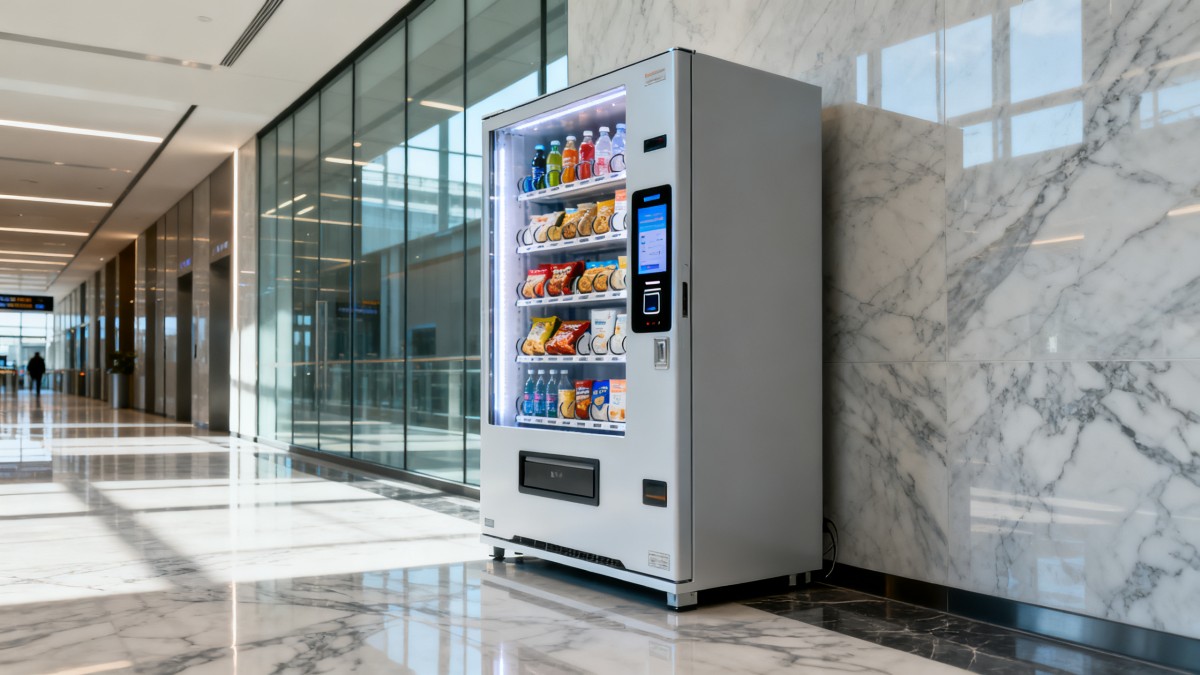
Many businesses assess only the purchase price. That approach misses installation, software, replenishment, payment processing, maintenance, shrinkage, and data integration costs.
A useful ROI model compares total investment against total business impact over 24 to 60 months. Short-term sales alone rarely tell the full story.
For a modern automated retail machine, the strongest gains often come from extended service hours. Self-service keeps transactions running when staffed counters close.
Another major factor is consistency. Machine-driven retail can standardize pricing, inventory visibility, and customer flow across locations with fewer operational variations.
Core ROI metrics to track
- Payback period in months
- Gross margin per transaction
- Transactions per day and per square foot
- Machine uptime and service response time
- Labor hours reduced or redeployed
- Inventory loss, spoilage, or stockout rate
When does an automated retail machine pay off fastest?
The best returns usually appear where traffic is predictable, service windows are long, and labor costs are difficult to absorb. Not every site performs equally.
High-performing environments include transport hubs, office campuses, healthcare facilities, universities, hotels, residential towers, and mixed-use developments.
In these settings, an automated retail machine can capture impulse purchases and after-hours demand. It also reduces queue pressure during peak periods.
Payback often accelerates when the machine sells high-margin essentials, ready-to-eat products, personal care items, accessories, or digitally assisted premium goods.
Signals of a strong business case
- The site has daily traffic but limited staffed service.
- Customers value speed more than assisted selling.
- Products are standardized and easy to replenish.
- The footprint is small but commercially expensive.
- Digital payments are already widely accepted.
Returns are slower in low-traffic spaces, highly customized product categories, or locations with frequent vandalism and weak service support.
Which costs are most underestimated in self-service retail?
The headline machine price is only part of the equation. A realistic automated retail machine budget must include hidden operational and technical costs.
Power, connectivity, software licenses, remote monitoring, cashless compliance, and local certification requirements can significantly change total cost of ownership.
Maintenance is another blind spot. Even advanced units need cleaning, firmware updates, sensor calibration, and rapid part replacement to protect uptime.
Restocking logistics matter just as much. If route efficiency is poor, labor savings at the point of sale can disappear in the supply chain.
Common hidden-cost categories
In global projects, standards compliance also matters. UL, CE, and payment security requirements affect deployment speed and long-term operating risk.
How should businesses compare an automated retail machine with staffed retail?
The comparison should not be framed as machine versus people. The better question is where self-service performs better and where human interaction still wins.
An automated retail machine excels in repeatable, low-friction transactions. Staffed retail performs better for consultation-heavy categories or premium service moments.
Hybrid models often generate the strongest results. Machines cover routine purchases while employees focus on upselling, exception handling, and brand experience.
Quick comparison table
This comparison clarifies when an automated retail machine strengthens the retail mix instead of replacing valuable service touchpoints.
What risks can damage automated retail machine ROI?
Poor site selection remains the biggest risk. Even excellent hardware underperforms if traffic, product fit, or access hours are wrong.
A second risk is weak assortment strategy. Products must match local demand, price expectations, climate conditions, and replenishment capability.
Technical fragmentation also hurts returns. If the automated retail machine cannot connect with payment, ERP, or analytics systems, management loses visibility.
Security should never be treated as optional. Physical tampering, payment fraud, and cyber vulnerabilities can quickly turn a promising asset into a liability.
Frequent mistakes to avoid
- Launching without a defined replenishment schedule
- Choosing equipment based only on low purchase price
- Ignoring service-level agreements for repairs
- Using generic product mixes across very different sites
- Failing to measure conversion, uptime, and stockouts
The most resilient projects combine machine reliability, clear governance, and benchmarked hardware quality with data-based operating discipline.
How can businesses decide if an automated retail machine is worth deploying now?
A practical evaluation starts with a pilot. Test one or two locations, measure three months of demand, and compare results against a baseline.
The pilot should track sales mix, downtime, refill frequency, customer adoption, and average basket size. Those indicators reveal operational reality quickly.
It is also wise to review machine construction, interface design, materials, energy use, and compliance documentation before scaling internationally.
For commercial environments pursuing modernization, the right automated retail machine should support digital integration, consistent aesthetics, and efficient supply chain control.
A simple decision checklist
Self-service really pays off when demand, product fit, uptime, and logistics align. An automated retail machine is most effective as part of a broader commercial ecosystem.
The smartest next step is to benchmark hardware quality, service capability, compliance readiness, and location economics before broad rollout. That discipline protects investment and improves long-term retail performance.
News Recommendations
 How to choose an ultra bright waterproof window display for storefronts
![51a6ab95581761cc26f4318be6520c15]()
Aris Katos
Future of Carbide Coatings
 How to verify suppliers on a trade portal for global sourcing
![51a6ab95581761cc26f4318be6520c15]()
Aris Katos
Future of Carbide Coatings
 How RoHS requirements should be stated in product specifications
![51a6ab95581761cc26f4318be6520c15]()
Aris Katos
Future of Carbide Coatings
 What affects the lead time for custom retail counter displays?
![51a6ab95581761cc26f4318be6520c15]()
Aris Katos
Future of Carbide Coatings
 What consumer packaging USA importers need to verify before ordering
![51a6ab95581761cc26f4318be6520c15]()
Aris Katos
Future of Carbide Coatings
 How commercial spaces interiors shape customer dwell time
![51a6ab95581761cc26f4318be6520c15]()
Aris Katos
Future of Carbide Coatings
 How LED commercial lighting design reduces glare in retail spaces
![51a6ab95581761cc26f4318be6520c15]()
Aris Katos
Future of Carbide Coatings
 How industrial technology information improves RFID inventory accuracy
![51a6ab95581761cc26f4318be6520c15]()
Aris Katos
Future of Carbide Coatings
 When drip garden watering systems make more sense than sprinklers
![51a6ab95581761cc26f4318be6520c15]()
Aris Katos
Future of Carbide Coatings
 When category comparison improves sourcing for industrial applications
![51a6ab95581761cc26f4318be6520c15]()
Aris Katos
Future of Carbide Coatings
 Industrial application guidance for selecting the right LED lighting
![51a6ab95581761cc26f4318be6520c15]()
Aris Katos
Future of Carbide Coatings
 Which commercial architecture standards apply to European retail fit-outs?
![51a6ab95581761cc26f4318be6520c15]()
Aris Katos
Future of Carbide Coatings
 How to verify FDA requirements for maternity care products
![51a6ab95581761cc26f4318be6520c15]()
Aris Katos
Future of Carbide Coatings
 How to verify BPA-free claims for food-contact products
![51a6ab95581761cc26f4318be6520c15]()
Aris Katos
Future of Carbide Coatings
 When does a European wholesale supplier suit modular office projects?
![51a6ab95581761cc26f4318be6520c15]()
Aris Katos
Future of Carbide Coatings
 When consumer ecosystem solutions improve the in-store shopping journey
![51a6ab95581761cc26f4318be6520c15]()
Aris Katos
Future of Carbide Coatings
 How a commercial developers network can reduce site selection risk
![51a6ab95581761cc26f4318be6520c15]()
Aris Katos
Future of Carbide Coatings
 How clear purchasing specifications prevent costly supplier deviations
![51a6ab95581761cc26f4318be6520c15]()
Aris Katos
Future of Carbide Coatings
 What an ISTA drop test lab checks before your packaging ships
![51a6ab95581761cc26f4318be6520c15]()
Aris Katos
Future of Carbide Coatings
 Which commercial furniture standards apply to workplace seating?
![51a6ab95581761cc26f4318be6520c15]()
Aris Katos
Future of Carbide Coatings
 How to evaluate smart lighting module OEM compatibility before sampling
![51a6ab95581761cc26f4318be6520c15]()
Aris Katos
Future of Carbide Coatings
 How to assess whether sustainable technology delivers real impact
![51a6ab95581761cc26f4318be6520c15]()
Aris Katos
Future of Carbide Coatings
 How to assess an OEM supplier’s quality control before ordering
![51a6ab95581761cc26f4318be6520c15]()
Aris Katos
Future of Carbide Coatings
 How consumer ecosystem solutions data can improve retail personalization
![51a6ab95581761cc26f4318be6520c15]()
Aris Katos
Future of Carbide Coatings
 When does consumer packaging design justify a higher product price?
![51a6ab95581761cc26f4318be6520c15]()
Aris Katos
Future of Carbide Coatings
 Supermarket Fixture Installation: Planning Layouts, Wiring, and Handover
![51a6ab95581761cc26f4318be6520c15]()
Aris Katos
Future of Carbide Coatings
 Automated Lighting and Smart Lighting Control in Bergerac: Key Project Considerations
![51a6ab95581761cc26f4318be6520c15]()
Aris Katos
Future of Carbide Coatings
 Segment Streetlight Controllers: Choosing Control Modes for Urban Roads
![51a6ab95581761cc26f4318be6520c15]()
Aris Katos
Future of Carbide Coatings
 IEC 62471-2 Explained: How to Assess Photobiological Risks in LED Lighting
![51a6ab95581761cc26f4318be6520c15]()
Aris Katos
Future of Carbide Coatings
 Food Grade Packaging Requirements by Product Type, Temperature, and Contact Risk
![51a6ab95581761cc26f4318be6520c15]()
Aris Katos
Future of Carbide Coatings
 Food Packaging Compliance Checklist: Tests, Records, and Labeling Before Shipment
![51a6ab95581761cc26f4318be6520c15]()
Aris Katos
Future of Carbide Coatings
 NSF Food Packaging Standards: When Certification Matters for Commercial Food Use
![51a6ab95581761cc26f4318be6520c15]()
Aris Katos
Future of Carbide Coatings
 FDA Food Grade Compliance: Which Materials and Documents Do Buyers Need?
![51a6ab95581761cc26f4318be6520c15]()
Aris Katos
Future of Carbide Coatings
 What Should a Food Grade Declaration Include for Packaging Compliance?
![51a6ab95581761cc26f4318be6520c15]()
Aris Katos
Future of Carbide Coatings
 Housewares Importing: How to Evaluate Suppliers, Costs, and Compliance Risks
![51a6ab95581761cc26f4318be6520c15]()
Aris Katos
Future of Carbide Coatings
 Why Freeze-Dried Fruit Ingredients Lose Crispness—and How to Prevent It
![51a6ab95581761cc26f4318be6520c15]()
Aris Katos
Future of Carbide Coatings
 What industry veterans look for before choosing a new supplier
![51a6ab95581761cc26f4318be6520c15]()
Aris Katos
Future of Carbide Coatings
 How material fatigue can shorten the service life of retail shelving
![51a6ab95581761cc26f4318be6520c15]()
Aris Katos
Future of Carbide Coatings
 What makes a global sourcing platform reliable for supplier verification?
![51a6ab95581761cc26f4318be6520c15]()
Aris Katos
Future of Carbide Coatings