2026 CCEE Cross-Border E-Commerce Expo & Global Platform Resource Summit
Time
Click Count
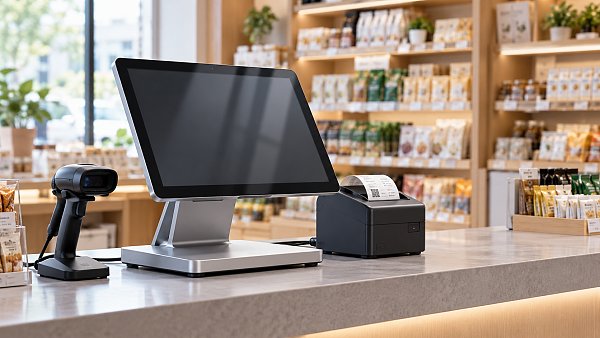
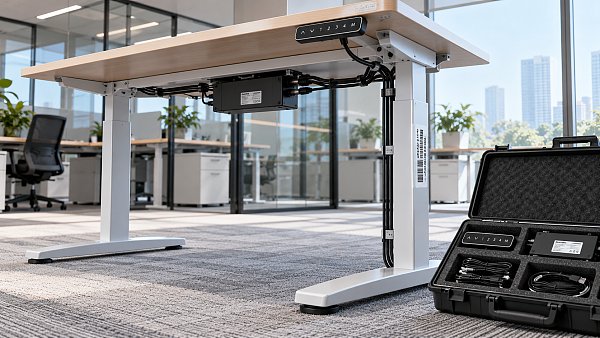
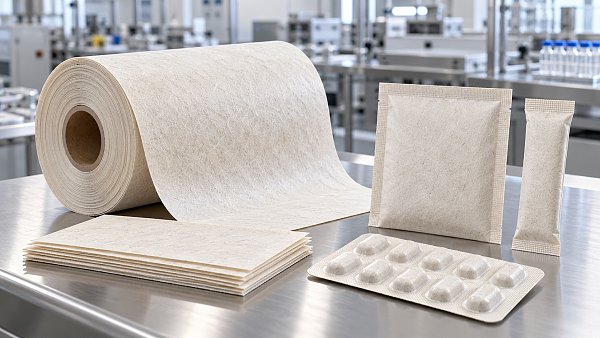
From May 14–16, 2026, the CCEE Cross-Border E-Commerce Expo — co-branded with Hugo — will open at Shenzhen Convention and Exhibition Center, centering on the theme ‘AI + Green Supply Chain’. With dedicated zones for Smart Retail Technology, Sustainable Packaging, and POS & Self-Service Kiosks, the event signals emerging procurement priorities from major global platforms including Amazon, Temu, and SHEIN — particularly for Matter protocol–compliant POS terminals and food-grade packaging certified to FDA 21 CFR 175.300. This development warrants attention from manufacturers, packaging suppliers, retail tech developers, and cross-border trade service providers.
Event Overview
The 2026 CCEE Cross-Border E-Commerce Expo & Global Platform Resource Summit will be held at Shenzhen Convention and Exhibition Center from May 14 to 16, 2026. Organized by Hugo, the event focuses on ‘AI + Green Supply Chain’ and features three core exhibition zones: Smart Retail Technology, Sustainable Packaging, and POS & Self-Service Kiosks. Amazon, Temu, and SHEIN will publicly release their second-half 2026 new product procurement lists onsite, specifying requirements for Matter-enabled POS terminals and FDA 21 CFR 175.300–certified food-contact packaging suppliers.
Industries Affected by This Development
Direct Exporters & Cross-Border Sellers: These enterprises face intensified alignment pressure with platform-specific technical and compliance criteria. The explicit call for Matter-compliant hardware and FDA-certified packaging implies tighter pre-qualification gates before listing or inclusion in vendor pools — potentially affecting time-to-market and eligibility for priority sourcing programs.
Raw Material & Component Suppliers (e.g., packaging resins, POS hardware ICs): Demand signals are shifting toward inputs that support downstream certification readiness. For example, resin suppliers may see increased inquiries for FDA 21 CFR 175.300–traceable formulations; semiconductor vendors serving POS terminal OEMs may observe design-in requests referencing Matter SDK compatibility.
Contract Manufacturers & ODMs (especially in POS hardware and packaging): Their role is evolving from volume production to early-stage compliance enablement. Supporting clients in achieving Matter certification (e.g., via Matter-compliant reference designs) or facilitating FDA documentation packages for finished packaging could become differentiating service offerings — not just optional add-ons.
Distribution & Logistics Service Providers: While not directly cited in the announcement, traceability infrastructure gains relevance. FDA 21 CFR 175.300 compliance requires full material origin documentation; Matter certification involves firmware version control and secure over-the-air update capability — both increasing data-handling expectations across fulfillment and warehousing workflows.
Supply Chain Compliance & Certification Support Firms: Demand for third-party verification services related to Matter interoperability testing and FDA food-contact substance validation is likely to rise. However, this remains contingent on actual platform enforcement timelines — not yet confirmed in the current announcement.
What Relevant Enterprises or Practitioners Should Focus On — And How to Respond Now
Monitor official procurement guidelines and qualification timelines
Amazon, Temu, and SHEIN have not yet published formal application windows or deadline dates for the 2026 H2 procurement lists. Current more suitable action is to subscribe to each platform’s official seller portals and vendor onboarding channels for updates — rather than assuming immediate submission deadlines.
Prioritize verifiable compliance documentation — not just product claims
For packaging suppliers: FDA 21 CFR 175.300 is a formulation-level regulation — it applies to coatings and adhesives used in food-contact applications, not final packaging units. Companies should verify whether their existing test reports cover exact material batches and processing conditions referenced in the regulation. For POS terminal makers: Matter certification requires participation in the Connectivity Standards Alliance (CSA) program; self-declaration is insufficient.
Distinguish between platform signal and operational rollout
The announcement reflects strategic direction, not binding contractual terms. Analysis shows that large platforms often pilot new requirements with select vendors before scaling. Therefore, early engagement with platform procurement teams — especially around Matter integration roadmaps or FDA documentation templates — carries higher near-term value than broad-scale retooling.
Prepare internal cross-functional alignment — especially between R&D, QA, and export operations
Matter compliance involves firmware, cloud architecture, and device security; FDA 21 CFR 175.300 demands raw material traceability and supplier audit trails. These span multiple departments. Current more suitable preparation includes mapping internal handoff points between engineering, quality assurance, and regulatory affairs — identifying gaps in documentation ownership or testing responsibility.
Editorial Perspective / Industry Observation
Observably, this announcement functions primarily as a forward-looking signal — not an immediate compliance mandate. It reflects platform-led efforts to standardize interoperability (via Matter) and strengthen safety accountability (via FDA-aligned packaging) within fragmented supplier ecosystems. From an industry perspective, it highlights a growing divergence between ‘market access’ (basic listing eligibility) and ‘strategic sourcing preference’ (priority placement, joint marketing, logistics support). Analysis suggests the latter is increasingly tied to verifiable, auditable capabilities — not just cost or lead time. That said, the extent and pace of enforcement remain subject to platform-specific implementation decisions, which have not yet been disclosed.
Conclusion
This announcement does not introduce new regulations or binding obligations — but it does crystallize two concrete technical thresholds gaining prominence in cross-border B2B sourcing: Matter protocol readiness and FDA 21 CFR 175.300 traceability. For affected enterprises, the current significance lies less in urgent compliance action and more in strategic calibration — assessing where internal capabilities align (or diverge) from these emerging benchmarks, and identifying which gaps warrant near-term investment versus longer-term monitoring. It is better understood as a directional marker than an operational trigger.
Source Attribution
Main source: Official announcement of the 2026 CCEE Cross-Border E-Commerce Expo & Global Platform Resource Summit, issued by Hugo. No additional background data, policy documents, or platform implementation timelines were referenced or verified beyond this announcement. Areas requiring ongoing observation include: (1) official publication of Amazon/Temu/SHEIN 2026 H2 procurement application procedures; (2) clarification of Matter certification scope (e.g., Matter 1.3 vs. Matter 2.0); (3) whether FDA 21 CFR 175.300 requirement extends to all food-grade packaging categories or only specific subtypes (e.g., flexible laminates vs. rigid containers).
News Recommendations
 How do packaging customization options affect minimum order quantities in Europe?
![51a6ab95581761cc26f4318be6520c15]()
Aris Katos
Future of Carbide Coatings
 Transom to Acquire Cree LED in Commercial Lighting Ownership Change
![51a6ab95581761cc26f4318be6520c15]()
Aris Katos
Future of Carbide Coatings
 How to plan customer flow in commercial design planning
![51a6ab95581761cc26f4318be6520c15]()
Aris Katos
Future of Carbide Coatings
 USTR Urged to Permanently Suspend Fees on China-Linked Ships
![51a6ab95581761cc26f4318be6520c15]()
Aris Katos
Future of Carbide Coatings
 How to choose comparable stores for retail benchmarking
![51a6ab95581761cc26f4318be6520c15]()
Aris Katos
Future of Carbide Coatings
 How does anchoring affect modular building wind load resistance?
![51a6ab95581761cc26f4318be6520c15]()
Aris Katos
Future of Carbide Coatings
 Amazon Raises European FBA Surcharge to 2% in Ten Markets From November 2
![51a6ab95581761cc26f4318be6520c15]()
Aris Katos
Future of Carbide Coatings
 How to verify a BPA-free test report for baby products
![51a6ab95581761cc26f4318be6520c15]()
Aris Katos
Future of Carbide Coatings
 China's Mandatory Classroom Lighting Standard GB 7793-2025 Takes Effect November 1
![51a6ab95581761cc26f4318be6520c15]()
Aris Katos
Future of Carbide Coatings
 How order volume affects the price of wholesale poly mailers
![51a6ab95581761cc26f4318be6520c15]()
Aris Katos
Future of Carbide Coatings
 US Imposes 50% Tariff on Certain Canadian PET Resin Imports
![51a6ab95581761cc26f4318be6520c15]()
Aris Katos
Future of Carbide Coatings
 How to read the maximum ratings in a semiconductor datasheet
![51a6ab95581761cc26f4318be6520c15]()
Aris Katos
Future of Carbide Coatings
 University of Maryland Develops Bio-Based Packaging to Extend Avocado and Cucumber Shelf Life
![51a6ab95581761cc26f4318be6520c15]()
Aris Katos
Future of Carbide Coatings
 How to verify a cookware manufacturer's induction compatibility claims
![51a6ab95581761cc26f4318be6520c15]()
Aris Katos
Future of Carbide Coatings
 Omdia Forecasts 11.6% Annual Growth in LED Display Revenue Through 2030
![51a6ab95581761cc26f4318be6520c15]()
Aris Katos
Future of Carbide Coatings
 How to verify a pulp molding packaging factory's production capacity
![51a6ab95581761cc26f4318be6520c15]()
Aris Katos
Future of Carbide Coatings
 Curion Survey: Half of Consumers Frustrated by Sustainable Packaging
![51a6ab95581761cc26f4318be6520c15]()
Aris Katos
Future of Carbide Coatings
 How to assess the credibility of market insight content
![51a6ab95581761cc26f4318be6520c15]()
Aris Katos
Future of Carbide Coatings
 US Removes 50% Additional Tariff on Selected Canadian Packaging Products
![51a6ab95581761cc26f4318be6520c15]()
Aris Katos
Future of Carbide Coatings
 Will a waterproof dimmable LED driver work with your existing dimmer?
![51a6ab95581761cc26f4318be6520c15]()
Aris Katos
Future of Carbide Coatings
 Charter Next Generation Raises Film PCR Use 30%, Advances Food-Grade Applications
![51a6ab95581761cc26f4318be6520c15]()
Aris Katos
Future of Carbide Coatings
 How to choose a dog harness and leash for a dog that pulls hard
![51a6ab95581761cc26f4318be6520c15]()
Aris Katos
Future of Carbide Coatings
 How to respect local customs when negotiating with overseas suppliers
![51a6ab95581761cc26f4318be6520c15]()
Aris Katos
Future of Carbide Coatings
 RFID Recycling Challenges Bring Paper-Based and Chipless Tags Into Focus
![51a6ab95581761cc26f4318be6520c15]()
Aris Katos
Future of Carbide Coatings
 How to choose commercial lighting for offices that reduces glare
![51a6ab95581761cc26f4318be6520c15]()
Aris Katos
Future of Carbide Coatings
 Queue Launches Fully Automated Robotic Pharmacy Kiosk for 30-Second Dispensing
![51a6ab95581761cc26f4318be6520c15]()
Aris Katos
Future of Carbide Coatings
 Can your supermarket store fixtures supplier meet your opening date?
![51a6ab95581761cc26f4318be6520c15]()
Aris Katos
Future of Carbide Coatings
 Shopify POS UI Extensions 2026-10 Adds Virtual Lists and Custom Row Templates
![51a6ab95581761cc26f4318be6520c15]()
Aris Katos
Future of Carbide Coatings
 How to assess smart office furniture suppliers’ North American support
![51a6ab95581761cc26f4318be6520c15]()
Aris Katos
Future of Carbide Coatings
 Aqara Launches Smart Lighting Range to Advance AI Spatial Intelligence
![51a6ab95581761cc26f4318be6520c15]()
Aris Katos
Future of Carbide Coatings
 How to assess demand forecasts in a lighting intelligence report
![51a6ab95581761cc26f4318be6520c15]()
Aris Katos
Future of Carbide Coatings
 Billerud推出PharmaKraft纤维基医药包装材料
![51a6ab95581761cc26f4318be6520c15]()
Aris Katos
Future of Carbide Coatings
 How to assess supplier reliability in global supply chain sourcing
![51a6ab95581761cc26f4318be6520c15]()
Aris Katos
Future of Carbide Coatings
 Omdia Forecasts 11.6% CAGR for Global LED Video Display Market in 2026–2030
![51a6ab95581761cc26f4318be6520c15]()
Aris Katos
Future of Carbide Coatings
 How to verify an LFGB testing laboratory's accreditation scope
![51a6ab95581761cc26f4318be6520c15]()
Aris Katos
Future of Carbide Coatings
 How to assess a workplace interior supplier's installation scope
![51a6ab95581761cc26f4318be6520c15]()
Aris Katos
Future of Carbide Coatings
 What records are needed for an ISO 9001 furniture factory audit?
![51a6ab95581761cc26f4318be6520c15]()
Aris Katos
Future of Carbide Coatings
 How to choose AI marketing tools that work with your existing CRM
![51a6ab95581761cc26f4318be6520c15]()
Aris Katos
Future of Carbide Coatings
 Do freight costs erase savings when buying retail fixtures wholesale?
![51a6ab95581761cc26f4318be6520c15]()
Aris Katos
Future of Carbide Coatings