When Do You Need IP67 Waterproof Signage?
Time
Click Count
In demanding commercial environments, choosing ip67 waterproof signage is no longer optional when durability, safety, and brand visibility are at stake. From smart city lighting infrastructure to energy efficient signage trends, buyers and operators must also weigh ik10 impact resistance rating, retail lighting psychological impact, and led chip lifespan testing to ensure long-term performance and cost efficiency.
For researchers, facility operators, procurement teams, and commercial evaluators, the question is not whether waterproof signage sounds useful, but when it becomes a requirement rather than an upgrade. In retail streets, transit zones, exterior wayfinding systems, parking structures, and mixed-use developments, signs often face rain, dust, washdown cleaning, vibration, and accidental impact for 12 to 24 hours a day.
Within modern commercial ecosystems, signage is no longer a decorative add-on. It functions as a visibility asset, a safety tool, a traffic guide, and a long-term operating cost driver. That is why IP67, IK10, LED reliability, material sealing, and maintenance intervals now matter as much as color temperature, face finish, or brand consistency.
What IP67 Waterproof Signage Actually Means in Commercial Use
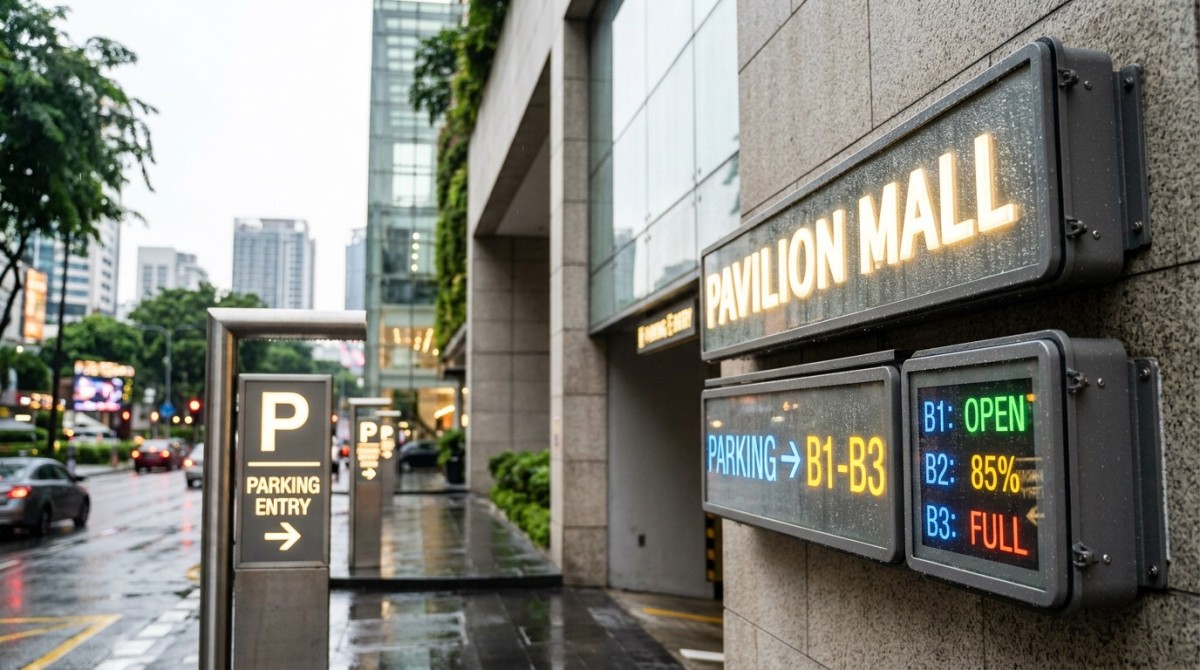
IP67 waterproof signage is designed to resist two common threats in commercial environments: dust ingress and temporary water immersion. In practical terms, the first digit “6” means full protection against dust, while the second digit “7” means the enclosure can typically withstand immersion in water up to 1 meter for 30 minutes under defined test conditions. That does not make every sign suitable for all marine or submerged applications, but it does define a strong protection threshold for exterior and semi-exposed installations.
For buyers, the key point is that IP67 is an enclosure rating, not a blanket quality claim. A sign may carry an IP67 claim, yet still perform poorly if cable entry points, gasket materials, lens bonding, or driver housings are weak. In other words, the rating only becomes meaningful when the full assembly is engineered consistently, including seal integrity after installation.
This matters because many commercial sites are not fully indoor or outdoor. Storefront canopies, transport platforms, open-air malls, fuel retail zones, and hospitality entrances often expose signage to wind-driven rain, cleaning chemicals, and airborne particulates. In such places, IP54 or IP65 may be adequate in some cases, but the risk profile changes when washdown frequency exceeds 1 to 2 times per week or where standing water and splash exposure are common.
IP67 also becomes more relevant when operators need stable performance over a 3-year to 7-year lifecycle, rather than a short initial display period. Water ingress does not always cause instant failure. It can accelerate LED lumen depreciation, corrode connectors, reduce insulation performance, and shorten driver life over a period of 6 to 18 months.
Why the rating must be read together with mechanical protection
A waterproof sign installed in a public zone still faces impact risk from carts, tools, vandalism, and routine handling. That is why IP67 is often evaluated together with the IK10 impact resistance rating. IK10 indicates resistance to 20 joules of impact energy, which is highly relevant in transportation, public retail, and urban commercial projects where accidental collision is likely.
- IP67 addresses dust and temporary immersion performance.
- IK10 addresses external impact resistance in high-traffic environments.
- LED chip lifespan testing helps estimate lumen maintenance over 30,000 to 50,000 hours.
- Thermal management affects whether waterproof sealing creates heat buildup inside the enclosure.
Basic interpretation for non-technical decision makers
If a sign will be exposed to rain, dust, regular cleaning, and possible impact, IP67 should be treated as one part of a broader technical checklist. Procurement teams should verify enclosure design, material grade, sealing method, mounting method, and serviceability rather than relying on a single rating line in a quotation.
When You Need IP67 Waterproof Signage: High-Risk Commercial Scenarios
Not every sign needs IP67, but many modern commercial environments do. The most obvious case is fully outdoor signage exposed to direct rain, dust, and temperature shifts. Yet the more important category is the “gray zone” where a sign is technically sheltered but still faces moisture, cleaning sprays, airborne contaminants, and thermal cycling over hundreds of operating days each year.
Examples include shopping center facades, drive-through wayfinding, parking garage guidance, transit-oriented retail, airport concession signs, hospital exterior directional systems, and smart city information points. In these settings, downtime has an operational cost. A failed sign can affect navigation, customer flow, and brand consistency, especially in chains operating across 10, 50, or 200 locations.
IP67 waterproof signage is also a strong option where sanitation protocols are strict. Food retail, quick-service restaurants, healthcare-adjacent commercial sites, and some logistics spaces rely on regular wipe-down or spray cleaning. If the cleaning cycle is daily or several times per week, lower protection ratings often become a maintenance risk rather than a cost saving.
The table below shows common commercial scenarios and the point at which IP67 becomes justified from an operating and risk perspective.
The practical conclusion is simple: the more a sign operates as infrastructure rather than decor, the stronger the case for IP67. This is especially true when replacement access is difficult, service interruptions are costly, or brand visibility is tied to nighttime performance and public safety.
Key triggers that move a project from optional to necessary
- Exposure to direct rain or heavy splash for more than 30 to 50 days per year.
- Routine cleaning with spray or wet cloths more than 3 times per week.
- Public-facing installation below about 2.5 meters, where impact and vandalism risk increase.
- Multi-site rollouts where failure rates above 2% to 5% create costly maintenance logistics.
- Projects requiring stable output over 30,000+ LED operating hours.
How to Evaluate Signage Beyond Waterproof Claims
One of the most common procurement mistakes is treating waterproof signage as a single-variable purchase. In reality, a durable commercial sign must balance ingress protection, structural toughness, optical performance, heat dissipation, maintenance access, and visual impact. A sign that survives rain but loses brightness after 12 months is not a successful commercial asset.
This is where retail lighting psychological impact and LED chip lifespan testing enter the conversation. In storefront and wayfinding applications, brightness, contrast, color consistency, and legibility can shape customer attention within 3 to 5 seconds. Poorly specified LED modules may create uneven lighting, faster color shift, or low readability at dawn, dusk, and nighttime peak traffic periods.
Commercial operators should also compare the enclosure design with thermal realities. Waterproof seals reduce moisture ingress, but they can trap heat if the housing is not properly engineered. Excess internal temperature can shorten driver life and reduce lumen retention. For many LED systems, every sustained rise in operating temperature has a cumulative effect on long-term output and service intervals.
The following table provides a practical evaluation framework that goes beyond the headline IP67 label.
For commercial evaluators, the strongest suppliers are typically those that can explain not only the rating itself, but the assembly logic behind it. That includes gasket materials, mounting constraints, driver location, face material thickness, and expected inspection intervals.
A four-point technical screening process
- Confirm whether the IP67 rating applies to the complete sign or only to selected components.
- Review impact resistance needs based on installation height, pedestrian density, and cart or vehicle proximity.
- Ask for LED chip lifespan testing or equivalent long-duration performance data in realistic temperature conditions.
- Check whether replacement parts and driver access support a 3-year to 5-year maintenance strategy.
Why visual performance still matters
Energy efficient signage trends are pushing buyers toward lower power consumption, but power reduction cannot come at the cost of legibility. In many retail and public navigation settings, the sign must remain readable across varying ambient light conditions. A technically sealed but visually weak sign can still fail its business purpose.
Procurement, Installation, and Lifecycle Planning
For procurement teams, deciding on IP67 waterproof signage should involve total lifecycle thinking rather than only initial unit price. A lower-priced sign with marginal sealing may seem acceptable during quotation comparison, but if it requires replacement in 12 to 18 months, the true cost rises through labor, downtime, re-lifting equipment, and inconsistent brand presentation across locations.
In multi-site commercial rollouts, installation quality is equally important. Even a properly designed waterproof sign can fail if field cable entries are poorly sealed, mounting surfaces are uneven, or incorrect fasteners create stress points. That is why many experienced buyers build a 5-step acceptance process covering enclosure inspection, electrical safety, brightness verification, sealing review, and site-condition documentation.
Lead times should also be reviewed realistically. Standardized exterior signs may move in 2 to 4 weeks, while customized illuminated branding, integrated smart controls, or cross-border compliance checks can extend to 5 to 8 weeks. Procurement teams working with chain operators often benefit from sample validation before mass deployment, especially where branding and environmental conditions vary by region.
The table below summarizes core buying factors that help commercial teams compare bids on more than price alone.
A disciplined procurement process usually improves more than product quality. It also shortens approval cycles, reduces change orders, and gives facility managers a clearer maintenance map for the next 24 to 60 months.
Installation and handover checklist
- Verify site exposure level: direct rain, splash zone, washdown zone, or enclosed canopy.
- Confirm cable entry sealing and mounting torque during installation.
- Record illumination performance during day and night acceptance.
- Document spare parts list, recommended inspection cycle, and driver replacement procedure.
- Schedule a first inspection after 3 to 6 months in harsh outdoor or public-use environments.
Common Mistakes, FAQs, and Practical Recommendations
Many commercial projects oversimplify signage selection. Some assume that every exterior sign must be IP67, while others try to save cost by selecting lower-rated products for high-exposure areas. The right answer depends on exposure duration, cleaning routine, impact risk, installation difficulty, and the cost of failure. In many cases, the most expensive choice is not the highest specification, but the wrong specification.
Another common mistake is ignoring the relationship between durability and customer experience. Retail lighting psychological impact is real in commercial settings. Uneven illumination, dim letter faces, and rapid color drift can weaken wayfinding clarity and storefront appeal long before total electrical failure occurs. That is why buyers should evaluate both protective performance and visual consistency.
Below are practical answers to common decision-stage questions from researchers, operators, and sourcing teams.
Is IP67 always necessary for outdoor signs?
No. Some sheltered locations can operate reliably with IP65 if cleaning intensity is low and water exposure is limited. However, where signs face direct rain, washdown, condensate, or difficult maintenance access, IP67 is often the safer commercial choice.
How important is IK10 impact resistance rating?
It becomes highly important in public areas, transport settings, low-mounted signs, parking structures, and locations exposed to carts or vandalism. If a sign is installed in a controlled private zone above normal reach, a lower impact level may be acceptable. In open commercial environments, IK10 can substantially reduce repair incidents.
What should procurement teams ask about LED chip lifespan testing?
Ask how long the LEDs are expected to maintain usable brightness, under what thermal conditions they were evaluated, and whether the full sign enclosure affects heat buildup. A headline number such as 50,000 hours is only useful when enclosure temperature, driver quality, and real operating cycles are also considered.
Final recommendation
You need IP67 waterproof signage when the sign operates as part of essential commercial infrastructure: exposed, cleaned frequently, difficult to service, brand-critical, or installed in a public-use setting where both durability and appearance matter over years, not months. For chain retailers, developers, and sourcing directors, the best decision comes from aligning enclosure protection with impact resistance, LED longevity, maintenance planning, and the actual site environment.
G-BCE supports commercial decision makers with cross-sector benchmarking that connects signage performance, safety requirements, sourcing logic, and long-term operating value. If you are comparing outdoor sign specifications, planning a multi-site rollout, or evaluating waterproof and impact-resistant commercial hardware, contact us to get a tailored solution, review technical details, and explore broader modernization strategies for resilient consumer environments.
News Recommendations
 How to choose an ultra bright waterproof window display for storefronts
![51a6ab95581761cc26f4318be6520c15]()
Aris Katos
Future of Carbide Coatings
 How to verify suppliers on a trade portal for global sourcing
![51a6ab95581761cc26f4318be6520c15]()
Aris Katos
Future of Carbide Coatings
 How RoHS requirements should be stated in product specifications
![51a6ab95581761cc26f4318be6520c15]()
Aris Katos
Future of Carbide Coatings
 What affects the lead time for custom retail counter displays?
![51a6ab95581761cc26f4318be6520c15]()
Aris Katos
Future of Carbide Coatings
 What consumer packaging USA importers need to verify before ordering
![51a6ab95581761cc26f4318be6520c15]()
Aris Katos
Future of Carbide Coatings
 How commercial spaces interiors shape customer dwell time
![51a6ab95581761cc26f4318be6520c15]()
Aris Katos
Future of Carbide Coatings
 How LED commercial lighting design reduces glare in retail spaces
![51a6ab95581761cc26f4318be6520c15]()
Aris Katos
Future of Carbide Coatings
 How industrial technology information improves RFID inventory accuracy
![51a6ab95581761cc26f4318be6520c15]()
Aris Katos
Future of Carbide Coatings
 When drip garden watering systems make more sense than sprinklers
![51a6ab95581761cc26f4318be6520c15]()
Aris Katos
Future of Carbide Coatings
 When category comparison improves sourcing for industrial applications
![51a6ab95581761cc26f4318be6520c15]()
Aris Katos
Future of Carbide Coatings
 Industrial application guidance for selecting the right LED lighting
![51a6ab95581761cc26f4318be6520c15]()
Aris Katos
Future of Carbide Coatings
 Which commercial architecture standards apply to European retail fit-outs?
![51a6ab95581761cc26f4318be6520c15]()
Aris Katos
Future of Carbide Coatings
 How to verify FDA requirements for maternity care products
![51a6ab95581761cc26f4318be6520c15]()
Aris Katos
Future of Carbide Coatings
 How to verify BPA-free claims for food-contact products
![51a6ab95581761cc26f4318be6520c15]()
Aris Katos
Future of Carbide Coatings
 When does a European wholesale supplier suit modular office projects?
![51a6ab95581761cc26f4318be6520c15]()
Aris Katos
Future of Carbide Coatings
 When consumer ecosystem solutions improve the in-store shopping journey
![51a6ab95581761cc26f4318be6520c15]()
Aris Katos
Future of Carbide Coatings
 How a commercial developers network can reduce site selection risk
![51a6ab95581761cc26f4318be6520c15]()
Aris Katos
Future of Carbide Coatings
 How clear purchasing specifications prevent costly supplier deviations
![51a6ab95581761cc26f4318be6520c15]()
Aris Katos
Future of Carbide Coatings
 What an ISTA drop test lab checks before your packaging ships
![51a6ab95581761cc26f4318be6520c15]()
Aris Katos
Future of Carbide Coatings
 Which commercial furniture standards apply to workplace seating?
![51a6ab95581761cc26f4318be6520c15]()
Aris Katos
Future of Carbide Coatings
 How to evaluate smart lighting module OEM compatibility before sampling
![51a6ab95581761cc26f4318be6520c15]()
Aris Katos
Future of Carbide Coatings
 How to assess whether sustainable technology delivers real impact
![51a6ab95581761cc26f4318be6520c15]()
Aris Katos
Future of Carbide Coatings
 How to assess an OEM supplier’s quality control before ordering
![51a6ab95581761cc26f4318be6520c15]()
Aris Katos
Future of Carbide Coatings
 How consumer ecosystem solutions data can improve retail personalization
![51a6ab95581761cc26f4318be6520c15]()
Aris Katos
Future of Carbide Coatings
 When does consumer packaging design justify a higher product price?
![51a6ab95581761cc26f4318be6520c15]()
Aris Katos
Future of Carbide Coatings
 Supermarket Fixture Installation: Planning Layouts, Wiring, and Handover
![51a6ab95581761cc26f4318be6520c15]()
Aris Katos
Future of Carbide Coatings
 Automated Lighting and Smart Lighting Control in Bergerac: Key Project Considerations
![51a6ab95581761cc26f4318be6520c15]()
Aris Katos
Future of Carbide Coatings
 Segment Streetlight Controllers: Choosing Control Modes for Urban Roads
![51a6ab95581761cc26f4318be6520c15]()
Aris Katos
Future of Carbide Coatings
 IEC 62471-2 Explained: How to Assess Photobiological Risks in LED Lighting
![51a6ab95581761cc26f4318be6520c15]()
Aris Katos
Future of Carbide Coatings
 Food Grade Packaging Requirements by Product Type, Temperature, and Contact Risk
![51a6ab95581761cc26f4318be6520c15]()
Aris Katos
Future of Carbide Coatings
 Food Packaging Compliance Checklist: Tests, Records, and Labeling Before Shipment
![51a6ab95581761cc26f4318be6520c15]()
Aris Katos
Future of Carbide Coatings
 NSF Food Packaging Standards: When Certification Matters for Commercial Food Use
![51a6ab95581761cc26f4318be6520c15]()
Aris Katos
Future of Carbide Coatings
 FDA Food Grade Compliance: Which Materials and Documents Do Buyers Need?
![51a6ab95581761cc26f4318be6520c15]()
Aris Katos
Future of Carbide Coatings
 What Should a Food Grade Declaration Include for Packaging Compliance?
![51a6ab95581761cc26f4318be6520c15]()
Aris Katos
Future of Carbide Coatings
 Housewares Importing: How to Evaluate Suppliers, Costs, and Compliance Risks
![51a6ab95581761cc26f4318be6520c15]()
Aris Katos
Future of Carbide Coatings
 Why Freeze-Dried Fruit Ingredients Lose Crispness—and How to Prevent It
![51a6ab95581761cc26f4318be6520c15]()
Aris Katos
Future of Carbide Coatings
 What industry veterans look for before choosing a new supplier
![51a6ab95581761cc26f4318be6520c15]()
Aris Katos
Future of Carbide Coatings
 How material fatigue can shorten the service life of retail shelving
![51a6ab95581761cc26f4318be6520c15]()
Aris Katos
Future of Carbide Coatings
 What makes a global sourcing platform reliable for supplier verification?
![51a6ab95581761cc26f4318be6520c15]()
Aris Katos
Future of Carbide Coatings