Energy Efficient Signage Trends to Watch in 2026
Time
Click Count
As commercial spaces evolve, energy efficient signage trends are reshaping how brands balance visibility, sustainability, and cost control. In 2026, buyers and operators are looking beyond basic LEDs toward smarter systems influenced by retail lighting psychological impact, smart city lighting infrastructure, and human centric lighting (HCL). From ip67 waterproof signage to validated led chip lifespan testing, these innovations are setting new standards for durable, high-performance environments.
Why energy efficient signage is becoming a strategic purchasing priority
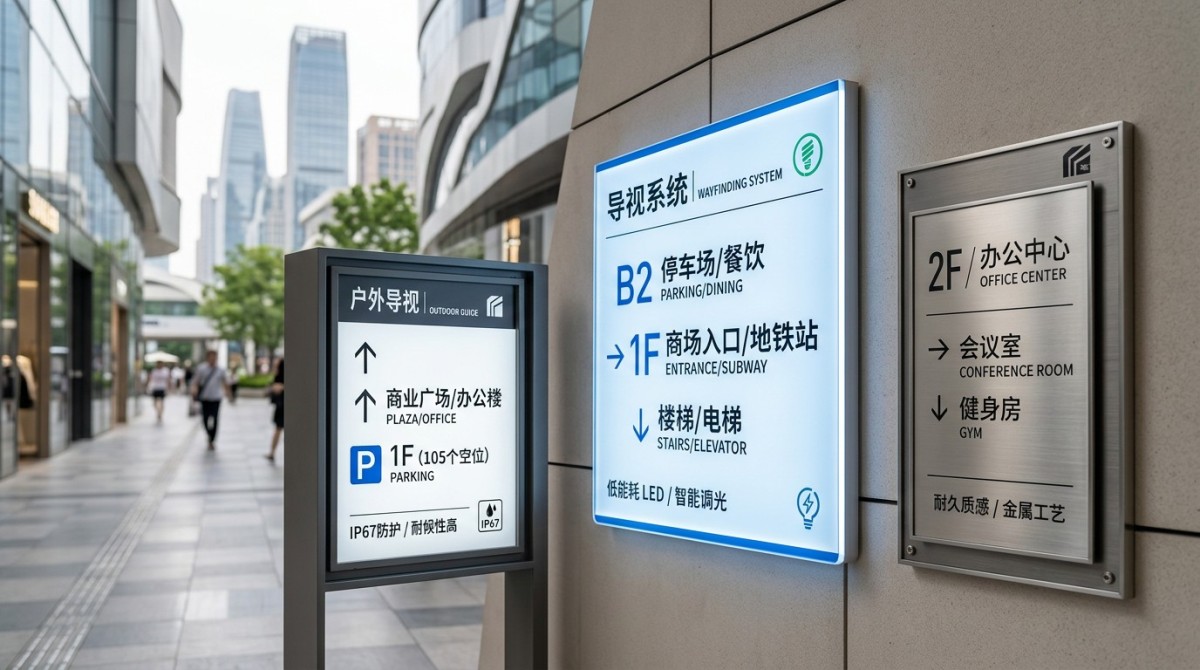
For chain operators, commercial developers, and sourcing teams, energy efficient signage is no longer a simple facilities item. It now sits at the intersection of operating cost control, brand consistency, maintenance planning, and sustainability reporting. In mixed-use retail, hospitality, transport, and public-facing business environments, signage often runs 10–18 hours per day, and in some applications it operates continuously. That operating profile makes power draw, thermal stability, and service life core commercial issues rather than secondary technical details.
In 2026, the market direction is clear: buyers want signage systems that do more than illuminate. They want lower wattage per visual output, more predictable maintenance intervals, stronger ingress protection for semi-outdoor use, and compatibility with digital monitoring. This is where trends such as led chip lifespan testing, dimming control logic, and smart city lighting infrastructure start to influence mainstream specification work. Procurement teams are under pressure to compare total ownership cost over 3–5 years, not just unit price at the quotation stage.
End users and operators also face a practical challenge. A sign that looks efficient on paper may still fail in real service conditions if heat management, driver quality, sealing design, or installation access are poorly considered. In projects with 20, 50, or 200 signage points, even a small increase in failure rate can create a visible maintenance burden. That is why benchmarking against international expectations such as UL or CE pathways, along with structured environmental testing, matters in global procurement.
G-BCE helps decision makers interpret these variables in a broader commercial context. By connecting Asian manufacturing precision with global aesthetic, compliance, and durability expectations, the platform supports not only product comparison but also project-fit evaluation across commercial lighting & signage, smart retail technology, and broader supply chain modernization.
What is changing between older LED signage and 2026-ready systems?
The shift is not just from fluorescent to LED. That transition happened years ago. The current shift is from basic LED conversion toward adaptive, data-aware, lower-maintenance signage systems. Buyers increasingly review 4 key layers together: optical efficiency, controls, environmental durability, and lifecycle validation. A sign can have LEDs and still underperform if it lacks appropriate driver protection, uniform light distribution, or realistic maintenance access.
- Optical design now matters as much as source efficiency. Better diffusion and lens management can improve perceived brightness without simply increasing wattage.
- Control strategies such as scheduled dimming, occupancy-linked activation, or daylight response can reduce unnecessary runtime in selected environments.
- Durability expectations are rising, especially for ip67 waterproof signage in exposed façades, transport interfaces, and external wayfinding zones.
- Verification practices, including led chip lifespan testing and thermal stress review, are becoming more important during supplier screening.
For information researchers, this means trend tracking should focus less on marketing claims and more on specification transparency. For operators, it means asking whether the sign’s performance after 12–24 months will still match the opening-day look. For procurement and commercial evaluation teams, it means comparing measurable design inputs and service assumptions before locking in a vendor.
Which energy efficient signage trends matter most in 2026?
Not every trend deserves equal attention. The most relevant energy efficient signage trends in 2026 are the ones that improve visual performance and reduce lifecycle friction at the same time. Across retail, branded commercial interiors, quick-service environments, public corridors, and mixed indoor-outdoor zones, 5 trend groups stand out because they directly affect specification quality and purchasing confidence.
1. Smarter controls and lower wasted runtime
Static full-output operation is increasingly viewed as inefficient. More signage projects are using timed dimming windows, zone-based activation, and integration with building management or local smart control systems. In some applications, brightness can be reduced during low-traffic periods for 6–8 hours per day without compromising wayfinding or brand recognition. This is especially relevant in malls, transport nodes, and large-format retail.
2. Human centric lighting and retail psychology integration
Human centric lighting (HCL) and retail lighting psychological impact are influencing signage color temperature and luminance decisions. The goal is not simply “brighter is better.” In premium retail or hospitality-led environments, excessive glare can reduce comfort and visual coherence. Buyers are increasingly evaluating how signage supports attention, navigation, dwell time, and mood. A more calibrated visual hierarchy can often outperform a higher-energy, visually aggressive installation.
3. Greater focus on environmental resilience
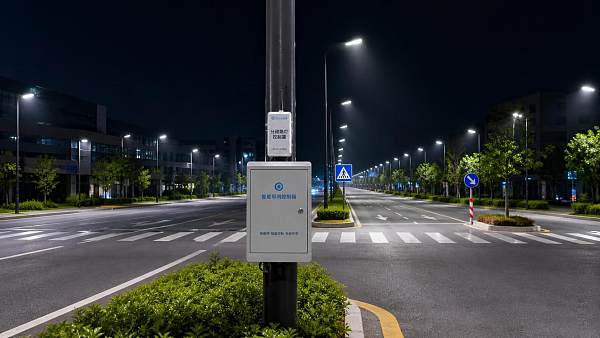
Semi-outdoor and exposed applications are driving demand for ip67 waterproof signage, corrosion-aware housings, and stable driver compartments. This matters in storefront canopies, streetside pylons, parking guidance, transit-linked retail, and food service façades. A lower-cost product may appear similar at handover but can deteriorate faster under moisture, dust, or thermal cycling. As a result, ingress protection and sealing consistency are becoming frontline procurement questions.
4. Lifespan validation instead of headline claims
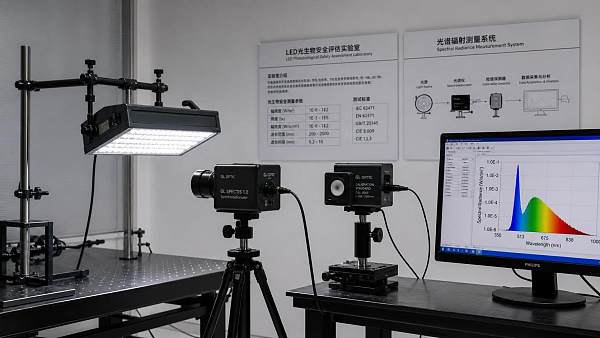
Buyers are paying closer attention to how lifespan is assessed. A broad lifetime statement without test context is less persuasive than evidence of led chip lifespan testing, thermal pathway design, and driver compatibility review. In practice, maintenance planning depends on system-level reliability, not only on the nominal life of one component. That distinction matters for projects with 2–4 year budget reviews and strict uptime expectations.
The table below summarizes the commercial relevance of key 2026 trends for different decision makers.
The practical lesson is simple: the best trend is the one that improves both operational reliability and business value. Many projects benefit more from a disciplined 4-point specification upgrade than from adding flashy features with unclear return.
How should buyers compare technologies, specifications, and real-world performance?
Procurement teams often struggle because quotes look similar while underlying performance assumptions are different. A proper comparison should separate visual output, power behavior, environmental suitability, and serviceability. This is especially important in cross-border sourcing, where catalog language may not fully explain enclosure design, control capability, or compliance pathway. G-BCE’s benchmarking perspective is useful here because it frames signage as part of a broader commercial hardware ecosystem rather than a single isolated product.
For most projects, 3 categories of comparison create the clearest purchasing picture. First, compare source and driver architecture. Second, compare housing and ingress performance. Third, compare maintenance and replacement logic. If these three layers are not reviewed together, teams risk choosing a lower upfront price that later produces higher service cost over a 24–60 month operating window.
A practical comparison matrix for sourcing teams
The table below can be used during RFQ review, supplier interviews, or internal commercial evaluation. It is designed for information researchers, operators, and commercial reviewers who need to move from broad interest to specification-level decision making.
This comparison does not mean every project needs the most advanced configuration. It means the specification should match the use case. A premium indoor brand wall has different needs than a public wayfinding totem or a transit-adjacent exterior cabinet. The value comes from fit, not from feature accumulation.
Five checks that often reveal hidden risk
- Ask whether stated lifetime refers to the LED package only or to the full sign system including driver behavior and heat conditions.
- Confirm expected operating environment, including indoor, sheltered outdoor, or full weather exposure over seasonal temperature variation.
- Review maintenance access. A hard-to-open enclosure can turn a small service event into a costly on-site intervention.
- Check if the sign is intended for integration with control systems now or in a later phase of facility modernization.
- Verify compliance pathway requirements early, especially if the project is moving across multiple jurisdictions or tenant approval layers.
These checks are particularly relevant in projects with compressed rollout schedules of 2–6 weeks for pilot deployment or 8–12 weeks for larger commercial programs. Fast delivery often magnifies the cost of unclear specifications.
What should operators and procurement teams ask before ordering?
The best energy efficient signage decisions come from asking operational questions early. Operators care about uptime, cleaning, and replacement effort. Procurement teams care about cost predictability, quotation comparability, and compliance risk. Business evaluators care about lifecycle value, rollout scalability, and whether the selected solution aligns with broader commercial modernization goals. These concerns overlap, but they should be addressed in a structured order.
A 4-step buying framework
- Define the operating profile: daily runtime, indoor or outdoor exposure, required viewing distance, and whether brightness should change by time period.
- Confirm critical technical thresholds: ingress level, control compatibility, service access, and any thermal or enclosure constraints tied to the site.
- Review commercial variables: target budget band, pilot quantity versus scale quantity, sample need, and acceptable lead-time range such as 7–15 days for samples or 3–8 weeks for project supply.
- Validate compliance and documentation: applicable CE or UL pathway, material expectations, installation guidance, and testing records available for review.
This framework helps prevent a common mistake: choosing a sign based on visual impression alone. A visually successful mock-up may still be commercially weak if the system is overpowered, difficult to maintain, or mismatched to environmental conditions. In high-traffic commercial spaces, reliability and service planning carry real financial weight.
Common scenario-based recommendations
Different environments require different priorities. Retail interiors often benefit from HCL-aware visual tuning and control flexibility. Exterior branded signage needs stronger protection against dust and moisture, often pushing buyers toward ip67 waterproof signage or equivalent weather-focused construction. Public service and transport-linked applications may place extra emphasis on readability, endurance, and planned maintenance intervals.
For multi-site rollouts, consistency is critical. A supplier should be able to support repeatable production across small, medium, and large batch quantities. That may mean pilot validation in one location, followed by phase-based rollout in 3 stages: sample confirmation, low-volume implementation, and scaled deployment. This staged approach reduces redesign risk and improves budgeting accuracy.
How do standards, testing, and lifecycle cost affect the final decision?
A lower purchase price can look attractive until maintenance, downtime, and replacement planning are considered. Energy efficient signage should be evaluated through lifecycle cost, not only acquisition cost. The most useful lifecycle questions are straightforward: How long is the expected operating window? How easy is service? What environmental stress will the sign face? Is component quality documented clearly enough for cross-border procurement review?
Standards and certification pathways add discipline to this evaluation. While exact project requirements vary, buyers commonly review alignment with frameworks such as UL or CE depending on market destination. In furniture-adjacent or integrated commercial environments, broader material and safety expectations may also affect specification choices. The point is not to overstate certification, but to ensure that compliance planning begins before ordering rather than after production.
A simple lifecycle cost lens
The table below shows how procurement teams can compare cost beyond unit price. It is especially helpful when evaluating supplier quotations that appear close in price but differ substantially in durability, testing transparency, and maintenance implications.
When this lifecycle lens is applied, many buyers discover that the “cheapest” sign is only cheaper at day 1. Over 12–36 months, service events, premature degradation, or control limitations can erase the initial savings. That is why specification discipline matters more than headline discounting.
FAQ: issues buyers often overlook
How do I know if ip67 waterproof signage is necessary?
It is most relevant for fully exposed outdoor or high-moisture conditions. For sheltered indoor applications, it may be unnecessary and add cost without operational value. The right choice depends on exposure profile, cleaning routine, and site risk, not on marketing preference.
Is higher brightness always better for energy efficient signage?
No. Excess brightness can increase energy use and visual discomfort. In many commercial settings, better optical control and thoughtful luminance balance produce stronger visibility than simply raising output.
What should I ask about led chip lifespan testing?
Ask how testing was performed, whether thermal conditions were considered, and whether the claim reflects the full system or only the LED source. A useful answer should connect component life to real installation conditions.
What is a realistic delivery planning approach?
For many projects, plan in 3 phases: sample review, pilot confirmation, and scaled delivery. Samples may take 7–15 days in common scenarios, while larger programs may require several weeks depending on customization, approvals, and documentation needs.
Why work with G-BCE when evaluating energy efficient signage for 2026?
Energy efficient signage decisions increasingly affect more than the sign itself. They connect with commercial architecture, retail technology integration, sustainability expectations, and global supply chain reliability. G-BCE is positioned to support this broader decision context through cross-sector benchmarking across commercial lighting & signage, smart retail technology, commercial fixtures, and related supply chain systems.
For researchers, G-BCE helps clarify which trends are commercially relevant and which are mostly promotional noise. For operators, it supports evaluation of maintenance logic, application fit, and installation practicality. For procurement and business evaluation teams, it helps compare suppliers and technical routes against globally recognized expectations such as UL, CE, and BIFMA-related benchmarking logic where adjacent commercial environments intersect.
If you are reviewing energy efficient signage trends for 2026, contact G-BCE to discuss parameter confirmation, application-based product selection, sample planning, expected lead times, control compatibility, certification requirements, and quotation alignment. Whether you are evaluating a single branded environment or a multi-site rollout, the discussion can be structured around 4 practical outputs: specification clarification, risk review, supplier comparison, and implementation planning.
The most effective next step is not to request a generic catalog. It is to submit your use scenario, runtime expectation, environment type, target quantity, and compliance destination. That makes it possible to narrow options faster, reduce sourcing ambiguity, and move toward a signage solution that is energy-aware, durable, and commercially realistic.
- smart retail
- supply chain
- commercial lighting
- signage
- commercial hardware
- retail technology
- commercial spaces
- commercial developers
- manufacturing precision
- commercial environments
- smart retail technology
- led chip lifespan testing
- ip67 waterproof signage
- human centric lighting (HCL)
- energy efficient signage trends
- smart city lighting infrastructure
- retail lighting psychological impact
News Recommendations
 How to choose an ultra bright waterproof window display for storefronts
![51a6ab95581761cc26f4318be6520c15]()
Aris Katos
Future of Carbide Coatings
 How to verify suppliers on a trade portal for global sourcing
![51a6ab95581761cc26f4318be6520c15]()
Aris Katos
Future of Carbide Coatings
 How RoHS requirements should be stated in product specifications
![51a6ab95581761cc26f4318be6520c15]()
Aris Katos
Future of Carbide Coatings
 What affects the lead time for custom retail counter displays?
![51a6ab95581761cc26f4318be6520c15]()
Aris Katos
Future of Carbide Coatings
 What consumer packaging USA importers need to verify before ordering
![51a6ab95581761cc26f4318be6520c15]()
Aris Katos
Future of Carbide Coatings
 How commercial spaces interiors shape customer dwell time
![51a6ab95581761cc26f4318be6520c15]()
Aris Katos
Future of Carbide Coatings
 How LED commercial lighting design reduces glare in retail spaces
![51a6ab95581761cc26f4318be6520c15]()
Aris Katos
Future of Carbide Coatings
 How industrial technology information improves RFID inventory accuracy
![51a6ab95581761cc26f4318be6520c15]()
Aris Katos
Future of Carbide Coatings
 When drip garden watering systems make more sense than sprinklers
![51a6ab95581761cc26f4318be6520c15]()
Aris Katos
Future of Carbide Coatings
 When category comparison improves sourcing for industrial applications
![51a6ab95581761cc26f4318be6520c15]()
Aris Katos
Future of Carbide Coatings
 Industrial application guidance for selecting the right LED lighting
![51a6ab95581761cc26f4318be6520c15]()
Aris Katos
Future of Carbide Coatings
 Which commercial architecture standards apply to European retail fit-outs?
![51a6ab95581761cc26f4318be6520c15]()
Aris Katos
Future of Carbide Coatings
 How to verify FDA requirements for maternity care products
![51a6ab95581761cc26f4318be6520c15]()
Aris Katos
Future of Carbide Coatings
 How to verify BPA-free claims for food-contact products
![51a6ab95581761cc26f4318be6520c15]()
Aris Katos
Future of Carbide Coatings
 When does a European wholesale supplier suit modular office projects?
![51a6ab95581761cc26f4318be6520c15]()
Aris Katos
Future of Carbide Coatings
 When consumer ecosystem solutions improve the in-store shopping journey
![51a6ab95581761cc26f4318be6520c15]()
Aris Katos
Future of Carbide Coatings
 How a commercial developers network can reduce site selection risk
![51a6ab95581761cc26f4318be6520c15]()
Aris Katos
Future of Carbide Coatings
 How clear purchasing specifications prevent costly supplier deviations
![51a6ab95581761cc26f4318be6520c15]()
Aris Katos
Future of Carbide Coatings
 What an ISTA drop test lab checks before your packaging ships
![51a6ab95581761cc26f4318be6520c15]()
Aris Katos
Future of Carbide Coatings
 Which commercial furniture standards apply to workplace seating?
![51a6ab95581761cc26f4318be6520c15]()
Aris Katos
Future of Carbide Coatings
 How to evaluate smart lighting module OEM compatibility before sampling
![51a6ab95581761cc26f4318be6520c15]()
Aris Katos
Future of Carbide Coatings
 How to assess whether sustainable technology delivers real impact
![51a6ab95581761cc26f4318be6520c15]()
Aris Katos
Future of Carbide Coatings
 How to assess an OEM supplier’s quality control before ordering
![51a6ab95581761cc26f4318be6520c15]()
Aris Katos
Future of Carbide Coatings
 How consumer ecosystem solutions data can improve retail personalization
![51a6ab95581761cc26f4318be6520c15]()
Aris Katos
Future of Carbide Coatings
 When does consumer packaging design justify a higher product price?
![51a6ab95581761cc26f4318be6520c15]()
Aris Katos
Future of Carbide Coatings
 Supermarket Fixture Installation: Planning Layouts, Wiring, and Handover
![51a6ab95581761cc26f4318be6520c15]()
Aris Katos
Future of Carbide Coatings
 Automated Lighting and Smart Lighting Control in Bergerac: Key Project Considerations
![51a6ab95581761cc26f4318be6520c15]()
Aris Katos
Future of Carbide Coatings
 Segment Streetlight Controllers: Choosing Control Modes for Urban Roads
![51a6ab95581761cc26f4318be6520c15]()
Aris Katos
Future of Carbide Coatings
 IEC 62471-2 Explained: How to Assess Photobiological Risks in LED Lighting
![51a6ab95581761cc26f4318be6520c15]()
Aris Katos
Future of Carbide Coatings
 Food Grade Packaging Requirements by Product Type, Temperature, and Contact Risk
![51a6ab95581761cc26f4318be6520c15]()
Aris Katos
Future of Carbide Coatings
 Food Packaging Compliance Checklist: Tests, Records, and Labeling Before Shipment
![51a6ab95581761cc26f4318be6520c15]()
Aris Katos
Future of Carbide Coatings
 NSF Food Packaging Standards: When Certification Matters for Commercial Food Use
![51a6ab95581761cc26f4318be6520c15]()
Aris Katos
Future of Carbide Coatings
 FDA Food Grade Compliance: Which Materials and Documents Do Buyers Need?
![51a6ab95581761cc26f4318be6520c15]()
Aris Katos
Future of Carbide Coatings
 What Should a Food Grade Declaration Include for Packaging Compliance?
![51a6ab95581761cc26f4318be6520c15]()
Aris Katos
Future of Carbide Coatings
 Housewares Importing: How to Evaluate Suppliers, Costs, and Compliance Risks
![51a6ab95581761cc26f4318be6520c15]()
Aris Katos
Future of Carbide Coatings
 Why Freeze-Dried Fruit Ingredients Lose Crispness—and How to Prevent It
![51a6ab95581761cc26f4318be6520c15]()
Aris Katos
Future of Carbide Coatings
 What industry veterans look for before choosing a new supplier
![51a6ab95581761cc26f4318be6520c15]()
Aris Katos
Future of Carbide Coatings
 How material fatigue can shorten the service life of retail shelving
![51a6ab95581761cc26f4318be6520c15]()
Aris Katos
Future of Carbide Coatings
 What makes a global sourcing platform reliable for supplier verification?
![51a6ab95581761cc26f4318be6520c15]()
Aris Katos
Future of Carbide Coatings