Digital billboard manufacturer: what affects total cost?
Time
Click Count
Choosing a digital billboard manufacturer involves far more than screen size or upfront pricing. Total cost depends on factors such as lumen output per watt benchmarks, color rendering index (CRI) data, unified glare rating (UGR) standards, control compatibility with a dali lighting control system or smart street light controller, and sourcing from a reliable dimmable led driver supplier, wireless lighting sensor factory, or iot lighting node oem. This guide helps buyers evaluate performance, integration, and long-term value.
What really shapes the total cost of a digital billboard project?
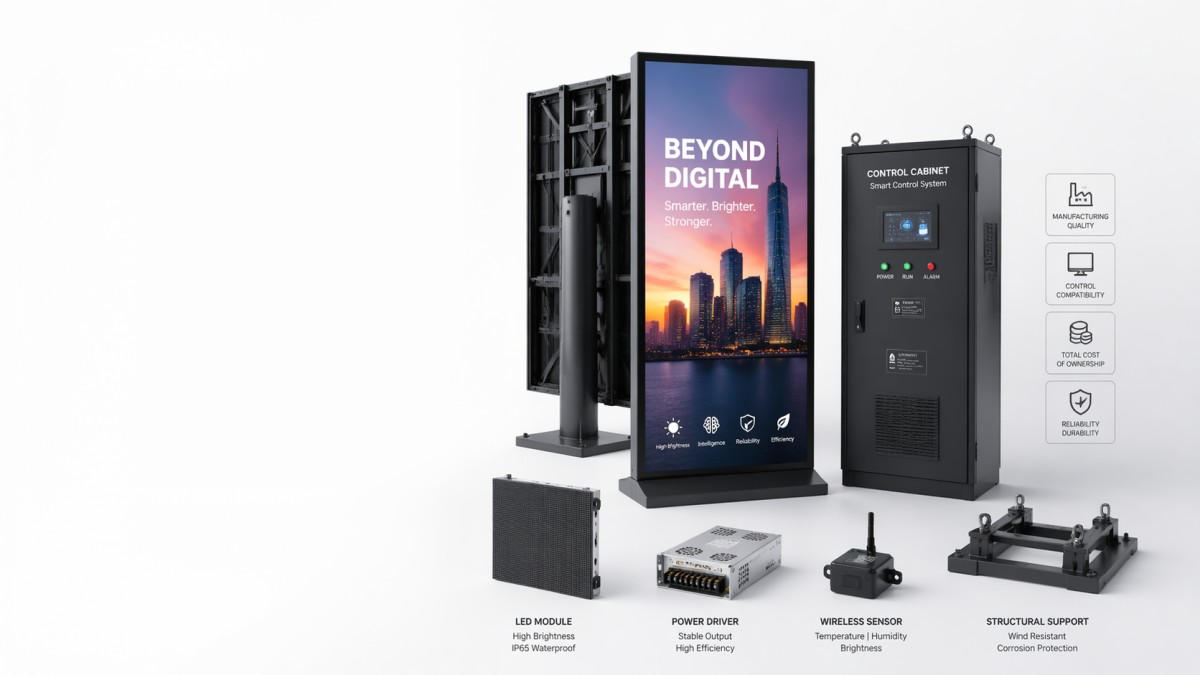
For research teams, operators, procurement managers, and commercial evaluators, the biggest mistake is treating a digital billboard as a single product. In practice, total cost is the sum of at least 5 layers: display hardware, structural system, power and control architecture, compliance and testing, and long-term service. A low initial quote can become expensive within 12–24 months if brightness falls too fast, parts are hard to replace, or software does not integrate with existing retail or commercial infrastructure.
In mixed commercial environments, especially where retail, transportation, hospitality, and public-facing developments overlap, a digital billboard manufacturer must be assessed beyond cabinet pricing. Buyers should compare pixel pitch range, front or rear maintenance design, IP protection level, expected operating schedule such as 16–24 hours per day, and the quality of the power subsystem. If the billboard also interacts with smart lighting or façade systems, compatibility with a dali lighting control system or smart street light controller may add or reduce integration cost.
At G-BCE, benchmarking matters because billboard procurement increasingly sits inside wider modernization projects. A commercial developer may source signage together with commercial lighting, AI-driven store hardware, and sustainable fit-out elements. In that context, the lowest equipment quote is rarely the best business decision. The more useful question is this: what is the total operating burden over 3–5 years, and how predictable is it across regions, installers, and maintenance teams?
Another cost driver is specification mismatch. Overspecifying brightness for an indoor atrium or underspecifying thermal management for a hot roadside installation can both create avoidable expense. A capable digital billboard manufacturer should explain where performance thresholds matter, where they do not, and how different component choices affect not only image quality but also energy draw, repair frequency, and installation complexity.
Five cost layers buyers should separate during evaluation
- Display layer: LED modules, brightness level, pixel pitch, refresh rate, cabinet material, and ingress protection.
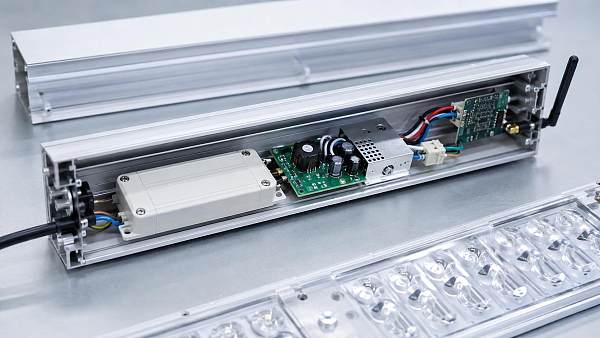
- Electrical layer: power supplies, dimmable led driver supplier stability, surge protection, wiring design, and controller compatibility.
- Control layer: content management, remote monitoring, sensor linkage, and interface with building or street systems.
- Installation layer: steel structure, foundations, permits, access equipment, and labor conditions at site.
- Lifecycle layer: spare parts planning, service response time, calibration, cleaning, and operator training.
Which technical specifications have the biggest effect on cost and value?
Technical specifications affect both purchase price and lifetime economics. Brightness is an obvious example. Outdoor digital billboard systems often require a much higher nit range than indoor commercial displays, but more brightness is not automatically better. Higher output can increase thermal stress, power consumption, and component aging. Buyers should ask how brightness is managed across daytime and nighttime conditions, whether automatic dimming is included, and whether a wireless lighting sensor factory or iot lighting node oem participates in the control ecosystem.
Efficiency metrics also deserve attention. Lumen output per watt is more often discussed in lighting, yet the same discipline applies when reviewing billboard-adjacent illumination, backlit signage zones, and integrated streetscape systems. If a digital billboard sits inside a coordinated façade or roadside media installation, the energy model must reflect the full assembly. This is where cross-sector benchmarking helps: a billboard may not operate in isolation if it shares dimming logic, sensors, or load management with exterior lighting and smart city controls.
Color performance can add hidden cost when it is ignored at the buying stage. CRI is usually tied to lighting rather than direct-view LED screens, but in hybrid commercial spaces where illuminated branding, architectural lighting, and billboard content are visually linked, poor color harmony can reduce overall presentation quality. Likewise, UGR standards matter when billboard installations influence perceived glare in pedestrian environments, transport hubs, or mixed-use developments. These points matter less for a remote highway placement and more for close-view commercial environments.
Serviceability is another technical specification with direct budget impact. Front-maintenance cabinets may reduce rear access requirements and lower structural depth, but they can increase cabinet complexity. Rear-maintenance systems may look cheaper at first, yet they often need larger access space, more installation coordination, and more site-specific labor. For procurement teams comparing two manufacturers, this difference can alter total installed cost by one project phase rather than one component line.
Technical checkpoints that often change the quote
Before shortlisting a digital billboard manufacturer, procurement teams usually benefit from a structured parameter review. The table below summarizes common technical variables and how they influence cost, integration effort, and operating risk across commercial and public-facing projects.
The key lesson is not that every project needs the highest specification. It is that every line item should be tied to a real use case. A shopping center entrance, roadside media tower, and transit concourse billboard can all require different balances between brightness, viewing distance, integration, and maintenance. Technical clarity reduces both overbuying and underperformance.
A practical 4-point screening method
- Define the environment first: indoor, semi-outdoor, roadside, transport, or architectural media façade.
- Match operating schedule: intermittent use, 16-hour daily use, or continuous 24/7 exposure.
- Confirm control ecosystem: standalone player, networked CMS, or integrated smart infrastructure.
- Estimate maintenance reality: available access space, technician frequency, and spare part stocking plan.
How should procurement teams compare manufacturers instead of just comparing prices?
When two digital billboard manufacturers offer similar display sizes, the procurement decision often shifts to consistency, documentation, and supply chain transparency. This is especially important for international buyers who must coordinate engineering teams, installers, finance teams, and local compliance reviewers. A quote should reveal more than cost per square meter. It should show what is included, what is optional, and what service assumptions are built into the number.
A manufacturer with stable sourcing from a dimmable led driver supplier, sensor partners, and controller vendors may offer a slightly higher opening price but a lower risk profile over the next 2–5 years. This matters when spare parts continuity, firmware support, and replacement timelines influence media uptime. Procurement teams should also check whether the manufacturer can support pilot quantities, medium-batch rollout, and large multi-site deployment without changing core components mid-project.
G-BCE’s value in this process lies in cross-sector comparison. A billboard is often approved together with lighting, signage, store technology, or public-space hardware. That means buyers need a framework that aligns technical benchmarks with commercial outcomes. The right manufacturer should provide evidence of process discipline, not only a polished brochure. Engineering response quality during the first 7–15 days often tells buyers more than generic claims about product quality.
The most useful procurement model is weighted comparison. Assign practical value to operating environment fit, compliance readiness, serviceability, integration flexibility, and documentation quality. In many commercial projects, a 5-category scorecard reveals weaknesses that a price spreadsheet hides, such as incomplete certification files, unclear warranty terms, or dependence on hard-to-source control components.
Manufacturer comparison table for B2B decision-making
The following comparison framework helps buyers separate short-term savings from long-term value. It is especially useful when evaluating a digital billboard manufacturer for chain rollout, urban redevelopment, retail modernization, or integrated signage and lighting projects.
This comparison is useful because hidden cost usually enters the project after purchase order approval. If the supplier cannot support documentation, integration, or replacement workflows, the buyer absorbs the cost through project delay, contractor variation, or lost media uptime. That is why procurement quality should be measured in transparency, not only in price negotiation.
A 6-item procurement checklist
- Ask for a complete bill of scope, including structure, controls, accessories, and exclusions.
- Confirm whether samples, pilot units, or reference modules can be reviewed before rollout.
- Check component traceability for power supplies, controllers, and environmental protection parts.
- Review standard delivery range, often 2–6 weeks for standard configurations and longer for structural customization.
- Clarify warranty scope, spare parts recommendation, and remote troubleshooting process.
- Make sure certification and site compliance documents are available early, not after production starts.
What hidden costs are often missed in installation, compliance, and operations?
The most commonly missed costs appear outside the factory quotation. Installation conditions can shift the budget quickly. A roadside billboard may need lifting access, steel reinforcement, wind-load review, and local authority coordination. An urban commercial façade may require night work, traffic management, and tighter glare control. These are not edge cases. They are routine realities in billboard deployment, and they should be assessed during early technical review rather than after shipment.
Compliance is another hidden area. Depending on market and project type, buyers may need electrical safety documentation, component certification records, structural calculations, or installation method statements. G-BCE’s cross-border perspective is useful here because commercial developers sourcing from Asia often need alignment with international expectations such as UL- or CE-relevant pathways at the product and system level. Even where a billboard itself is compliant, adjacent components can cause delay if their documentation is incomplete.
Operational cost also includes energy, cleaning, calibration, and failure response. Displays running 18–24 hours per day in dusty, humid, or high-temperature environments require more disciplined preventive maintenance. Operators should ask for a realistic maintenance schedule, not a generic promise. In many projects, quarterly visual checks, periodic cleaning, and annual electrical review are sensible baseline planning points, though exact intervals depend on site conditions and local operating standards.
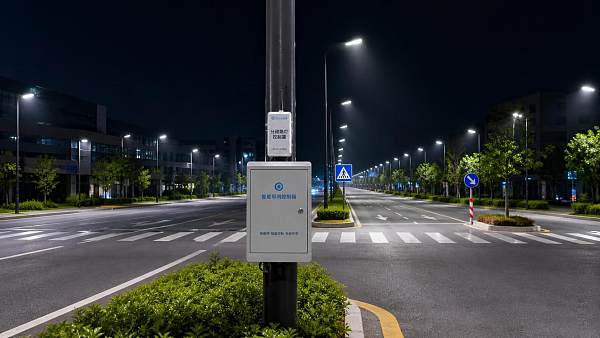
Integration costs are often underestimated as well. If a digital billboard must work with a smart street light controller, ambient sensors, or centralized content triggers, commissioning can involve multiple parties. Every extra interface adds testing time. A manufacturer with prior experience in connected commercial environments can reduce this friction by providing wiring logic, control mapping, and pre-shipment verification steps before site teams begin final installation.
Common hidden cost categories
- Site preparation: foundations, reinforcement, access routes, and utility coordination.
- Regulatory review: permits, brightness restrictions, electrical inspection, and public safety requirements.
- Commissioning: software setup, networking, sensor calibration, and third-party system testing.
- Lifecycle service: replacement modules, power units, technician dispatch, and content downtime impact.
How to reduce risk before purchase order
A practical risk-control sequence usually has 3 stages. First, confirm site conditions and compliance expectations. Second, lock the technical interface with control, power, and network teams. Third, validate service assumptions, including spare coverage and support windows. When these three stages are completed before manufacturing starts, change orders are less likely and rollout planning becomes more reliable.
For international projects, buyers should also align packaging, shipment timing, and on-site acceptance methods. Even a standard product can experience preventable delay if customs documentation, delivery split plans, or installation sequencing are not discussed early. Total cost control is therefore not only an engineering task. It is also a supply chain coordination task.
How do different application scenarios change the cost model?
Not every digital billboard project should be built around the same specification logic. A billboard in a luxury retail district may prioritize visual integration, controlled glare, and coordinated lighting aesthetics. A transport hub may prioritize readability, durability, and long daily operating hours. A roadside asset may prioritize weather resistance, remote monitoring, and structural resilience. Each scenario changes which manufacturer strengths matter most and which costs are justified.
This is why scenario-led sourcing produces better outcomes than catalog-led sourcing. G-BCE works across commercial lighting and signage, smart retail technology, and broader supply-chain benchmarking, so the selection logic can reflect the real environment rather than only display specifications. In many mixed-use developments, the billboard must align with architectural finishes, public-space behavior, and digital control systems at the same time.
For operators, the operating pattern matters as much as the physical location. A campaign-driven billboard that updates content frequently may require stronger network stability and content scheduling tools. A fixed-format branding display may instead prioritize stable brightness and simplified maintenance. The right digital billboard manufacturer should ask these operational questions early, because software and support choices can shift total ownership cost even when the hardware remains the same.
The scenario perspective also helps buyers evaluate alternatives. In some indoor or short-distance contexts, a high-cost outdoor-grade assembly may not be necessary. In exposed public settings, however, choosing a lower-spec alternative to save on capital expense can create avoidable maintenance and reputational cost. Matching the product to the scenario is often the fastest way to protect budget.
Scenario-based selection guidance
- Retail frontage and mixed-use developments: prioritize visual quality, lighting harmony, and control integration.
- Transit and public circulation zones: prioritize legibility, service access, and continuous operation planning.
- Roadside advertising: prioritize environmental protection, remote diagnostics, and structural documentation.
- Smart city or connected streetscape projects: prioritize interoperability with sensors, controllers, and centralized management.
FAQ: questions buyers frequently ask
How long does a typical billboard project take? For standard hardware, initial quotation and engineering clarification may take 7–15 days. Production and delivery often fall in a 2–6 week range depending on customization, structure, and shipping method. Site preparation and permitting can extend the timeline, so early coordination matters more than factory lead time alone.
Should buyers always choose the brightest option? No. Over-specification can increase energy use, thermal load, and glare risk without improving performance in the actual viewing environment. Brightness should be linked to installation context, local restrictions, and automatic control strategy.
Why ask about sensor and control compatibility? Because a billboard increasingly operates inside a connected commercial environment. If the display must respond to ambient light, smart street systems, or centralized building controls, early compatibility review can prevent retrofit cost and commissioning delay.
What is one common procurement mistake? Buyers often compare only cabinet price and ignore support quality, component continuity, and service access. The result is a lower opening quote with a higher lifecycle burden, especially in projects running across multiple locations or long daily schedules.
Why choose a data-led sourcing partner for digital billboard manufacturer evaluation?
Choosing a digital billboard manufacturer becomes easier when buyers can compare products in the context of broader commercial modernization. G-BCE supports that process by connecting signage evaluation with adjacent systems such as commercial lighting, smart retail infrastructure, and international supply chain benchmarking. This is valuable for sourcing directors and project teams who must balance aesthetics, compliance, technical fit, and long-term operating efficiency in one decision cycle.
Instead of reviewing isolated claims, buyers can use a structured framework: 3 core dimensions for technical fit, 5 cost layers for ownership analysis, and 6 procurement checkpoints for execution control. That approach helps identify whether a supplier is suitable for one pilot site, a regional rollout, or a multi-market commercial deployment. It also helps teams compare billboard systems alongside dimmable drivers, wireless sensors, smart controllers, and other connected hardware that influence project success.
If you are assessing total cost, the most useful next step is not a generic price request. It is a scoped discussion. Share your installation scenario, operating schedule, control requirements, certification expectations, and service model. From there, the right recommendation can cover parameter confirmation, manufacturer comparison, delivery cycle expectations, component compatibility, and whether a custom solution is justified.
Contact us if you need support with digital billboard manufacturer screening, technical specification review, integration with a dali lighting control system or smart street light controller, sourcing evaluation for a dimmable led driver supplier or wireless lighting sensor factory, sample feasibility, certification document planning, or quotation comparison for multi-site projects. A clear brief at the start usually saves far more than aggressive price negotiation at the end.
- smart retail
- supply chain
- commercial lighting
- signage
- retail technology
- commercial spaces
- commercial developers
- commercial environments
- smart retail technology
- digital billboard manufacturer
- dali lighting control system
- wireless lighting sensor factory
- dimmable led driver supplier
- smart street light controller
- iot lighting node oem
- lumen output per watt benchmarks
- color rendering index (CRI) data
- unified glare rating (UGR) standards
News Recommendations
 How to choose an ultra bright waterproof window display for storefronts
![51a6ab95581761cc26f4318be6520c15]()
Aris Katos
Future of Carbide Coatings
 How to verify suppliers on a trade portal for global sourcing
![51a6ab95581761cc26f4318be6520c15]()
Aris Katos
Future of Carbide Coatings
 How RoHS requirements should be stated in product specifications
![51a6ab95581761cc26f4318be6520c15]()
Aris Katos
Future of Carbide Coatings
 What affects the lead time for custom retail counter displays?
![51a6ab95581761cc26f4318be6520c15]()
Aris Katos
Future of Carbide Coatings
 What consumer packaging USA importers need to verify before ordering
![51a6ab95581761cc26f4318be6520c15]()
Aris Katos
Future of Carbide Coatings
 How commercial spaces interiors shape customer dwell time
![51a6ab95581761cc26f4318be6520c15]()
Aris Katos
Future of Carbide Coatings
 How LED commercial lighting design reduces glare in retail spaces
![51a6ab95581761cc26f4318be6520c15]()
Aris Katos
Future of Carbide Coatings
 How industrial technology information improves RFID inventory accuracy
![51a6ab95581761cc26f4318be6520c15]()
Aris Katos
Future of Carbide Coatings
 When drip garden watering systems make more sense than sprinklers
![51a6ab95581761cc26f4318be6520c15]()
Aris Katos
Future of Carbide Coatings
 When category comparison improves sourcing for industrial applications
![51a6ab95581761cc26f4318be6520c15]()
Aris Katos
Future of Carbide Coatings
 Industrial application guidance for selecting the right LED lighting
![51a6ab95581761cc26f4318be6520c15]()
Aris Katos
Future of Carbide Coatings
 Which commercial architecture standards apply to European retail fit-outs?
![51a6ab95581761cc26f4318be6520c15]()
Aris Katos
Future of Carbide Coatings
 How to verify FDA requirements for maternity care products
![51a6ab95581761cc26f4318be6520c15]()
Aris Katos
Future of Carbide Coatings
 How to verify BPA-free claims for food-contact products
![51a6ab95581761cc26f4318be6520c15]()
Aris Katos
Future of Carbide Coatings
 When does a European wholesale supplier suit modular office projects?
![51a6ab95581761cc26f4318be6520c15]()
Aris Katos
Future of Carbide Coatings
 When consumer ecosystem solutions improve the in-store shopping journey
![51a6ab95581761cc26f4318be6520c15]()
Aris Katos
Future of Carbide Coatings
 How a commercial developers network can reduce site selection risk
![51a6ab95581761cc26f4318be6520c15]()
Aris Katos
Future of Carbide Coatings
 How clear purchasing specifications prevent costly supplier deviations
![51a6ab95581761cc26f4318be6520c15]()
Aris Katos
Future of Carbide Coatings
 What an ISTA drop test lab checks before your packaging ships
![51a6ab95581761cc26f4318be6520c15]()
Aris Katos
Future of Carbide Coatings
 Which commercial furniture standards apply to workplace seating?
![51a6ab95581761cc26f4318be6520c15]()
Aris Katos
Future of Carbide Coatings
 How to evaluate smart lighting module OEM compatibility before sampling
![51a6ab95581761cc26f4318be6520c15]()
Aris Katos
Future of Carbide Coatings
 How to assess whether sustainable technology delivers real impact
![51a6ab95581761cc26f4318be6520c15]()
Aris Katos
Future of Carbide Coatings
 How to assess an OEM supplier’s quality control before ordering
![51a6ab95581761cc26f4318be6520c15]()
Aris Katos
Future of Carbide Coatings
 How consumer ecosystem solutions data can improve retail personalization
![51a6ab95581761cc26f4318be6520c15]()
Aris Katos
Future of Carbide Coatings
 When does consumer packaging design justify a higher product price?
![51a6ab95581761cc26f4318be6520c15]()
Aris Katos
Future of Carbide Coatings
 Supermarket Fixture Installation: Planning Layouts, Wiring, and Handover
![51a6ab95581761cc26f4318be6520c15]()
Aris Katos
Future of Carbide Coatings
 Automated Lighting and Smart Lighting Control in Bergerac: Key Project Considerations
![51a6ab95581761cc26f4318be6520c15]()
Aris Katos
Future of Carbide Coatings
 Segment Streetlight Controllers: Choosing Control Modes for Urban Roads
![51a6ab95581761cc26f4318be6520c15]()
Aris Katos
Future of Carbide Coatings
 IEC 62471-2 Explained: How to Assess Photobiological Risks in LED Lighting
![51a6ab95581761cc26f4318be6520c15]()
Aris Katos
Future of Carbide Coatings
 Food Grade Packaging Requirements by Product Type, Temperature, and Contact Risk
![51a6ab95581761cc26f4318be6520c15]()
Aris Katos
Future of Carbide Coatings
 Food Packaging Compliance Checklist: Tests, Records, and Labeling Before Shipment
![51a6ab95581761cc26f4318be6520c15]()
Aris Katos
Future of Carbide Coatings
 NSF Food Packaging Standards: When Certification Matters for Commercial Food Use
![51a6ab95581761cc26f4318be6520c15]()
Aris Katos
Future of Carbide Coatings
 FDA Food Grade Compliance: Which Materials and Documents Do Buyers Need?
![51a6ab95581761cc26f4318be6520c15]()
Aris Katos
Future of Carbide Coatings
 What Should a Food Grade Declaration Include for Packaging Compliance?
![51a6ab95581761cc26f4318be6520c15]()
Aris Katos
Future of Carbide Coatings
 Housewares Importing: How to Evaluate Suppliers, Costs, and Compliance Risks
![51a6ab95581761cc26f4318be6520c15]()
Aris Katos
Future of Carbide Coatings
 Why Freeze-Dried Fruit Ingredients Lose Crispness—and How to Prevent It
![51a6ab95581761cc26f4318be6520c15]()
Aris Katos
Future of Carbide Coatings
 What industry veterans look for before choosing a new supplier
![51a6ab95581761cc26f4318be6520c15]()
Aris Katos
Future of Carbide Coatings
 How material fatigue can shorten the service life of retail shelving
![51a6ab95581761cc26f4318be6520c15]()
Aris Katos
Future of Carbide Coatings
 What makes a global sourcing platform reliable for supplier verification?
![51a6ab95581761cc26f4318be6520c15]()
Aris Katos
Future of Carbide Coatings