How LED Chip Lifespan Testing Prevents Bad Buys
Time
Click Count
From smart city lighting infrastructure to energy efficient signage trends, poor component quality can turn promising projects into costly mistakes. For procurement teams, operators, and evaluators, led chip lifespan testing is a critical filter that reveals long-term reliability behind claims like human centric lighting (HCL), biophilic lighting design, ip67 waterproof signage, and ik10 impact resistance rating—helping prevent bad buys before they reach commercial spaces.
In commercial lighting and signage, the LED chip is not a minor subcomponent. It is the performance core that directly affects lumen maintenance, color consistency, thermal stability, maintenance cycles, and total cost of ownership. A product that looks competitive on day 1 can become a liability after 6 to 18 months if the chip degrades faster than expected.
For global sourcing teams working across retail, offices, hospitality, transport hubs, and mixed-use developments, lifespan testing provides a practical way to compare suppliers beyond brochures. It helps buyers assess whether a lighting module can survive long operating hours, fluctuating temperatures, and demanding installation environments without undermining brand image or operational budgets.
This matters especially in data-driven benchmarking environments such as G-BCE, where purchasing decisions are tied to functional performance, compliance alignment, and long-term resilience. When LED chip lifespan testing is built into evaluation, buyers gain a more reliable basis for selecting commercial lighting and signage products that support sustainability goals and reduce avoidable replacement risk.
Why LED Chip Lifespan Testing Matters in Commercial Procurement

In B2B procurement, a bad LED purchase rarely fails immediately. More often, problems appear gradually: brightness drops by 15% to 30%, color temperature drifts, hotspots increase, and maintenance requests start multiplying across a network of stores or public-facing sites. Lifespan testing helps reveal these hidden risks before volume orders are placed.
A common misunderstanding is to treat rated lifetime claims such as 25,000, 50,000, or 100,000 hours as interchangeable. They are not. The test method, ambient temperature, drive current, heat dissipation design, and failure criteria all influence what those figures actually mean in practice. Without test context, headline numbers can mislead even experienced buyers.
For operators, the impact is operational as well as financial. A signage program spread across 200 locations may only need a 3% early failure rate to create a serious service burden. Dispatch labor, replacement parts, access equipment, and inconsistent brand presentation can easily outweigh the initial savings of a lower-cost product.
For evaluators and research teams, lifespan testing provides comparable evidence. It connects technical performance with practical business outcomes such as maintenance intervals, warranty exposure, and procurement confidence. In sectors where installations run 10 to 16 hours per day, even a modest reduction in usable life can shift replacement planning by several years.
What lifespan testing actually checks
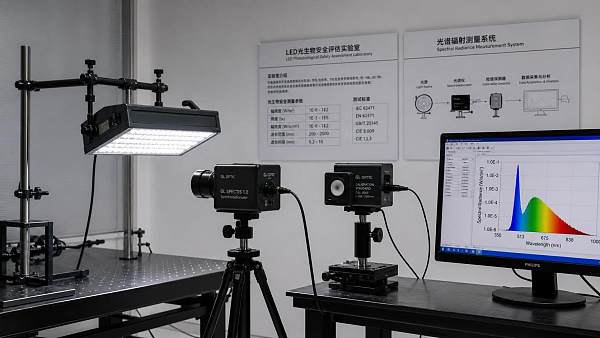
LED chip lifespan testing does not only ask whether the chip still turns on. It examines how performance changes over time under controlled conditions. The most useful tests track lumen depreciation, color shift, thermal behavior, electrical stability, and failure rates at defined checkpoints such as 1,000, 3,000, 6,000, or 10,000 hours.
Core indicators that buyers should review
- Lumen maintenance, often expressed through targets such as L70 or L80, indicating when output falls to 70% or 80% of initial light output.
- Color consistency, including whether chromaticity shift remains acceptable for retail displays, hospitality ambiance, or branded signage applications.
- Thermal performance under continuous operation at elevated case temperatures such as 55°C, 75°C, or higher in enclosed fixtures.
- Catastrophic failure rate, especially important in projects with hundreds or thousands of deployed units.
The table below shows how weak lifespan performance translates into procurement risk in real commercial environments.
The key takeaway is simple: lifespan testing turns vague quality claims into measurable procurement inputs. It allows buyers to identify whether a low quotation reflects true manufacturing efficiency or hidden durability compromises.
How Lifespan Testing Supports HCL, Biophilic, and Durable Signage Projects
Not every lighting project places the same demands on LED chips. Human centric lighting, biophilic lighting design, indoor commercial displays, and outdoor signage each stress the chip differently. Testing helps match performance to application rather than relying on generic claims that may not hold up in actual use.
In HCL environments, stable output and color are especially important because the system may change intensity and color temperature throughout the day. If the chip ages unevenly, the programmed experience becomes inconsistent. A tunable system designed around 2700K to 6500K transitions needs chips that maintain predictable behavior across thousands of switching and dimming cycles.
In biophilic retail or hospitality spaces, visual quality matters as much as efficiency. Lighting that is meant to highlight natural materials, greenery, or premium finishes must preserve color rendering and tonal balance over time. A chip that shifts visibly after 4,000 to 8,000 hours may undermine the design intent long before the fixture reaches physical end of life.
For signage, lifespan testing intersects with environmental durability. An IP67 waterproof housing or IK10 impact rating does not guarantee LED longevity by itself. If the internal chip and thermal pathway are weak, the sign can still suffer output loss, patchy illumination, or premature driver stress, especially in hot climates or high-vibration installations.
Application-specific stress factors
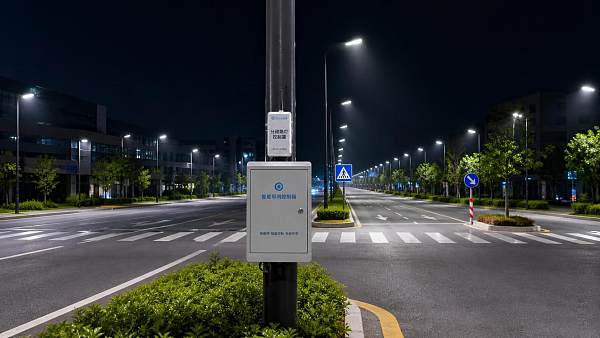
The practical value of LED chip lifespan testing increases when buyers align test conditions with real operating patterns. A smart city light operating 12 hours per night, an indoor display running 14 hours daily, and a hospitality feature wall with frequent dimming all create different aging patterns.
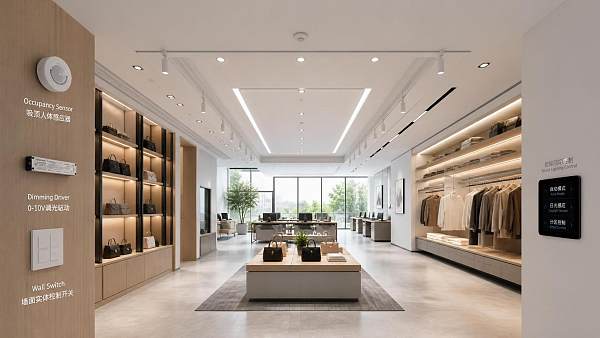
- Retail shelves and display zones need strong lumen maintenance and low color drift to preserve merchandise presentation.
- Office and wellness projects using HCL need stable dimming response, low flicker risk, and long-term color predictability.
- Outdoor wayfinding and signage need stronger thermal resilience, moisture-resistant integration, and lower failure rates in sealed housings.
- Transport or public-use applications benefit from testing tied to vibration, enclosure heat build-up, and long duty cycles of 4,000+ hours per year.
The following comparison shows why one testing profile does not fit every project.
This kind of application mapping allows sourcing teams to avoid overbuying in low-risk cases and under-specifying in critical ones. The result is a better fit between upfront cost, expected service life, and commercial environment demands.
What Procurement Teams Should Ask Suppliers Before Buying
A supplier may present a polished datasheet, but decision-makers need deeper evidence. Lifespan testing becomes useful only when buyers ask the right technical and commercial questions. This is where many bad buys happen: the procurement review focuses on price, wattage, and headline lumen output, while ignoring the conditions behind lifetime claims.
A practical sourcing review should compare test duration, test temperature, sample size, drive current, and pass criteria. A 500-hour internal check is not equivalent to a structured 6,000-hour evaluation with clear reporting. The larger and more exposed the rollout, the more important these distinctions become.
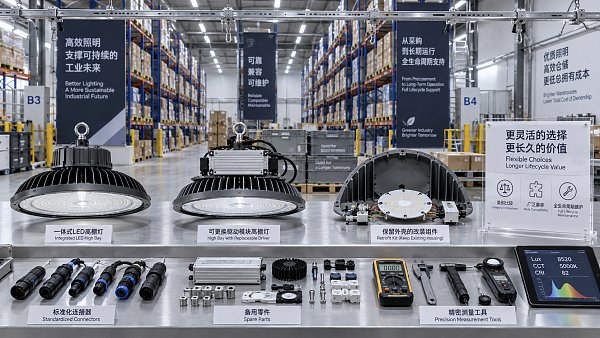
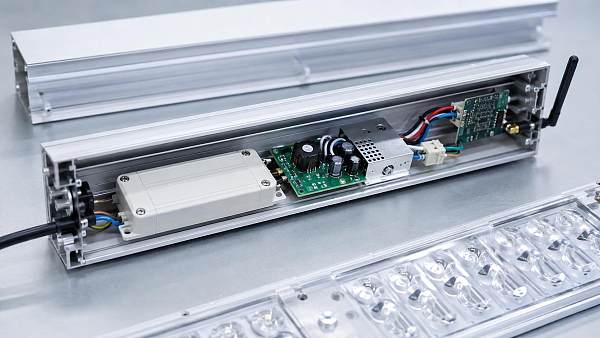
Commercial buyers should also distinguish between chip-level data and full-system performance. Even a strong LED chip can underperform if the board layout, heat sink, lens, driver, or enclosure is poorly designed. For that reason, it is useful to review both component testing and assembled fixture or sign testing where possible.
For multi-country sourcing, documentation quality matters too. Reports should be clear enough for engineering teams, procurement managers, and commercial evaluators to interpret consistently. When data is incomplete, heavily summarized, or difficult to compare, supply chain risk rises.
A practical supplier checklist
- Ask for the tested operating temperature range and whether results reflect real fixture conditions rather than only laboratory bench conditions.
- Confirm the failure definition: complete outage, lumen depreciation threshold, unacceptable color shift, or a combination of criteria.
- Review sample quantity. Ten tested pieces provide far less confidence than a broader production-representative sample.
- Check whether driver, PCB, housing, and thermal interface were included in the final system validation.
- Verify how warranty terms align with tested life assumptions, especially for projects with 3-year to 5-year service expectations.
Questions worth asking in RFQ or technical review
Instead of asking only “What is the rated lifetime?”, buyers should ask “At what case temperature was L70 or L80 estimated?”, “What was the test duration?”, “How many samples were included?”, and “What performance drift was observed at the 1,000-hour and 3,000-hour checkpoints?” These questions quickly separate robust suppliers from weak ones.
It is also useful to request a pilot batch or pre-production verification window of 2 to 4 weeks. For chain operators and developers, this small step can reduce the chance of a large-scale quality issue after rollout.
A Decision Framework for Research Teams, Operators, and Evaluators
Different stakeholders read lifespan data differently. Researchers want comparability, operators want reliability, procurement teams want cost control, and commercial evaluators want lower business risk. A useful decision framework connects the test report to all four priorities instead of treating it as a purely technical document.
One effective approach is to score LED options across four dimensions: performance stability, environmental fit, documentation transparency, and service impact. This creates a more balanced basis for selection than unit price alone. In many projects, a product that costs 8% to 12% more upfront can still reduce total lifecycle cost if maintenance frequency drops significantly.
Operators should pay close attention to maintenance planning. If a site network requires lifts, after-hours access, or contractor visits, every avoidable failure has a multiplied cost. In those conditions, chips with stronger tested durability can be worth the premium, especially where signage or lighting is business-critical.
Evaluators should also examine use-case alignment. A decorative indoor feature light does not need the same stress margin as a sealed outdoor sign exposed to heat, dust, and weather. Matching test evidence to environment prevents both under-specification and unnecessary overspending.
Sample decision matrix
The matrix below gives teams a structured way to compare offers when LED chip lifespan testing is part of the procurement process.
A decision framework like this is especially useful for cross-border sourcing where multiple suppliers meet the basic specification. It shifts the conversation from “Who is cheapest?” to “Which option is most dependable for this application and service model?”
Common buying mistakes to avoid
- Accepting a long lifetime claim without checking test conditions.
- Evaluating chip quality without reviewing thermal design of the final assembly.
- Assuming waterproof or impact-resistant housing automatically protects light quality over time.
- Ignoring service cost in favor of the lowest landed price.
How to Build Lifespan Testing into a Smarter Sourcing Process
The best way to prevent bad buys is to move lifespan testing upstream, before supplier approval and before mass deployment. This does not mean every buyer needs a full laboratory program. It means the sourcing workflow should include a clear review path for durability evidence, pilot validation, and application-fit assessment.
A practical process often has 5 steps: define operating scenario, set minimum evidence requirements, compare supplier reports, validate pilot samples, and align warranty with expected use. This can often be completed within a 2 to 6 week sourcing window, depending on project complexity and whether field trials are required.
For organizations benchmarking products across multiple pillars such as commercial lighting, signage, and smart retail environments, this approach creates repeatable evaluation logic. It supports more consistent decision-making across architects, engineers, procurement managers, and business stakeholders.
Within the G-BCE perspective, LED chip lifespan testing is more than a lab metric. It is part of a broader technical benchmarking discipline that improves data transparency across supply chains. That is particularly valuable when buyers must compare products built in different manufacturing ecosystems but deployed under global commercial standards and aesthetic expectations.
Recommended implementation workflow
- Define usage profile: indoor or outdoor, 8 to 16 operating hours per day, ambient temperature range, dimming frequency, and maintenance access difficulty.
- Set evidence thresholds: require documented testing checkpoints, thermal data, and a clear performance failure definition.
- Compare at least 2 to 3 suppliers on equal criteria instead of mixing unmatched reports.
- Run pilot or mock-up validation for visible applications such as signage, premium retail, or customer-facing environments.
- Align commercial terms: warranty, spare policy, and replacement lead time should match realistic service expectations.
FAQ
How long should an LED chip lifespan test run before buyers trust it?
Longer is generally better, but usefulness depends on application and reporting quality. For commercial screening, 3,000 to 6,000 hours of structured data can already reveal major weaknesses. For high-risk or large-scale deployments, buyers often want stronger long-duration evidence and system-level validation.
Is chip testing enough for outdoor signage procurement?
No. Outdoor signage should be assessed as a system. Chip performance, thermal management, sealing quality, driver compatibility, and enclosure behavior all affect usable life. IP67 and IK10 ratings are relevant, but they do not replace durability testing of the light source under realistic operating conditions.
What is the main warning sign in supplier documentation?
Be cautious when lifetime claims are presented without test temperature, sample details, or performance thresholds. If a supplier cannot explain how the number was derived, buyers should treat the claim as incomplete rather than decision-grade evidence.
LED chip lifespan testing helps commercial buyers see beyond attractive launch specifications and marketing language. It clarifies whether a product can maintain output, color quality, and operational reliability in real use across retail, office, hospitality, and signage environments.
For information researchers, operators, procurement teams, and business evaluators, this testing supports smarter comparisons, lower lifecycle risk, and more resilient sourcing decisions. It is especially valuable when assessing projects tied to HCL, biophilic lighting design, durable signage, and multi-site rollouts where maintenance disruption is costly.
If your team is benchmarking commercial lighting or signage solutions across global supply chains, G-BCE can help you evaluate performance evidence with greater clarity and procurement relevance. Contact us to discuss your application, request a tailored comparison framework, or learn more solutions for dependable commercial environments.
- smart retail
- supply chain
- commercial lighting
- signage
- commercial spaces
- commercial environments
- data transparency
- technical benchmarking
- signage solutions
- led chip lifespan testing
- ik10 impact resistance rating
- ip67 waterproof signage
- human centric lighting (HCL)
- biophilic lighting design
- energy efficient signage trends
- smart city lighting infrastructure
News Recommendations
 How to choose an ultra bright waterproof window display for storefronts
![51a6ab95581761cc26f4318be6520c15]()
Aris Katos
Future of Carbide Coatings
 How to verify suppliers on a trade portal for global sourcing
![51a6ab95581761cc26f4318be6520c15]()
Aris Katos
Future of Carbide Coatings
 How RoHS requirements should be stated in product specifications
![51a6ab95581761cc26f4318be6520c15]()
Aris Katos
Future of Carbide Coatings
 What affects the lead time for custom retail counter displays?
![51a6ab95581761cc26f4318be6520c15]()
Aris Katos
Future of Carbide Coatings
 What consumer packaging USA importers need to verify before ordering
![51a6ab95581761cc26f4318be6520c15]()
Aris Katos
Future of Carbide Coatings
 How commercial spaces interiors shape customer dwell time
![51a6ab95581761cc26f4318be6520c15]()
Aris Katos
Future of Carbide Coatings
 How LED commercial lighting design reduces glare in retail spaces
![51a6ab95581761cc26f4318be6520c15]()
Aris Katos
Future of Carbide Coatings
 How industrial technology information improves RFID inventory accuracy
![51a6ab95581761cc26f4318be6520c15]()
Aris Katos
Future of Carbide Coatings
 When drip garden watering systems make more sense than sprinklers
![51a6ab95581761cc26f4318be6520c15]()
Aris Katos
Future of Carbide Coatings
 When category comparison improves sourcing for industrial applications
![51a6ab95581761cc26f4318be6520c15]()
Aris Katos
Future of Carbide Coatings
 Industrial application guidance for selecting the right LED lighting
![51a6ab95581761cc26f4318be6520c15]()
Aris Katos
Future of Carbide Coatings
 Which commercial architecture standards apply to European retail fit-outs?
![51a6ab95581761cc26f4318be6520c15]()
Aris Katos
Future of Carbide Coatings
 How to verify FDA requirements for maternity care products
![51a6ab95581761cc26f4318be6520c15]()
Aris Katos
Future of Carbide Coatings
 How to verify BPA-free claims for food-contact products
![51a6ab95581761cc26f4318be6520c15]()
Aris Katos
Future of Carbide Coatings
 When does a European wholesale supplier suit modular office projects?
![51a6ab95581761cc26f4318be6520c15]()
Aris Katos
Future of Carbide Coatings
 When consumer ecosystem solutions improve the in-store shopping journey
![51a6ab95581761cc26f4318be6520c15]()
Aris Katos
Future of Carbide Coatings
 How a commercial developers network can reduce site selection risk
![51a6ab95581761cc26f4318be6520c15]()
Aris Katos
Future of Carbide Coatings
 How clear purchasing specifications prevent costly supplier deviations
![51a6ab95581761cc26f4318be6520c15]()
Aris Katos
Future of Carbide Coatings
 What an ISTA drop test lab checks before your packaging ships
![51a6ab95581761cc26f4318be6520c15]()
Aris Katos
Future of Carbide Coatings
 Which commercial furniture standards apply to workplace seating?
![51a6ab95581761cc26f4318be6520c15]()
Aris Katos
Future of Carbide Coatings
 How to evaluate smart lighting module OEM compatibility before sampling
![51a6ab95581761cc26f4318be6520c15]()
Aris Katos
Future of Carbide Coatings
 How to assess whether sustainable technology delivers real impact
![51a6ab95581761cc26f4318be6520c15]()
Aris Katos
Future of Carbide Coatings
 How to assess an OEM supplier’s quality control before ordering
![51a6ab95581761cc26f4318be6520c15]()
Aris Katos
Future of Carbide Coatings
 How consumer ecosystem solutions data can improve retail personalization
![51a6ab95581761cc26f4318be6520c15]()
Aris Katos
Future of Carbide Coatings
 When does consumer packaging design justify a higher product price?
![51a6ab95581761cc26f4318be6520c15]()
Aris Katos
Future of Carbide Coatings
 Supermarket Fixture Installation: Planning Layouts, Wiring, and Handover
![51a6ab95581761cc26f4318be6520c15]()
Aris Katos
Future of Carbide Coatings
 Automated Lighting and Smart Lighting Control in Bergerac: Key Project Considerations
![51a6ab95581761cc26f4318be6520c15]()
Aris Katos
Future of Carbide Coatings
 Segment Streetlight Controllers: Choosing Control Modes for Urban Roads
![51a6ab95581761cc26f4318be6520c15]()
Aris Katos
Future of Carbide Coatings
 IEC 62471-2 Explained: How to Assess Photobiological Risks in LED Lighting
![51a6ab95581761cc26f4318be6520c15]()
Aris Katos
Future of Carbide Coatings
 Food Grade Packaging Requirements by Product Type, Temperature, and Contact Risk
![51a6ab95581761cc26f4318be6520c15]()
Aris Katos
Future of Carbide Coatings
 Food Packaging Compliance Checklist: Tests, Records, and Labeling Before Shipment
![51a6ab95581761cc26f4318be6520c15]()
Aris Katos
Future of Carbide Coatings
 NSF Food Packaging Standards: When Certification Matters for Commercial Food Use
![51a6ab95581761cc26f4318be6520c15]()
Aris Katos
Future of Carbide Coatings
 FDA Food Grade Compliance: Which Materials and Documents Do Buyers Need?
![51a6ab95581761cc26f4318be6520c15]()
Aris Katos
Future of Carbide Coatings
 What Should a Food Grade Declaration Include for Packaging Compliance?
![51a6ab95581761cc26f4318be6520c15]()
Aris Katos
Future of Carbide Coatings
 Housewares Importing: How to Evaluate Suppliers, Costs, and Compliance Risks
![51a6ab95581761cc26f4318be6520c15]()
Aris Katos
Future of Carbide Coatings
 Why Freeze-Dried Fruit Ingredients Lose Crispness—and How to Prevent It
![51a6ab95581761cc26f4318be6520c15]()
Aris Katos
Future of Carbide Coatings
 What industry veterans look for before choosing a new supplier
![51a6ab95581761cc26f4318be6520c15]()
Aris Katos
Future of Carbide Coatings
 How material fatigue can shorten the service life of retail shelving
![51a6ab95581761cc26f4318be6520c15]()
Aris Katos
Future of Carbide Coatings
 What makes a global sourcing platform reliable for supplier verification?
![51a6ab95581761cc26f4318be6520c15]()
Aris Katos
Future of Carbide Coatings