Is Biophilic Lighting Design Right for Your Space?
Time
Click Count
As commercial spaces evolve, biophilic lighting design is gaining attention for its ability to improve mood, productivity, and brand experience. For architects, operators, and sourcing teams, understanding the retail lighting psychological impact of human centric lighting (HCL) is essential when evaluating whether this approach fits your space, performance goals, and long-term commercial strategy.
If you are asking whether biophilic lighting design is right for your space, the short answer is: it can be highly effective when your project depends on occupant comfort, dwell time, visual quality, wellness positioning, or premium brand perception. But it is not automatically the right choice for every site. The real decision depends on your use case, operating hours, budget, control capabilities, ceiling conditions, and whether the expected commercial value justifies the added design and specification complexity.
For decision-makers, this is less about following a trend and more about evaluating whether a human-centered lighting strategy can improve user experience while supporting business performance. For operators and procurement teams, the key question is practical: will it deliver measurable benefits without creating maintenance, compatibility, or cost issues?
What decision-makers are really asking before choosing biophilic lighting
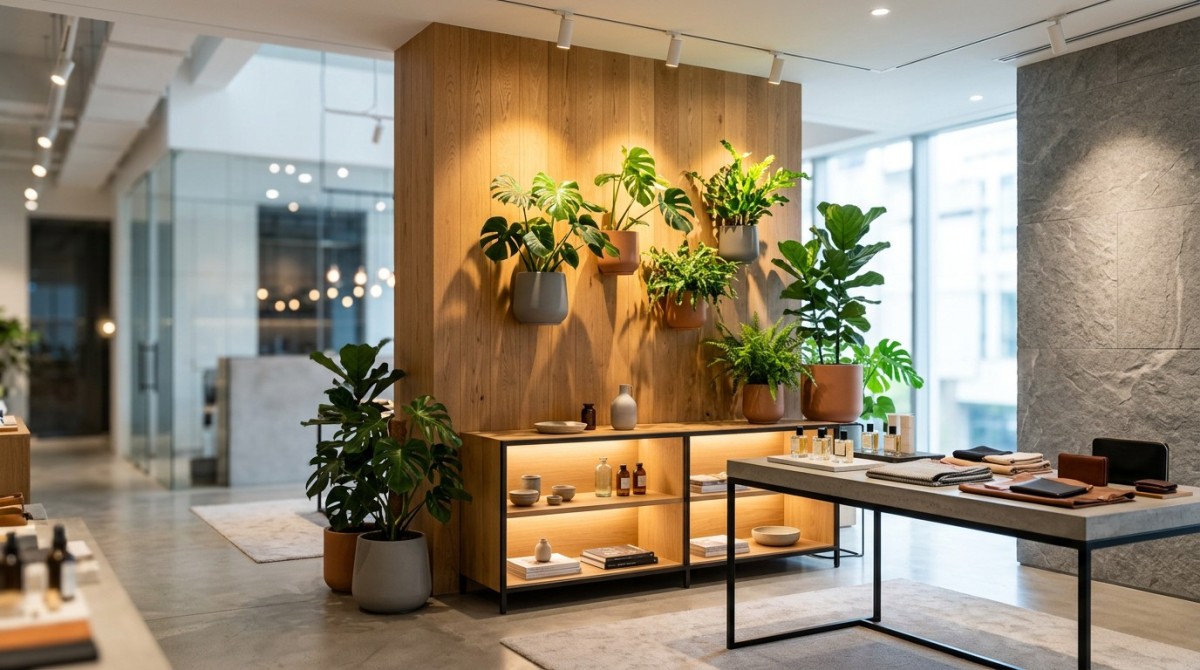
Most searchers looking into biophilic lighting design are not just trying to understand the concept. They want to know whether it will work in a real commercial environment and whether it is worth the investment.
In practice, the core search intent usually includes four questions:
- Will it improve the experience of the space? This includes mood, comfort, focus, visual appeal, and emotional response.
- Is there a business case? Buyers want to understand return in terms of customer dwell time, staff wellbeing, perceived quality, and brand differentiation.
- Is it suitable for my type of project? Not every office, retail store, hospitality venue, or mixed-use space benefits in the same way.
- What are the risks? Stakeholders want to avoid overdesigned systems, poor integration, unrealistic claims, and maintenance burdens.
This means the most useful evaluation is not “What is biophilic lighting?” but “Where does it create operational, experiential, and commercial value, and where does it not?”
What biophilic lighting design actually means in a commercial setting
Biophilic lighting design uses lighting to strengthen a human connection to nature. In commercial environments, this often overlaps with human centric lighting, dynamic lighting controls, and nature-inspired visual composition.
Instead of treating lighting only as a technical necessity, biophilic design considers how light supports human rhythms and emotional comfort. Common strategies include:
- Using tunable white lighting to reflect changing daylight patterns
- Supporting circadian alignment in workplaces, wellness settings, and public spaces
- Combining electric light with daylight access and glare control
- Creating contrast, shadow, softness, and variation that feel more natural than flat uniform illumination
- Highlighting natural materials, greenery, textures, and architectural forms
In retail and hospitality, the retail lighting psychological impact can be significant. Lighting that feels harsh, static, or disconnected from the physical environment can reduce comfort. Lighting that feels balanced, adaptive, and natural can make a space feel more inviting, premium, and easier to stay in.
That said, biophilic lighting is not simply dimmer warm light or decorative greenery with spotlights. It requires a coordinated design approach involving architecture, controls, fixture selection, color quality, and the intended behavior of users in the space.
When biophilic lighting design is likely to be a strong fit
Biophilic lighting is typically a strong choice when the environment depends on extended occupancy, repeated use, emotional engagement, or wellness-led positioning.
Office and workplace environments
It can support alertness during the day, reduce visual fatigue, and improve the perceived quality of the workspace. In hybrid work environments, this can also help create a more compelling reason for employees to be on site.
Retail spaces
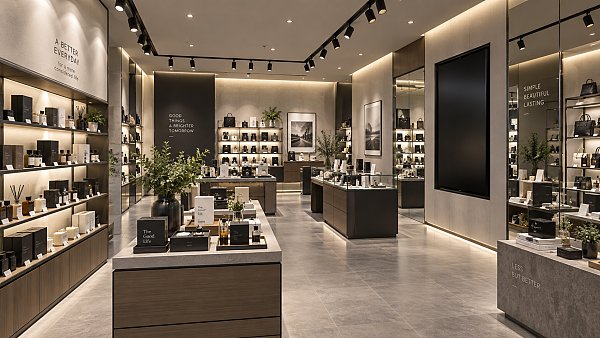
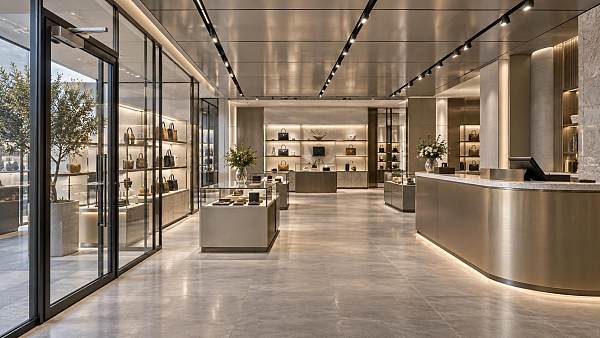
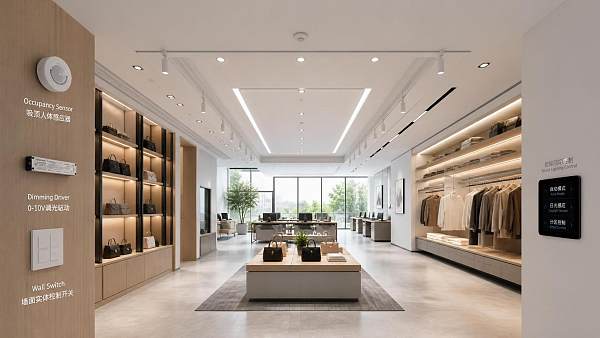
In premium retail, showroom, and lifestyle environments, biophilic lighting can strengthen product presentation and brand atmosphere. It may help increase dwell time and improve how customers perceive comfort, trust, and product quality.
Hospitality and wellness settings
Hotels, spas, lounges, and healthcare-adjacent spaces often benefit from a calmer, more restorative lighting language. Here, the value comes not only from visibility but from mood regulation and perceived care.
Education and public environments
Where concentration, orientation, and comfort matter, dynamic and nature-referenced lighting can support more pleasant occupancy conditions.
Brand-led flagship environments
If your commercial strategy depends on experience design, sustainability storytelling, or premium differentiation, biophilic lighting can become part of the brand narrative rather than just a background utility.
In these scenarios, the investment tends to make more sense because the benefits extend beyond energy performance into user behavior and commercial perception.
When it may not be the right choice, or not the top priority
Biophilic lighting is not always the best first investment.
It may offer limited value when:
- The space is highly transactional with very short dwell times
- Budget pressure makes basic lighting quality, compliance, and efficiency the higher priority
- The project has low control system maturity or limited commissioning support
- Ceiling heights, daylight conditions, or infrastructure constraints prevent meaningful implementation
- Maintenance teams need very simple, standardized systems across multiple sites
For example, in a back-of-house utility area, a high-turnover discount format, or a cost-driven rollout program, better ROI may come from improving uniformity, glare control, efficacy, and fixture durability before adding dynamic circadian features.
This does not mean biophilic principles have no place. It simply means the application may need to be selective, such as focusing only on customer zones, staff welfare areas, executive spaces, or flagship locations.
What benefits matter most to operators, sourcing teams, and business evaluators
For commercial stakeholders, the most important benefits are usually not theoretical wellness claims but practical outcomes tied to space performance.
1. Better user experience
Spaces that feel visually comfortable and emotionally balanced are easier to occupy. This can affect staff satisfaction, customer dwell time, and overall perception of quality.
2. Stronger brand positioning
For brands that want to communicate sustainability, premium design, or wellbeing, biophilic lighting can reinforce that message in a tangible way.
3. Potential productivity and comfort gains
In workplaces and task-based settings, better light quality and circadian support may contribute to alertness, reduced fatigue, and improved concentration, especially in spaces with weak daylight access.
4. More differentiated commercial environments
As many interiors become visually similar, lighting becomes a strategic tool for shaping identity and memory. Biophilic lighting can help create a space that feels distinct rather than generic.
5. Integration with broader sustainability goals
When properly specified, dynamic lighting systems can work alongside daylight harvesting, occupancy sensing, and efficient LED platforms. This allows human-centered design to align with operational efficiency rather than compete with it.
However, teams should be cautious about overstating outcomes. The strongest business case usually comes from combining qualitative improvements with measurable operational criteria, not from promising unrealistic health transformations from lighting alone.
How to evaluate whether biophilic lighting will work in your space
A practical assessment should include both design and commercial filters. The following questions help determine fit:
- What behavior do you want to influence? Longer stays, greater focus, calmer movement, premium perception, better staff comfort?
- What is the occupancy pattern? Daytime office use, evening hospitality, all-day retail traffic, shift work?
- How much daylight already exists? Biophilic lighting works best when integrated with daylight strategy, not treated separately.
- Do you have the control infrastructure? Human centric lighting often depends on dimming, scheduling, sensors, and commissioning quality.
- What level of maintenance can the site support? More advanced systems require stronger operational discipline.
- Are you evaluating one site or a scalable rollout? A flagship solution may not translate directly into chain-wide deployment.
A useful benchmark is to compare three scenarios:
- Standard compliant LED lighting
- High-quality architectural lighting with better visual comfort
- Biophilic or human-centered lighting with dynamic controls
This side-by-side approach helps teams understand whether the incremental cost creates enough incremental value.
Key specification issues that often decide success or failure
Even strong concepts can fail if the technical specification is weak. For procurement teams and project evaluators, these are the details worth checking:
- Color rendering quality: Natural materials, skin tones, and merchandise need accurate and pleasing presentation.
- Glare control: A “human-centered” concept will fail quickly if the fixtures create discomfort.
- Tunable white performance: Check dimming smoothness, color consistency, and control reliability.
- Control system compatibility: Ensure interoperability with building systems and local operating requirements.
- Commissioning and scene setting: Poor programming can undermine the entire user experience.
- Fixture durability and supply continuity: Especially important for multi-site operators and long lifecycle projects.
- Standards alignment: Confirm relevant electrical, safety, and performance compliance for your market.
This is where a benchmarking mindset matters. A visually appealing concept is not enough. Commercial buyers need proof that the solution can perform reliably, scale when needed, and meet international technical expectations.
A simple decision framework: should you move forward?
Biophilic lighting design is likely worth pursuing if most of the following are true:
- Your space depends on comfort, mood, focus, or experiential quality
- Your brand benefits from wellness, sustainability, or premium positioning
- Your users spend enough time in the space to feel the difference
- You have the budget and technical support for proper controls and commissioning
- You want lighting to contribute strategically, not just functionally
You may want a more limited or phased approach if:
- The project is highly cost-sensitive
- Operational simplicity is more important than adaptive experience
- The site has poor infrastructure for dynamic systems
- The business case is unclear beyond design preference
In many commercial projects, the best answer is not an all-or-nothing decision. A targeted implementation in high-impact zones often delivers better value than applying biophilic lighting uniformly across every area.
Conclusion
Biophilic lighting design can be the right choice for a space when the goal is to improve user wellbeing, strengthen brand experience, and create a more natural and emotionally engaging environment. Its real value becomes clearer in workplaces, premium retail, hospitality, and other settings where comfort, perception, and dwell time matter.
But the right decision depends on more than design intent. Buyers and operators should assess use case, control readiness, maintenance capacity, budget, and measurable commercial objectives. When specified carefully and aligned with business goals, human centric lighting can move from design trend to strategic asset. When applied without a clear purpose, it can become unnecessary complexity.
The smartest path is to evaluate biophilic lighting not as a universal upgrade, but as a performance-based tool: one that should earn its place through better experience, stronger outcomes, and reliable long-term operation.
News Recommendations
 How to choose an ultra bright waterproof window display for storefronts
![51a6ab95581761cc26f4318be6520c15]()
Aris Katos
Future of Carbide Coatings
 How to verify suppliers on a trade portal for global sourcing
![51a6ab95581761cc26f4318be6520c15]()
Aris Katos
Future of Carbide Coatings
 How RoHS requirements should be stated in product specifications
![51a6ab95581761cc26f4318be6520c15]()
Aris Katos
Future of Carbide Coatings
 What affects the lead time for custom retail counter displays?
![51a6ab95581761cc26f4318be6520c15]()
Aris Katos
Future of Carbide Coatings
 What consumer packaging USA importers need to verify before ordering
![51a6ab95581761cc26f4318be6520c15]()
Aris Katos
Future of Carbide Coatings
 How commercial spaces interiors shape customer dwell time
![51a6ab95581761cc26f4318be6520c15]()
Aris Katos
Future of Carbide Coatings
 How LED commercial lighting design reduces glare in retail spaces
![51a6ab95581761cc26f4318be6520c15]()
Aris Katos
Future of Carbide Coatings
 How industrial technology information improves RFID inventory accuracy
![51a6ab95581761cc26f4318be6520c15]()
Aris Katos
Future of Carbide Coatings
 When drip garden watering systems make more sense than sprinklers
![51a6ab95581761cc26f4318be6520c15]()
Aris Katos
Future of Carbide Coatings
 When category comparison improves sourcing for industrial applications
![51a6ab95581761cc26f4318be6520c15]()
Aris Katos
Future of Carbide Coatings
 Industrial application guidance for selecting the right LED lighting
![51a6ab95581761cc26f4318be6520c15]()
Aris Katos
Future of Carbide Coatings
 Which commercial architecture standards apply to European retail fit-outs?
![51a6ab95581761cc26f4318be6520c15]()
Aris Katos
Future of Carbide Coatings
 How to verify FDA requirements for maternity care products
![51a6ab95581761cc26f4318be6520c15]()
Aris Katos
Future of Carbide Coatings
 How to verify BPA-free claims for food-contact products
![51a6ab95581761cc26f4318be6520c15]()
Aris Katos
Future of Carbide Coatings
 When does a European wholesale supplier suit modular office projects?
![51a6ab95581761cc26f4318be6520c15]()
Aris Katos
Future of Carbide Coatings
 When consumer ecosystem solutions improve the in-store shopping journey
![51a6ab95581761cc26f4318be6520c15]()
Aris Katos
Future of Carbide Coatings
 How a commercial developers network can reduce site selection risk
![51a6ab95581761cc26f4318be6520c15]()
Aris Katos
Future of Carbide Coatings
 How clear purchasing specifications prevent costly supplier deviations
![51a6ab95581761cc26f4318be6520c15]()
Aris Katos
Future of Carbide Coatings
 What an ISTA drop test lab checks before your packaging ships
![51a6ab95581761cc26f4318be6520c15]()
Aris Katos
Future of Carbide Coatings
 Which commercial furniture standards apply to workplace seating?
![51a6ab95581761cc26f4318be6520c15]()
Aris Katos
Future of Carbide Coatings
 How to evaluate smart lighting module OEM compatibility before sampling
![51a6ab95581761cc26f4318be6520c15]()
Aris Katos
Future of Carbide Coatings
 How to assess whether sustainable technology delivers real impact
![51a6ab95581761cc26f4318be6520c15]()
Aris Katos
Future of Carbide Coatings
 How to assess an OEM supplier’s quality control before ordering
![51a6ab95581761cc26f4318be6520c15]()
Aris Katos
Future of Carbide Coatings
 How consumer ecosystem solutions data can improve retail personalization
![51a6ab95581761cc26f4318be6520c15]()
Aris Katos
Future of Carbide Coatings
 When does consumer packaging design justify a higher product price?
![51a6ab95581761cc26f4318be6520c15]()
Aris Katos
Future of Carbide Coatings
 Supermarket Fixture Installation: Planning Layouts, Wiring, and Handover
![51a6ab95581761cc26f4318be6520c15]()
Aris Katos
Future of Carbide Coatings
 Automated Lighting and Smart Lighting Control in Bergerac: Key Project Considerations
![51a6ab95581761cc26f4318be6520c15]()
Aris Katos
Future of Carbide Coatings
 Segment Streetlight Controllers: Choosing Control Modes for Urban Roads
![51a6ab95581761cc26f4318be6520c15]()
Aris Katos
Future of Carbide Coatings
 IEC 62471-2 Explained: How to Assess Photobiological Risks in LED Lighting
![51a6ab95581761cc26f4318be6520c15]()
Aris Katos
Future of Carbide Coatings
 Food Grade Packaging Requirements by Product Type, Temperature, and Contact Risk
![51a6ab95581761cc26f4318be6520c15]()
Aris Katos
Future of Carbide Coatings
 Food Packaging Compliance Checklist: Tests, Records, and Labeling Before Shipment
![51a6ab95581761cc26f4318be6520c15]()
Aris Katos
Future of Carbide Coatings
 NSF Food Packaging Standards: When Certification Matters for Commercial Food Use
![51a6ab95581761cc26f4318be6520c15]()
Aris Katos
Future of Carbide Coatings
 FDA Food Grade Compliance: Which Materials and Documents Do Buyers Need?
![51a6ab95581761cc26f4318be6520c15]()
Aris Katos
Future of Carbide Coatings
 What Should a Food Grade Declaration Include for Packaging Compliance?
![51a6ab95581761cc26f4318be6520c15]()
Aris Katos
Future of Carbide Coatings
 Housewares Importing: How to Evaluate Suppliers, Costs, and Compliance Risks
![51a6ab95581761cc26f4318be6520c15]()
Aris Katos
Future of Carbide Coatings
 Why Freeze-Dried Fruit Ingredients Lose Crispness—and How to Prevent It
![51a6ab95581761cc26f4318be6520c15]()
Aris Katos
Future of Carbide Coatings
 What industry veterans look for before choosing a new supplier
![51a6ab95581761cc26f4318be6520c15]()
Aris Katos
Future of Carbide Coatings
 How material fatigue can shorten the service life of retail shelving
![51a6ab95581761cc26f4318be6520c15]()
Aris Katos
Future of Carbide Coatings
 What makes a global sourcing platform reliable for supplier verification?
![51a6ab95581761cc26f4318be6520c15]()
Aris Katos
Future of Carbide Coatings