What CRI data really tells you before buying LEDs
Time
Click Count
Before choosing LEDs, color rendering index (CRI) data reveals far more than visual quality—it affects merchandise appeal, user comfort, and long-term commercial performance. When reviewed alongside unified glare rating (UGR) standards and lumen output per watt benchmarks, buyers can make smarter decisions across retail, office, and smart infrastructure projects, from a dimmable led driver supplier to an iot lighting node oem.
Why CRI data matters more than many LED buyers expect
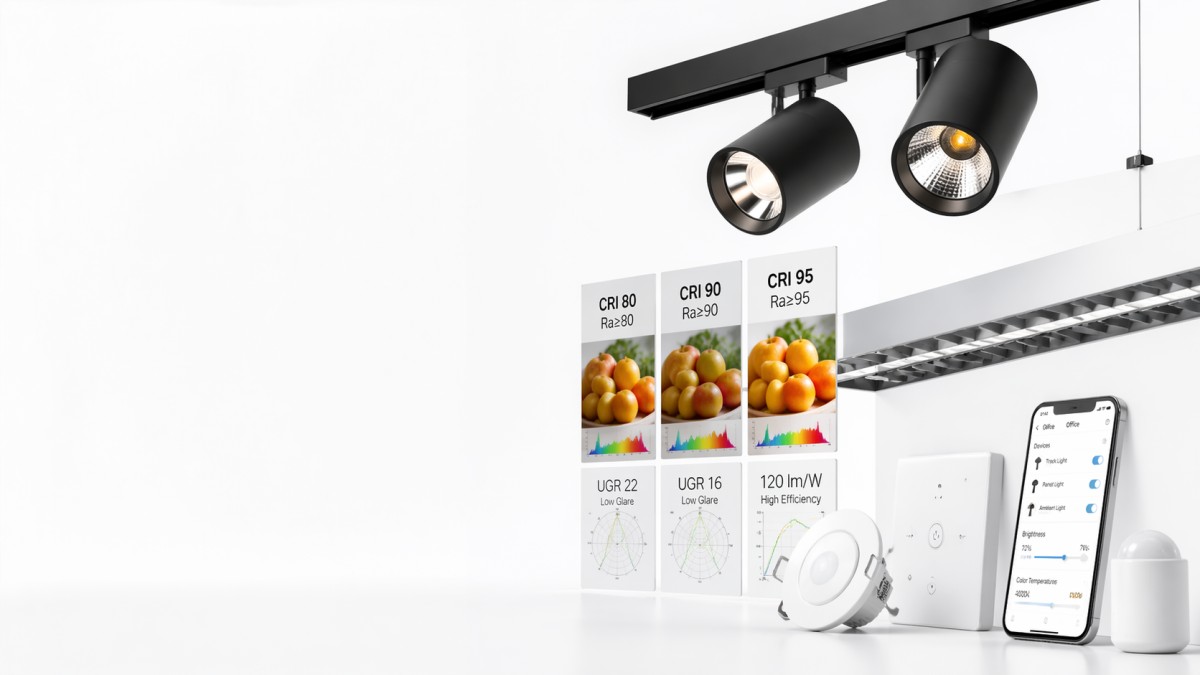
Many purchasing teams still treat CRI as a secondary number, checking wattage and price first. That approach often creates downstream problems in stores, offices, hospitality projects, and connected commercial environments. CRI data helps reveal how accurately an LED source renders colors compared with a reference light source, and that has direct impact on product presentation, visual comfort, employee perception, and customer dwell time.
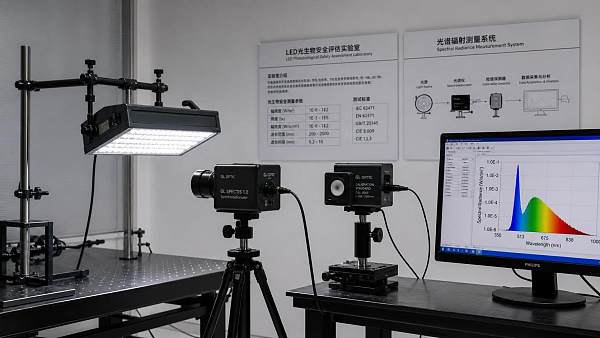
In practical sourcing, CRI should not be read alone. A luminaire with CRI 90 may still underperform if glare is excessive, if the beam pattern is poorly controlled, or if the driver causes flicker during dimming. For that reason, professional evaluation usually starts with 3 core indicators: CRI, UGR, and luminous efficacy in lm/W. In most commercial projects, these three figures provide a clearer early-stage filter than a low unit price alone.
For information researchers and business evaluators, CRI data is also useful because it bridges technical performance and commercial outcomes. In fashion retail, a poor CRI selection can make textiles look dull. In grocery, it can shift the appearance of produce or packaged goods. In offices and service counters, it can affect facial tones, task recognition, and screen-to-environment balance across 8–12 hour operating periods.
G-BCE’s cross-sector benchmarking perspective is valuable here because lighting decisions rarely stand alone. They connect with fixture materials, digital retail systems, signage visibility, and sustainability targets. When buyers compare LED solutions against broader commercial hardware requirements, they avoid isolated decisions and gain a more reliable basis for supply chain alignment, installation planning, and lifecycle evaluation.
- CRI influences product appearance, brand consistency, and visual judgment in customer-facing spaces.
- UGR affects comfort, especially in offices, hospitality zones, and digital display areas where glare accumulates over long periods.
- lm/W helps estimate operating efficiency, energy strategy, and replacement economics across medium- to large-scale deployments.
How to read CRI together with UGR and efficacy before shortlisting suppliers
A common sourcing mistake is to ask for “high CRI LEDs” without defining the project context. In reality, the acceptable range depends on merchandise sensitivity, viewing distance, dwell time, and control strategy. For many office and circulation spaces, CRI 80 may be acceptable when balanced with good efficacy and UGR control. For premium retail, showroom, cosmetics, or hospitality presentation, buyers more often review CRI 90 or above.
UGR becomes especially important when the project includes open-plan workstations, cashier points, consultation desks, or digital shelf-edge displays. Even a high-CRI luminaire can feel uncomfortable if glare is poorly managed. In many commercial interiors, UGR <19 is a common reference for office-related visual tasks, while accent and decorative zones may accept higher values depending on mounting height and line of sight.
Luminous efficacy, often expressed in lm/W, should be checked at system level rather than LED chip level alone. A strong specification on paper may weaken after optical losses, driver conversion, thermal conditions, or dimming control integration. This is particularly relevant when buyers compare an iot lighting node oem proposal with a conventional luminaire quotation. Smart controls add value, but they must not obscure core performance metrics.
The table below gives a practical decision view for early supplier screening. It is not a substitute for final mock-up testing, but it helps procurement teams structure RFQ discussions and reduce ambiguity across 2–4 rounds of technical review.
This comparison shows why a single “best” number is misleading. A retail chain may deliberately accept slightly lower lm/W to gain better CRI for merchandise appeal. A back-of-house logistics zone may prioritize efficacy and maintenance intervals instead. Strong procurement decisions come from aligning the metric to the business function, not from chasing one headline specification.
Three checks that prevent spec-sheet misunderstandings
First, confirm the test basis. Ask whether CRI and lumen figures refer to the LED package, module, or complete luminaire. Second, confirm the correlated color temperature, since performance can shift between 3000K, 4000K, and 5000K variants. Third, check dimming behavior over the expected control range, such as 10–100% or 1–100%, especially when reviewing a dimmable led driver supplier.
These checks are particularly important for multinational rollouts. A specification that looks acceptable in one region may conflict with installation practices, visual expectations, or power quality conditions in another. G-BCE’s benchmarking approach supports buyers who need to compare Asian manufacturing offers against international commercial requirements without losing technical clarity.
Which LED choices fit retail, office, and smart infrastructure scenarios?
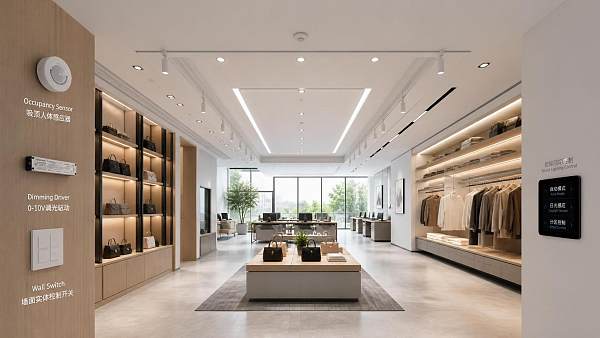
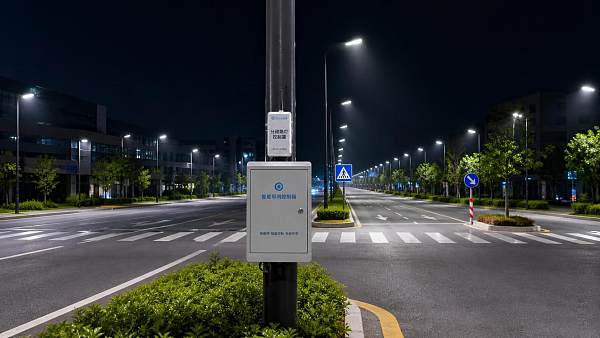
Application context changes the meaning of CRI data. In retail, color fidelity is often tied to conversion, especially where apparel, cosmetics, fresh goods, or premium packaging are involved. In offices, visual comfort and task performance may outweigh the need for very high CRI. In smart infrastructure, networked controls, maintenance visibility, and total system integration can be as important as rendering quality.
For operators and facility users, the question is rarely “What is the highest CRI available?” A better question is “What level of color rendering supports the intended visual task at acceptable energy and maintenance cost?” That shifts the conversation from isolated component pricing to operational fit. For example, a flagship retail zone may justify CRI 90+, while storage corridors may not need the same level.
Commercial projects also involve layered lighting. Ambient, accent, task, and signage lighting may each have different priorities. That is why procurement teams should avoid one universal specification for an entire site. In many mixed-use projects, 3 to 5 lighting categories are reviewed separately during design development to balance appearance, controls, and lifecycle cost.
The table below helps non-specialist stakeholders connect CRI data to practical application logic. It is useful for cross-functional discussions involving sourcing directors, designers, operators, and project managers.
The key takeaway is that application categories should drive the LED shortlist. If buyers use a single benchmark for every area, they risk either overspending on low-priority zones or underperforming in customer-facing spaces. A segmented specification strategy usually produces better budget discipline and better environmental performance over a 3–7 year operational horizon.
Where operators often feel the difference first
Operators notice color distortion during restocking, display resets, and daily maintenance before management sees it in reports. Merchandise that looked correct in sample review can appear inconsistent after full installation if CCT bins vary, optics differ by supplier batch, or dimming curves are mismatched. This is why mock-up validation and batch consistency checks matter for both user experience and procurement control.
- Retail teams often prioritize display appearance and customer perception within the first 2–3 meters of view.
- Office users usually react more quickly to glare, flicker, and uneven luminance than to minor CRI differences.
- Infrastructure operators focus on maintenance intervals, controllability, and replacement simplicity across distributed assets.
What should procurement teams verify before placing an LED order?
A four-step procurement review that reduces risk
A reliable LED procurement process usually follows 4 steps: define the use case, verify technical data, review compliance and service conditions, and test samples in the intended environment. Skipping one of these stages often creates hidden cost later. For example, a low-cost offer may appear attractive until the buyer realizes the quoted CRI was measured at a different CCT or the delivered fixture lacks the promised dimming compatibility.
For procurement officers and commercial evaluators, the most useful documents are usually the specification sheet, photometric data, driver details, dimming protocol notes, and any applicable conformity documentation. In projects linked to international rollout, buyers may also check whether the solution is aligned with market access expectations such as CE- or UL-related pathways, depending on destination and product category.
Lead time matters as much as product data. Standard commercial batches may move on a 2–6 week cycle, while customized optics, controls, housing finishes, or branded integration can extend the schedule. If the project requires site mock-ups, sample approval, or firmware coordination with a smart lighting platform, a realistic sourcing plan should include at least 1–2 additional review windows.
The checklist below helps teams compare quotations from a dimmable led driver supplier, fixture manufacturer, and iot lighting node oem without losing track of practical decision factors.
- Confirm project zoning: separate front-of-house, task, accent, and utility areas rather than buying one specification for all spaces.
- Verify system-level values: ask for complete-luminaire CRI, UGR, output, efficacy, and dimming behavior, not chip-level data only.
- Check compliance path: review applicable electrical safety, EMC, and project-specific market access requirements before order release.
- Approve samples under real conditions: test at the actual mounting height, surface reflectance, and operating schedule if possible.
Common red flags during quotation comparison
Be cautious when the CRI value is highlighted but no test context is provided, when lumen claims appear unusually high for the specified optical control, or when the driver brand and protocol are left undefined. Another warning sign is unclear responsibility between fixture maker and control node provider. In smart commercial projects, fragmented accountability often creates delays during installation and commissioning.
G-BCE supports this stage by translating fragmented product claims into benchmarkable decision criteria across commercial lighting, smart retail hardware, and supply chain execution. That broader view is useful for organizations that source internationally and need consistent evaluation language across design, procurement, and operations teams.
Standards, compliance, and frequent misconceptions about CRI
Why compliance review should sit beside performance review
LED purchasing decisions are not only about visual results. Commercial projects often require documentation that supports market entry, installation approval, or internal risk review. Depending on region and product type, buyers may review electrical safety, electromagnetic compatibility, environmental declarations, and application-specific standards. Performance data without a clear compliance path can slow projects by several weeks during final approval.
A frequent misconception is that a high CRI automatically means a premium or compliant product. It does not. CRI is one indicator, and it says nothing by itself about glare control, flicker behavior, ingress protection, thermal management, or control interoperability. Another misconception is that all CRI 90 luminaires will look the same. They may not, because spectral distribution, optics, and surrounding materials influence the final result.
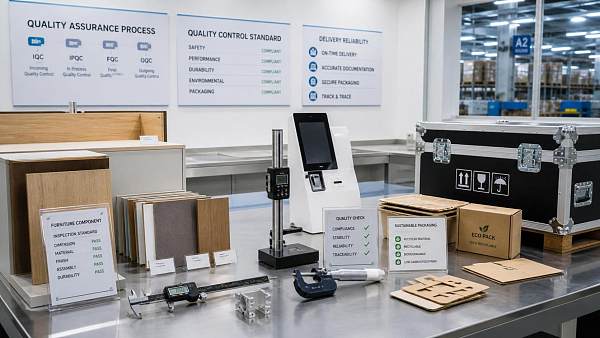
Buyers should also distinguish between prototype performance and repeatable supply performance. In international sourcing, the practical question is whether batch consistency can be maintained over medium-volume and large-volume orders. A well-reviewed sample is useful, but long-term procurement depends on process stability, component traceability, and realistic quality control windows such as incoming checks, pilot runs, and pre-shipment verification.
For commercial architects, sourcing directors, and evaluation teams, cross-sector benchmarking reduces risk because lighting rarely operates in isolation. It interacts with furniture finishes, signage readability, display technology, packaging color, and user flow. That is why G-BCE’s integrated view is relevant when projects combine aesthetic goals with technical benchmarking and supply chain modernization.
FAQ: practical questions buyers ask before committing
The questions below reflect common search intent from researchers, operators, and procurement teams comparing LED options for commercial environments.
Is CRI 80 enough, or should I specify CRI 90?
It depends on the task and brand expectation. CRI 80 is often suitable for circulation, utility, and many office applications. CRI 90 is more commonly justified in premium retail, hospitality, cosmetics, and display-sensitive areas where color accuracy affects presentation or perceived quality. If budget is limited, split the site into zones rather than applying CRI 90 everywhere.
What should I ask a dimmable led driver supplier before approval?
Ask about dimming range, protocol compatibility, visible flicker risk, load conditions, and whether performance data is based on the final luminaire system. Clarify if the project uses 0–10V, DALI, or another control approach. For commercial spaces with scene setting or occupancy response, smooth dimming from low output to full output is often more important than a nominal maximum wattage figure.
When does an iot lighting node oem add real value?
An IoT-ready node adds value when the project needs centralized monitoring, scheduling, occupancy-based control, energy reporting, or distributed maintenance visibility across multiple sites. It is less compelling if the installation is small, operational hours are predictable, and the control strategy is simple. Buyers should compare the added hardware and integration cost against a 2–5 year operational benefit window.
How long does LED sourcing and approval usually take?
For standard products, technical review and sample confirmation may take 7–15 days, while customized commercial programs often require 2–6 weeks or longer depending on optics, controls, finishing, and documentation. Multi-site deployments may add further time for mock-ups, stakeholder sign-off, and phased delivery coordination.
Why choose G-BCE for LED benchmarking, sourcing clarity, and next-step consultation
When LED data is reviewed in isolation, buyers risk choosing products that look strong on paper but create problems in real commercial environments. G-BCE helps teams evaluate CRI, UGR, efficacy, control readiness, and compliance considerations within the wider ecosystem of retail modernization, commercial fixtures, smart technology, and supply chain execution. That integrated method is especially useful for projects spanning multiple countries, suppliers, or commercial formats.
Our value is not limited to a single product lens. We help researchers, operators, procurement teams, and business evaluators compare technical claims against application needs, international standards logic, and project delivery realities. Whether you are reviewing a dimmable led driver supplier, assessing an iot lighting node oem, or structuring a multi-zone LED specification, we support clearer decisions and fewer avoidable revisions.
You can contact us for practical support on 6 key topics: parameter confirmation, scenario-based product selection, delivery cycle planning, customized solution matching, certification requirement review, and sample evaluation strategy. If your project includes retail, office, smart infrastructure, or mixed-use commercial space, we can help organize the right comparison framework before formal quotation or pilot testing begins.
If you are preparing an RFQ or narrowing a supplier list, reach out with your target CRI level, application zones, control requirements, expected lead time, and destination market. G-BCE can help turn scattered LED specifications into a decision-ready benchmarking path that supports sourcing confidence, operational fit, and commercial performance.
- smart retail
- supply chain
- commercial lighting
- signage
- commercial hardware
- commercial spaces
- commercial architects
- commercial environments
- international standards
- technical benchmarking
- dimmable led driver supplier
- iot lighting node oem
- lumen output per watt benchmarks
- color rendering index (CRI) data
- unified glare rating (UGR) standards
News Recommendations
 How to choose an ultra bright waterproof window display for storefronts
![51a6ab95581761cc26f4318be6520c15]()
Aris Katos
Future of Carbide Coatings
 How to verify suppliers on a trade portal for global sourcing
![51a6ab95581761cc26f4318be6520c15]()
Aris Katos
Future of Carbide Coatings
 How RoHS requirements should be stated in product specifications
![51a6ab95581761cc26f4318be6520c15]()
Aris Katos
Future of Carbide Coatings
 What affects the lead time for custom retail counter displays?
![51a6ab95581761cc26f4318be6520c15]()
Aris Katos
Future of Carbide Coatings
 What consumer packaging USA importers need to verify before ordering
![51a6ab95581761cc26f4318be6520c15]()
Aris Katos
Future of Carbide Coatings
 How commercial spaces interiors shape customer dwell time
![51a6ab95581761cc26f4318be6520c15]()
Aris Katos
Future of Carbide Coatings
 How LED commercial lighting design reduces glare in retail spaces
![51a6ab95581761cc26f4318be6520c15]()
Aris Katos
Future of Carbide Coatings
 How industrial technology information improves RFID inventory accuracy
![51a6ab95581761cc26f4318be6520c15]()
Aris Katos
Future of Carbide Coatings
 When drip garden watering systems make more sense than sprinklers
![51a6ab95581761cc26f4318be6520c15]()
Aris Katos
Future of Carbide Coatings
 When category comparison improves sourcing for industrial applications
![51a6ab95581761cc26f4318be6520c15]()
Aris Katos
Future of Carbide Coatings
 Industrial application guidance for selecting the right LED lighting
![51a6ab95581761cc26f4318be6520c15]()
Aris Katos
Future of Carbide Coatings
 Which commercial architecture standards apply to European retail fit-outs?
![51a6ab95581761cc26f4318be6520c15]()
Aris Katos
Future of Carbide Coatings
 How to verify FDA requirements for maternity care products
![51a6ab95581761cc26f4318be6520c15]()
Aris Katos
Future of Carbide Coatings
 How to verify BPA-free claims for food-contact products
![51a6ab95581761cc26f4318be6520c15]()
Aris Katos
Future of Carbide Coatings
 When does a European wholesale supplier suit modular office projects?
![51a6ab95581761cc26f4318be6520c15]()
Aris Katos
Future of Carbide Coatings
 When consumer ecosystem solutions improve the in-store shopping journey
![51a6ab95581761cc26f4318be6520c15]()
Aris Katos
Future of Carbide Coatings
 How a commercial developers network can reduce site selection risk
![51a6ab95581761cc26f4318be6520c15]()
Aris Katos
Future of Carbide Coatings
 How clear purchasing specifications prevent costly supplier deviations
![51a6ab95581761cc26f4318be6520c15]()
Aris Katos
Future of Carbide Coatings
 What an ISTA drop test lab checks before your packaging ships
![51a6ab95581761cc26f4318be6520c15]()
Aris Katos
Future of Carbide Coatings
 Which commercial furniture standards apply to workplace seating?
![51a6ab95581761cc26f4318be6520c15]()
Aris Katos
Future of Carbide Coatings
 How to evaluate smart lighting module OEM compatibility before sampling
![51a6ab95581761cc26f4318be6520c15]()
Aris Katos
Future of Carbide Coatings
 How to assess whether sustainable technology delivers real impact
![51a6ab95581761cc26f4318be6520c15]()
Aris Katos
Future of Carbide Coatings
 How to assess an OEM supplier’s quality control before ordering
![51a6ab95581761cc26f4318be6520c15]()
Aris Katos
Future of Carbide Coatings
 How consumer ecosystem solutions data can improve retail personalization
![51a6ab95581761cc26f4318be6520c15]()
Aris Katos
Future of Carbide Coatings
 When does consumer packaging design justify a higher product price?
![51a6ab95581761cc26f4318be6520c15]()
Aris Katos
Future of Carbide Coatings
 Supermarket Fixture Installation: Planning Layouts, Wiring, and Handover
![51a6ab95581761cc26f4318be6520c15]()
Aris Katos
Future of Carbide Coatings
 Automated Lighting and Smart Lighting Control in Bergerac: Key Project Considerations
![51a6ab95581761cc26f4318be6520c15]()
Aris Katos
Future of Carbide Coatings
 Segment Streetlight Controllers: Choosing Control Modes for Urban Roads
![51a6ab95581761cc26f4318be6520c15]()
Aris Katos
Future of Carbide Coatings
 IEC 62471-2 Explained: How to Assess Photobiological Risks in LED Lighting
![51a6ab95581761cc26f4318be6520c15]()
Aris Katos
Future of Carbide Coatings
 Food Grade Packaging Requirements by Product Type, Temperature, and Contact Risk
![51a6ab95581761cc26f4318be6520c15]()
Aris Katos
Future of Carbide Coatings
 Food Packaging Compliance Checklist: Tests, Records, and Labeling Before Shipment
![51a6ab95581761cc26f4318be6520c15]()
Aris Katos
Future of Carbide Coatings
 NSF Food Packaging Standards: When Certification Matters for Commercial Food Use
![51a6ab95581761cc26f4318be6520c15]()
Aris Katos
Future of Carbide Coatings
 FDA Food Grade Compliance: Which Materials and Documents Do Buyers Need?
![51a6ab95581761cc26f4318be6520c15]()
Aris Katos
Future of Carbide Coatings
 What Should a Food Grade Declaration Include for Packaging Compliance?
![51a6ab95581761cc26f4318be6520c15]()
Aris Katos
Future of Carbide Coatings
 Housewares Importing: How to Evaluate Suppliers, Costs, and Compliance Risks
![51a6ab95581761cc26f4318be6520c15]()
Aris Katos
Future of Carbide Coatings
 Why Freeze-Dried Fruit Ingredients Lose Crispness—and How to Prevent It
![51a6ab95581761cc26f4318be6520c15]()
Aris Katos
Future of Carbide Coatings
 What industry veterans look for before choosing a new supplier
![51a6ab95581761cc26f4318be6520c15]()
Aris Katos
Future of Carbide Coatings
 How material fatigue can shorten the service life of retail shelving
![51a6ab95581761cc26f4318be6520c15]()
Aris Katos
Future of Carbide Coatings
 What makes a global sourcing platform reliable for supplier verification?
![51a6ab95581761cc26f4318be6520c15]()
Aris Katos
Future of Carbide Coatings