Human Centric Lighting: Hype or Real Benefit?
Time
Click Count
Is human centric lighting (HCL) a measurable upgrade or just marketing language? For researchers, operators, buyers, and evaluators, the short answer is this: HCL can deliver real benefits, but only when it is specified, measured, and applied in the right commercial context. In practice, the value of HCL depends less on branding claims and more on whether a lighting system improves visual comfort, supports task performance, aligns with circadian goals where relevant, and fits energy, controls, maintenance, and compliance requirements. For commercial teams comparing solutions across retail, office, hospitality, healthcare, and mixed-use spaces, the key is to separate evidence-based design from vague promises.
That distinction matters because lighting decisions now sit at the intersection of user experience, operational efficiency, sustainability, and technical benchmarking. Buyers want to know whether human centric lighting improves occupant response, staff wellbeing, and retail lighting psychological impact. Operators want systems that are easy to manage, compatible with smart controls, and realistic to maintain. Evaluators want proof: metrics, standards, and use cases. This article examines where HCL creates measurable value, where it is overstated, and how to judge it alongside biophilic lighting design, smart city lighting infrastructure, and energy efficient signage trends in modern commercial environments.
So, is human centric lighting hype or a real commercial benefit?
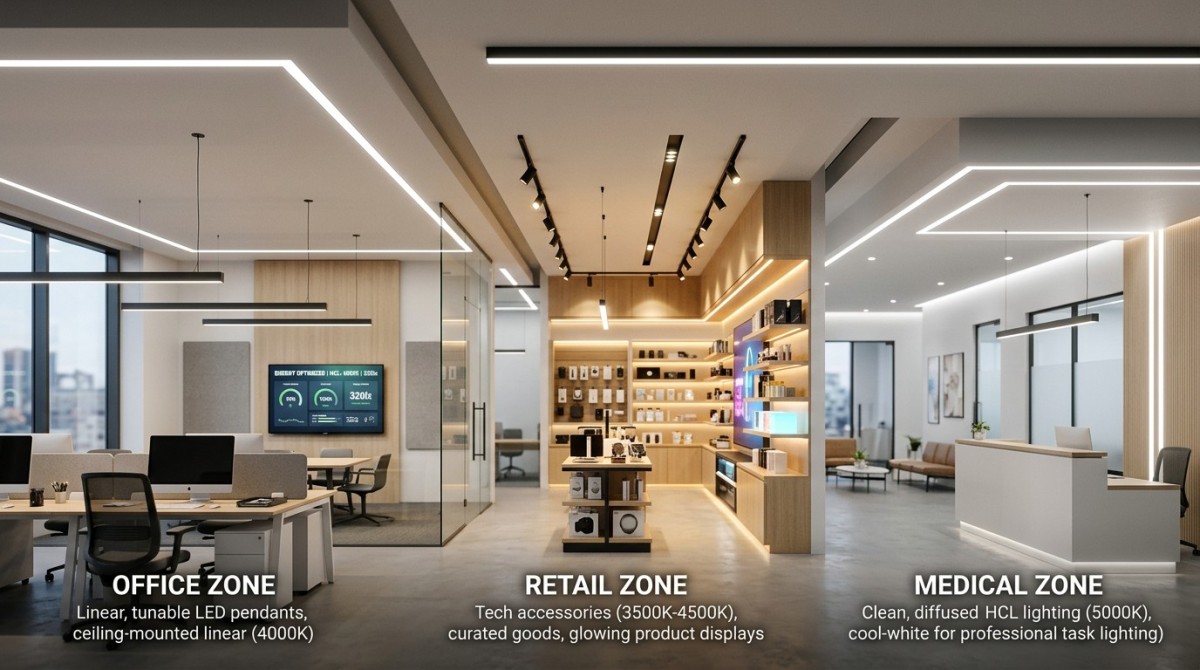
The most accurate answer is: both exist in the market. Human centric lighting is a real benefit when it is used to support actual human needs such as visual clarity, comfort, mood, orientation, and time-based lighting adaptation. It becomes hype when vendors treat it as a catch-all label without defining performance targets, user outcomes, or control logic.
For most commercial projects, HCL should not be evaluated as a standalone lifestyle concept. It should be assessed as a lighting strategy that may improve one or more of the following:
- Visual comfort and reduced glare
- Task visibility and attention support
- Perceived atmosphere and brand experience
- Occupant satisfaction in long-dwell environments
- Day-night rhythm alignment in selected settings
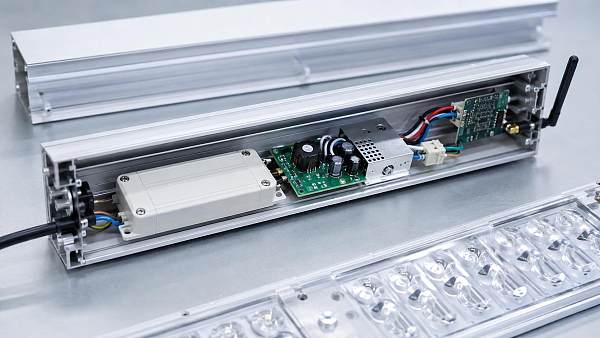
- Flexibility through tunable white and intelligent controls
However, not every project needs a full circadian lighting system. In many cases, better outcomes come from getting the basics right: vertical illuminance, color rendering, uniformity, control zoning, daylight integration, glare management, and maintenance quality. A poorly designed “smart” HCL system often performs worse than a well-designed conventional lighting scheme.
What are researchers, operators, and buyers actually trying to find out?
When people search “Human Centric Lighting: Hype or Real Benefit?”, they are usually not looking for theory alone. They want help making a decision. Across information researchers, operators, procurement teams, and business evaluators, the most common questions are practical:
- Is there credible evidence that HCL improves wellbeing, productivity, or customer experience?
- Which benefits are proven, and which are still difficult to measure?
- Does HCL make sense for retail, offices, schools, healthcare, hospitality, or public commercial spaces?
- What metrics should be used to compare suppliers and products?
- How do HCL systems affect CAPEX, OPEX, controls, maintenance, and training?
- Can HCL align with sustainability goals and energy efficient signage trends?
- How can a buyer avoid paying extra for features that deliver little operational value?
These concerns point to the real search intent: readers want to understand whether HCL creates measurable business and user value, how to assess claims, and where it fits within wider modernization strategies for commercial spaces.
Where human centric lighting delivers genuine value
Human centric lighting tends to create the clearest benefit in spaces where people spend meaningful time, perform visually demanding tasks, or are influenced by atmosphere and orientation. That includes offices, healthcare environments, education settings, premium retail, hospitality, transit hubs, and mixed-use developments.
In offices and workspaces, HCL may improve comfort and perceived alertness when lighting changes appropriately across the day and reduces eye strain. This is especially relevant in deep-plan interiors with limited daylight.
In healthcare and care environments, time-sensitive lighting can support patient comfort, staff functioning, and nighttime wayfinding when carefully designed. This is one of the more evidence-sensitive sectors, where the timing, intensity, and spectral characteristics of light matter more than marketing language.
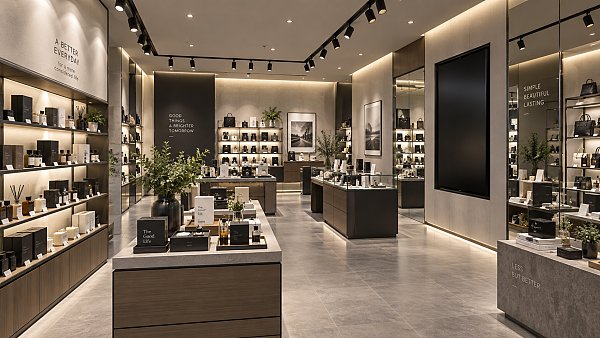
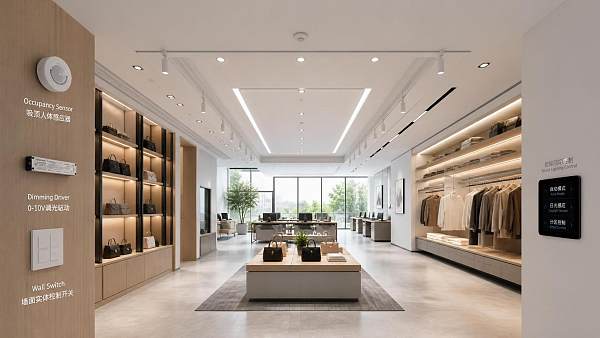
In retail, the value is often less about circadian rhythm and more about retail lighting psychological impact. HCL-related strategies can improve merchandise presentation, dwell experience, navigation, and emotional tone. Dynamic scenes, tuned color temperature, and stronger vertical illumination may help shape perception and brand identity when used carefully.
In hospitality, HCL can support mood transitions throughout the day, making spaces feel more natural, calming, premium, or intimate. Here the benefit often overlaps with biophilic lighting design, where natural variation, warmth, and connection to environmental cues are important.
In education, claims around concentration and engagement are frequently discussed, but outcomes depend heavily on implementation quality and the broader environmental context.
The key insight is that HCL is not equally valuable everywhere. It is strongest where user experience, long dwell times, flexible scene setting, or time-based adaptation matter.
Where the hype begins: common overclaims and weak specifications
The term “human centric lighting” is broad enough to invite misuse. Many systems are marketed as HCL simply because they offer tunable white LEDs or app-based controls. But tunability alone does not guarantee human benefit. A system should not be considered genuinely human-centric unless the design logic is tied to human outcomes.
Common signs of hype include:
- Claims of major productivity gains without context or measurable baseline
- Promises of circadian support without discussing timing, light levels, and exposure duration
- Heavy focus on color temperature while ignoring glare, flicker, uniformity, and rendering
- “Smart” controls that are too complex for operators to use consistently
- Specifications with no benchmark against recognized standards
- Wellness language without commissioning, training, or maintenance planning
For buyers and evaluators, this is where due diligence matters. An HCL proposal should describe not just what the system can do, but why those functions matter in the intended environment and how success will be measured after installation.
How to judge whether an HCL solution is worth the investment
The best way to evaluate HCL is to move from abstract claims to measurable criteria. Procurement and assessment teams should compare solutions using both lighting quality metrics and operational performance factors.
Start with lighting fundamentals:
- Illuminance levels for task and ambient needs
- Vertical illuminance where face recognition, orientation, or spatial perception matter
- Unified Glare Rating or other glare control measures
- Color rendering quality for retail, hospitality, and display applications
- Flicker performance and visual stability
- Uniformity and scene consistency
Then assess HCL-specific functionality:
- Tunable white range and accuracy
- Control scheduling by time of day and zone
- Daylight sensing and occupancy integration
- User override logic and simplicity of operation
- Scene programming aligned with actual use cases
- Commissioning support and staff training
Finally, compare total commercial value:
- Energy use and dimming efficiency
- Compatibility with BMS or smart building systems
- Maintenance access, driver reliability, and component replacement
- Warranty terms and supplier responsiveness
- Compliance with relevant standards such as UL, CE, and project-specific benchmarks
- Expected payback through experience quality, flexibility, or operational savings
If a supplier cannot explain the relationship between these metrics and your actual environment, the HCL proposition is probably too vague.
How HCL connects with retail psychology, biophilic design, and smart infrastructure
One reason HCL attracts attention is that it overlaps with several broader commercial trends. Understanding those connections helps buyers make better, more integrated decisions.
Retail lighting psychological impact: In retail, light affects perception of freshness, luxury, safety, spaciousness, and product value. Dynamic and well-calibrated lighting can guide attention and shape shopper mood. Here, HCL is useful when it enhances experience and visibility, not when it adds unnecessary system complexity.
Biophilic lighting design: Many commercial spaces now aim to recreate qualities associated with natural light, including gentle variation, warmth shifts, and stronger connection to time and place. HCL can support biophilic design when it works with materials, greenery, daylight, and architecture rather than acting as an isolated technical feature.
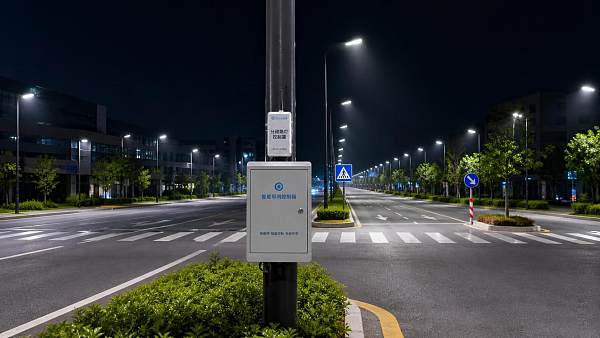
Smart city lighting infrastructure: In large campuses, transport-linked developments, and mixed-use districts, HCL may be part of a wider intelligent lighting network. Integration with sensors, centralized management, occupancy data, and adaptive scheduling can improve both user experience and energy management.
Energy efficient signage trends: Lighting budgets are increasingly considered across the entire visual environment, not just ceiling fixtures. Buyers should evaluate how architectural lighting, display lighting, and signage systems work together. An HCL strategy that improves ambience but ignores signage efficiency or maintenance can weaken overall project value.
The commercial takeaway is simple: HCL works best as part of a coordinated environmental lighting strategy, not as a single premium add-on.
When should a business choose HCL, and when is standard high-quality lighting enough?
A business should consider HCL when at least one of the following is true:
- The space has long occupant dwell time
- User comfort and experience are key performance outcomes
- The brand environment changes significantly over the day
- There is limited daylight and a need for time-based environmental cues
- The project already includes advanced controls and skilled facility management
- The business wants flexible scene setting for different functions or audiences
By contrast, standard high-quality lighting may be enough when:
- The environment is primarily task-based and short-duration
- Users do not need dynamic light changes
- Operational simplicity is more important than advanced programmability
- Maintenance teams have limited control-system capacity
- Budget is better spent on better optics, glare control, and efficient fixtures
This is an important point for procurement teams: in many projects, spending more on robust, well-benchmarked lighting quality is smarter than paying for “human centric” features that will rarely be used.
A practical checklist for sourcing and benchmarking HCL solutions
For global sourcing, technical evaluation should be disciplined. Use this checklist to compare vendors and avoid inflated claims:
- Define the use case first. Is the goal wellbeing, visual comfort, atmosphere, task support, customer experience, or all of these?
- Ask for measurable targets. Request specific lighting metrics, control sequences, and expected user outcomes.
- Review standards and certifications. Confirm compliance with electrical, safety, and application-relevant requirements.
- Test controls in real scenarios. A system that looks advanced in a demo may be impractical for daily operations.
- Check integration pathways. Ensure compatibility with smart building, retail, or facility management systems.
- Evaluate commissioning support. Poor commissioning is one of the biggest reasons advanced lighting underperforms.
- Calculate total cost of ownership. Include controls, software, training, replacements, and support.
- Request project references. Similar installations reveal whether the claimed benefits hold up in practice.
This kind of benchmarking is especially important in international procurement, where product quality, controls reliability, and after-sales support can vary widely across suppliers.
Conclusion: HCL is real, but only when it is evidence-based and fit for purpose
Human centric lighting is not just hype, but it is also not automatically beneficial. Its real value appears when lighting design is aligned with human behavior, operational needs, and measurable project goals. For researchers, operators, buyers, and commercial evaluators, the right question is not “Is HCL good?” but “Which human-centric functions matter in this space, and how will we verify the benefit?”
In many commercial settings, especially those focused on experience, wellbeing, or time-based environmental quality, HCL can be a meaningful upgrade. But the best results come from disciplined specification: strong lighting fundamentals, realistic controls, standards-based benchmarking, and clear business purpose. If those conditions are missing, “human centric lighting” is often just expensive vocabulary. If they are present, it can be a credible part of modern commercial lighting strategy.
News Recommendations
 How to choose an ultra bright waterproof window display for storefronts
![51a6ab95581761cc26f4318be6520c15]()
Aris Katos
Future of Carbide Coatings
 How to verify suppliers on a trade portal for global sourcing
![51a6ab95581761cc26f4318be6520c15]()
Aris Katos
Future of Carbide Coatings
 How RoHS requirements should be stated in product specifications
![51a6ab95581761cc26f4318be6520c15]()
Aris Katos
Future of Carbide Coatings
 What affects the lead time for custom retail counter displays?
![51a6ab95581761cc26f4318be6520c15]()
Aris Katos
Future of Carbide Coatings
 What consumer packaging USA importers need to verify before ordering
![51a6ab95581761cc26f4318be6520c15]()
Aris Katos
Future of Carbide Coatings
 How commercial spaces interiors shape customer dwell time
![51a6ab95581761cc26f4318be6520c15]()
Aris Katos
Future of Carbide Coatings
 How LED commercial lighting design reduces glare in retail spaces
![51a6ab95581761cc26f4318be6520c15]()
Aris Katos
Future of Carbide Coatings
 How industrial technology information improves RFID inventory accuracy
![51a6ab95581761cc26f4318be6520c15]()
Aris Katos
Future of Carbide Coatings
 When drip garden watering systems make more sense than sprinklers
![51a6ab95581761cc26f4318be6520c15]()
Aris Katos
Future of Carbide Coatings
 When category comparison improves sourcing for industrial applications
![51a6ab95581761cc26f4318be6520c15]()
Aris Katos
Future of Carbide Coatings
 Industrial application guidance for selecting the right LED lighting
![51a6ab95581761cc26f4318be6520c15]()
Aris Katos
Future of Carbide Coatings
 Which commercial architecture standards apply to European retail fit-outs?
![51a6ab95581761cc26f4318be6520c15]()
Aris Katos
Future of Carbide Coatings
 How to verify FDA requirements for maternity care products
![51a6ab95581761cc26f4318be6520c15]()
Aris Katos
Future of Carbide Coatings
 How to verify BPA-free claims for food-contact products
![51a6ab95581761cc26f4318be6520c15]()
Aris Katos
Future of Carbide Coatings
 When does a European wholesale supplier suit modular office projects?
![51a6ab95581761cc26f4318be6520c15]()
Aris Katos
Future of Carbide Coatings
 When consumer ecosystem solutions improve the in-store shopping journey
![51a6ab95581761cc26f4318be6520c15]()
Aris Katos
Future of Carbide Coatings
 How a commercial developers network can reduce site selection risk
![51a6ab95581761cc26f4318be6520c15]()
Aris Katos
Future of Carbide Coatings
 How clear purchasing specifications prevent costly supplier deviations
![51a6ab95581761cc26f4318be6520c15]()
Aris Katos
Future of Carbide Coatings
 What an ISTA drop test lab checks before your packaging ships
![51a6ab95581761cc26f4318be6520c15]()
Aris Katos
Future of Carbide Coatings
 Which commercial furniture standards apply to workplace seating?
![51a6ab95581761cc26f4318be6520c15]()
Aris Katos
Future of Carbide Coatings
 How to evaluate smart lighting module OEM compatibility before sampling
![51a6ab95581761cc26f4318be6520c15]()
Aris Katos
Future of Carbide Coatings
 How to assess whether sustainable technology delivers real impact
![51a6ab95581761cc26f4318be6520c15]()
Aris Katos
Future of Carbide Coatings
 How to assess an OEM supplier’s quality control before ordering
![51a6ab95581761cc26f4318be6520c15]()
Aris Katos
Future of Carbide Coatings
 How consumer ecosystem solutions data can improve retail personalization
![51a6ab95581761cc26f4318be6520c15]()
Aris Katos
Future of Carbide Coatings
 When does consumer packaging design justify a higher product price?
![51a6ab95581761cc26f4318be6520c15]()
Aris Katos
Future of Carbide Coatings
 Supermarket Fixture Installation: Planning Layouts, Wiring, and Handover
![51a6ab95581761cc26f4318be6520c15]()
Aris Katos
Future of Carbide Coatings
 Automated Lighting and Smart Lighting Control in Bergerac: Key Project Considerations
![51a6ab95581761cc26f4318be6520c15]()
Aris Katos
Future of Carbide Coatings
 Segment Streetlight Controllers: Choosing Control Modes for Urban Roads
![51a6ab95581761cc26f4318be6520c15]()
Aris Katos
Future of Carbide Coatings
 IEC 62471-2 Explained: How to Assess Photobiological Risks in LED Lighting
![51a6ab95581761cc26f4318be6520c15]()
Aris Katos
Future of Carbide Coatings
 Food Grade Packaging Requirements by Product Type, Temperature, and Contact Risk
![51a6ab95581761cc26f4318be6520c15]()
Aris Katos
Future of Carbide Coatings
 Food Packaging Compliance Checklist: Tests, Records, and Labeling Before Shipment
![51a6ab95581761cc26f4318be6520c15]()
Aris Katos
Future of Carbide Coatings
 NSF Food Packaging Standards: When Certification Matters for Commercial Food Use
![51a6ab95581761cc26f4318be6520c15]()
Aris Katos
Future of Carbide Coatings
 FDA Food Grade Compliance: Which Materials and Documents Do Buyers Need?
![51a6ab95581761cc26f4318be6520c15]()
Aris Katos
Future of Carbide Coatings
 What Should a Food Grade Declaration Include for Packaging Compliance?
![51a6ab95581761cc26f4318be6520c15]()
Aris Katos
Future of Carbide Coatings
 Housewares Importing: How to Evaluate Suppliers, Costs, and Compliance Risks
![51a6ab95581761cc26f4318be6520c15]()
Aris Katos
Future of Carbide Coatings
 Why Freeze-Dried Fruit Ingredients Lose Crispness—and How to Prevent It
![51a6ab95581761cc26f4318be6520c15]()
Aris Katos
Future of Carbide Coatings
 What industry veterans look for before choosing a new supplier
![51a6ab95581761cc26f4318be6520c15]()
Aris Katos
Future of Carbide Coatings
 How material fatigue can shorten the service life of retail shelving
![51a6ab95581761cc26f4318be6520c15]()
Aris Katos
Future of Carbide Coatings
 What makes a global sourcing platform reliable for supplier verification?
![51a6ab95581761cc26f4318be6520c15]()
Aris Katos
Future of Carbide Coatings