Vietnam Tightens Labels for Biodegradable Packaging
Time
Click Count
On July 1, 2026, Vietnam began implementing the revised national technical regulation QCVN 26:2026/BTTTT for imported biodegradable packaging, adding mandatory label disclosures and document requirements that directly affect importers, packaging suppliers, exporters, e-commerce fulfillment packaging providers, and compliance teams. The change matters because it shifts biodegradable claims from general product messaging into a border-entry compliance issue, with labeling clarity and supporting verification now tied to whether goods can enter the market.
What the revised rule now requires
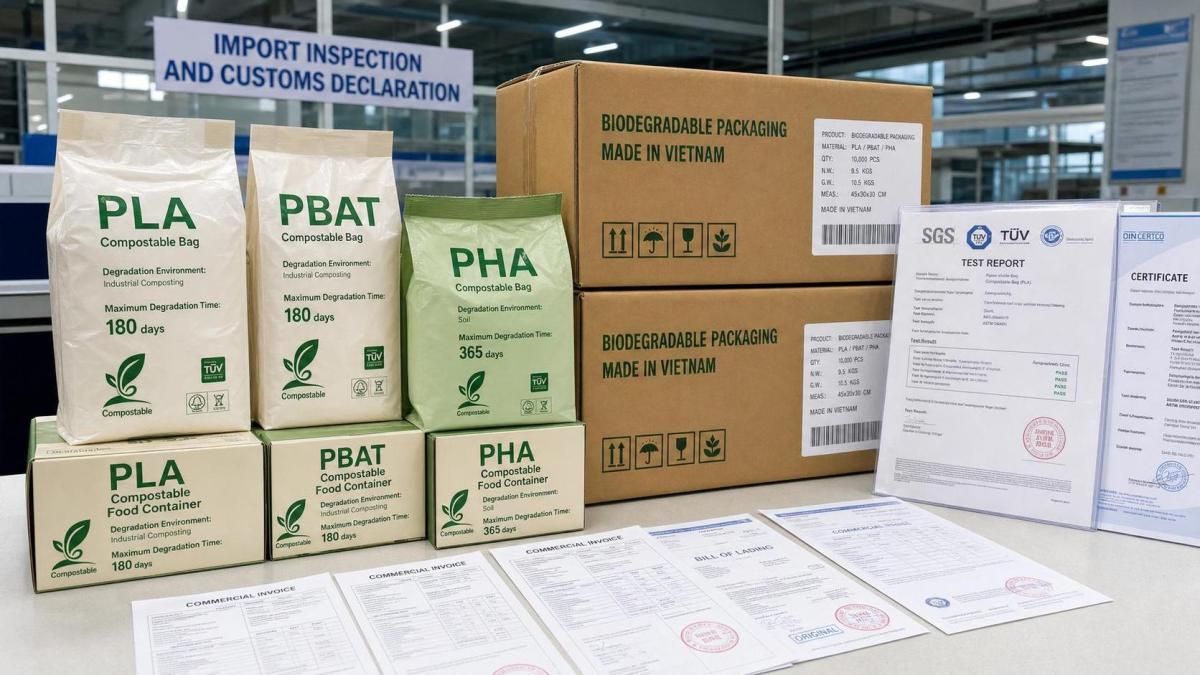
According to the provided event summary, the new version of QCVN 26:2026/BTTTT took effect in Vietnam on July 1, 2026. It requires all imported biodegradable packaging, including e-commerce fulfillment packs, to clearly state on the label the applicable degradation environment, specified as soil, compost, or seawater, as well as the maximum time required for complete degradation.
The summary also states that products with missing or unclear labeling will be denied entry. In addition, the rule specifically names PLA, PBAT, and PHA-based materials as requiring a third-party biodegradation verification report in Vietnamese.
Where the pressure will likely appear first in the supply chain
Border-facing traders and import operations
From an industry perspective, companies handling direct trade into Vietnam may be the first to feel the operational impact because the rule connects labeling quality to admissibility at entry. What deserves closer attention is whether product labels already distinguish the intended degradation environment in a way that is clear enough for review, and whether the stated degradation time is presented as a specific, understandable declaration rather than a broad environmental claim.
Packaging manufacturers and material converters
Manufacturers using biodegradable substrates may need to revisit how technical claims are translated into packaging artwork and shipment documents. Analysis shows that the issue is not only material selection, but also whether the final labeling and supporting technical file remain consistent for imported finished packaging. For PLA, PBAT, and PHA materials in particular, the Vietnamese-language third-party verification requirement creates an additional document interface between production, testing, and export preparation.
E-commerce fulfillment and private-label buyers
For businesses sourcing fulfillment packaging, the rule reaches beyond traditional retail packaging because the summary expressly includes e-commerce fulfillment packs. Observably, procurement and private-label teams may need to confirm earlier in the buying cycle that supplier-provided labels, translations, and verification reports are ready before shipment, especially where packaging is customized and lead times are short.
Testing, certification, and document support functions
Compliance support providers and internal regulatory teams may see greater demand for document review, translation control, and claim alignment. The practical pressure point is that a biodegradation claim now appears tied more closely to a specific declared environment and a maximum completion period, which means technical reports, label text, and shipment files may need tighter cross-checking before dispatch.
What companies should examine now
Check whether label language is specific enough
Analysis shows that the immediate compliance question is not simply whether a package is marketed as biodegradable, but whether the label clearly identifies the applicable environment and the maximum time for complete degradation. Businesses shipping into Vietnam should review whether current wording could be seen as incomplete or ambiguous under the new requirement.
Review Vietnamese-language report readiness
For PLA, PBAT, and PHA-based products, what deserves closer attention is the availability of a third-party biodegradation verification report in Vietnamese. If the report exists only in another language, companies may need to verify whether their documentation package is sufficiently prepared for import review, since the summary indicates this requirement is specifically called out.
Align procurement files with shipment execution
Buyers, sourcing teams, and suppliers may need to compare purchase specifications, packaging artwork, technical declarations, and export documents before goods move. Observably, this is a control point for avoiding mismatches between what is printed on the packaging and what is supported by the underlying verification materials.
Track follow-on interpretation in execution practice
The provided information does not include detailed enforcement guidance, so it would be premature to assume a settled implementation standard beyond the stated entry consequence. It is more appropriate to monitor how the wording around clarity, labeling presentation, and Vietnamese-language verification is applied in practice through future official explanations, document review expectations, or buyer-side specification updates.
How this change is best understood at this stage
Observably, this development reads more as an implemented compliance signal than as a draft policy trend, because the summary states an effective date and a direct entry consequence for missing or unclear labeling. At the same time, analysis shows that the market still needs to watch for execution details. The current issue is less about broad environmental positioning and more about whether technical claims can be translated into labels and documents that are specific, reviewable, and consistent at the point of import.
A narrower rule change with immediate trade relevance
In practical terms, this update is best understood as a targeted import compliance requirement for biodegradable packaging entering Vietnam, with particular sensitivity around label wording and Vietnamese-language third-party verification for PLA, PBAT, and PHA materials. It does not by itself confirm wider market outcomes, but it does indicate that companies involved in packaging trade, sourcing, and delivery should treat biodegradation claims as an active documentation and entry-control issue rather than a general marketing statement.
Basis of this article and what still needs verification
This article is based on the user-provided news title, event date, and event summary. For developments of this kind, commonly relevant source types may include official announcements, releases from regulatory authorities, customs or trade administration information, industry association notices, standards documents, and reporting by authoritative media. A specific official source link was not provided in the input, so that point still requires verification. Observably, follow-up attention should remain on any detailed implementation guidance, certification and verification practice, tender or buyer specification changes, industry feedback, and how companies execute the requirement in actual shipments.
News Recommendations
 How energy-efficient design reduces operating costs in retail lighting
![51a6ab95581761cc26f4318be6520c15]()
Aris Katos
Future of Carbide Coatings
 When commercial aluminum storefronts make sense for a retail renovation
![51a6ab95581761cc26f4318be6520c15]()
Aris Katos
Future of Carbide Coatings
 What makes LED lights durable in high-use commercial spaces?
![51a6ab95581761cc26f4318be6520c15]()
Aris Katos
Future of Carbide Coatings
 Which industry categories offer the strongest export potential in Latin America?
![51a6ab95581761cc26f4318be6520c15]()
Aris Katos
Future of Carbide Coatings
 How to choose an ultra bright waterproof window display for storefronts
![51a6ab95581761cc26f4318be6520c15]()
Aris Katos
Future of Carbide Coatings
 How to verify suppliers on a trade portal for global sourcing
![51a6ab95581761cc26f4318be6520c15]()
Aris Katos
Future of Carbide Coatings
 How RoHS requirements should be stated in product specifications
![51a6ab95581761cc26f4318be6520c15]()
Aris Katos
Future of Carbide Coatings
 What affects the lead time for custom retail counter displays?
![51a6ab95581761cc26f4318be6520c15]()
Aris Katos
Future of Carbide Coatings
 What consumer packaging USA importers need to verify before ordering
![51a6ab95581761cc26f4318be6520c15]()
Aris Katos
Future of Carbide Coatings
 How commercial spaces interiors shape customer dwell time
![51a6ab95581761cc26f4318be6520c15]()
Aris Katos
Future of Carbide Coatings
 How LED commercial lighting design reduces glare in retail spaces
![51a6ab95581761cc26f4318be6520c15]()
Aris Katos
Future of Carbide Coatings
 How industrial technology information improves RFID inventory accuracy
![51a6ab95581761cc26f4318be6520c15]()
Aris Katos
Future of Carbide Coatings
 When drip garden watering systems make more sense than sprinklers
![51a6ab95581761cc26f4318be6520c15]()
Aris Katos
Future of Carbide Coatings
 When category comparison improves sourcing for industrial applications
![51a6ab95581761cc26f4318be6520c15]()
Aris Katos
Future of Carbide Coatings
 Industrial application guidance for selecting the right LED lighting
![51a6ab95581761cc26f4318be6520c15]()
Aris Katos
Future of Carbide Coatings
 Which commercial architecture standards apply to European retail fit-outs?
![51a6ab95581761cc26f4318be6520c15]()
Aris Katos
Future of Carbide Coatings
 How to verify FDA requirements for maternity care products
![51a6ab95581761cc26f4318be6520c15]()
Aris Katos
Future of Carbide Coatings
 How to verify BPA-free claims for food-contact products
![51a6ab95581761cc26f4318be6520c15]()
Aris Katos
Future of Carbide Coatings
 When does a European wholesale supplier suit modular office projects?
![51a6ab95581761cc26f4318be6520c15]()
Aris Katos
Future of Carbide Coatings
 When consumer ecosystem solutions improve the in-store shopping journey
![51a6ab95581761cc26f4318be6520c15]()
Aris Katos
Future of Carbide Coatings
 How a commercial developers network can reduce site selection risk
![51a6ab95581761cc26f4318be6520c15]()
Aris Katos
Future of Carbide Coatings
 How clear purchasing specifications prevent costly supplier deviations
![51a6ab95581761cc26f4318be6520c15]()
Aris Katos
Future of Carbide Coatings
 What an ISTA drop test lab checks before your packaging ships
![51a6ab95581761cc26f4318be6520c15]()
Aris Katos
Future of Carbide Coatings
 Which commercial furniture standards apply to workplace seating?
![51a6ab95581761cc26f4318be6520c15]()
Aris Katos
Future of Carbide Coatings
 How to evaluate smart lighting module OEM compatibility before sampling
![51a6ab95581761cc26f4318be6520c15]()
Aris Katos
Future of Carbide Coatings
 How to assess whether sustainable technology delivers real impact
![51a6ab95581761cc26f4318be6520c15]()
Aris Katos
Future of Carbide Coatings
 How to assess an OEM supplier’s quality control before ordering
![51a6ab95581761cc26f4318be6520c15]()
Aris Katos
Future of Carbide Coatings
 How consumer ecosystem solutions data can improve retail personalization
![51a6ab95581761cc26f4318be6520c15]()
Aris Katos
Future of Carbide Coatings
 When does consumer packaging design justify a higher product price?
![51a6ab95581761cc26f4318be6520c15]()
Aris Katos
Future of Carbide Coatings
 Supermarket Fixture Installation: Planning Layouts, Wiring, and Handover
![51a6ab95581761cc26f4318be6520c15]()
Aris Katos
Future of Carbide Coatings
 Automated Lighting and Smart Lighting Control in Bergerac: Key Project Considerations
![51a6ab95581761cc26f4318be6520c15]()
Aris Katos
Future of Carbide Coatings
 Segment Streetlight Controllers: Choosing Control Modes for Urban Roads
![51a6ab95581761cc26f4318be6520c15]()
Aris Katos
Future of Carbide Coatings
 IEC 62471-2 Explained: How to Assess Photobiological Risks in LED Lighting
![51a6ab95581761cc26f4318be6520c15]()
Aris Katos
Future of Carbide Coatings
 Food Grade Packaging Requirements by Product Type, Temperature, and Contact Risk
![51a6ab95581761cc26f4318be6520c15]()
Aris Katos
Future of Carbide Coatings
 Food Packaging Compliance Checklist: Tests, Records, and Labeling Before Shipment
![51a6ab95581761cc26f4318be6520c15]()
Aris Katos
Future of Carbide Coatings
 NSF Food Packaging Standards: When Certification Matters for Commercial Food Use
![51a6ab95581761cc26f4318be6520c15]()
Aris Katos
Future of Carbide Coatings
 FDA Food Grade Compliance: Which Materials and Documents Do Buyers Need?
![51a6ab95581761cc26f4318be6520c15]()
Aris Katos
Future of Carbide Coatings
 What Should a Food Grade Declaration Include for Packaging Compliance?
![51a6ab95581761cc26f4318be6520c15]()
Aris Katos
Future of Carbide Coatings
 Housewares Importing: How to Evaluate Suppliers, Costs, and Compliance Risks
![51a6ab95581761cc26f4318be6520c15]()
Aris Katos
Future of Carbide Coatings