Biodegradable Packaging Wholesale: What Affects Cost?
Time
Click Count
For buyers comparing biodegradable packaging wholesale options, cost is shaped by far more than raw material prices. From resin type and custom printing to order volume, certification, and supplier capability, every detail affects the final quote. Choosing the right compostable mailer manufacturer also means balancing sustainability goals, performance standards, and long-term supply chain efficiency.
What really drives biodegradable packaging wholesale pricing?
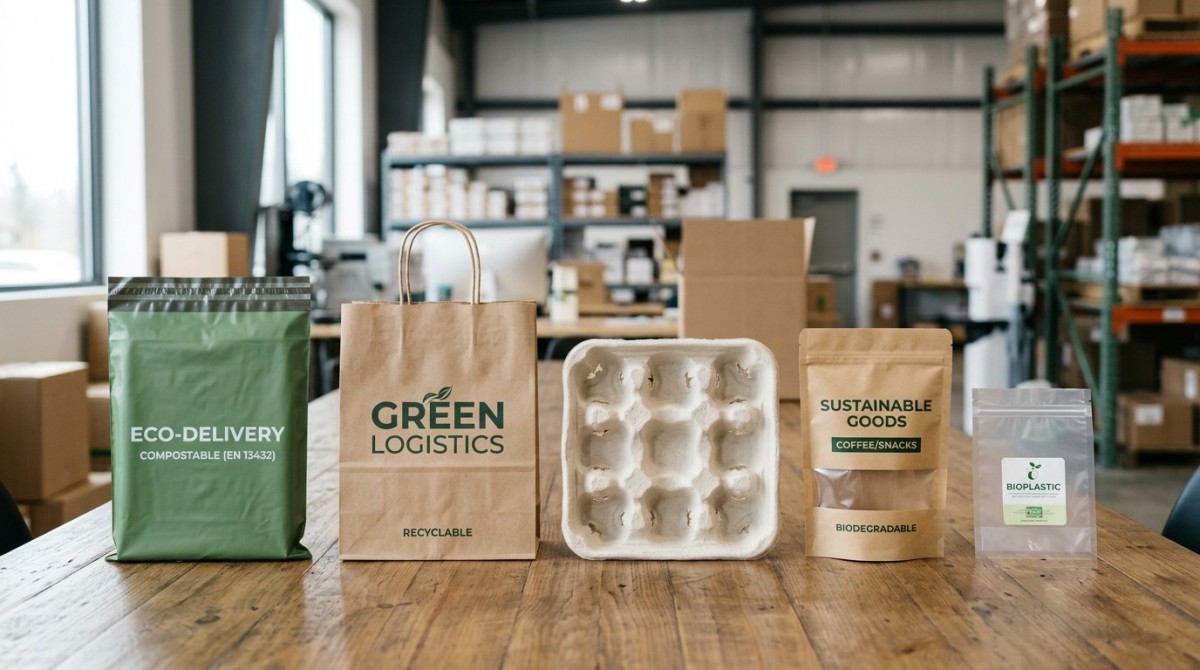
In biodegradable packaging wholesale, the first pricing layer usually comes from material selection. PLA, PBAT blends, kraft paper laminates, molded fiber, and starch-based compounds do not behave the same in converting, sealing, printing, or storage. A lower-cost resin on paper may become a higher total-cost option if it reduces line speed, raises damage rates, or fails in humid logistics conditions.
For procurement teams, it is useful to separate cost into 4 practical buckets: substrate cost, converting cost, compliance cost, and supply chain cost. This framework helps information researchers and business evaluators compare quotes from different suppliers on equal terms rather than judging only by unit price. In many sourcing reviews, the visible package price represents only one part of the true ownership cost.
Order quantity also matters, but not in a simple linear way. Small pilot runs of 5,000–20,000 units often carry disproportionately high setup cost because film blowing, plate making, die cutting, and color calibration are spread over fewer pieces. Mid-volume orders in the 50,000–200,000 range usually offer more stable economics, while very large annual contracts may unlock better freight planning and material reservation.
For operators and end users, performance expectations influence cost just as much as materials. A compostable mailer for apparel e-commerce, a bakery takeaway bag, and a retail refill pouch require different barrier, tear, seal, and shelf-life properties. When the application is not clearly defined at the RFQ stage, suppliers often add contingency into the quote, which makes biodegradable packaging wholesale appear more expensive than it needs to be.
The 6 cost variables buyers should verify first
- Material formulation: clarify whether the structure is mono-material, blended compostable film, paper-based, or multilayer, because each affects processing yield and end use.
- Thickness or basis weight: a mailer at 50–70 microns differs significantly in cost and durability from one at 80–100 microns.
- Printing complexity: 1–2 colors with simple artwork usually costs less than full-coverage branding, reverse printing, or premium finishes.
- Closure and format: self-seal strips, gussets, valves, or reinforced handles add components and labor steps.
- Compliance scope: home compostability claims, industrial compostability, food-contact suitability, and regional labeling can add testing and documentation work.
- Lead time risk: urgent production in 7–10 days often costs more than standard planning windows of 2–4 weeks.
At G-BCE, cost benchmarking is most useful when linked to application reality. Because sustainable packaging sits inside a larger commercial and consumer ecosystem, material decisions should be reviewed alongside logistics, store presentation, brand consistency, and sourcing resilience. This cross-sector approach helps buyers avoid a narrow price comparison that ignores downstream operational losses.
How do materials and format choices change the final quote?
Not all biodegradable packaging is built for the same job. Paper-forward formats may suit dry goods, boutique retail, or short-use takeaway applications, while compostable flexible film is often selected for mailers, liners, garment bags, or certain light-duty e-commerce uses. The challenge is that material cost, conversion waste, seal reliability, and print appearance do not move together. A buyer may save on resin but spend more on defects or customer complaints.
Thickness is a common blind spot. Buyers sometimes request a lower gauge to reduce quote levels, but if puncture resistance drops below the practical requirement of the product and route, replacement shipments and returns quickly outweigh the savings. In retail and consumer goods supply chains, the right specification is usually the one that fits the damage profile, packing speed, and sustainability target at the same time.
The table below outlines typical cost drivers across several common biodegradable packaging wholesale formats. It is not a fixed price chart, but it helps procurement teams understand why two sustainable packaging options that look similar may carry very different supplier quotations.
A practical takeaway is that format engineering can be more influential than headline material claims. For example, adding a zipper, euro hole, venting feature, or special bottom seal may increase usability and retail value, but it also adds machine time and quality control checkpoints. In many bids, the gap between a basic and premium version appears after these details are fully specified.
When is a compostable mailer manufacturer the right fit?
A specialized compostable mailer manufacturer is often the better choice when the project needs repeatable sealing performance, branded printing, and stable annual supply. This matters for multi-country retail operators and consumer brands that cannot afford inconsistent batches. Standard lead times often sit around 2–5 weeks after artwork approval, while custom sampling may take 7–14 days depending on tooling and print complexity.
By contrast, if the packaging need is broad and low-spec, a general converter may appear cheaper. However, business evaluators should ask whether that lower quote includes real experience with compostable films, storage recommendations, and application-specific testing. Sustainable packaging failures often come from mismatched processing knowledge rather than material labels alone.
Three format decisions that often raise cost unexpectedly
- Full-bleed printing across both sides, because ink coverage, drying, and registration control increase production complexity.
- Oversized dimensions for lightweight goods, because extra film area adds material cost without improving shipping efficiency.
- Requesting premium feel and high compostability in the same structure without confirming end-use limits, which can lead to overengineering.
This is where benchmark-driven sourcing becomes valuable. G-BCE helps procurement teams compare materials and formats through a broader performance lens, connecting packaging choices to commercial presentation, logistics realities, and international sourcing discipline rather than isolated unit cost.
What should procurement teams compare beyond unit price?
Unit price is only the opening number. A stronger procurement review compares total acquisition value across specification clarity, production consistency, compliance support, and delivery reliability. For biodegradable packaging wholesale, two suppliers can quote similar prices while offering very different levels of process control. That difference often shows up later in print variation, weak seals, missed dates, or incomplete shipping documents.
For users and operators, packaging that runs smoothly on packing lines has measurable value. If bags open poorly, labels do not adhere well, or dimensions fluctuate beyond acceptable tolerance, labor time increases. Even a 2–3 second delay per pack becomes meaningful in higher-throughput operations. Procurement teams should therefore ask for dimensional tolerances, closure reliability, and storage recommendations early in the sourcing cycle.
The comparison table below provides a practical framework for evaluating biodegradable packaging wholesale suppliers, especially when reviewing a compostable mailer manufacturer for recurring B2B demand.
This type of side-by-side review helps buyers shift from price shopping to risk-managed sourcing. In a global supply environment, the supplier that answers technical and commercial questions clearly often delivers better long-term value, even if the opening quote is not the lowest.
A 5-point procurement checklist for biodegradable packaging wholesale
- Define the use case in operational terms: product weight, route length, storage exposure, and packing speed.
- Match the material structure to actual performance needs rather than broad sustainability claims.
- Request a sample run or pilot batch before committing to annual volume.
- Confirm artwork setup, color expectations, and any additional plate or tooling costs.
- Review lead time, replenishment rhythm, and backup planning for seasonal demand peaks.
For large retail groups and sourcing directors, G-BCE’s value lies in technical benchmarking across interconnected categories. Sustainable packaging does not exist in isolation. It affects consumer perception, warehouse handling, compliance workflows, and regional launch speed, which is why cross-functional sourcing criteria are essential.
How do certifications, logistics, and supplier capability affect total cost?
Compliance can meaningfully change both price and lead time. If a buyer needs packaging aligned with compostability standards, food-contact requirements, market-specific labeling, or retailer documentation, the supplier must allocate time for evidence preparation and, in some cases, product-specific validation. These activities may not always be visible in the unit quote, but they influence the overall commercial package and schedule risk.
Logistics is another underestimated factor. Biodegradable packaging wholesale sourced internationally may involve ocean transit of 3–6 weeks, inland handling, pallet configuration, and seasonal humidity exposure. A quote that looks low ex-works can become less attractive once buyers add freight, customs processing, and inventory carrying cost. This is especially relevant for high-SKU retail operations that need stable replenishment windows.
Supplier capability matters because sustainable materials can be less forgiving in production than conventional plastics. Process discipline in extrusion, printing, conversion, and sealing directly affects yield and repeatability. A supplier with limited experience may quote aggressively at first, then struggle with color matching, adhesion, or defect rates during scaled production. That usually means hidden cost through delays, waste, or corrective shipments.
Common standards and documentation buyers may discuss
- Compostability references for industrial or controlled composting environments, depending on target market claims.
- Food-contact declarations when packaging touches consumables directly or indirectly.
- Material safety and restricted substance documentation for import compliance or retailer onboarding.
- Packing list, carton labeling, and barcode requirements for distribution center intake.
Buyers should also think in service stages. A disciplined compostable mailer manufacturer typically works through 4 checkpoints: application review, sample confirmation, mass-production approval, and shipment release. When these gates are unclear, misunderstandings around dimensions, artwork, sealing, or documentation become more likely. In practice, better process visibility often reduces total cost more effectively than a small per-unit discount.
Risk signals to watch during supplier evaluation
Watch for vague answers on storage conditions, such as temperature and humidity recommendations. Sustainable films and papers can behave differently over time, and failure to define a storage window of, for example, 6–12 months under controlled conditions may increase spoilage risk. Also note any unwillingness to provide sample retention or batch traceability, because that weakens post-delivery problem solving.
Another signal is oversimplified pricing for complex custom work. If a supplier offers the same commercial terms for a plain mailer and a heavily printed, multi-feature version with tight lead time, buyers should verify whether all technical steps are truly included. Transparent costing is usually a sign of operational maturity, not inflated pricing.
FAQ: practical questions buyers ask before placing an order
The questions below reflect common search intent from information researchers, users, procurement officers, and commercial evaluators comparing biodegradable packaging wholesale options. They also help structure internal discussions before requesting a formal quotation.
How can I reduce biodegradable packaging wholesale cost without lowering quality too much?
Start with the specification, not the negotiation. In many projects, cost can be reduced by simplifying print coverage, optimizing dimensions, consolidating SKUs, or moving from several small orders to one planned volume block every 1–3 months. It also helps to confirm whether the product really needs premium closures or higher barrier performance. The safest savings usually come from design efficiency, not unverified material downgrades.
What is a normal lead time from a compostable mailer manufacturer?
For standard custom work, sampling often takes about 7–14 days, while mass production may require 2–5 weeks after final approval. Shipping time depends on route and method. Rush orders are possible in some cases, but they can raise cost and increase planning risk. Buyers should always separate sample lead time, production lead time, and transit lead time when comparing suppliers.
Are all biodegradable packaging products compostable in the same way?
No. “Biodegradable” and “compostable” are not interchangeable in practical purchasing. End-of-life performance depends on the material system, the disposal environment, and the claim being made in the destination market. Procurement teams should ask what conditions the packaging is designed for and what supporting documentation the supplier can provide, rather than assuming one sustainability term covers every use case.
What should operators test before approving a pilot order?
Operators should test at least 5 areas: pack-line handling, closure performance, print durability, transport resistance, and storage behavior. If the packaging will be used across different climates or routes, it is wise to review a short controlled trial rather than rely only on visual inspection. Pilot validation is often the lowest-cost way to prevent larger rollout issues.
Why work with G-BCE when evaluating sustainable packaging sourcing?
G-BCE supports sourcing decisions through a broader commercial systems perspective. Instead of viewing biodegradable packaging wholesale as a stand-alone purchase, we connect packaging choices to retail presentation, consumer product movement, compliance expectations, and supplier benchmarking. This matters for companies operating across regions, formats, and quality standards, where one packaging decision can affect multiple departments at once.
Our cross-sector intelligence model is especially useful for procurement personnel and business evaluators who need more than a quote. We help clarify the comparison logic behind materials, converting methods, supplier readiness, and standards alignment. That makes it easier to evaluate whether a compostable mailer manufacturer or broader sustainable packaging supplier fits your commercial environment, not just your initial budget line.
If you are reviewing biodegradable packaging wholesale for retail, e-commerce, food-adjacent, or branded consumer applications, contact G-BCE to discuss 6 key decision areas: material structure, product format, customization scope, expected lead time, compliance requirements, and sample strategy. We can support parameter confirmation, supplier comparison, quotation review, delivery planning, and packaging selection logic for global sourcing programs.
You can also reach out for practical support on sample evaluation criteria, custom specification refinement, annual sourcing frameworks, and documentation questions linked to target markets. For teams balancing sustainability goals with performance and procurement discipline, a clearer benchmark at the beginning usually leads to fewer surprises at scale.
News Recommendations
 How to choose an ultra bright waterproof window display for storefronts
![51a6ab95581761cc26f4318be6520c15]()
Aris Katos
Future of Carbide Coatings
 How to verify suppliers on a trade portal for global sourcing
![51a6ab95581761cc26f4318be6520c15]()
Aris Katos
Future of Carbide Coatings
 How RoHS requirements should be stated in product specifications
![51a6ab95581761cc26f4318be6520c15]()
Aris Katos
Future of Carbide Coatings
 What affects the lead time for custom retail counter displays?
![51a6ab95581761cc26f4318be6520c15]()
Aris Katos
Future of Carbide Coatings
 What consumer packaging USA importers need to verify before ordering
![51a6ab95581761cc26f4318be6520c15]()
Aris Katos
Future of Carbide Coatings
 How commercial spaces interiors shape customer dwell time
![51a6ab95581761cc26f4318be6520c15]()
Aris Katos
Future of Carbide Coatings
 How LED commercial lighting design reduces glare in retail spaces
![51a6ab95581761cc26f4318be6520c15]()
Aris Katos
Future of Carbide Coatings
 How industrial technology information improves RFID inventory accuracy
![51a6ab95581761cc26f4318be6520c15]()
Aris Katos
Future of Carbide Coatings
 When drip garden watering systems make more sense than sprinklers
![51a6ab95581761cc26f4318be6520c15]()
Aris Katos
Future of Carbide Coatings
 When category comparison improves sourcing for industrial applications
![51a6ab95581761cc26f4318be6520c15]()
Aris Katos
Future of Carbide Coatings
 Industrial application guidance for selecting the right LED lighting
![51a6ab95581761cc26f4318be6520c15]()
Aris Katos
Future of Carbide Coatings
 Which commercial architecture standards apply to European retail fit-outs?
![51a6ab95581761cc26f4318be6520c15]()
Aris Katos
Future of Carbide Coatings
 How to verify FDA requirements for maternity care products
![51a6ab95581761cc26f4318be6520c15]()
Aris Katos
Future of Carbide Coatings
 How to verify BPA-free claims for food-contact products
![51a6ab95581761cc26f4318be6520c15]()
Aris Katos
Future of Carbide Coatings
 When does a European wholesale supplier suit modular office projects?
![51a6ab95581761cc26f4318be6520c15]()
Aris Katos
Future of Carbide Coatings
 When consumer ecosystem solutions improve the in-store shopping journey
![51a6ab95581761cc26f4318be6520c15]()
Aris Katos
Future of Carbide Coatings
 How a commercial developers network can reduce site selection risk
![51a6ab95581761cc26f4318be6520c15]()
Aris Katos
Future of Carbide Coatings
 How clear purchasing specifications prevent costly supplier deviations
![51a6ab95581761cc26f4318be6520c15]()
Aris Katos
Future of Carbide Coatings
 What an ISTA drop test lab checks before your packaging ships
![51a6ab95581761cc26f4318be6520c15]()
Aris Katos
Future of Carbide Coatings
 Which commercial furniture standards apply to workplace seating?
![51a6ab95581761cc26f4318be6520c15]()
Aris Katos
Future of Carbide Coatings
 How to evaluate smart lighting module OEM compatibility before sampling
![51a6ab95581761cc26f4318be6520c15]()
Aris Katos
Future of Carbide Coatings
 How to assess whether sustainable technology delivers real impact
![51a6ab95581761cc26f4318be6520c15]()
Aris Katos
Future of Carbide Coatings
 How to assess an OEM supplier’s quality control before ordering
![51a6ab95581761cc26f4318be6520c15]()
Aris Katos
Future of Carbide Coatings
 How consumer ecosystem solutions data can improve retail personalization
![51a6ab95581761cc26f4318be6520c15]()
Aris Katos
Future of Carbide Coatings
 When does consumer packaging design justify a higher product price?
![51a6ab95581761cc26f4318be6520c15]()
Aris Katos
Future of Carbide Coatings
 Supermarket Fixture Installation: Planning Layouts, Wiring, and Handover
![51a6ab95581761cc26f4318be6520c15]()
Aris Katos
Future of Carbide Coatings
 Automated Lighting and Smart Lighting Control in Bergerac: Key Project Considerations
![51a6ab95581761cc26f4318be6520c15]()
Aris Katos
Future of Carbide Coatings
 Segment Streetlight Controllers: Choosing Control Modes for Urban Roads
![51a6ab95581761cc26f4318be6520c15]()
Aris Katos
Future of Carbide Coatings
 IEC 62471-2 Explained: How to Assess Photobiological Risks in LED Lighting
![51a6ab95581761cc26f4318be6520c15]()
Aris Katos
Future of Carbide Coatings
 Food Grade Packaging Requirements by Product Type, Temperature, and Contact Risk
![51a6ab95581761cc26f4318be6520c15]()
Aris Katos
Future of Carbide Coatings
 Food Packaging Compliance Checklist: Tests, Records, and Labeling Before Shipment
![51a6ab95581761cc26f4318be6520c15]()
Aris Katos
Future of Carbide Coatings
 NSF Food Packaging Standards: When Certification Matters for Commercial Food Use
![51a6ab95581761cc26f4318be6520c15]()
Aris Katos
Future of Carbide Coatings
 FDA Food Grade Compliance: Which Materials and Documents Do Buyers Need?
![51a6ab95581761cc26f4318be6520c15]()
Aris Katos
Future of Carbide Coatings
 What Should a Food Grade Declaration Include for Packaging Compliance?
![51a6ab95581761cc26f4318be6520c15]()
Aris Katos
Future of Carbide Coatings
 Housewares Importing: How to Evaluate Suppliers, Costs, and Compliance Risks
![51a6ab95581761cc26f4318be6520c15]()
Aris Katos
Future of Carbide Coatings
 Why Freeze-Dried Fruit Ingredients Lose Crispness—and How to Prevent It
![51a6ab95581761cc26f4318be6520c15]()
Aris Katos
Future of Carbide Coatings
 What industry veterans look for before choosing a new supplier
![51a6ab95581761cc26f4318be6520c15]()
Aris Katos
Future of Carbide Coatings
 How material fatigue can shorten the service life of retail shelving
![51a6ab95581761cc26f4318be6520c15]()
Aris Katos
Future of Carbide Coatings
 What makes a global sourcing platform reliable for supplier verification?
![51a6ab95581761cc26f4318be6520c15]()
Aris Katos
Future of Carbide Coatings