When a packaging carbon footprint calculator gives misleading results
Time
Click Count
A packaging carbon footprint calculator can be a useful starting point, but misleading results often emerge when critical variables like FSC certified paper sourcing, OK compost industrial certification, and EU plastic tax compliance are oversimplified. For procurement teams and commercial evaluators, understanding how data quality, EPR scope, and real packaging performance benchmarks affect carbon claims is essential before making sourcing or sustainability decisions.
In cross-border sourcing, packaging decisions rarely sit within a single department. A buyer may focus on unit price, a sustainability manager may prioritize emissions reporting, and a commercial evaluator may need to assess compliance risk across 3 to 5 target markets. When the calculator output appears precise but ignores upstream material inputs, disposal pathways, or regional tax exposure, the result can distort procurement decisions rather than support them.
For organizations operating across retail, consumer goods, and supply chain modernization programs, the question is not whether to use a packaging carbon footprint calculator, but how to interpret it with technical discipline. That means checking assumptions, validating data sources, and comparing carbon results against real packaging performance, certification boundaries, and downstream obligations such as EPR reporting and plastic tax thresholds.
Why packaging carbon footprint calculators can produce distorted answers
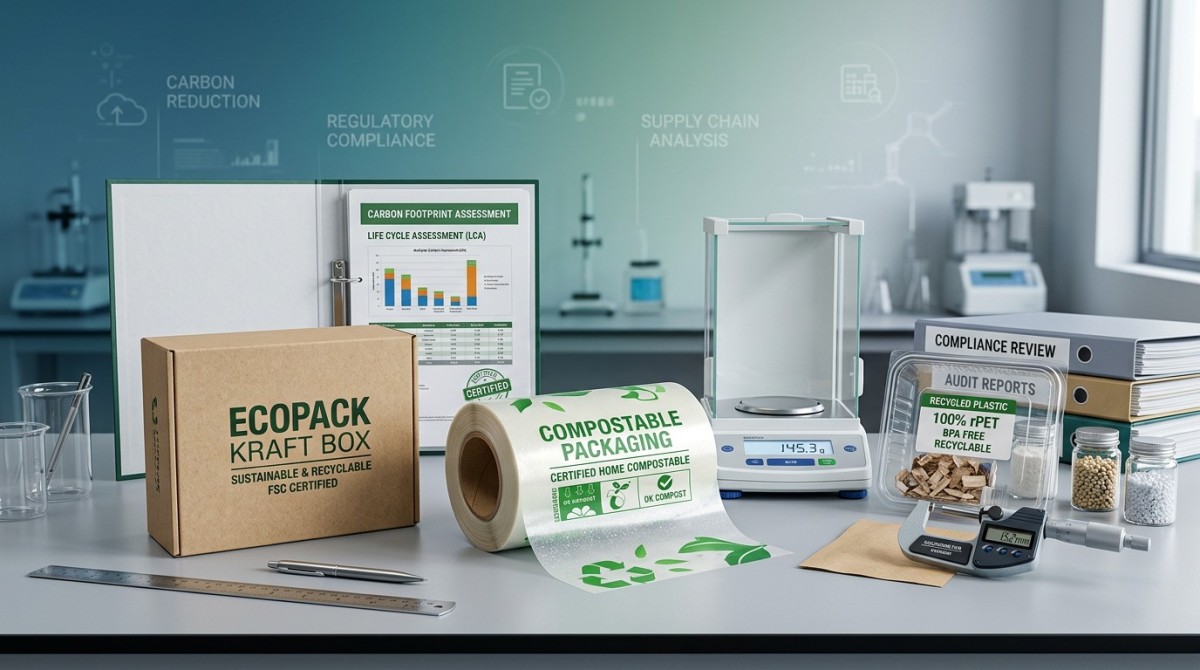
Most calculators simplify a complex packaging system into a limited set of inputs: material type, pack weight, transport distance, and end-of-life scenario. That can be useful for first-pass screening in 10 to 20 minutes, but it becomes unreliable when buyers treat the result as a decision-grade figure. Packaging carbon impact is heavily influenced by boundary definitions, secondary packaging, conversion waste, recycled content quality, and the actual treatment route after use.
A common problem is the assumption that two paper-based packs with the same grammage have similar carbon outcomes. In reality, FSC certified paper sourcing may indicate chain-of-custody integrity, but the emissions profile still depends on pulp origin, recycled fiber ratio, energy mix at the mill, coating composition, and transport mode. A 5% to 15% variance in material specification can create a much larger shift in the final footprint when multiplied across large annual procurement volumes.
Another source of misleading output is the treatment of compostability. Buyers often see OK compost industrial certification and assume low-impact disposal. However, industrial compostability does not guarantee that the packaging will enter a suitable waste stream in the destination market. If the local waste infrastructure sends most flexible packaging to incineration or landfill, the modeled end-of-life scenario may be materially wrong. That makes the calculator technically neat but commercially misleading.
Regulatory oversights create additional distortion. EU plastic tax compliance, EPR fee obligations, and recycled content requirements can all reshape the cost-carbon equation. A pack that appears low carbon in a generic tool may still generate higher total burden if it triggers extra reporting work, restricted market access, or higher producer responsibility fees in 2 or more jurisdictions.
The most common reasons for inaccurate calculator outputs
- System boundaries exclude inks, adhesives, labels, closures, inserts, or tertiary packaging.
- Emission factors are generic and not linked to region-specific electricity grids or supplier data.
- End-of-life scenarios assume recycling rates that do not reflect actual collection and sorting performance.
- Material substitutions are evaluated without considering barrier performance, breakage, or damage rates.
- Compliance costs such as EPR administration or plastic tax exposure are treated as separate from sustainability decisions.
For G-BCE readers involved in commercial modernization and supply chain benchmarking, the key takeaway is that a packaging carbon footprint calculator is not a stand-alone procurement tool. It should be treated as one layer within a broader technical review that includes materials, logistics, certifications, recovery infrastructure, and market-specific commercial constraints.
Which variables matter most in a procurement-grade packaging assessment
When procurement teams move from concept evaluation to supplier selection, a small set of overlooked variables often explains the gap between a calculator result and real-world performance. The most important issue is data quality. Primary supplier data gathered within the last 12 months is typically more decision-useful than generic library data that may be 3 to 5 years old and based on regional averages instead of the actual production site.
Material sourcing is the second major variable. FSC certified paper, recycled polymer grades, virgin resin blends, and multilayer constructions all carry different environmental and compliance implications. A packaging format with 30% recycled content may score well in one model, yet underperform commercially if it has lower stiffness, weaker sealing consistency, or a shorter shelf-life window that drives product waste.
Transport assumptions are also frequently oversimplified. A calculator may assume a standard sea-freight route, but actual sourcing programs often involve mixed flows: factory to consolidation hub, export port handling, intercontinental shipping, inland trucking, and regional distribution. Even a 500 km difference in inland transport can materially change the result for low-weight, high-volume packaging categories.
The table below summarizes procurement-relevant variables that should be checked before relying on a carbon output in supplier comparison or commercial evaluation.
The central conclusion is straightforward: if one or more of these variables is treated as generic, the packaging carbon footprint calculator may still generate a number, but the number should not be used as a final sourcing verdict. For B2B decision-makers, confidence depends less on having a neat figure and more on understanding the assumptions behind it.
Minimum data set before comparing suppliers
- Pack specification with material breakdown by weight, ideally within a tolerance of ±2%.
- Primary and secondary packaging details, including labels, adhesives, and closures.
- Production origin and conversion location for each major component.
- Target sales markets and disposal assumptions for at least the top 3 markets by volume.
- Relevant compliance obligations such as EPR, plastic tax, and recycled content declarations.
This level of documentation does not make the process slow. In many sourcing programs, it can be completed during a 2 to 4 week supplier prequalification phase and prevents much costlier redesign cycles later.
How compliance and end-of-life assumptions change the carbon story
Compliance is often discussed as a separate legal topic, yet in practical procurement it directly affects packaging carbon interpretation. EU plastic tax exposure, national EPR reporting, packaging waste labeling rules, and compostability acceptance criteria all influence whether a format is sustainable in operation, not just in theory. If a calculator ignores these factors, it may encourage a packaging choice that performs poorly once deployed across multiple markets.
Take compostable packaging as an example. OK compost industrial certification confirms performance under industrial composting conditions, not home composting and not universal collection availability. If only 1 out of 4 destination markets has reliable industrial composting infrastructure, the modeled benefit may only apply to 25% of the rollout volume. For the remaining markets, disposal may default to incineration or landfill, changing both carbon assumptions and environmental messaging risk.
Paper-based substitution can also be misunderstood. FSC certified paper sourcing is important for responsible forest product governance, but it does not automatically mean a lower overall footprint than lightweight plastics. A thicker barrier-coated paper pack can increase transport weight, reduce filling-line speed, or raise spoilage if barrier properties are insufficient. If product loss rises by even 1% to 3%, the total system impact may outweigh the packaging-level carbon gain.
For commercial evaluators, the better approach is to combine carbon outputs with compliance fit, recovery feasibility, and operational performance. The table below shows how regulatory and disposal assumptions should be screened before approval.
The broader procurement lesson is that packaging carbon should be evaluated as part of a compliance-operability package. A technically lower number is not automatically a lower-risk option. The preferred format is often the one that balances 4 dimensions at once: verified emissions, regulatory fit, supply continuity, and product protection.
Questions commercial teams should ask before approving a claim
- Does the carbon result reflect the top destination markets by volume and disposal route?
- Are certifications relevant to actual infrastructure, or only to laboratory conditions?
- Will the chosen format increase EPR fees, reporting effort, or tax exposure over a 12-month cycle?
- Has product protection performance been tested under warehouse, transport, and retail handling conditions?
A practical framework for evaluating packaging carbon claims before sourcing approval
A more reliable sourcing process starts by separating exploratory carbon modeling from approval-stage validation. In the first stage, teams can use a packaging carbon footprint calculator to narrow options. In the second stage, they should validate whether the shortlisted pack performs across cost, compliance, logistics, and end-of-life. This two-stage method is especially useful for international chain operators and brand owners working with multiple manufacturing regions.
For most B2B procurement programs, a 5-step review process is sufficient. It does not require excessive bureaucracy, but it does require a clear handoff between sourcing, technical, and commercial functions. G-BCE’s benchmarking perspective is that packaging should be assessed like any other commercial infrastructure component: by comparing real performance under real operating conditions rather than isolated claims.
Five-step review process
- Define the packaging system boundary, including primary, secondary, and critical ancillary materials.
- Collect supplier-specific data and confirm whether values are primary, secondary, or estimated proxies.
- Map the top markets, logistics routes, and disposal pathways for at least 80% of annual volume.
- Check regulatory fit, including EPR, tax, labeling, and certification relevance.
- Test real packaging performance such as damage rate, barrier function, line compatibility, and storage stability.
At the validation stage, buyers should look for decision thresholds, not just marketing language. For example, if two packaging formats differ by only 3% to 6% in modeled carbon but one reduces damage claims by 1.5% and simplifies compliance in 2 major markets, the commercially stronger choice may not be the one with the lowest headline carbon figure.
What procurement teams should document
- Specification version control, so carbon results align with the exact pack design under review.
- Declared certification scope, including whether claims apply to material, conversion, or finished packaging.
- Assumptions on recycled content, waste treatment, and transport mode.
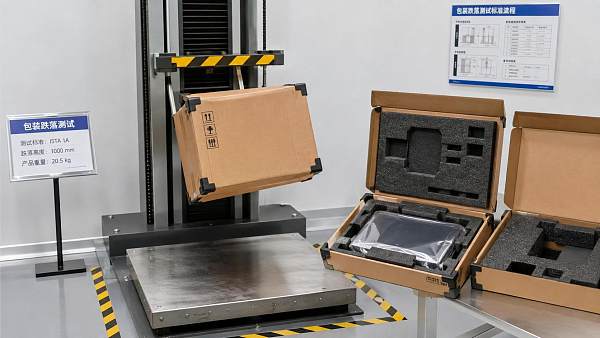
- Performance test results such as compression, drop, sealing, or shelf-life compatibility.
- Commercial risk notes covering supply concentration, lead time, and market-specific compliance exposure.
This framework turns a packaging carbon footprint calculator from a potentially misleading shortcut into a useful screening tool. It also improves communication between sustainability teams and procurement specialists, who often work with different definitions of what counts as a successful packaging decision.
In cross-sector environments such as retail fit-out, branded consumer goods, and international sourcing programs, the strongest packaging decisions are usually those backed by transparent assumptions, 2 to 3 scenario comparisons, and measurable operational performance.
FAQ for buyers, researchers, and commercial evaluators
Because packaging carbon results are often used in RFPs, supplier reviews, and sustainability reporting, several practical questions appear repeatedly during commercial evaluation. The answers below focus on how to reduce decision error rather than how to produce the lowest headline number.
How accurate is a packaging carbon footprint calculator in early-stage sourcing?
In early screening, it can be directionally useful for comparing 2 to 4 packaging concepts, especially when material formats are clearly different. However, accuracy drops when supplier-specific data is missing or when disposal assumptions are generic. It is best used for shortlisting, not final approval, unless the underlying data set has been technically verified.
Does FSC certified paper always lower carbon impact?
No. FSC certification is highly relevant for responsible sourcing and traceability, but total carbon impact still depends on pulp composition, converting process, coatings, transport, and pack performance. If a paper solution requires more material weight or causes higher product loss, the full system result may be less favorable than expected.
What is the biggest mistake when evaluating compostable packaging?
The most common error is treating OK compost industrial certification as proof that the pack will actually be composted after use. The certification confirms performance under specific industrial conditions, but the market must also have collection and processing infrastructure. Without that link, the calculator’s end-of-life assumption may not reflect reality.
How should EPR and EU plastic tax be included in packaging decisions?
They should be part of the same sourcing review as carbon, cost, and performance. Even when not expressed directly in kilograms of CO2e, they shape total commercial burden over a 12-month or 24-month procurement cycle. If a packaging format increases reporting complexity or tax exposure, that should be visible during supplier comparison.
What evidence should a supplier provide before carbon claims are trusted?
At minimum, ask for material composition, production origin, certification scope, assumed end-of-life route, and date of the underlying data. Where possible, request primary data or third-party verified documentation. For higher-volume programs, it is also reasonable to request performance testing and scenario analysis across key target markets.
A packaging carbon footprint calculator remains a valuable starting tool, but only when its outputs are interpreted within a broader commercial and technical context. For information researchers, procurement leaders, and business evaluators, the real task is to test whether carbon claims still hold after compliance obligations, disposal realities, material sourcing, and packaging performance are taken into account.
G-BCE supports this more disciplined approach by connecting sustainable packaging assessment with cross-sector benchmarking, commercial modernization needs, and international sourcing realities. If your team is comparing packaging formats, validating supplier claims, or building a market-ready sustainability procurement framework, contact us to get a more structured evaluation path, request a tailored benchmarking perspective, or learn more about solution-specific guidance.
News Recommendations
 How to choose an ultra bright waterproof window display for storefronts
![51a6ab95581761cc26f4318be6520c15]()
Aris Katos
Future of Carbide Coatings
 How to verify suppliers on a trade portal for global sourcing
![51a6ab95581761cc26f4318be6520c15]()
Aris Katos
Future of Carbide Coatings
 How RoHS requirements should be stated in product specifications
![51a6ab95581761cc26f4318be6520c15]()
Aris Katos
Future of Carbide Coatings
 What affects the lead time for custom retail counter displays?
![51a6ab95581761cc26f4318be6520c15]()
Aris Katos
Future of Carbide Coatings
 What consumer packaging USA importers need to verify before ordering
![51a6ab95581761cc26f4318be6520c15]()
Aris Katos
Future of Carbide Coatings
 How commercial spaces interiors shape customer dwell time
![51a6ab95581761cc26f4318be6520c15]()
Aris Katos
Future of Carbide Coatings
 How LED commercial lighting design reduces glare in retail spaces
![51a6ab95581761cc26f4318be6520c15]()
Aris Katos
Future of Carbide Coatings
 How industrial technology information improves RFID inventory accuracy
![51a6ab95581761cc26f4318be6520c15]()
Aris Katos
Future of Carbide Coatings
 When drip garden watering systems make more sense than sprinklers
![51a6ab95581761cc26f4318be6520c15]()
Aris Katos
Future of Carbide Coatings
 When category comparison improves sourcing for industrial applications
![51a6ab95581761cc26f4318be6520c15]()
Aris Katos
Future of Carbide Coatings
 Industrial application guidance for selecting the right LED lighting
![51a6ab95581761cc26f4318be6520c15]()
Aris Katos
Future of Carbide Coatings
 Which commercial architecture standards apply to European retail fit-outs?
![51a6ab95581761cc26f4318be6520c15]()
Aris Katos
Future of Carbide Coatings
 How to verify FDA requirements for maternity care products
![51a6ab95581761cc26f4318be6520c15]()
Aris Katos
Future of Carbide Coatings
 How to verify BPA-free claims for food-contact products
![51a6ab95581761cc26f4318be6520c15]()
Aris Katos
Future of Carbide Coatings
 When does a European wholesale supplier suit modular office projects?
![51a6ab95581761cc26f4318be6520c15]()
Aris Katos
Future of Carbide Coatings
 When consumer ecosystem solutions improve the in-store shopping journey
![51a6ab95581761cc26f4318be6520c15]()
Aris Katos
Future of Carbide Coatings
 How a commercial developers network can reduce site selection risk
![51a6ab95581761cc26f4318be6520c15]()
Aris Katos
Future of Carbide Coatings
 How clear purchasing specifications prevent costly supplier deviations
![51a6ab95581761cc26f4318be6520c15]()
Aris Katos
Future of Carbide Coatings
 What an ISTA drop test lab checks before your packaging ships
![51a6ab95581761cc26f4318be6520c15]()
Aris Katos
Future of Carbide Coatings
 Which commercial furniture standards apply to workplace seating?
![51a6ab95581761cc26f4318be6520c15]()
Aris Katos
Future of Carbide Coatings
 How to evaluate smart lighting module OEM compatibility before sampling
![51a6ab95581761cc26f4318be6520c15]()
Aris Katos
Future of Carbide Coatings
 How to assess whether sustainable technology delivers real impact
![51a6ab95581761cc26f4318be6520c15]()
Aris Katos
Future of Carbide Coatings
 How to assess an OEM supplier’s quality control before ordering
![51a6ab95581761cc26f4318be6520c15]()
Aris Katos
Future of Carbide Coatings
 How consumer ecosystem solutions data can improve retail personalization
![51a6ab95581761cc26f4318be6520c15]()
Aris Katos
Future of Carbide Coatings
 When does consumer packaging design justify a higher product price?
![51a6ab95581761cc26f4318be6520c15]()
Aris Katos
Future of Carbide Coatings
 Supermarket Fixture Installation: Planning Layouts, Wiring, and Handover
![51a6ab95581761cc26f4318be6520c15]()
Aris Katos
Future of Carbide Coatings
 Automated Lighting and Smart Lighting Control in Bergerac: Key Project Considerations
![51a6ab95581761cc26f4318be6520c15]()
Aris Katos
Future of Carbide Coatings
 Segment Streetlight Controllers: Choosing Control Modes for Urban Roads
![51a6ab95581761cc26f4318be6520c15]()
Aris Katos
Future of Carbide Coatings
 IEC 62471-2 Explained: How to Assess Photobiological Risks in LED Lighting
![51a6ab95581761cc26f4318be6520c15]()
Aris Katos
Future of Carbide Coatings
 Food Grade Packaging Requirements by Product Type, Temperature, and Contact Risk
![51a6ab95581761cc26f4318be6520c15]()
Aris Katos
Future of Carbide Coatings
 Food Packaging Compliance Checklist: Tests, Records, and Labeling Before Shipment
![51a6ab95581761cc26f4318be6520c15]()
Aris Katos
Future of Carbide Coatings
 NSF Food Packaging Standards: When Certification Matters for Commercial Food Use
![51a6ab95581761cc26f4318be6520c15]()
Aris Katos
Future of Carbide Coatings
 FDA Food Grade Compliance: Which Materials and Documents Do Buyers Need?
![51a6ab95581761cc26f4318be6520c15]()
Aris Katos
Future of Carbide Coatings
 What Should a Food Grade Declaration Include for Packaging Compliance?
![51a6ab95581761cc26f4318be6520c15]()
Aris Katos
Future of Carbide Coatings
 Housewares Importing: How to Evaluate Suppliers, Costs, and Compliance Risks
![51a6ab95581761cc26f4318be6520c15]()
Aris Katos
Future of Carbide Coatings
 Why Freeze-Dried Fruit Ingredients Lose Crispness—and How to Prevent It
![51a6ab95581761cc26f4318be6520c15]()
Aris Katos
Future of Carbide Coatings
 What industry veterans look for before choosing a new supplier
![51a6ab95581761cc26f4318be6520c15]()
Aris Katos
Future of Carbide Coatings
 How material fatigue can shorten the service life of retail shelving
![51a6ab95581761cc26f4318be6520c15]()
Aris Katos
Future of Carbide Coatings
 What makes a global sourcing platform reliable for supplier verification?
![51a6ab95581761cc26f4318be6520c15]()
Aris Katos
Future of Carbide Coatings