Extended producer responsibility EPR costs that show up after launch
Time
Click Count
Extended producer responsibility (EPR) rarely ends at launch. For sourcing teams and business evaluators, the real budget pressure often appears months later: reporting corrections, eco-fee changes, packaging redesigns, supplier documentation gaps, eu plastic tax exposure, and test failures tied to transit durability or material substitution. In practice, the question is not whether EPR adds cost, but which post-launch costs are most likely to hit your program and how early you can see them coming.
For information researchers, procurement teams, and commercial evaluators, the most useful way to assess EPR is to treat it as an ongoing operational cost model rather than a one-time compliance event. That means looking beyond registration and launch readiness to the hidden cost drivers that emerge across data quality, recycled content claims, fsc certified paper sourcing, ista drop test validation, packaging burst strength (Mullen) performance, and supplier coordination. The companies that manage EPR well are usually the ones that connect compliance, packaging engineering, and sourcing governance before those issues become margin erosion.
Why EPR costs often increase after launch
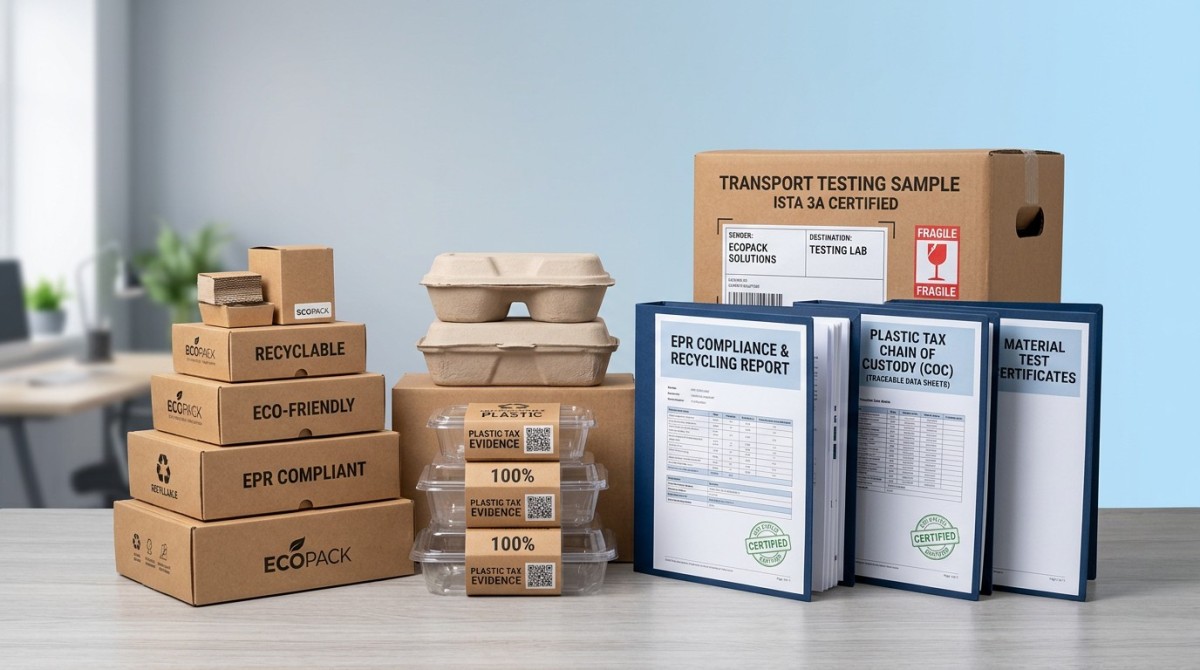
Many businesses underestimate EPR because the launch phase usually focuses on visible milestones: market entry, SKU registration, packaging approval, and supplier onboarding. After launch, however, the operating reality becomes more complex. Volumes shift, packaging formats change, country-level interpretations evolve, and data submitted during setup may no longer match what is actually sold.
This is where hidden costs begin to surface. A lightweight redesign may reduce material use but increase breakage risk. A sustainability claim may support brand goals but require more expensive documentation and chain-of-custody controls. A recycled plastic target may appear achievable until eu plastic tax calculations expose documentation weaknesses or non-qualifying resin inputs. In short, EPR cost growth usually comes from the gap between planned compliance and real-world execution.
For sourcing and business evaluation teams, the practical takeaway is simple: the launch budget is rarely the full EPR budget. Post-launch expenses should be expected in at least five areas: reporting and administration, supplier proof collection, packaging performance revalidation, tax and fee exposure, and corrective redesign.
Which hidden costs matter most to procurement and business evaluators
If your role involves supplier comparison, cost benchmarking, or business case review, the most important hidden EPR costs are usually not the headline registration fees. They are the recurring, harder-to-forecast costs that affect landed cost, margin stability, and compliance risk.
1. Data correction and reporting costs. EPR schemes depend on accurate packaging material data by weight, format, and destination market. Once products are live, mismatches often appear between specification sheets, actual bill of materials, and shipped configuration. Correcting that data may require consultant support, internal labor, or resubmission fees.
2. Supplier documentation gaps. Claims around recycled content, material composition, or fiber sourcing often rely on upstream evidence. If suppliers cannot provide valid declarations, test records, or chain-of-custody files, the buyer may need to re-source, re-test, or downgrade claims. This is especially common when teams assume that fsc certified paper sourcing is a straightforward substitution rather than a documented procurement system.
3. Eco-modulation and fee volatility. In some markets, EPR fees are influenced by recyclability, material choices, or labeling quality. That means a packaging design that looked cost-effective during launch may become more expensive when fee schedules change or when local recyclability criteria are updated.
4. Plastic tax exposure. Eu plastic tax-related cost pressure can arise when imported packaging lacks clear evidence of recycled content or when packaging composition is not tracked at the right level. Even where the tax is paid indirectly through national systems or supplier pass-through pricing, the financial effect still shows up in cost analysis.
5. Packaging failure after sustainability-driven redesign. Switching substrates, reducing board weight, or removing protective components may help sustainability metrics, but these changes can trigger product damage, claims, reverse logistics, and repacking expense if performance validation is insufficient.
How sustainability changes can create new performance costs
One of the most common post-launch EPR problems is the assumption that lower material use automatically means lower total cost. In reality, packaging optimization that is driven only by weight reduction can create expensive downstream issues.
For example, replacing a conventional corrugated structure with a lighter alternative may improve reported material intensity, but if the new pack does not hold up during transport, the savings disappear quickly. This is why performance benchmarks such as ista drop test protocols and packaging burst strength (Mullen) data should not be treated as technical side notes. They are commercial controls.
When a business changes packaging to improve recyclability or reduce plastic content, it should re-check at least three things:
- Whether transit durability still matches channel conditions, including parcel, pallet, and cross-border handling
- Whether board strength, sealing, and stacking performance remain suitable after material reduction
- Whether damage-related returns could outweigh any compliance or material savings
For procurement teams, this matters because a cheaper or “greener” pack is not necessarily lower-cost after launch. A packaging format that passes sustainability review but fails real logistics conditions can create a much larger cost burden than the original EPR fee.
Why eu plastic tax and material evidence become post-launch budget risks
Businesses often treat tax and EPR reporting as separate matters, but in practice they overlap through packaging data governance. The issue is not only whether plastic is present, but whether the company can prove what type of plastic was used, how much recycled content qualifies, and whether declarations are auditable.
Eu plastic tax exposure tends to rise after launch for several reasons. First, procurement teams may discover that supplier declarations are incomplete or inconsistent across factories. Second, packaging revisions may be implemented in production without equivalent updates in compliance records. Third, imported components may contain mixed or undocumented material content, making accurate classification difficult.
For evaluators, the key question is not just “What is the tax?” but “How resilient is the evidence chain behind the tax position?” If the answer depends on informal supplier statements rather than traceable documents, the business should assume a higher risk cost.
A useful review framework includes:
- Material-level weight accuracy by SKU and market
- Recycled content proof quality and renewal frequency
- Alignment between supplier specifications and compliance filings
- Change-control procedures when packaging materials are substituted
- Ownership of audit-ready records across procurement, quality, and compliance teams
How fsc certified paper sourcing affects EPR cost beyond the purchase price
FSC sourcing can support responsible packaging strategy, brand positioning, and market expectations, but the hidden costs are usually operational rather than simply material-related. Businesses that move into fsc certified paper sourcing without clear controls often discover that certification-linked procurement requires tighter supplier qualification, clearer document handling, and more disciplined artwork and claim management.
Post-launch costs may include supplier transitions, certificate verification, chain-of-custody alignment, claim approval reviews, and replacement of non-compliant print or packaging stock. In multi-supplier programs, even minor inconsistency can force rework if one facility provides acceptable documentation and another does not.
For sourcing teams, the decision should be evaluated on total program readiness:
- Can approved suppliers maintain valid certification through contract periods?
- Are paper grades and lead times stable enough for commercial continuity?
- Does the brand need claim-bearing packaging, or only responsibly sourced input material?
- What happens if a backup supplier cannot match the documentation standard?
The biggest mistake is to assume that certified paper is only a purchasing line item. In reality, it is also a governance and continuity issue.
What a practical post-launch EPR cost review should include
If your goal is to benchmark risk before it turns into margin loss, a useful post-launch EPR review should combine compliance, sourcing, and packaging performance into one operating picture. This is especially relevant for companies managing multiple SKUs, private-label programs, or international supply chains.
A strong review typically includes the following checkpoints:
- Fee and tax mapping: Compare forecast versus actual EPR fees, plastic-related charges, and supplier pass-through costs by market.
- Specification accuracy: Verify that live packaging matches approved technical files and reported weights.
- Documentation health: Check whether recycled content, fiber sourcing, and material declarations remain valid and auditable.
- Performance validation: Reconfirm ista drop test suitability, compression behavior, and packaging burst strength (Mullen) where materials were downgauged or changed.
- Damage and returns analysis: Identify whether sustainability-led packaging changes correlate with higher claims or transport loss.
- Supplier risk rating: Score suppliers on evidence quality, responsiveness, consistency, and change notification discipline.
This approach helps procurement and business evaluation teams move from reactive compliance spending to structured cost control. It also creates a stronger basis for supplier negotiation, because the conversation shifts from unit price alone to verified total cost performance.
How to decide whether your packaging program is financially resilient
A packaging program is financially resilient when it can absorb regulatory reporting, support credible sustainability claims, and maintain logistics performance without repeated corrective spending. That resilience depends less on perfect launch planning and more on whether the organization can detect and control post-launch variation.
For business evaluators, several indicators usually signal a stable EPR cost position:
- Packaging data is maintained centrally and updated through formal change control
- Supplier evidence is standardized rather than collected ad hoc
- Sustainability improvements are tested against real distribution risk, not assumed safe
- Tax, fee, and specification owners are clearly assigned across teams
- Commercial decisions consider lifecycle cost, not only material reduction or claim value
By contrast, if your organization is relying on fragmented spreadsheets, supplier self-statements, and unverified packaging substitutions, then the most expensive EPR costs may still be ahead of you.
Conclusion
Extended producer responsibility costs that show up after launch are rarely random. They usually come from predictable weak points: poor packaging data, incomplete supplier evidence, under-tested material changes, and disconnected ownership between compliance, sourcing, and packaging teams. For procurement professionals, researchers, and business evaluators, the right question is not whether EPR is expensive, but whether the packaging system is mature enough to prevent avoidable cost escalation.
When reviewing current or future packaging programs, focus on what happens after products enter the market: fee changes, eu plastic tax evidence, fsc certified paper sourcing controls, and performance benchmarks such as ista drop test and packaging burst strength (Mullen). Those are the areas where hidden costs most often emerge—and where better technical and commercial discipline creates the clearest long-term value.
News Recommendations
 How to choose an ultra bright waterproof window display for storefronts
![51a6ab95581761cc26f4318be6520c15]()
Aris Katos
Future of Carbide Coatings
 How to verify suppliers on a trade portal for global sourcing
![51a6ab95581761cc26f4318be6520c15]()
Aris Katos
Future of Carbide Coatings
 How RoHS requirements should be stated in product specifications
![51a6ab95581761cc26f4318be6520c15]()
Aris Katos
Future of Carbide Coatings
 What affects the lead time for custom retail counter displays?
![51a6ab95581761cc26f4318be6520c15]()
Aris Katos
Future of Carbide Coatings
 What consumer packaging USA importers need to verify before ordering
![51a6ab95581761cc26f4318be6520c15]()
Aris Katos
Future of Carbide Coatings
 How commercial spaces interiors shape customer dwell time
![51a6ab95581761cc26f4318be6520c15]()
Aris Katos
Future of Carbide Coatings
 How LED commercial lighting design reduces glare in retail spaces
![51a6ab95581761cc26f4318be6520c15]()
Aris Katos
Future of Carbide Coatings
 How industrial technology information improves RFID inventory accuracy
![51a6ab95581761cc26f4318be6520c15]()
Aris Katos
Future of Carbide Coatings
 When drip garden watering systems make more sense than sprinklers
![51a6ab95581761cc26f4318be6520c15]()
Aris Katos
Future of Carbide Coatings
 When category comparison improves sourcing for industrial applications
![51a6ab95581761cc26f4318be6520c15]()
Aris Katos
Future of Carbide Coatings
 Industrial application guidance for selecting the right LED lighting
![51a6ab95581761cc26f4318be6520c15]()
Aris Katos
Future of Carbide Coatings
 Which commercial architecture standards apply to European retail fit-outs?
![51a6ab95581761cc26f4318be6520c15]()
Aris Katos
Future of Carbide Coatings
 How to verify FDA requirements for maternity care products
![51a6ab95581761cc26f4318be6520c15]()
Aris Katos
Future of Carbide Coatings
 How to verify BPA-free claims for food-contact products
![51a6ab95581761cc26f4318be6520c15]()
Aris Katos
Future of Carbide Coatings
 When does a European wholesale supplier suit modular office projects?
![51a6ab95581761cc26f4318be6520c15]()
Aris Katos
Future of Carbide Coatings
 When consumer ecosystem solutions improve the in-store shopping journey
![51a6ab95581761cc26f4318be6520c15]()
Aris Katos
Future of Carbide Coatings
 How a commercial developers network can reduce site selection risk
![51a6ab95581761cc26f4318be6520c15]()
Aris Katos
Future of Carbide Coatings
 How clear purchasing specifications prevent costly supplier deviations
![51a6ab95581761cc26f4318be6520c15]()
Aris Katos
Future of Carbide Coatings
 What an ISTA drop test lab checks before your packaging ships
![51a6ab95581761cc26f4318be6520c15]()
Aris Katos
Future of Carbide Coatings
 Which commercial furniture standards apply to workplace seating?
![51a6ab95581761cc26f4318be6520c15]()
Aris Katos
Future of Carbide Coatings
 How to evaluate smart lighting module OEM compatibility before sampling
![51a6ab95581761cc26f4318be6520c15]()
Aris Katos
Future of Carbide Coatings
 How to assess whether sustainable technology delivers real impact
![51a6ab95581761cc26f4318be6520c15]()
Aris Katos
Future of Carbide Coatings
 How to assess an OEM supplier’s quality control before ordering
![51a6ab95581761cc26f4318be6520c15]()
Aris Katos
Future of Carbide Coatings
 How consumer ecosystem solutions data can improve retail personalization
![51a6ab95581761cc26f4318be6520c15]()
Aris Katos
Future of Carbide Coatings
 When does consumer packaging design justify a higher product price?
![51a6ab95581761cc26f4318be6520c15]()
Aris Katos
Future of Carbide Coatings
 Supermarket Fixture Installation: Planning Layouts, Wiring, and Handover
![51a6ab95581761cc26f4318be6520c15]()
Aris Katos
Future of Carbide Coatings
 Automated Lighting and Smart Lighting Control in Bergerac: Key Project Considerations
![51a6ab95581761cc26f4318be6520c15]()
Aris Katos
Future of Carbide Coatings
 Segment Streetlight Controllers: Choosing Control Modes for Urban Roads
![51a6ab95581761cc26f4318be6520c15]()
Aris Katos
Future of Carbide Coatings
 IEC 62471-2 Explained: How to Assess Photobiological Risks in LED Lighting
![51a6ab95581761cc26f4318be6520c15]()
Aris Katos
Future of Carbide Coatings
 Food Grade Packaging Requirements by Product Type, Temperature, and Contact Risk
![51a6ab95581761cc26f4318be6520c15]()
Aris Katos
Future of Carbide Coatings
 Food Packaging Compliance Checklist: Tests, Records, and Labeling Before Shipment
![51a6ab95581761cc26f4318be6520c15]()
Aris Katos
Future of Carbide Coatings
 NSF Food Packaging Standards: When Certification Matters for Commercial Food Use
![51a6ab95581761cc26f4318be6520c15]()
Aris Katos
Future of Carbide Coatings
 FDA Food Grade Compliance: Which Materials and Documents Do Buyers Need?
![51a6ab95581761cc26f4318be6520c15]()
Aris Katos
Future of Carbide Coatings
 What Should a Food Grade Declaration Include for Packaging Compliance?
![51a6ab95581761cc26f4318be6520c15]()
Aris Katos
Future of Carbide Coatings
 Housewares Importing: How to Evaluate Suppliers, Costs, and Compliance Risks
![51a6ab95581761cc26f4318be6520c15]()
Aris Katos
Future of Carbide Coatings
 Why Freeze-Dried Fruit Ingredients Lose Crispness—and How to Prevent It
![51a6ab95581761cc26f4318be6520c15]()
Aris Katos
Future of Carbide Coatings
 What industry veterans look for before choosing a new supplier
![51a6ab95581761cc26f4318be6520c15]()
Aris Katos
Future of Carbide Coatings
 How material fatigue can shorten the service life of retail shelving
![51a6ab95581761cc26f4318be6520c15]()
Aris Katos
Future of Carbide Coatings
 What makes a global sourcing platform reliable for supplier verification?
![51a6ab95581761cc26f4318be6520c15]()
Aris Katos
Future of Carbide Coatings