VOC emission levels in furniture are becoming a deal breaker
Time
Click Count
VOC emission levels in furniture are becoming a decisive benchmark for buyers evaluating contract furniture supplier capabilities, from office systems to hospitality and retail fit-outs. For researchers, operators, procurement teams, and commercial decision-makers, understanding Greenguard certified commercial furniture, ANSI/BIFMA office chair safety, and sustainable office furniture trends is now essential to balancing health, compliance, durability, and brand experience.
Why VOC emission levels have become a frontline procurement issue

In commercial interiors, VOC emission levels are no longer treated as a secondary environmental detail. They now affect supplier qualification, project approval, occupant comfort, and long-term brand perception. Whether a buyer is sourcing workstations for a 200-seat office, lounge seating for a hospitality project, or display fixtures for a retail chain, furniture emissions can influence indoor air quality during the first 24 hours, the first 7 days, and even the first several weeks after installation.
For information researchers, the challenge is often terminology. A product may be described as low-VOC, low-emitting, Greenguard certified commercial furniture, or compliant with project-specific indoor air targets, but those claims do not always mean the same thing. For operators, the pain point is practical: newly installed furniture that carries odor complaints can disrupt soft openings, workspace occupancy plans, and staff satisfaction.
Procurement teams face a more complex risk stack. They must compare VOC emission levels alongside ANSI/BIFMA office chair safety, durability, lead time, finish consistency, and price. Commercial evaluation is rarely based on one metric alone. In most projects, at least 4 core dimensions matter at the same time: emissions, structural safety, visual quality, and total delivered cost.
This is where G-BCE adds value. Because modern commercial spaces sit at the intersection of furniture, retail technology, lighting, packaging, and supply chain execution, emission performance cannot be reviewed in isolation. G-BCE helps sourcing teams benchmark furniture and fixture decisions against global commercial standards, material expectations, and operational realities across multiple categories rather than treating each procurement decision as a disconnected transaction.
What buyers are really trying to avoid
Most commercial buyers are not only asking, “Is this furniture compliant?” They are asking a broader question: “Will this product create hidden problems after delivery?” The real deal breakers usually appear in 3 stages. First comes technical review, where missing documentation raises concern. Second comes sample validation, where odor, finish, or edge treatment may fail expectations. Third comes post-installation, where emissions, comfort, or cleaning performance affect end users directly.
- Insufficient test documentation for panel boards, adhesives, laminates, coatings, or foam components.
- Mismatch between certified sample construction and mass-production material substitutions.
- Compressed installation schedules, such as 7–15 day fit-out windows, with no time for off-gassing management.
- Brand-sensitive environments where customer experience, scent neutrality, and clean presentation matter as much as physical durability.
A low price can quickly lose appeal if a site team must delay occupancy, increase ventilation runs, replace suspect pieces, or answer repeated client complaints. In that sense, VOC emission levels have become a strategic filter, not just a technical checkbox.
Which standards and documents matter most when evaluating commercial furniture?
For B2B buyers, standards and certifications serve two purposes. First, they reduce ambiguity during comparison. Second, they create a common language between architects, operators, procurement teams, and suppliers located in different markets. In commercial furniture, VOC emission levels should be reviewed together with product safety, structural performance, and applicable market-entry requirements.
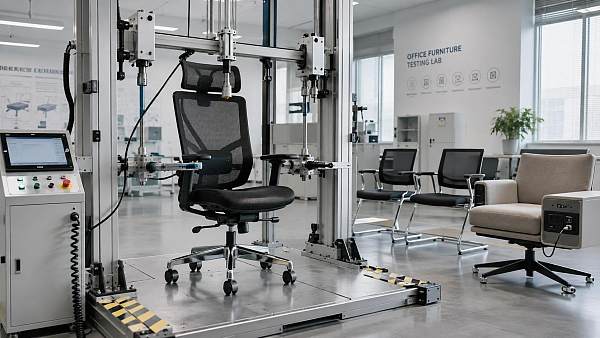
Greenguard certified commercial furniture is often used by buyers looking for low-emission reassurance, especially in offices, education, healthcare-adjacent environments, and premium retail settings. ANSI/BIFMA office chair safety is equally important when seating must satisfy daily use, mobility, load-bearing expectations, and ergonomic credibility. In practical terms, one addresses emissions and indoor air concerns, while the other addresses safety and performance under use.
Commercial developers and sourcing directors also need to separate component-level documents from finished-product evidence. A compliant board or adhesive does not automatically prove that the assembled workstation, chair, or fixture performs as expected. The review cycle typically covers 3 layers: material disclosure, product test evidence, and production consistency controls.
The table below summarizes how buyers can interpret major documentation categories when comparing commercial furniture suppliers for office, hospitality, and retail fit-out projects.
The key takeaway is simple: certifications should be read as part of a layered decision framework. A supplier with good paperwork but weak manufacturing consistency may still create project risk. A supplier with strong engineering but unclear emission documentation can also be difficult to approve. G-BCE supports buyers by translating these cross-functional requirements into a practical benchmarking view.
How to review a supplier file without missing critical gaps
A disciplined review process usually works better than chasing the longest document list. Buyers can start with 5 checkpoints that cover most contract furniture decisions across standard commercial projects.
- Confirm the exact product scope, including finish, substrate, foam, textile, and adhesive system.
- Check whether emission claims apply to the finished assembly rather than only one material layer.
- Review ANSI/BIFMA office chair safety or other performance evidence for products exposed to daily use cycles.
- Match documents against the destination market and project specification, especially if the project spans more than one region.
- Request sample-to-production consistency confirmation before mass order release.
This structured approach helps researchers and commercial evaluators move from generic sustainability claims to evidence-based sourcing decisions.
How VOC risk changes across office, hospitality, and retail scenarios
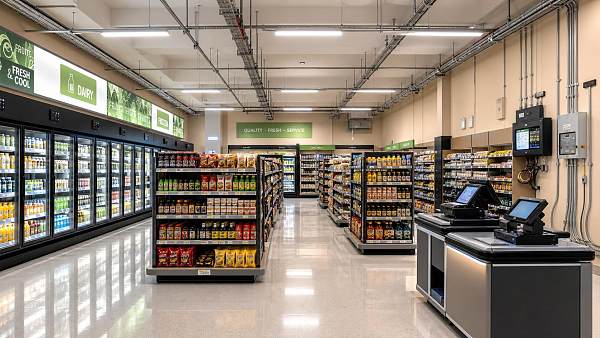
VOC emission levels do not create the same operational risk in every environment. In office projects, the focus is usually on employee comfort, workstation density, and the reopening schedule. In hospitality, guest perception becomes more sensitive because enclosed rooms, soft furnishings, and premium expectations amplify odor and air-quality concerns. In retail, the challenge often revolves around opening deadlines, visual merchandising consistency, and the need to maintain a clean brand atmosphere across multiple locations.
Users and operators should pay attention to the ratio of enclosed volume to installed furniture mass. A compact meeting room, manager office, fitting room, or guest suite may reveal odor or emission discomfort faster than an open atrium. This matters especially during the first 3–14 days after installation, when ventilation planning and fit-out sequencing can strongly affect perceived air quality.
Sustainable office furniture trends are also changing buyer expectations. More projects now ask suppliers to combine low-emission materials with modular construction, recyclable content, replaceable components, and longer service life. That means buyers are balancing 3 targets at once: healthier interiors, lower lifecycle waste, and commercial-grade durability.
The table below highlights how application context changes the way procurement teams should assess VOC emission levels, safety standards, and implementation priorities.
This comparison shows why a one-line supplier promise is rarely enough. The same furniture category can perform differently depending on room size, installation density, ventilation conditions, and project schedule. G-BCE’s cross-sector perspective is useful here because commercial spaces rarely operate as furniture-only environments; they combine fixtures, lighting, technology, packaging displays, and user movement patterns in one system.
Application signals buyers should not ignore
Office rollouts
If a project includes 50–300 task chairs, benching systems, storage units, and acoustic panels in one delivery wave, even moderate emission sources can accumulate in perception. Staggered installation and ventilation planning should be discussed before final logistics booking.
Hospitality fit-outs
Guest rooms often combine casegoods, upholstered seating, headboards, and decorative finishes. Buyers should review the full material stack rather than only the visible shell. Odor complaints can undermine premium positioning faster than minor aesthetic defects.
Retail chains
For multi-store programs, the issue is repeatability. A supplier who performs well on one pilot set may still struggle on a 20-store or 100-store rollout if material substitutions and production pressure change the emission profile or finish consistency.
What should procurement teams compare beyond low-VOC claims?
A low-VOC label alone is not a sufficient procurement decision tool. Buyers should compare at least 6 dimensions when evaluating contract furniture suppliers: emission documentation, structural performance, finish durability, lead time stability, customization control, and after-sales responsiveness. In many tenders, the winning supplier is not the one with the cheapest unit price, but the one with the lowest total project friction.
One frequent mistake is separating sustainability from functionality. In reality, sustainable office furniture trends reward suppliers that can combine low-emission materials with serviceable construction and longer replacement cycles. A chair that meets ANSI/BIFMA office chair safety but wears poorly in 12–18 months may create higher waste and cost than a more durable option with stronger lifecycle planning.
Another issue is timeline realism. Buyers often request samples, customization, compliance review, and bulk delivery within a compressed 4–8 week project window. That can work for standardized SKUs, but mixed-material custom programs may require separate time for sample confirmation, color approval, production scheduling, and pre-shipment inspection.
A practical way to compare suppliers is to use a weighted evaluation matrix. This helps researchers and business evaluators move beyond sales language and score suppliers based on actual fit for use.
Recommended supplier comparison checklist
- Emission evidence: Are VOC emission levels documented for the finished product or only for selected materials?
- Safety and durability: Does the seating or workstation category align with ANSI/BIFMA office chair safety or related commercial performance expectations?
- Material consistency: Can the supplier lock substrate, adhesive, coating, and foam specifications for production lots?
- Project support: Are shop drawings, finish schedules, samples, and replacement parts handled within realistic timelines such as 3–7 working days for documentation response?
- Global suitability: Can the supplier align with destination-market expectations involving UL, CE, BIFMA, or other specification references where relevant?
- Operational risk: Is the supplier experienced in commercial rollouts where packaging, delivery sequencing, and installation coordination affect final outcomes?
This is a strong area for G-BCE. Because the platform spans commercial furniture and fixtures, smart retail technology, lighting and signage, packaging, and supply-chain transparency, it helps buyers understand whether a supplier can support the broader commercial environment rather than just one isolated item code.
Common misconceptions, implementation risks, and practical FAQ
Commercial buyers often lose time and budget because they rely on assumptions that sound reasonable but fail under project conditions. VOC emission levels, Greenguard certified commercial furniture, and ANSI/BIFMA office chair safety are all useful decision tools, but only when interpreted correctly. The most costly mistakes usually happen when one document is treated as proof of full project readiness.
Implementation risk also increases when suppliers, designers, and site teams work in separate silos. A good product can underperform if installation is rushed, rooms are sealed too early, or substitute materials are approved informally. A realistic commercial workflow often includes 4 stages: specification review, sample validation, production control, and post-installation observation.
Below are the questions most often raised by researchers, operators, procurement teams, and commercial evaluators when VOC emission levels become a deciding factor.
Does low-VOC furniture mean there will be no odor at all?
Not necessarily. Low-emission performance reduces risk, but odor perception can still be affected by packaging, transport conditions, room ventilation, adhesives, foam, coatings, and installation density. Buyers should plan for ventilation and phased occupancy where the project schedule is tight, especially within the first 1–2 weeks after delivery.
Is Greenguard certified commercial furniture enough for office procurement?
It is valuable, but not enough by itself. Office procurement should also review ergonomics, service life, maintenance needs, dimensional fit, and ANSI/BIFMA office chair safety for seating categories. The right question is not only whether the product is low-emitting, but whether it will perform reliably for 8–10 hours of daily use across its intended lifecycle.
What is the most overlooked VOC risk in retail fit-outs?
Compressed launch timing. Retail programs often compress manufacturing, transport, installation, and merchandising into a narrow opening window. If fixtures arrive only a few days before launch, there may be little time to manage perceived odor or address replacement needs. Buyers should align packaging, unpacking sequence, and ventilation plans early, not after site arrival.
How can buyers reduce the chance of sample-to-bulk mismatch?
Request a controlled sample approval process tied to the final bill of materials. That should cover boards, edge treatments, foam grades, adhesives, fabrics, coatings, and hardware. For large orders, pre-shipment checks and photo documentation can help confirm that the approved construction has not changed during production.
Why choose us when VOC-sensitive commercial sourcing needs clearer benchmarks?
G-BCE is built for buyers who need more than fragmented product claims. Our value lies in helping global chain operators, commercial developers, sourcing teams, and premium consumer brands benchmark furniture and fixture decisions within the full commercial ecosystem. That means reviewing VOC emission levels in relation to standards, usage context, supply-chain execution, and the visual-functional demands of modern spaces.
Because we connect Asian manufacturing precision with international commercial expectations, we help decision-makers evaluate not only whether a supplier can produce, but whether the supplier can deliver appropriately for office systems, hospitality furniture, retail fixtures, and integrated commercial environments. This is especially useful when projects involve multiple categories, mixed compliance references, or rollout complexity across regions.
You can contact us for practical support in 6 key areas: parameter confirmation for low-emission materials, product selection for office and retail applications, review of ANSI/BIFMA office chair safety relevance, delivery-cycle assessment, customization feasibility, and certification document alignment. If you are comparing Greenguard certified commercial furniture options, reviewing sample strategies, or building a shortlist for sustainable office furniture trends, we can help you frame the decision with clearer technical and procurement logic.
If your team is planning a new workspace, a hospitality fit-out, or a multi-store retail program, reach out with your product list, performance priorities, target market, and project timeline. We can help you evaluate specification gaps, shortlist suitable commercial furniture pathways, discuss sample support, and structure quotation conversations around what actually affects project success.
- commercial furniture
- retail fixtures
- smart retail
- supply chain
- signage
- retail technology
- commercial spaces
- commercial developers
- global chain
- manufacturing precision
- commercial environments
- smart retail technology
- commercial furniture suppliers
- global chain operators
- contract furniture supplier
- ANSI/BIFMA office chair safety
- Greenguard certified commercial furniture
- VOC emission levels in furniture
- sustainable office furniture trends
News Recommendations
 How to choose an ultra bright waterproof window display for storefronts
![51a6ab95581761cc26f4318be6520c15]()
Aris Katos
Future of Carbide Coatings
 How to verify suppliers on a trade portal for global sourcing
![51a6ab95581761cc26f4318be6520c15]()
Aris Katos
Future of Carbide Coatings
 How RoHS requirements should be stated in product specifications
![51a6ab95581761cc26f4318be6520c15]()
Aris Katos
Future of Carbide Coatings
 What affects the lead time for custom retail counter displays?
![51a6ab95581761cc26f4318be6520c15]()
Aris Katos
Future of Carbide Coatings
 What consumer packaging USA importers need to verify before ordering
![51a6ab95581761cc26f4318be6520c15]()
Aris Katos
Future of Carbide Coatings
 How commercial spaces interiors shape customer dwell time
![51a6ab95581761cc26f4318be6520c15]()
Aris Katos
Future of Carbide Coatings
 How LED commercial lighting design reduces glare in retail spaces
![51a6ab95581761cc26f4318be6520c15]()
Aris Katos
Future of Carbide Coatings
 How industrial technology information improves RFID inventory accuracy
![51a6ab95581761cc26f4318be6520c15]()
Aris Katos
Future of Carbide Coatings
 When drip garden watering systems make more sense than sprinklers
![51a6ab95581761cc26f4318be6520c15]()
Aris Katos
Future of Carbide Coatings
 When category comparison improves sourcing for industrial applications
![51a6ab95581761cc26f4318be6520c15]()
Aris Katos
Future of Carbide Coatings
 Industrial application guidance for selecting the right LED lighting
![51a6ab95581761cc26f4318be6520c15]()
Aris Katos
Future of Carbide Coatings
 Which commercial architecture standards apply to European retail fit-outs?
![51a6ab95581761cc26f4318be6520c15]()
Aris Katos
Future of Carbide Coatings
 How to verify FDA requirements for maternity care products
![51a6ab95581761cc26f4318be6520c15]()
Aris Katos
Future of Carbide Coatings
 How to verify BPA-free claims for food-contact products
![51a6ab95581761cc26f4318be6520c15]()
Aris Katos
Future of Carbide Coatings
 When does a European wholesale supplier suit modular office projects?
![51a6ab95581761cc26f4318be6520c15]()
Aris Katos
Future of Carbide Coatings
 When consumer ecosystem solutions improve the in-store shopping journey
![51a6ab95581761cc26f4318be6520c15]()
Aris Katos
Future of Carbide Coatings
 How a commercial developers network can reduce site selection risk
![51a6ab95581761cc26f4318be6520c15]()
Aris Katos
Future of Carbide Coatings
 How clear purchasing specifications prevent costly supplier deviations
![51a6ab95581761cc26f4318be6520c15]()
Aris Katos
Future of Carbide Coatings
 What an ISTA drop test lab checks before your packaging ships
![51a6ab95581761cc26f4318be6520c15]()
Aris Katos
Future of Carbide Coatings
 Which commercial furniture standards apply to workplace seating?
![51a6ab95581761cc26f4318be6520c15]()
Aris Katos
Future of Carbide Coatings
 How to evaluate smart lighting module OEM compatibility before sampling
![51a6ab95581761cc26f4318be6520c15]()
Aris Katos
Future of Carbide Coatings
 How to assess whether sustainable technology delivers real impact
![51a6ab95581761cc26f4318be6520c15]()
Aris Katos
Future of Carbide Coatings
 How to assess an OEM supplier’s quality control before ordering
![51a6ab95581761cc26f4318be6520c15]()
Aris Katos
Future of Carbide Coatings
 How consumer ecosystem solutions data can improve retail personalization
![51a6ab95581761cc26f4318be6520c15]()
Aris Katos
Future of Carbide Coatings
 When does consumer packaging design justify a higher product price?
![51a6ab95581761cc26f4318be6520c15]()
Aris Katos
Future of Carbide Coatings
 Supermarket Fixture Installation: Planning Layouts, Wiring, and Handover
![51a6ab95581761cc26f4318be6520c15]()
Aris Katos
Future of Carbide Coatings
 Automated Lighting and Smart Lighting Control in Bergerac: Key Project Considerations
![51a6ab95581761cc26f4318be6520c15]()
Aris Katos
Future of Carbide Coatings
 Segment Streetlight Controllers: Choosing Control Modes for Urban Roads
![51a6ab95581761cc26f4318be6520c15]()
Aris Katos
Future of Carbide Coatings
 IEC 62471-2 Explained: How to Assess Photobiological Risks in LED Lighting
![51a6ab95581761cc26f4318be6520c15]()
Aris Katos
Future of Carbide Coatings
 Food Grade Packaging Requirements by Product Type, Temperature, and Contact Risk
![51a6ab95581761cc26f4318be6520c15]()
Aris Katos
Future of Carbide Coatings
 Food Packaging Compliance Checklist: Tests, Records, and Labeling Before Shipment
![51a6ab95581761cc26f4318be6520c15]()
Aris Katos
Future of Carbide Coatings
 NSF Food Packaging Standards: When Certification Matters for Commercial Food Use
![51a6ab95581761cc26f4318be6520c15]()
Aris Katos
Future of Carbide Coatings
 FDA Food Grade Compliance: Which Materials and Documents Do Buyers Need?
![51a6ab95581761cc26f4318be6520c15]()
Aris Katos
Future of Carbide Coatings
 What Should a Food Grade Declaration Include for Packaging Compliance?
![51a6ab95581761cc26f4318be6520c15]()
Aris Katos
Future of Carbide Coatings
 Housewares Importing: How to Evaluate Suppliers, Costs, and Compliance Risks
![51a6ab95581761cc26f4318be6520c15]()
Aris Katos
Future of Carbide Coatings
 Why Freeze-Dried Fruit Ingredients Lose Crispness—and How to Prevent It
![51a6ab95581761cc26f4318be6520c15]()
Aris Katos
Future of Carbide Coatings
 What industry veterans look for before choosing a new supplier
![51a6ab95581761cc26f4318be6520c15]()
Aris Katos
Future of Carbide Coatings
 How material fatigue can shorten the service life of retail shelving
![51a6ab95581761cc26f4318be6520c15]()
Aris Katos
Future of Carbide Coatings
 What makes a global sourcing platform reliable for supplier verification?
![51a6ab95581761cc26f4318be6520c15]()
Aris Katos
Future of Carbide Coatings