Greenguard certified commercial furniture still varies in material choices
Time
Click Count
Greenguard certified commercial furniture is often treated as a quick indicator of low chemical emissions, but buyers and specifiers should not assume that every certified product performs the same way in real-world use. Certification helps verify that a finished product meets defined indoor air quality thresholds, yet material composition still affects VOC behavior, edge sealing quality, cleanability, structural lifespan, refinishing options, and replacement costs. In practice, a stackable training chair with powder coated steel and molded polymer may present a very different sourcing profile from conference room furniture wholesale built with engineered wood cores and high pressure laminate surfaces.
For procurement teams, operators, and commercial evaluators, the key takeaway is simple: Greenguard certification reduces uncertainty around emissions, but it does not erase the differences between solid wood commercial grade construction, HPL-faced panel systems, metal frames, adhesives, foam, textiles, and surface finishes. If you are comparing office systems, education seating, hospitality tables, or smart office furniture integration projects, the right question is not only “Is it certified?” but also “What is it made of, how is it assembled, and how will it perform over time in our environment?”
This article explains the actual search intent behind Greenguard certified commercial furniture comparisons: decision-makers want to know why certified products still vary, which material categories create the biggest practical differences, how to judge risk beyond the label, and how to choose commercial furniture that balances indoor air quality, durability, maintenance, compliance, and total cost of ownership.
Why Greenguard certified commercial furniture can still differ so much
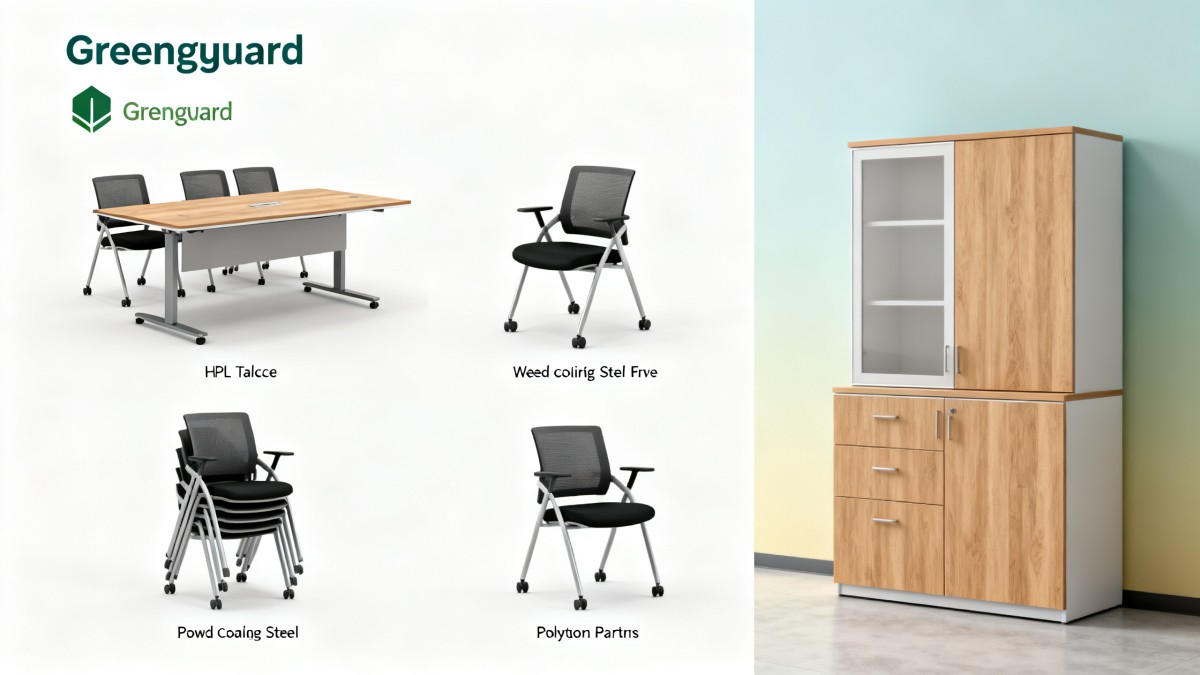
At the core, Greenguard certification evaluates emissions from the finished product under controlled conditions. That matters because commercial furniture is rarely made from one material alone. A chair, workstation, storage cabinet, or conference table may combine wood composites, laminates, metal parts, powder coating, adhesives, sealants, foam cushions, plastics, upholstery, and packaging residues. Two products can both pass the same emissions standard while still relying on very different material systems and manufacturing controls.
This is where many sourcing misunderstandings begin. Buyers often assume certification means identical material safety or identical long-term performance. It does not. One manufacturer may use lower-emission adhesives, better edge banding, and tighter process consistency, while another reaches compliance with a different material mix that still passes the threshold but behaves differently under heat, heavy wear, or frequent cleaning cycles. In a large office, school, clinic, or retail rollout, those differences can affect user comfort, maintenance frequency, and replacement planning.
For target readers such as procurement staff and business evaluators, the practical implication is that certification should be the starting filter, not the final decision rule. It helps eliminate many high-emission risks, especially in enclosed spaces, but it does not tell you everything about impact resistance, refinishing, corrosion resistance, seam failure, moisture response, or compatibility with your usage pattern. To make a sound commercial decision, you need to read the certification together with the bill of materials, substrate choices, finish system, and expected duty cycle.
What information researchers, users, and buyers actually care about
People searching this topic usually are not looking for a generic definition of Greenguard. They are trying to solve a sourcing problem. They may be comparing conference room furniture wholesale options, evaluating whether solid wood commercial grade furniture is worth the premium, checking if HPL is acceptable for high-use spaces, or reviewing whether powder coated steel frames offer a better maintenance profile in stackable commercial chairs. Their concern is practical: how to reduce compliance risk without overpaying for the wrong construction.
Operators and end users often care most about daily experience. Will the furniture produce noticeable odors after installation? Will surfaces chip, swell, stain, or become difficult to sanitize? Will task chairs, tables, or mobile storage units hold up under constant movement? In healthcare-adjacent, education, and open-plan office spaces, furniture must perform not only in emissions terms but also in noise, ergonomics, and ease of cleaning. A certified label does not answer all of that.
Procurement and commercial assessment teams usually add another layer of concern: bid comparability. Vendors may present similar certifications but very different specifications hidden in substrate density, metal gauge, fastener quality, or finishing methods. That is why the most useful content for these readers is not broad sustainability messaging. It is a framework for comparing material choices, understanding likely tradeoffs, and identifying where the label supports the decision and where technical review still matters.
How major material categories influence performance beyond certification
Solid wood commercial grade furniture is often perceived as the premium low-emission option, and in some cases that is justified. Solid wood generally avoids some of the formaldehyde-related concerns associated with certain composite wood products, though actual emissions still depend on stains, sealers, coatings, fillers, and adhesives used in joinery or edge construction. High-quality solid wood can offer long service life and refinishing potential, which can lower lifecycle cost in executive, hospitality, or high-visibility meeting areas.
However, solid wood is not automatically superior in every commercial setting. It can move with humidity, may require more finish maintenance, and often carries a higher upfront cost. In heavy-turnover environments such as training rooms, flexible work areas, or public venues, a solid wood solution may be less practical than a well-built hybrid design. Buyers should verify not only the species and finish but also the structural design, because “solid wood” used as a marketing term can overstate actual performance value.
Engineered wood with high pressure laminate (HPL) is common in conference room furniture wholesale, education tables, casegoods, and reception installations because it balances cost, consistency, and wear resistance. HPL surfaces can perform very well against abrasion, scratches, and routine cleaning. Yet the overall furniture quality depends heavily on the substrate below the laminate, the adhesives, edge banding quality, and moisture protection at seams and cutouts. A Greenguard certified HPL table may still vary significantly from another certified model in lifespan and maintenance burden.
Powder coated steel frames are widely used in stackable commercial chairs, benching systems, shelving, and collaborative furniture. Powder coating can provide a durable finish with a different emissions profile than some liquid coating systems, and steel offers structural reliability in high-use environments. Still, commercial buyers should compare weld quality, coating thickness, pretreatment process, corrosion resistance, and repairability. A low-emission frame that chips easily or rusts in coastal or humid interiors can create replacement costs that offset any initial savings.
Foam, textiles, and polymers deserve special attention because they often influence occupant perception more than the frame or tabletop. Upholstered seating can pass certification while still differing in cushion resilience, stain resistance, cleanability, and odor persistence after shipping and installation. In smart office furniture integration, where chairs, pods, privacy booths, or sensor-enabled workstations combine electronics and soft materials, hidden components such as cable grommets, acoustic foam, molded plastics, and adhesives can shape the real-world user experience.
How to compare certified products without being misled by the label alone
A practical review process starts with the certification scope. Ask whether the certification applies to the complete assembled product or only to selected components. Then ask for the latest documentation, model coverage, and any exclusions. This matters because line extensions, fabric substitutions, power modules, and size changes can alter the final material system. For large projects, procurement teams should avoid relying on outdated certificates or broad brand-level claims that do not clearly match the exact SKU being purchased.
Next, review the material stack in simple commercial terms. What is the main substrate: solid wood, plywood, MDF, particleboard, steel, aluminum, polymer, or a hybrid? What finish is applied? What adhesive system is used? How are edges sealed? Is the upholstery removable or field-replaceable? Is the finish suitable for disinfectant cleaning if needed? This level of review is especially important in commercial furniture and fixtures categories where visual similarity hides major construction differences.
Then connect those specifications to your use case. A certified table for a lightly used executive boardroom may not suit a high-turnover training center. A low-emission seating line for a quiet workspace may not meet the structural demands of hospitality waiting areas. Smart office furniture integration projects also require checking whether charging ports, sensors, cable management, or embedded power systems introduce additional heat, maintenance, or replacement complexity. In other words, suitability is context-specific, and certification is only one line in the suitability matrix.
What purchasing teams should ask suppliers before approving a project
To make certified furniture comparisons meaningful, sourcing teams should request a short but disciplined package from each supplier. This should include the current certification document, technical data sheet, warranty terms, cleaning guidance, and a materials description clear enough to distinguish solid wood from veneer-over-composite, or HPL from melamine, or powder coated steel from lower-grade painted tubing. If vendors cannot explain the difference clearly, that is already a useful signal.
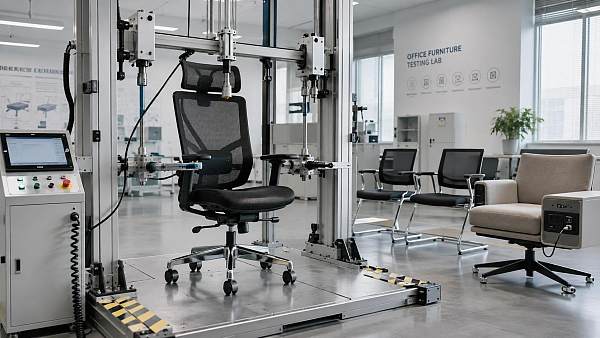
Ask direct questions about failure points. What are the most common field complaints? How are edge impacts handled? Can laminates be repaired, or must full tops be replaced? How do coatings perform under alcohol-based cleaners or frequent sanitization? What is the tested load capacity for stackable commercial chairs? Can glides, casters, upholstery covers, or power units be replaced without discarding the entire product? These answers help move the decision from brochure-level sustainability to real operational value.
Commercial evaluators should also ask about production consistency and regional supply chain control. A product line may be certified, but consistency across factories, batch-level material substitutions, and subcontracted finishing operations still matter. For global projects, especially those bridging Asian manufacturing and international commercial standards, it is wise to confirm whether the supplied version matches the benchmarked version in testing documents. This aligns with a technical benchmarking approach rather than a marketing-first sourcing process.
Balancing indoor air quality, durability, and total cost of ownership
The best commercial furniture decision is rarely the one with the simplest sustainability claim. It is the one that meets indoor air quality expectations while staying durable enough for the intended setting. If a lower-cost certified product needs replacement in three years due to seam failure, frame instability, or finish breakdown, its lifecycle impact may be worse than a more expensive product with a stronger material architecture. This is why procurement teams should evaluate emissions, maintenance, expected lifespan, and serviceability together.
For conference room furniture wholesale projects, HPL over stable engineered cores may be the most efficient answer where frequent use, cable access, and scratch resistance matter more than refinishing. For stackable commercial chairs, powder coated steel frames with replaceable glides and tested stacking performance may outperform more decorative alternatives. For flagship spaces, solid wood commercial grade furniture may justify its cost through longevity, aesthetics, and lower replacement frequency, provided the finish system and climate conditions are suitable.
In short, Greenguard certification is valuable because it helps narrow the field toward lower-emission commercial furniture. But the final decision should be made through a material-aware lens. Buyers who understand the differences between substrate, finish, frame, upholstery, and assembly quality are better positioned to choose furniture that supports health goals, user satisfaction, and long-term asset performance.
Conclusion: certification matters, but material intelligence matters more
Greenguard certified commercial furniture does not guarantee that all products are equal. It confirms an important emissions benchmark, yet material choices still shape odor perception, wear resistance, maintenance effort, durability, and replacement economics. That is why informed sourcing teams look beyond the label to evaluate how solid wood commercial grade builds, HPL systems, powder coated steel frames, and upholstered components actually behave in their intended environment.
For researchers, operators, purchasers, and business evaluators, the clearest path is to treat certification as a strong screening tool, then compare construction details with the same rigor used for compliance and budget review. When that happens, commercial furniture selection becomes more than a sustainability checkbox. It becomes a smarter, lower-risk investment in healthier and more resilient commercial spaces.
News Recommendations
 How to choose an ultra bright waterproof window display for storefronts
![51a6ab95581761cc26f4318be6520c15]()
Aris Katos
Future of Carbide Coatings
 How to verify suppliers on a trade portal for global sourcing
![51a6ab95581761cc26f4318be6520c15]()
Aris Katos
Future of Carbide Coatings
 How RoHS requirements should be stated in product specifications
![51a6ab95581761cc26f4318be6520c15]()
Aris Katos
Future of Carbide Coatings
 What affects the lead time for custom retail counter displays?
![51a6ab95581761cc26f4318be6520c15]()
Aris Katos
Future of Carbide Coatings
 What consumer packaging USA importers need to verify before ordering
![51a6ab95581761cc26f4318be6520c15]()
Aris Katos
Future of Carbide Coatings
 How commercial spaces interiors shape customer dwell time
![51a6ab95581761cc26f4318be6520c15]()
Aris Katos
Future of Carbide Coatings
 How LED commercial lighting design reduces glare in retail spaces
![51a6ab95581761cc26f4318be6520c15]()
Aris Katos
Future of Carbide Coatings
 How industrial technology information improves RFID inventory accuracy
![51a6ab95581761cc26f4318be6520c15]()
Aris Katos
Future of Carbide Coatings
 When drip garden watering systems make more sense than sprinklers
![51a6ab95581761cc26f4318be6520c15]()
Aris Katos
Future of Carbide Coatings
 When category comparison improves sourcing for industrial applications
![51a6ab95581761cc26f4318be6520c15]()
Aris Katos
Future of Carbide Coatings
 Industrial application guidance for selecting the right LED lighting
![51a6ab95581761cc26f4318be6520c15]()
Aris Katos
Future of Carbide Coatings
 Which commercial architecture standards apply to European retail fit-outs?
![51a6ab95581761cc26f4318be6520c15]()
Aris Katos
Future of Carbide Coatings
 How to verify FDA requirements for maternity care products
![51a6ab95581761cc26f4318be6520c15]()
Aris Katos
Future of Carbide Coatings
 How to verify BPA-free claims for food-contact products
![51a6ab95581761cc26f4318be6520c15]()
Aris Katos
Future of Carbide Coatings
 When does a European wholesale supplier suit modular office projects?
![51a6ab95581761cc26f4318be6520c15]()
Aris Katos
Future of Carbide Coatings
 When consumer ecosystem solutions improve the in-store shopping journey
![51a6ab95581761cc26f4318be6520c15]()
Aris Katos
Future of Carbide Coatings
 How a commercial developers network can reduce site selection risk
![51a6ab95581761cc26f4318be6520c15]()
Aris Katos
Future of Carbide Coatings
 How clear purchasing specifications prevent costly supplier deviations
![51a6ab95581761cc26f4318be6520c15]()
Aris Katos
Future of Carbide Coatings
 What an ISTA drop test lab checks before your packaging ships
![51a6ab95581761cc26f4318be6520c15]()
Aris Katos
Future of Carbide Coatings
 Which commercial furniture standards apply to workplace seating?
![51a6ab95581761cc26f4318be6520c15]()
Aris Katos
Future of Carbide Coatings
 How to evaluate smart lighting module OEM compatibility before sampling
![51a6ab95581761cc26f4318be6520c15]()
Aris Katos
Future of Carbide Coatings
 How to assess whether sustainable technology delivers real impact
![51a6ab95581761cc26f4318be6520c15]()
Aris Katos
Future of Carbide Coatings
 How to assess an OEM supplier’s quality control before ordering
![51a6ab95581761cc26f4318be6520c15]()
Aris Katos
Future of Carbide Coatings
 How consumer ecosystem solutions data can improve retail personalization
![51a6ab95581761cc26f4318be6520c15]()
Aris Katos
Future of Carbide Coatings
 When does consumer packaging design justify a higher product price?
![51a6ab95581761cc26f4318be6520c15]()
Aris Katos
Future of Carbide Coatings
 Supermarket Fixture Installation: Planning Layouts, Wiring, and Handover
![51a6ab95581761cc26f4318be6520c15]()
Aris Katos
Future of Carbide Coatings
 Automated Lighting and Smart Lighting Control in Bergerac: Key Project Considerations
![51a6ab95581761cc26f4318be6520c15]()
Aris Katos
Future of Carbide Coatings
 Segment Streetlight Controllers: Choosing Control Modes for Urban Roads
![51a6ab95581761cc26f4318be6520c15]()
Aris Katos
Future of Carbide Coatings
 IEC 62471-2 Explained: How to Assess Photobiological Risks in LED Lighting
![51a6ab95581761cc26f4318be6520c15]()
Aris Katos
Future of Carbide Coatings
 Food Grade Packaging Requirements by Product Type, Temperature, and Contact Risk
![51a6ab95581761cc26f4318be6520c15]()
Aris Katos
Future of Carbide Coatings
 Food Packaging Compliance Checklist: Tests, Records, and Labeling Before Shipment
![51a6ab95581761cc26f4318be6520c15]()
Aris Katos
Future of Carbide Coatings
 NSF Food Packaging Standards: When Certification Matters for Commercial Food Use
![51a6ab95581761cc26f4318be6520c15]()
Aris Katos
Future of Carbide Coatings
 FDA Food Grade Compliance: Which Materials and Documents Do Buyers Need?
![51a6ab95581761cc26f4318be6520c15]()
Aris Katos
Future of Carbide Coatings
 What Should a Food Grade Declaration Include for Packaging Compliance?
![51a6ab95581761cc26f4318be6520c15]()
Aris Katos
Future of Carbide Coatings
 Housewares Importing: How to Evaluate Suppliers, Costs, and Compliance Risks
![51a6ab95581761cc26f4318be6520c15]()
Aris Katos
Future of Carbide Coatings
 Why Freeze-Dried Fruit Ingredients Lose Crispness—and How to Prevent It
![51a6ab95581761cc26f4318be6520c15]()
Aris Katos
Future of Carbide Coatings
 What industry veterans look for before choosing a new supplier
![51a6ab95581761cc26f4318be6520c15]()
Aris Katos
Future of Carbide Coatings
 How material fatigue can shorten the service life of retail shelving
![51a6ab95581761cc26f4318be6520c15]()
Aris Katos
Future of Carbide Coatings
 What makes a global sourcing platform reliable for supplier verification?
![51a6ab95581761cc26f4318be6520c15]()
Aris Katos
Future of Carbide Coatings