Kraft Takeaway Food Box: Cost, Grease Resistance, and Compliance
Time
Click Count
A kraft takeaway food box now sits at the intersection of packaging cost, food-contact safety, grease control, and retail presentation. For chains, cloud kitchens, cafes, and distributors, the box is no longer a basic commodity. It shapes holding performance, customer perception, and compliance exposure across increasingly demanding supply chains.
That shift matters in a broader commercial context. As physical retail, delivery operations, and sustainable packaging standards become more connected, sourcing decisions are judged not only by unit price, but also by consistency, traceability, and suitability for real operating conditions.
Within the G-BCE view of modern consumer ecosystems, packaging belongs to the same benchmarking logic as retail fixtures, smart equipment, and branded touchpoints. A takeaway box must work as a practical container, a compliant material system, and a visible part of the customer experience.
What a Kraft Takeaway Food Box Really Needs to Deliver
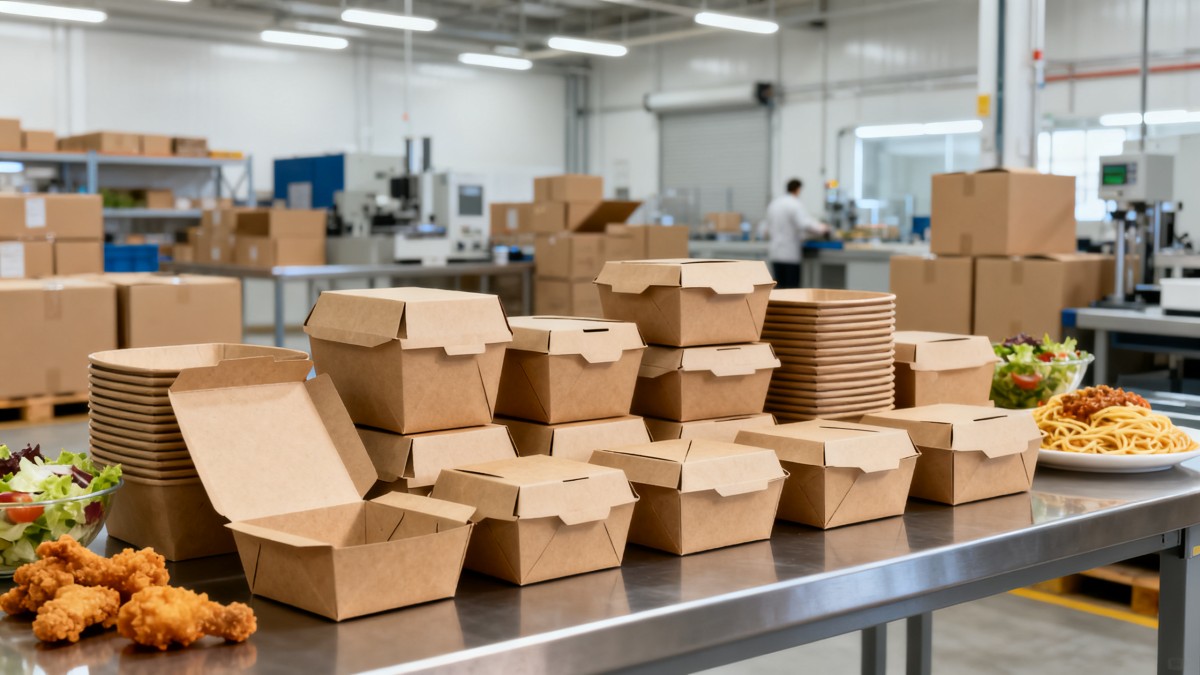
At a basic level, a kraft takeaway food box is a paper-based food container, usually made from virgin kraft board, recycled fiber blends, or laminated constructions. It is widely used for hot meals, bakery items, fried foods, salads, noodles, and mixed-menu takeaway service.
In practice, buyers are not just choosing a box shape. They are choosing a performance profile. That includes stiffness, fold integrity, leak resistance, lid closure, grease barrier quality, print compatibility, stacking behavior, and disposal characteristics.
Simple-looking products often fail in subtle ways. Corners can open under heat. Bases can soften after oil exposure. Coatings can crack along folds. A box that looks acceptable in a factory sample may underperform during a 25-minute delivery window.
This is why the kraft takeaway food box has become a specification decision rather than a low-attention packaging purchase.
Why Cost Is More Complex Than Unit Price
Cost pressure remains real, especially in foodservice categories with tight margins. Still, comparing suppliers on price alone usually hides the more expensive part of the decision.
A lower-priced kraft takeaway food box may use lighter board, weaker edge compression, or a thinner barrier layer. That can reduce direct purchasing cost while increasing waste, complaint rates, repacking labor, and product loss.
The more useful cost model looks at total packaging performance:
- unit cost by size and construction
- minimum order quantity and inventory turnover
- damage or leakage rate in transport
- storage efficiency and case-pack density
- branding value through print quality and appearance
- compliance documentation and audit readiness
Usually, the most economical option is not the cheapest sample. It is the specification that protects food quality without overengineering the pack.
Where pricing differences usually come from
Price gaps between similar boxes often come from raw fiber grade, board thickness, barrier chemistry, manufacturing precision, and certification scope. Printing method, custom die lines, nesting efficiency, and freight volume also influence landed cost.
For cross-border sourcing, documentation quality matters more than many teams expect. Delays at customs, missing declarations, or failed compliance checks can erase any initial savings.
Grease Resistance Is a Functional and Brand Issue
Grease resistance is often the first technical issue to surface in takeaway packaging. Fried items, sauced meals, pastries, and protein-heavy dishes place different demands on paper packaging, especially when heat and holding time are involved.
A kraft takeaway food box with poor oil resistance may stain externally, weaken at seams, or transfer grease into outer bags. That affects hygiene perception immediately, even before any product failure becomes obvious.
Several material approaches are common. Each has tradeoffs in barrier performance, recyclability, compostability claims, and cost.
The right choice depends on menu profile and delivery conditions. A bakery counter, a quick-service burger operation, and an airport meal concept do not need the same grease barrier.
How to test beyond the sample table
Lab data is useful, but field simulation is more revealing. Test the kraft takeaway food box with real menu items, full fill weight, normal closure pressure, and realistic hold times.
- Check exterior staining after 15, 30, and 45 minutes
- Evaluate corner strength after heat exposure
- Observe lid security during stacking and transport
- Review odor transfer or coating taint risk
- Compare performance after refrigeration if dual use is expected
Compliance Is Not a Box-Ticking Exercise
Compliance requirements for a kraft takeaway food box vary by destination market, but the core concerns are consistent. Food-contact safety, restricted substances, migration behavior, fiber sourcing claims, and environmental labeling all need careful review.
For many sourcing programs, the critical mistake is assuming that all paper food packaging is inherently compliant. It is not. Ink systems, adhesives, coatings, fluorinated treatments, and recycled content can all affect regulatory status.
Common document checkpoints include declarations for food-contact suitability, test reports for relevant market standards, material data from coating suppliers, and records supporting chain-of-custody or sustainability claims when those claims are being used commercially.
What to review during supplier qualification
A solid qualification process should look beyond the sales sheet. It should verify whether the supplier can maintain repeatable output and support audits when required.
- food-contact declarations matched to destination market
- migration or safety testing for coatings and inks
- evidence of PFAS status where relevant
- fiber origin and recycled content statements
- quality control records for board weight and bonding consistency
- change-control procedures for raw material substitutions
This is where platforms such as G-BCE add value. Comparative benchmarking helps separate marketing claims from verifiable performance, especially when packaging must align with international retail and supply chain standards.
Where Different Operating Scenarios Change the Specification
Not every kraft takeaway food box should be sourced under one universal standard. The required specification shifts with product type, service speed, and brand position.
This scenario-based approach avoids a common sourcing problem. Some programs overspecify every box and absorb unnecessary cost. Others standardize too aggressively and create failure in the most demanding menu segments.
Practical Signals of a Reliable Sourcing Decision
Reliable sourcing usually becomes visible through a few concrete signals. The supplier answers technical questions directly. Test data matches the actual construction. Samples from different batches remain consistent. Documentation arrives in a usable format, not as fragmented claims.
It also helps to compare the kraft takeaway food box against adjacent business needs. Can it run through existing packing lines? Does it fit current shelving or dispatch bins? Will the visual finish support the intended brand tier?
In many cases, the best next step is to build a short decision matrix. Include menu type, barrier need, market compliance, print expectations, volume forecast, and acceptable cost range. Then test two or three qualified options under real service conditions.
A kraft takeaway food box should ultimately be judged as part of the full commercial system. When cost, grease resistance, and compliance are evaluated together, sourcing becomes more stable, claims become easier to defend, and packaging performs with fewer surprises in the field.
That is the point where comparison becomes useful. Review specifications line by line, ask for market-specific documentation, and validate performance with the foods and holding times that matter most. The right box is usually the one that remains dependable after those checks.
News Recommendations
 How energy-efficient design reduces operating costs in retail lighting
![51a6ab95581761cc26f4318be6520c15]()
Aris Katos
Future of Carbide Coatings
 When commercial aluminum storefronts make sense for a retail renovation
![51a6ab95581761cc26f4318be6520c15]()
Aris Katos
Future of Carbide Coatings
 What makes LED lights durable in high-use commercial spaces?
![51a6ab95581761cc26f4318be6520c15]()
Aris Katos
Future of Carbide Coatings
 Which industry categories offer the strongest export potential in Latin America?
![51a6ab95581761cc26f4318be6520c15]()
Aris Katos
Future of Carbide Coatings
 How to choose an ultra bright waterproof window display for storefronts
![51a6ab95581761cc26f4318be6520c15]()
Aris Katos
Future of Carbide Coatings
 How to verify suppliers on a trade portal for global sourcing
![51a6ab95581761cc26f4318be6520c15]()
Aris Katos
Future of Carbide Coatings
 How RoHS requirements should be stated in product specifications
![51a6ab95581761cc26f4318be6520c15]()
Aris Katos
Future of Carbide Coatings
 What affects the lead time for custom retail counter displays?
![51a6ab95581761cc26f4318be6520c15]()
Aris Katos
Future of Carbide Coatings
 What consumer packaging USA importers need to verify before ordering
![51a6ab95581761cc26f4318be6520c15]()
Aris Katos
Future of Carbide Coatings
 How commercial spaces interiors shape customer dwell time
![51a6ab95581761cc26f4318be6520c15]()
Aris Katos
Future of Carbide Coatings
 How LED commercial lighting design reduces glare in retail spaces
![51a6ab95581761cc26f4318be6520c15]()
Aris Katos
Future of Carbide Coatings
 How industrial technology information improves RFID inventory accuracy
![51a6ab95581761cc26f4318be6520c15]()
Aris Katos
Future of Carbide Coatings
 When drip garden watering systems make more sense than sprinklers
![51a6ab95581761cc26f4318be6520c15]()
Aris Katos
Future of Carbide Coatings
 When category comparison improves sourcing for industrial applications
![51a6ab95581761cc26f4318be6520c15]()
Aris Katos
Future of Carbide Coatings
 Industrial application guidance for selecting the right LED lighting
![51a6ab95581761cc26f4318be6520c15]()
Aris Katos
Future of Carbide Coatings
 Which commercial architecture standards apply to European retail fit-outs?
![51a6ab95581761cc26f4318be6520c15]()
Aris Katos
Future of Carbide Coatings
 How to verify FDA requirements for maternity care products
![51a6ab95581761cc26f4318be6520c15]()
Aris Katos
Future of Carbide Coatings
 How to verify BPA-free claims for food-contact products
![51a6ab95581761cc26f4318be6520c15]()
Aris Katos
Future of Carbide Coatings
 When does a European wholesale supplier suit modular office projects?
![51a6ab95581761cc26f4318be6520c15]()
Aris Katos
Future of Carbide Coatings
 When consumer ecosystem solutions improve the in-store shopping journey
![51a6ab95581761cc26f4318be6520c15]()
Aris Katos
Future of Carbide Coatings
 How a commercial developers network can reduce site selection risk
![51a6ab95581761cc26f4318be6520c15]()
Aris Katos
Future of Carbide Coatings
 How clear purchasing specifications prevent costly supplier deviations
![51a6ab95581761cc26f4318be6520c15]()
Aris Katos
Future of Carbide Coatings
 What an ISTA drop test lab checks before your packaging ships
![51a6ab95581761cc26f4318be6520c15]()
Aris Katos
Future of Carbide Coatings
 Which commercial furniture standards apply to workplace seating?
![51a6ab95581761cc26f4318be6520c15]()
Aris Katos
Future of Carbide Coatings
 How to evaluate smart lighting module OEM compatibility before sampling
![51a6ab95581761cc26f4318be6520c15]()
Aris Katos
Future of Carbide Coatings
 How to assess whether sustainable technology delivers real impact
![51a6ab95581761cc26f4318be6520c15]()
Aris Katos
Future of Carbide Coatings
 How to assess an OEM supplier’s quality control before ordering
![51a6ab95581761cc26f4318be6520c15]()
Aris Katos
Future of Carbide Coatings
 How consumer ecosystem solutions data can improve retail personalization
![51a6ab95581761cc26f4318be6520c15]()
Aris Katos
Future of Carbide Coatings
 When does consumer packaging design justify a higher product price?
![51a6ab95581761cc26f4318be6520c15]()
Aris Katos
Future of Carbide Coatings
 Supermarket Fixture Installation: Planning Layouts, Wiring, and Handover
![51a6ab95581761cc26f4318be6520c15]()
Aris Katos
Future of Carbide Coatings
 Automated Lighting and Smart Lighting Control in Bergerac: Key Project Considerations
![51a6ab95581761cc26f4318be6520c15]()
Aris Katos
Future of Carbide Coatings
 Segment Streetlight Controllers: Choosing Control Modes for Urban Roads
![51a6ab95581761cc26f4318be6520c15]()
Aris Katos
Future of Carbide Coatings
 IEC 62471-2 Explained: How to Assess Photobiological Risks in LED Lighting
![51a6ab95581761cc26f4318be6520c15]()
Aris Katos
Future of Carbide Coatings
 Food Grade Packaging Requirements by Product Type, Temperature, and Contact Risk
![51a6ab95581761cc26f4318be6520c15]()
Aris Katos
Future of Carbide Coatings
 Food Packaging Compliance Checklist: Tests, Records, and Labeling Before Shipment
![51a6ab95581761cc26f4318be6520c15]()
Aris Katos
Future of Carbide Coatings
 NSF Food Packaging Standards: When Certification Matters for Commercial Food Use
![51a6ab95581761cc26f4318be6520c15]()
Aris Katos
Future of Carbide Coatings
 FDA Food Grade Compliance: Which Materials and Documents Do Buyers Need?
![51a6ab95581761cc26f4318be6520c15]()
Aris Katos
Future of Carbide Coatings
 What Should a Food Grade Declaration Include for Packaging Compliance?
![51a6ab95581761cc26f4318be6520c15]()
Aris Katos
Future of Carbide Coatings
 Housewares Importing: How to Evaluate Suppliers, Costs, and Compliance Risks
![51a6ab95581761cc26f4318be6520c15]()
Aris Katos
Future of Carbide Coatings