Which POS Terminals Are Easier for Staff to Use?
Time
Click Count
Among today’s POS terminals, the easiest systems for staff to use are usually not the ones with the longest feature list. They are the ones that let employees complete common tasks quickly, make fewer mistakes during busy shifts, and require less training to become confident. For researchers and frontline operators, the key question is practical: which POS terminals reduce friction at checkout, support clear workflows, and fit the reality of modern retail operations? In most cases, the best staff-friendly POS terminals combine a simple interface, responsive hardware, reliable payment flows, and integrations that keep inventory, pricing, and fulfillment accurate in real time.
That matters even more in commercial environments where speed, accuracy, customer experience, and supply chain visibility are closely connected. From chain retail and specialty stores to branded consumer spaces, an easy-to-use POS system can improve staff productivity while also supporting better merchandising, smarter replenishment, and fewer operational bottlenecks. This guide explains what makes POS terminals easier for staff to use, how to compare options, and which features deserve the most attention before a buying decision.
What staff really mean when they ask for an “easy” POS terminal
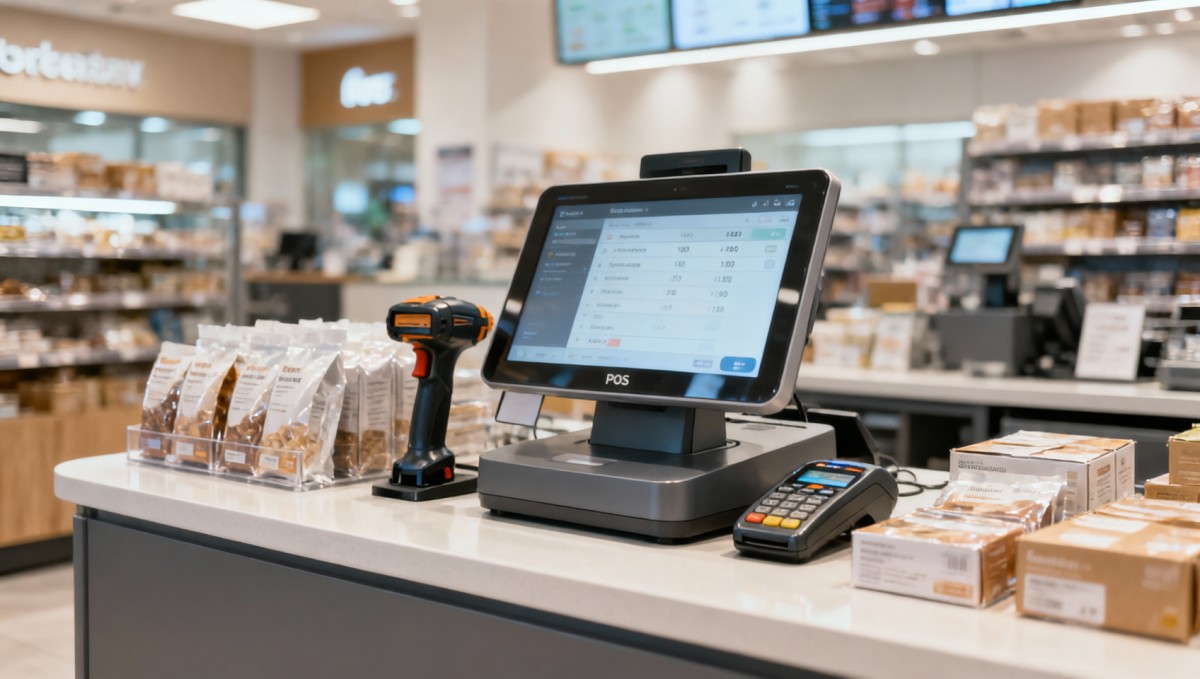
When frontline staff say a POS terminal is easy to use, they usually mean four things:
- They can learn it quickly without long training sessions.
- It is easy to navigate under pressure, especially during peak hours.
- It helps prevent mistakes in pricing, discounts, returns, and payment handling.
- It works reliably without lag, frozen screens, or confusing prompts.
In other words, ease of use is not just about a clean-looking screen. It is about how well the POS terminal supports real store routines. If staff need too many taps to complete a sale, cannot find products quickly, or must call a supervisor to solve simple issues, the terminal is not truly user-friendly.
For information researchers evaluating options, this is the core search intent behind the question “Which POS terminals are easier for staff to use?” The user is not only looking for product names. They want decision criteria: what practical characteristics make one system easier than another, and how can that ease be verified before rollout?
The easiest POS terminals usually share these usability features
If the goal is fast adoption and low operator stress, some design features matter more than others.
1. Simple, task-first screen layout
The best POS terminals present the most common actions clearly: product search, barcode scanning, discounts, payment, receipts, returns, and customer lookup. Staff should not have to navigate through multiple layers for routine actions.
A task-first layout often includes:
- Large, readable buttons
- Clear visual grouping by function
- Minimal clutter on the main sales screen
- Consistent button placement across workflows
2. Fast product lookup and scanning
Staff struggle most when item entry is slow. Easy-to-use systems support multiple ways to find products, including barcode scanning, favorites, category shortcuts, and predictive search. This is especially important in stores with broad consumer goods assortments, packaging variants, or frequently updated SKUs.
3. Clear prompts that reduce errors
User-friendly terminals guide staff instead of assuming expert knowledge. For example, they flag incomplete steps, confirm unusual discounts, show change due clearly, and make refund rules easy to follow. That reduces training time and limits costly mistakes.
4. Reliable touch response and ergonomic hardware
Good software can still feel difficult if the terminal hardware is slow or awkward. Staff-friendly POS terminals often include responsive touchscreens, angled displays, durable stands, and card readers placed for natural customer interaction. In modern commercial spaces, ergonomic setup matters because it affects speed and comfort throughout the day.
5. Seamless payment flow
Easy systems keep payment simple. Card, mobile wallet, QR payment, split payment, and printed or digital receipt options should follow a logical sequence. When payment steps are fragmented or delayed by poor integration, staff frustration rises immediately.
Which types of POS terminals are usually easiest for frontline teams?
There is no single best POS terminal for every business, but some formats are generally easier for staff depending on the setting.
Tablet-based POS systems
Tablet POS terminals are often easier for staff to learn because their interfaces resemble familiar mobile apps. They are popular in boutiques, cafes, pop-up stores, and service-led retail because they feel intuitive and visually clean. They also work well in flexible commercial spaces where counters, fixtures, and customer flow may change.
Best for: low-to-medium complexity operations, modern specialty retail, smaller teams, and businesses that want shorter training cycles.
All-in-one countertop POS terminals
These combine display, payment acceptance, and core transaction functions in one integrated unit. They are often easier for staff in high-volume retail because everything is in one place and workflows are standardized. Chain operators often prefer them for consistency across locations.
Best for: supermarkets, convenience retail, branded chain stores, and environments where speed and repeatable processes matter most.
Modular POS terminals
Modular systems can be very effective, but they are not always the easiest for staff unless configured well. They allow businesses to connect scanners, scales, receipt printers, customer displays, and back-office systems. This flexibility is valuable, but too many disconnected components can create complexity.
Best for: larger operations with specialized workflows, as long as the user interface remains streamlined.
Mobile handheld POS devices
Handheld POS terminals are increasingly easy to use in hospitality, queue-busting retail, showroom selling, and assisted selling environments. They can improve staff productivity by letting employees check stock, take payment, and complete transactions anywhere on the floor. However, small screens can become a usability problem if product catalogs or workflows are too complex.
Best for: assisted selling, line reduction, event retail, and stores focused on personalized service.
What matters more than brand names when comparing POS ease of use
Many buyers start by searching for the “best POS terminal brands,” but frontline usability depends less on reputation and more on operational fit. These are the factors worth prioritizing during comparison:
Training time to basic competence
Ask how long a new employee needs to complete a sale, process a refund, apply a promotion, and close a shift without assistance. If possible, test this with actual users rather than only managers or vendors.
Number of steps for common tasks
Count clicks or taps for the tasks staff perform most often. A system that saves just a few steps per transaction can create major time savings across locations and shifts.
Error recovery
Staff will make mistakes. The easier terminal is the one that makes it simple to void an item, correct quantity, change payment method, or restart a transaction without confusion.
Speed during peak traffic
A POS system may look easy in a demo but feel difficult in a busy store. Evaluate performance when the line is long, inventory sync is active, and multiple peripherals are connected.
Consistency across channels
If the business supports click-and-collect, returns from online orders, loyalty programs, or cross-store inventory, staff need one consistent workflow. A terminal becomes harder to use when store operations are disconnected from ecommerce or warehouse data.
How POS usability connects to retail operations and supply chain accuracy
For G-BCE’s audience, ease of use should not be viewed only as a checkout issue. In a modern consumer ecosystem, POS terminals are part of a larger operational structure that includes inventory integrity, consumer goods movement, packaging compliance, and commercial space performance.
When a POS terminal is easy for staff to use, it often produces downstream benefits such as:
- More accurate item-level sales data
- Fewer stock discrepancies
- Cleaner promotional execution
- Faster replenishment decisions
- Better visibility across store and fulfillment channels
- Less waste linked to returns, mis-picks, or packaging errors
This is especially relevant for businesses managing premium consumer products, sustainable packaging formats, or international sourcing standards. A confusing terminal can weaken the quality of operational data. An intuitive terminal supports cleaner execution from checkout to back-office reporting.
Questions staff and buyers should ask before choosing a POS terminal
If the goal is to identify which POS terminals are easier for staff to use, these questions are more useful than broad marketing claims:
- Can a new staff member learn the main workflow in under one hour?
- How many taps does it take to complete a standard sale?
- Is the text large and clear enough in bright retail lighting?
- Can staff find products quickly if a barcode does not scan?
- How easy is it to process returns, exchanges, and split payments?
- Does the terminal stay responsive during busy periods?
- How well does it integrate with inventory, promotions, loyalty, and order management?
- Can the hardware withstand daily commercial use?
- Does the layout support ergonomic use at the counter?
- Can the system be standardized across different store formats?
These questions help both researchers and operators move from vague preference to measurable evaluation.
Common mistakes that make a POS terminal harder for staff to use
Many businesses choose a system based on features, price, or appearance, then discover that the terminal is frustrating in daily use. Common causes include:
- Too many advanced functions on the main screen
- Poor integration between POS, payment device, and inventory system
- Small buttons or hard-to-read text
- Slow product database search
- Complicated permissions for routine actions
- Lack of workflow testing with actual store staff
- Hardware that does not fit the counter, fixture, or customer interaction zone
In high-performance commercial environments, usability should be validated in context: with the real lighting, space constraints, traffic levels, and product mix of the store.
Overall answer: which POS terminals are easiest for staff to use?
In general, the easiest POS terminals for staff are those with intuitive touch interfaces, fast and reliable hardware, minimal steps for common tasks, and strong integration with payment and inventory systems. Tablet-based and well-designed all-in-one POS terminals are often the most accessible for frontline teams, while modular systems can also work well if complexity is controlled.
The best choice depends on the store’s transaction volume, SKU complexity, service model, and broader retail technology ecosystem. For most buyers, the right approach is not to ask which terminal has the most features, but which one helps staff work faster, make fewer errors, and stay confident during real operating conditions.
That is the clearest benchmark for usability—and the most practical way to evaluate long-term value.
News Recommendations
 How to choose an ultra bright waterproof window display for storefronts
![51a6ab95581761cc26f4318be6520c15]()
Aris Katos
Future of Carbide Coatings
 How to verify suppliers on a trade portal for global sourcing
![51a6ab95581761cc26f4318be6520c15]()
Aris Katos
Future of Carbide Coatings
 How RoHS requirements should be stated in product specifications
![51a6ab95581761cc26f4318be6520c15]()
Aris Katos
Future of Carbide Coatings
 What affects the lead time for custom retail counter displays?
![51a6ab95581761cc26f4318be6520c15]()
Aris Katos
Future of Carbide Coatings
 What consumer packaging USA importers need to verify before ordering
![51a6ab95581761cc26f4318be6520c15]()
Aris Katos
Future of Carbide Coatings
 How commercial spaces interiors shape customer dwell time
![51a6ab95581761cc26f4318be6520c15]()
Aris Katos
Future of Carbide Coatings
 How LED commercial lighting design reduces glare in retail spaces
![51a6ab95581761cc26f4318be6520c15]()
Aris Katos
Future of Carbide Coatings
 How industrial technology information improves RFID inventory accuracy
![51a6ab95581761cc26f4318be6520c15]()
Aris Katos
Future of Carbide Coatings
 When drip garden watering systems make more sense than sprinklers
![51a6ab95581761cc26f4318be6520c15]()
Aris Katos
Future of Carbide Coatings
 When category comparison improves sourcing for industrial applications
![51a6ab95581761cc26f4318be6520c15]()
Aris Katos
Future of Carbide Coatings
 Industrial application guidance for selecting the right LED lighting
![51a6ab95581761cc26f4318be6520c15]()
Aris Katos
Future of Carbide Coatings
 Which commercial architecture standards apply to European retail fit-outs?
![51a6ab95581761cc26f4318be6520c15]()
Aris Katos
Future of Carbide Coatings
 How to verify FDA requirements for maternity care products
![51a6ab95581761cc26f4318be6520c15]()
Aris Katos
Future of Carbide Coatings
 How to verify BPA-free claims for food-contact products
![51a6ab95581761cc26f4318be6520c15]()
Aris Katos
Future of Carbide Coatings
 When does a European wholesale supplier suit modular office projects?
![51a6ab95581761cc26f4318be6520c15]()
Aris Katos
Future of Carbide Coatings
 When consumer ecosystem solutions improve the in-store shopping journey
![51a6ab95581761cc26f4318be6520c15]()
Aris Katos
Future of Carbide Coatings
 How a commercial developers network can reduce site selection risk
![51a6ab95581761cc26f4318be6520c15]()
Aris Katos
Future of Carbide Coatings
 How clear purchasing specifications prevent costly supplier deviations
![51a6ab95581761cc26f4318be6520c15]()
Aris Katos
Future of Carbide Coatings
 What an ISTA drop test lab checks before your packaging ships
![51a6ab95581761cc26f4318be6520c15]()
Aris Katos
Future of Carbide Coatings
 Which commercial furniture standards apply to workplace seating?
![51a6ab95581761cc26f4318be6520c15]()
Aris Katos
Future of Carbide Coatings
 How to evaluate smart lighting module OEM compatibility before sampling
![51a6ab95581761cc26f4318be6520c15]()
Aris Katos
Future of Carbide Coatings
 How to assess whether sustainable technology delivers real impact
![51a6ab95581761cc26f4318be6520c15]()
Aris Katos
Future of Carbide Coatings
 How to assess an OEM supplier’s quality control before ordering
![51a6ab95581761cc26f4318be6520c15]()
Aris Katos
Future of Carbide Coatings
 How consumer ecosystem solutions data can improve retail personalization
![51a6ab95581761cc26f4318be6520c15]()
Aris Katos
Future of Carbide Coatings
 When does consumer packaging design justify a higher product price?
![51a6ab95581761cc26f4318be6520c15]()
Aris Katos
Future of Carbide Coatings
 Supermarket Fixture Installation: Planning Layouts, Wiring, and Handover
![51a6ab95581761cc26f4318be6520c15]()
Aris Katos
Future of Carbide Coatings
 Automated Lighting and Smart Lighting Control in Bergerac: Key Project Considerations
![51a6ab95581761cc26f4318be6520c15]()
Aris Katos
Future of Carbide Coatings
 Segment Streetlight Controllers: Choosing Control Modes for Urban Roads
![51a6ab95581761cc26f4318be6520c15]()
Aris Katos
Future of Carbide Coatings
 IEC 62471-2 Explained: How to Assess Photobiological Risks in LED Lighting
![51a6ab95581761cc26f4318be6520c15]()
Aris Katos
Future of Carbide Coatings
 Food Grade Packaging Requirements by Product Type, Temperature, and Contact Risk
![51a6ab95581761cc26f4318be6520c15]()
Aris Katos
Future of Carbide Coatings
 Food Packaging Compliance Checklist: Tests, Records, and Labeling Before Shipment
![51a6ab95581761cc26f4318be6520c15]()
Aris Katos
Future of Carbide Coatings
 NSF Food Packaging Standards: When Certification Matters for Commercial Food Use
![51a6ab95581761cc26f4318be6520c15]()
Aris Katos
Future of Carbide Coatings
 FDA Food Grade Compliance: Which Materials and Documents Do Buyers Need?
![51a6ab95581761cc26f4318be6520c15]()
Aris Katos
Future of Carbide Coatings
 What Should a Food Grade Declaration Include for Packaging Compliance?
![51a6ab95581761cc26f4318be6520c15]()
Aris Katos
Future of Carbide Coatings
 Housewares Importing: How to Evaluate Suppliers, Costs, and Compliance Risks
![51a6ab95581761cc26f4318be6520c15]()
Aris Katos
Future of Carbide Coatings
 Why Freeze-Dried Fruit Ingredients Lose Crispness—and How to Prevent It
![51a6ab95581761cc26f4318be6520c15]()
Aris Katos
Future of Carbide Coatings
 What industry veterans look for before choosing a new supplier
![51a6ab95581761cc26f4318be6520c15]()
Aris Katos
Future of Carbide Coatings
 How material fatigue can shorten the service life of retail shelving
![51a6ab95581761cc26f4318be6520c15]()
Aris Katos
Future of Carbide Coatings
 What makes a global sourcing platform reliable for supplier verification?
![51a6ab95581761cc26f4318be6520c15]()
Aris Katos
Future of Carbide Coatings