Are POS Terminals Worth Upgrading in 2026?
Time
Click Count
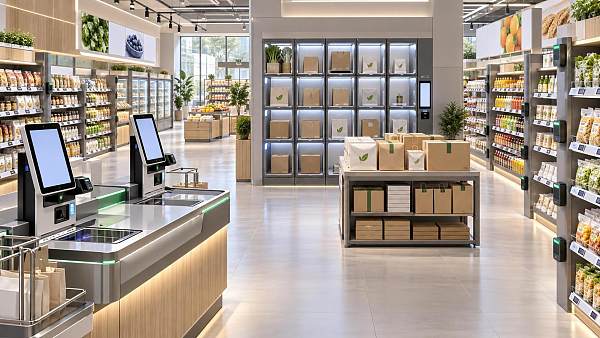
As the modern marketplace evolves, upgrading POS terminals in 2026 is no longer just a retail technology decision—it affects supply chain visibility, consumer goods flow, signage integration, and the efficiency of commercial spaces. For operators and users alike, the right upgrade can also support sustainable materials, sustainable packaging, and the service expectations of high-end brands in an increasingly data-driven environment.
For most businesses, the short answer is yes—POS terminals are worth upgrading in 2026 if your current setup slows transactions, limits payment options, creates integration gaps, or makes reporting and maintenance harder than they should be. But not every company needs a full replacement. In many cases, the best decision depends on hardware age, software compatibility, security requirements, user workflow, and whether the terminal can support omnichannel retail and smarter commercial operations.
For research-driven buyers and frontline users, the real question is not simply “Should we upgrade?” but “What business problems will a new POS terminal actually solve, and when does the return justify the cost?”
What Buyers and Operators Really Need to Know Before Upgrading
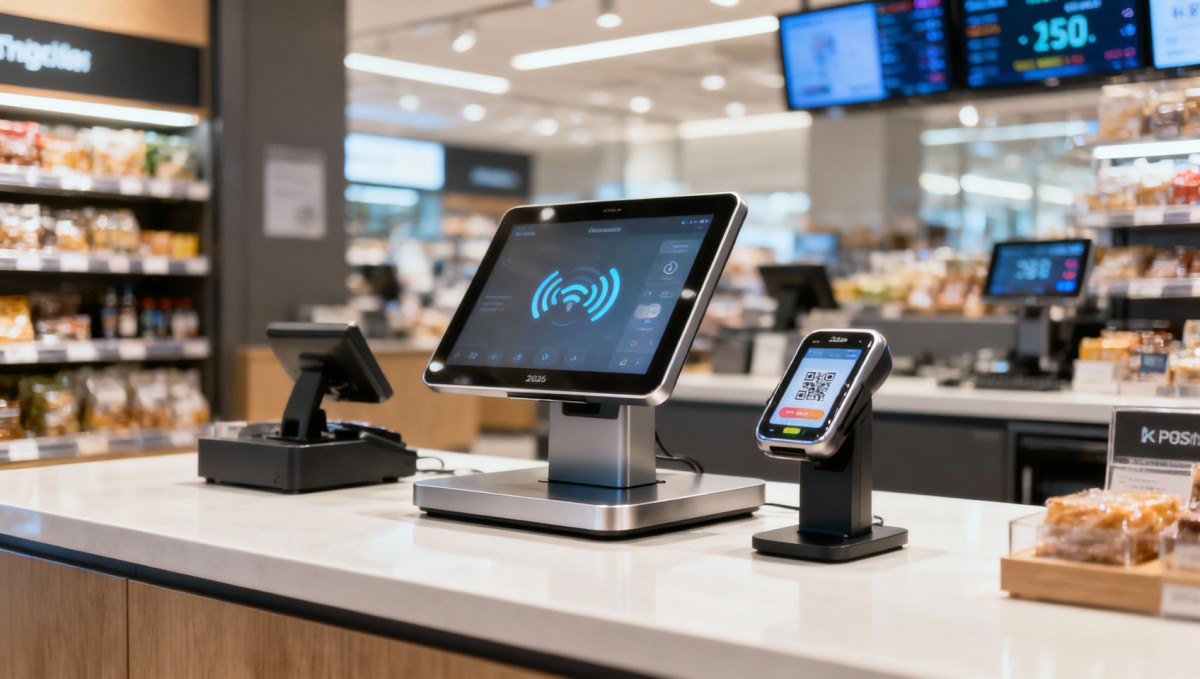
People searching for whether POS terminals are worth upgrading in 2026 usually have a practical intent: they want to evaluate value, timing, and risk. They are not looking for generic definitions of POS technology. They want to know whether a new system will improve speed, reliability, compliance, customer experience, and daily usability.
That is especially true for two groups:
- Information researchers and decision support teams who need a clear framework for comparing cost, business value, and future readiness.
- Users and operators who care about transaction speed, fewer errors, easier training, and less downtime at the counter.
In 2026, the strongest case for a POS terminal upgrade usually comes from one or more of the following conditions:
- Your terminals are more than 4–6 years old and beginning to fail more often.
- You cannot support newer payment methods smoothly, including contactless, mobile wallet, QR, or integrated loyalty workflows.
- Your POS does not connect well with inventory, ERP, CRM, digital signage, or e-commerce systems.
- Security patches, PCI compliance, or OS support are becoming difficult or expensive to maintain.
- Staff need too many steps to complete simple tasks, hurting service speed and customer experience.
- You operate in premium commercial environments where aesthetics, counter footprint, and hardware design matter.
When a POS Upgrade Delivers Real Business Value
A POS terminal upgrade is worth it when it removes operational friction that directly affects revenue, labor efficiency, or customer satisfaction. In modern retail and service environments, POS hardware is no longer isolated. It sits at the center of checkout, data capture, product movement, loyalty engagement, and store-level intelligence.
1. Faster and more flexible checkout
Modern POS terminals can reduce lag, shorten queue times, and support more payment choices. That matters in high-traffic retail, hospitality, specialty stores, and branded spaces where customer patience is limited and service perception is tied to speed.
2. Better integration across the commercial ecosystem
A 2026-ready terminal should work with inventory systems, customer databases, pricing engines, digital receipts, self-service workflows, and in some cases commercial signage or store analytics tools. Better integration reduces manual reconciliation and gives teams cleaner operational data.
3. Improved security and compliance
Older POS devices often become costly to maintain because they struggle with updated payment security standards, software support, and remote management. Upgrading can reduce exposure to security vulnerabilities and help maintain compliance without layered workarounds.
4. Lower maintenance burden
A terminal that frequently freezes, disconnects, or requires on-site support creates hidden costs. These costs often include staff frustration, delayed transactions, lost sales, and IT labor. Newer systems with centralized management and better reliability can reduce total support effort.
5. Better fit for premium and sustainable retail concepts
For high-end brands and modern commercial spaces, POS terminals are part of the physical experience. Slimmer hardware, cleaner cable management, lower energy consumption, and compatibility with digitally enhanced service models can align better with contemporary retail design and sustainability goals.
Signs Your Current POS Terminal Is Costing More Than It Saves
Many organizations delay POS upgrades because the current system is still technically functioning. But “still working” is not the same as “still efficient.” If your terminal creates recurring friction, it may already be more expensive than replacing it.
Watch for these warning signs:
- Frequent slowdowns or crashes: even small delays add up during peak hours.
- Limited payment acceptance: if customers expect tap-to-pay or mobile wallet options and your terminal handles them poorly, conversion may suffer.
- High training dependency: systems that are not intuitive increase onboarding time and operator errors.
- Disconnected workflows: if staff must re-enter data into inventory, loyalty, or back-office systems, your POS is creating avoidable labor.
- Rising repair or support costs: older hardware often appears cheaper until replacement parts, downtime, and patching effort are included.
- Outdated user interface: poor screen responsiveness and complicated navigation slow down frontline staff.
If several of these issues are present, upgrading in 2026 is likely not just worthwhile—it may be overdue.
How to Judge ROI Without Overestimating the Benefits
One of the most useful ways to evaluate whether a POS terminal upgrade is worth it is to avoid vague promises and focus on measurable outcomes. Good decisions come from comparing total costs against operational gains.
Start with these categories:
- Transaction efficiency: How many seconds can be saved per transaction, and what does that mean during busy periods?
- Downtime reduction: How often does the current system fail, and what sales or labor loss does that create?
- IT and support cost: How much time is spent maintaining or patching outdated equipment?
- Training and usability: Can new staff learn the updated interface faster?
- Integration gains: Will the new terminal eliminate duplicate work between POS, inventory, and reporting systems?
- Security and compliance risk: What future costs can be avoided by moving away from unsupported hardware or software?
It is also important to compare full replacement versus targeted upgrade. Some businesses only need to replace high-volume checkout points, customer-facing displays, or payment modules, rather than every terminal in the network. A phased strategy often delivers better ROI and lower disruption.
What Features Matter Most in a 2026 POS Terminal
Not every new feature creates real value. For most operators and sourcing teams, the best POS terminal is one that balances performance, compatibility, usability, and lifecycle durability.
Key features worth prioritizing include:
- Fast processing and responsive touchscreen performance
- Support for contactless, NFC, mobile wallet, and evolving payment methods
- Cloud and hybrid system compatibility
- Remote device management and diagnostics
- Strong security architecture and current compliance support
- Compact design suitable for premium or space-constrained counters
- Durability for continuous use in retail, foodservice, or service counters
- Integration with inventory, CRM, loyalty, and digital commerce tools
- Energy efficiency and material quality aligned with sustainability targets
For global operators, it is also smart to evaluate whether the hardware aligns with recognized technical and safety benchmarks such as UL or CE requirements, especially when deploying across multiple regions.
Upgrade Risks to Consider Before You Commit
Even when the case for upgrading is strong, poor implementation can reduce the benefits. The biggest mistakes usually come from treating POS replacement as a simple hardware purchase rather than a workflow and ecosystem decision.
Common risks include:
- Choosing terminals that do not integrate well with existing software.
- Underestimating staff retraining needs.
- Replacing all locations at once without pilot testing.
- Ignoring network readiness, peripheral compatibility, or receipt printer/scanner support.
- Focusing only on upfront price instead of total cost of ownership.
To reduce risk, businesses should test new terminals in a live or semi-live environment, gather user feedback from cashiers and supervisors, and confirm compatibility with payments, back-office systems, and store design requirements before a full rollout.
So, Are POS Terminals Worth Upgrading in 2026?
In most cases, yes—especially for businesses facing aging hardware, fragmented workflows, higher support costs, or rising customer expectations. A POS terminal upgrade in 2026 can improve speed, reliability, payment flexibility, data visibility, and alignment with smarter commercial environments.
However, the best answer is not based on trend alone. It depends on whether your current POS setup is limiting operations, creating hidden costs, or preventing integration with the broader retail and supply chain ecosystem. If it is, upgrading is less a technology refresh and more a strategic operational improvement.
For decision-makers, the smartest path is to evaluate the upgrade through business outcomes: efficiency, usability, compliance, maintainability, and future readiness. For operators, the value is simpler: fewer interruptions, faster service, and a system that supports the job instead of slowing it down.
That is what makes a POS terminal upgrade truly worth it in 2026.
News Recommendations
 How to choose an ultra bright waterproof window display for storefronts
![51a6ab95581761cc26f4318be6520c15]()
Aris Katos
Future of Carbide Coatings
 How to verify suppliers on a trade portal for global sourcing
![51a6ab95581761cc26f4318be6520c15]()
Aris Katos
Future of Carbide Coatings
 How RoHS requirements should be stated in product specifications
![51a6ab95581761cc26f4318be6520c15]()
Aris Katos
Future of Carbide Coatings
 What affects the lead time for custom retail counter displays?
![51a6ab95581761cc26f4318be6520c15]()
Aris Katos
Future of Carbide Coatings
 What consumer packaging USA importers need to verify before ordering
![51a6ab95581761cc26f4318be6520c15]()
Aris Katos
Future of Carbide Coatings
 How commercial spaces interiors shape customer dwell time
![51a6ab95581761cc26f4318be6520c15]()
Aris Katos
Future of Carbide Coatings
 How LED commercial lighting design reduces glare in retail spaces
![51a6ab95581761cc26f4318be6520c15]()
Aris Katos
Future of Carbide Coatings
 How industrial technology information improves RFID inventory accuracy
![51a6ab95581761cc26f4318be6520c15]()
Aris Katos
Future of Carbide Coatings
 When drip garden watering systems make more sense than sprinklers
![51a6ab95581761cc26f4318be6520c15]()
Aris Katos
Future of Carbide Coatings
 When category comparison improves sourcing for industrial applications
![51a6ab95581761cc26f4318be6520c15]()
Aris Katos
Future of Carbide Coatings
 Industrial application guidance for selecting the right LED lighting
![51a6ab95581761cc26f4318be6520c15]()
Aris Katos
Future of Carbide Coatings
 Which commercial architecture standards apply to European retail fit-outs?
![51a6ab95581761cc26f4318be6520c15]()
Aris Katos
Future of Carbide Coatings
 How to verify FDA requirements for maternity care products
![51a6ab95581761cc26f4318be6520c15]()
Aris Katos
Future of Carbide Coatings
 How to verify BPA-free claims for food-contact products
![51a6ab95581761cc26f4318be6520c15]()
Aris Katos
Future of Carbide Coatings
 When does a European wholesale supplier suit modular office projects?
![51a6ab95581761cc26f4318be6520c15]()
Aris Katos
Future of Carbide Coatings
 When consumer ecosystem solutions improve the in-store shopping journey
![51a6ab95581761cc26f4318be6520c15]()
Aris Katos
Future of Carbide Coatings
 How a commercial developers network can reduce site selection risk
![51a6ab95581761cc26f4318be6520c15]()
Aris Katos
Future of Carbide Coatings
 How clear purchasing specifications prevent costly supplier deviations
![51a6ab95581761cc26f4318be6520c15]()
Aris Katos
Future of Carbide Coatings
 What an ISTA drop test lab checks before your packaging ships
![51a6ab95581761cc26f4318be6520c15]()
Aris Katos
Future of Carbide Coatings
 Which commercial furniture standards apply to workplace seating?
![51a6ab95581761cc26f4318be6520c15]()
Aris Katos
Future of Carbide Coatings
 How to evaluate smart lighting module OEM compatibility before sampling
![51a6ab95581761cc26f4318be6520c15]()
Aris Katos
Future of Carbide Coatings
 How to assess whether sustainable technology delivers real impact
![51a6ab95581761cc26f4318be6520c15]()
Aris Katos
Future of Carbide Coatings
 How to assess an OEM supplier’s quality control before ordering
![51a6ab95581761cc26f4318be6520c15]()
Aris Katos
Future of Carbide Coatings
 How consumer ecosystem solutions data can improve retail personalization
![51a6ab95581761cc26f4318be6520c15]()
Aris Katos
Future of Carbide Coatings
 When does consumer packaging design justify a higher product price?
![51a6ab95581761cc26f4318be6520c15]()
Aris Katos
Future of Carbide Coatings
 Supermarket Fixture Installation: Planning Layouts, Wiring, and Handover
![51a6ab95581761cc26f4318be6520c15]()
Aris Katos
Future of Carbide Coatings
 Automated Lighting and Smart Lighting Control in Bergerac: Key Project Considerations
![51a6ab95581761cc26f4318be6520c15]()
Aris Katos
Future of Carbide Coatings
 Segment Streetlight Controllers: Choosing Control Modes for Urban Roads
![51a6ab95581761cc26f4318be6520c15]()
Aris Katos
Future of Carbide Coatings
 IEC 62471-2 Explained: How to Assess Photobiological Risks in LED Lighting
![51a6ab95581761cc26f4318be6520c15]()
Aris Katos
Future of Carbide Coatings
 Food Grade Packaging Requirements by Product Type, Temperature, and Contact Risk
![51a6ab95581761cc26f4318be6520c15]()
Aris Katos
Future of Carbide Coatings
 Food Packaging Compliance Checklist: Tests, Records, and Labeling Before Shipment
![51a6ab95581761cc26f4318be6520c15]()
Aris Katos
Future of Carbide Coatings
 NSF Food Packaging Standards: When Certification Matters for Commercial Food Use
![51a6ab95581761cc26f4318be6520c15]()
Aris Katos
Future of Carbide Coatings
 FDA Food Grade Compliance: Which Materials and Documents Do Buyers Need?
![51a6ab95581761cc26f4318be6520c15]()
Aris Katos
Future of Carbide Coatings
 What Should a Food Grade Declaration Include for Packaging Compliance?
![51a6ab95581761cc26f4318be6520c15]()
Aris Katos
Future of Carbide Coatings
 Housewares Importing: How to Evaluate Suppliers, Costs, and Compliance Risks
![51a6ab95581761cc26f4318be6520c15]()
Aris Katos
Future of Carbide Coatings
 Why Freeze-Dried Fruit Ingredients Lose Crispness—and How to Prevent It
![51a6ab95581761cc26f4318be6520c15]()
Aris Katos
Future of Carbide Coatings
 What industry veterans look for before choosing a new supplier
![51a6ab95581761cc26f4318be6520c15]()
Aris Katos
Future of Carbide Coatings
 How material fatigue can shorten the service life of retail shelving
![51a6ab95581761cc26f4318be6520c15]()
Aris Katos
Future of Carbide Coatings
 What makes a global sourcing platform reliable for supplier verification?
![51a6ab95581761cc26f4318be6520c15]()
Aris Katos
Future of Carbide Coatings