Frictionless Checkout Technology: Hidden Risks Before Rollout
Time
Click Count
Frictionless checkout technology promises faster transactions, leaner staffing, and richer shopper data—but hidden risks can undermine ROI before deployment begins. For business decision-makers, success depends on more than innovation: system integration, data privacy, hardware reliability, and customer trust all shape rollout outcomes. This article examines the critical blind spots leaders should evaluate before scaling frictionless checkout technology across modern retail environments.
For chain operators, developers, and sourcing leaders, the appeal is easy to understand. Shorter queues can improve throughput, labor can be redeployed to service roles, and shopper behavior data can support merchandising decisions. Yet in real-world retail environments, even a technically impressive deployment can fail if sensor coverage, compliance controls, or cross-system workflows were underestimated during planning.
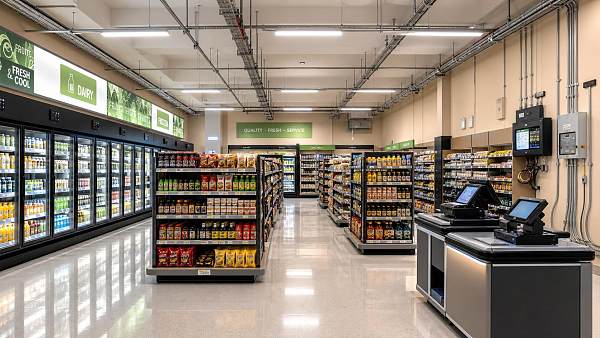
Within global commercial ecosystems, frictionless checkout technology also touches adjacent decisions in store layout, fixtures, smart hardware, lighting, packaging, and supply chain readiness. A pilot that works in one 200-square-meter concept store may not translate cleanly into a 2,000-square-meter supermarket, a high-end brand showroom, or a mixed-use commercial development without disciplined benchmarking.
Why Frictionless Checkout Technology Fails Before It Even Goes Live

Many rollout problems appear long before customers scan, tap, or walk out. The first hidden risk is treating frictionless checkout technology as a front-end feature rather than an operating model change. In most deployments, there are at least 4 interconnected layers: shopper identification, item recognition, payment orchestration, and exception handling. If one layer is weak, the customer experience quickly becomes less “frictionless” than a standard POS lane.
Integration Debt Is Often the Largest Cost Driver
Business cases often focus on reducing transaction time by 20%–40% or cutting front-lane labor dependence during peak hours. However, the greater cost may sit in middleware, API mapping, and edge-device management. If the store already runs legacy ERP, inventory, loyalty, and tax systems, integration work can stretch from 8–12 weeks in a simple pilot to 6–9 months in multi-country rollouts.
The issue is not only whether systems connect, but whether data stays synchronized within acceptable thresholds. A lag of 3–5 minutes between frictionless checkout events and inventory updates may be manageable in apparel, but it can create material shrinkage and replenishment errors in convenience, grocery, or fresh-food environments.
Key pre-rollout integration checks
- Validate how transaction records flow into ERP, WMS, loyalty, and finance systems.
- Set an acceptable sync interval, such as real time, under 60 seconds, or batch every 5 minutes.
- Define fallback workflows for payment failures, age-restricted goods, and product misreads.
- Test exception rates across at least 3 store traffic conditions: low, moderate, and peak.
Hardware Reliability Is More Fragile Than Most Buyers Assume
Frictionless checkout technology depends on cameras, weight sensors, shelf intelligence, network switches, POS peripherals, and power stability. In controlled demos, accuracy can look impressive. In live stores, hardware performance shifts with ceiling height, reflective packaging, ambient lighting, fixture density, and customer flow patterns. Even a 2%–4% drop in detection accuracy can significantly increase manual interventions.
This is where commercial benchmarking matters. Hardware should be assessed not just for technical specification, but for compatibility with store fixtures, lighting plans, and maintenance access. A store with 3.2-meter ceilings, narrow aisles, and mixed materials requires different calibration than an open-format environment with consistent shelf geometry.
Before approving a rollout, decision-makers should compare technical readiness factors side by side. The table below highlights common pre-deployment risk variables that affect performance and total cost.
The main takeaway is that technical failure rarely comes from one dramatic issue. It usually results from several small tolerances compounding across hardware, data, and workflow design. For procurement and operations teams, this means pilot acceptance criteria should include measurable thresholds, not only vendor demonstrations.
The Compliance and Trust Risks That Leaders Underestimate
The second major blind spot is assuming customer adoption will follow technical readiness. Frictionless checkout technology can collect image data, location patterns, transaction histories, and behavioral signals. That creates value for operations and merchandising, but it also raises questions around notice, consent, retention, and data access. In cross-border retail groups, these questions become more complex when data moves across jurisdictions or third-party service layers.
Privacy Design Must Be Part of the Commercial Design
A common mistake is postponing governance until the installation phase. By then, camera positions, signage, app flows, and backend architecture may already be fixed. A stronger approach is to review privacy controls during the first 2 planning stages: solution design and pilot specification. This includes defining what data is collected, how long it is retained, who can access it, and which processes support deletion or dispute handling.
Trust is also shaped by physical communication. Clear zone signage, visible assistance points, and simple opt-in explanations can reduce confusion more effectively than dense policy text. In premium retail or mixed-use developments, customer expectations around brand experience are often as important as compliance language.
Shrinkage Control and Fairness Require Exception Governance
Even advanced frictionless checkout technology will generate edge cases. Age-restricted items, bundled products, damaged packaging, loyalty redemptions, returns, and disputed charges all require exception logic. If exception handling is slow, inconsistent, or biased toward revenue recovery at the expense of customer fairness, adoption can stall within the first 30–90 days.
Leaders should define governance around 3 areas: intervention triggers, refund authority, and auditability. A store associate needs a clear rule set for when to override the system, while managers need a review trail that distinguishes technical error from genuine loss events.
The following framework can help decision-makers assess whether compliance and trust controls are mature enough for a scaled deployment.
This table shows that compliance readiness is not purely legal. It is operational, spatial, and customer-facing. In modern commercial environments, trust is earned at the same speed it can be lost, especially when a system is marketed as seamless but produces visible friction at the point of payment.
How to Evaluate Rollout Readiness Across Store Formats and Supply Chains
Decision-makers should avoid a single-template deployment strategy. Frictionless checkout technology behaves differently across convenience stores, grocery, specialty retail, travel retail, and premium brand spaces. SKU count, package reflectivity, basket size, ambient traffic, and fixture configuration all change system demands. A 500-SKU grab-and-go concept is a very different operating model from a 15,000-SKU urban supermarket.
Assess the Physical Environment Before the Software Roadmap
In many projects, commercial architecture and fixture selection are treated as separate from checkout innovation. That separation creates avoidable rework. Ceiling obstructions, poor sightlines, unstable shelving, inconsistent lighting temperature, or non-standard aisle widths can all reduce system accuracy. In retrofits, adjustment costs can rise quickly if hardware mounting or power routing was not planned early.
Five physical checks before pilot approval
- Measure ceiling height and fixture interference in the active transaction zone.
- Review aisle widths, queue spillover, and customer movement paths at peak periods.
- Test lighting consistency, especially glare, shadows, and packaging reflection.
- Confirm power redundancy and network resilience for at least one failover scenario.
- Inspect maintenance access so sensors and cameras can be serviced in under 15–20 minutes.
Supply Chain and Packaging Variables Affect Detection Performance
Leaders sometimes overlook the connection between supply chain consistency and checkout performance. In reality, packaging redesigns, label variation, seasonal multipacks, and supplier substitutions can all affect how frictionless checkout technology identifies products. This matters most in categories with frequent assortment rotation or region-specific packaging formats.
For international operators sourcing across multiple factories, packaging governance should be tied to the technology roadmap. If package dimensions vary beyond a practical tolerance, or if reflective materials shift between production runs, detection models may require retraining and validation. That adds cost and slows rollout velocity.
Create a Three-Stage Rollout Model
A structured rollout usually performs better than a fast expansion driven by executive enthusiasm. For most enterprises, a 3-stage model works well: controlled pilot, limited cluster deployment, and scaled regional expansion. Each stage should have explicit exit criteria such as intervention rate, inventory accuracy, shopper adoption, and service ticket volume.
As a practical benchmark, a pilot may run for 6–10 weeks, followed by a 4–8 week review window. A cluster deployment across 3–10 stores then reveals whether performance holds across different layouts and demand profiles. Only after those results are stable should procurement commit to broader fixture changes, hardware purchasing, or multi-site integration contracts.
What Enterprise Buyers Should Demand From Vendors and Internal Teams
The most successful projects treat frictionless checkout technology as a coordinated sourcing and governance program, not a single product purchase. That means buyers should evaluate solution providers, integrators, hardware partners, and internal operations teams against the same measurable framework.
Core selection criteria for B2B decision-makers
- Scalability across at least 2–3 store formats without complete architecture redesign.
- Compatibility with existing POS, ERP, loyalty, and tax workflows.
- Documented support model, including response windows such as 4 hours, 24 hours, and next-business-day escalation.
- Hardware maintainability, spare-parts availability, and local service coverage.
- Governance support for audit logs, data access controls, and policy updates.
Questions to ask before signing a contract
Ask how the vendor handles packaging changes, assortment growth, and store layout variation. Request pilot KPIs in advance, not after deployment. Clarify who owns model tuning, system monitoring, and rollback decisions if accuracy drops below target. Enterprise buyers should also ask what percentage of incidents can be resolved remotely and how often on-site recalibration is typically needed during the first 12 months.
Internal alignment matters just as much. IT may prioritize cybersecurity, operations may prioritize uptime, finance may prioritize shrinkage and ROI, while brand teams may focus on shopper perception. If those groups do not agree on top 5 success metrics before launch, frictionless checkout technology can become politically difficult to scale even when the pilot seems promising.
A Practical Governance Checklist
Before rollout, assign owners for 6 recurring decisions: system health monitoring, incident triage, customer dispute resolution, packaging change approval, data retention review, and quarterly performance reporting. This keeps the technology tied to operating discipline instead of allowing issues to drift between departments.
Frictionless checkout technology can deliver real value when matched with disciplined store design, resilient infrastructure, reliable supply chain inputs, and transparent customer governance. For enterprise decision-makers, the goal is not simply to remove the cashier moment; it is to build a dependable transaction environment that protects margin, brand trust, and long-term scalability.
Organizations planning modernization across commercial fixtures, smart retail systems, and supply chain operations should evaluate checkout innovation as part of a broader ecosystem strategy. To discuss rollout readiness, benchmarking criteria, or a tailored commercial technology roadmap, contact us today to get a customized solution and explore more high-performance retail infrastructure options.
News Recommendations
 How to choose an ultra bright waterproof window display for storefronts
![51a6ab95581761cc26f4318be6520c15]()
Aris Katos
Future of Carbide Coatings
 How to verify suppliers on a trade portal for global sourcing
![51a6ab95581761cc26f4318be6520c15]()
Aris Katos
Future of Carbide Coatings
 How RoHS requirements should be stated in product specifications
![51a6ab95581761cc26f4318be6520c15]()
Aris Katos
Future of Carbide Coatings
 What affects the lead time for custom retail counter displays?
![51a6ab95581761cc26f4318be6520c15]()
Aris Katos
Future of Carbide Coatings
 What consumer packaging USA importers need to verify before ordering
![51a6ab95581761cc26f4318be6520c15]()
Aris Katos
Future of Carbide Coatings
 How commercial spaces interiors shape customer dwell time
![51a6ab95581761cc26f4318be6520c15]()
Aris Katos
Future of Carbide Coatings
 How LED commercial lighting design reduces glare in retail spaces
![51a6ab95581761cc26f4318be6520c15]()
Aris Katos
Future of Carbide Coatings
 How industrial technology information improves RFID inventory accuracy
![51a6ab95581761cc26f4318be6520c15]()
Aris Katos
Future of Carbide Coatings
 When drip garden watering systems make more sense than sprinklers
![51a6ab95581761cc26f4318be6520c15]()
Aris Katos
Future of Carbide Coatings
 When category comparison improves sourcing for industrial applications
![51a6ab95581761cc26f4318be6520c15]()
Aris Katos
Future of Carbide Coatings
 Industrial application guidance for selecting the right LED lighting
![51a6ab95581761cc26f4318be6520c15]()
Aris Katos
Future of Carbide Coatings
 Which commercial architecture standards apply to European retail fit-outs?
![51a6ab95581761cc26f4318be6520c15]()
Aris Katos
Future of Carbide Coatings
 How to verify FDA requirements for maternity care products
![51a6ab95581761cc26f4318be6520c15]()
Aris Katos
Future of Carbide Coatings
 How to verify BPA-free claims for food-contact products
![51a6ab95581761cc26f4318be6520c15]()
Aris Katos
Future of Carbide Coatings
 When does a European wholesale supplier suit modular office projects?
![51a6ab95581761cc26f4318be6520c15]()
Aris Katos
Future of Carbide Coatings
 When consumer ecosystem solutions improve the in-store shopping journey
![51a6ab95581761cc26f4318be6520c15]()
Aris Katos
Future of Carbide Coatings
 How a commercial developers network can reduce site selection risk
![51a6ab95581761cc26f4318be6520c15]()
Aris Katos
Future of Carbide Coatings
 How clear purchasing specifications prevent costly supplier deviations
![51a6ab95581761cc26f4318be6520c15]()
Aris Katos
Future of Carbide Coatings
 What an ISTA drop test lab checks before your packaging ships
![51a6ab95581761cc26f4318be6520c15]()
Aris Katos
Future of Carbide Coatings
 Which commercial furniture standards apply to workplace seating?
![51a6ab95581761cc26f4318be6520c15]()
Aris Katos
Future of Carbide Coatings
 How to evaluate smart lighting module OEM compatibility before sampling
![51a6ab95581761cc26f4318be6520c15]()
Aris Katos
Future of Carbide Coatings
 How to assess whether sustainable technology delivers real impact
![51a6ab95581761cc26f4318be6520c15]()
Aris Katos
Future of Carbide Coatings
 How to assess an OEM supplier’s quality control before ordering
![51a6ab95581761cc26f4318be6520c15]()
Aris Katos
Future of Carbide Coatings
 How consumer ecosystem solutions data can improve retail personalization
![51a6ab95581761cc26f4318be6520c15]()
Aris Katos
Future of Carbide Coatings
 When does consumer packaging design justify a higher product price?
![51a6ab95581761cc26f4318be6520c15]()
Aris Katos
Future of Carbide Coatings
 Supermarket Fixture Installation: Planning Layouts, Wiring, and Handover
![51a6ab95581761cc26f4318be6520c15]()
Aris Katos
Future of Carbide Coatings
 Automated Lighting and Smart Lighting Control in Bergerac: Key Project Considerations
![51a6ab95581761cc26f4318be6520c15]()
Aris Katos
Future of Carbide Coatings
 Segment Streetlight Controllers: Choosing Control Modes for Urban Roads
![51a6ab95581761cc26f4318be6520c15]()
Aris Katos
Future of Carbide Coatings
 IEC 62471-2 Explained: How to Assess Photobiological Risks in LED Lighting
![51a6ab95581761cc26f4318be6520c15]()
Aris Katos
Future of Carbide Coatings
 Food Grade Packaging Requirements by Product Type, Temperature, and Contact Risk
![51a6ab95581761cc26f4318be6520c15]()
Aris Katos
Future of Carbide Coatings
 Food Packaging Compliance Checklist: Tests, Records, and Labeling Before Shipment
![51a6ab95581761cc26f4318be6520c15]()
Aris Katos
Future of Carbide Coatings
 NSF Food Packaging Standards: When Certification Matters for Commercial Food Use
![51a6ab95581761cc26f4318be6520c15]()
Aris Katos
Future of Carbide Coatings
 FDA Food Grade Compliance: Which Materials and Documents Do Buyers Need?
![51a6ab95581761cc26f4318be6520c15]()
Aris Katos
Future of Carbide Coatings
 What Should a Food Grade Declaration Include for Packaging Compliance?
![51a6ab95581761cc26f4318be6520c15]()
Aris Katos
Future of Carbide Coatings
 Housewares Importing: How to Evaluate Suppliers, Costs, and Compliance Risks
![51a6ab95581761cc26f4318be6520c15]()
Aris Katos
Future of Carbide Coatings
 Why Freeze-Dried Fruit Ingredients Lose Crispness—and How to Prevent It
![51a6ab95581761cc26f4318be6520c15]()
Aris Katos
Future of Carbide Coatings
 What industry veterans look for before choosing a new supplier
![51a6ab95581761cc26f4318be6520c15]()
Aris Katos
Future of Carbide Coatings
 How material fatigue can shorten the service life of retail shelving
![51a6ab95581761cc26f4318be6520c15]()
Aris Katos
Future of Carbide Coatings
 What makes a global sourcing platform reliable for supplier verification?
![51a6ab95581761cc26f4318be6520c15]()
Aris Katos
Future of Carbide Coatings