AI Retail Hardware Demand Rises on New Policy
Time
Click Count
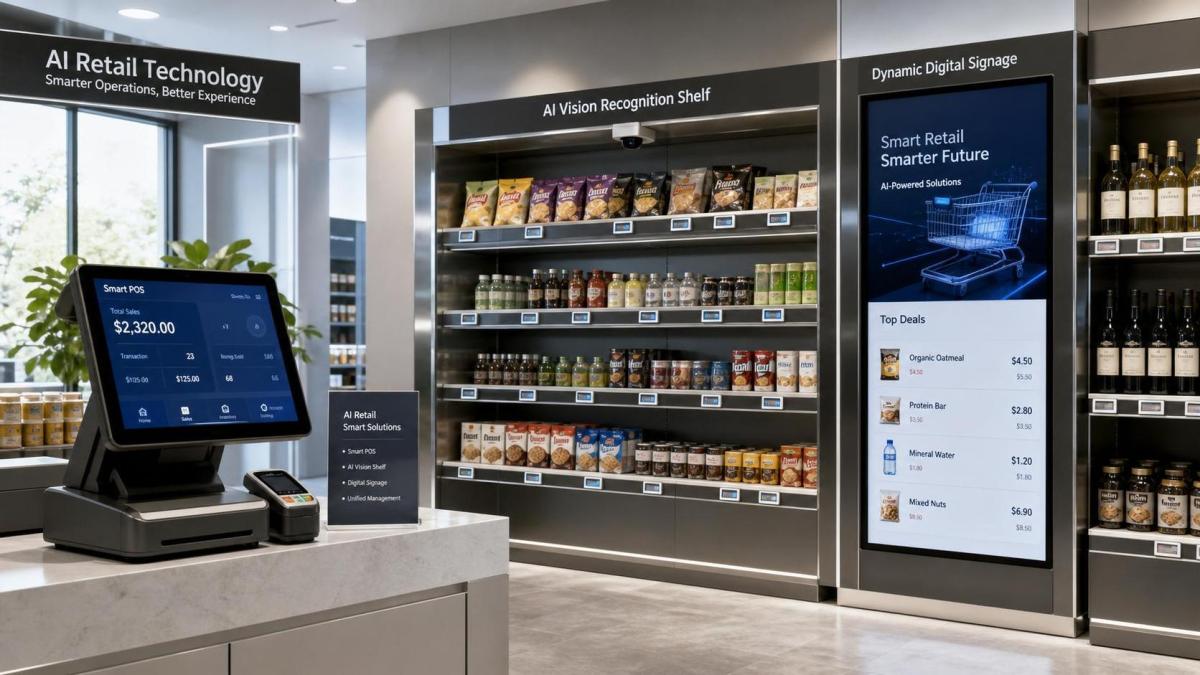
On June 18, 2026, eight Chinese government departments led by the Ministry of Commerce issued an implementation opinion aimed at accelerating the development of AI-driven consumption. The policy matters to retail technology vendors, commercial display suppliers, overseas chain retailers, hotel groups, and distributors because it explicitly points to deeper AI integration in retail terminals and commercial display systems, with procurement attention likely to focus on smart POS, AI-enabled visual shelf recognition, and dynamic digital signage.
What the policy clearly puts on the table
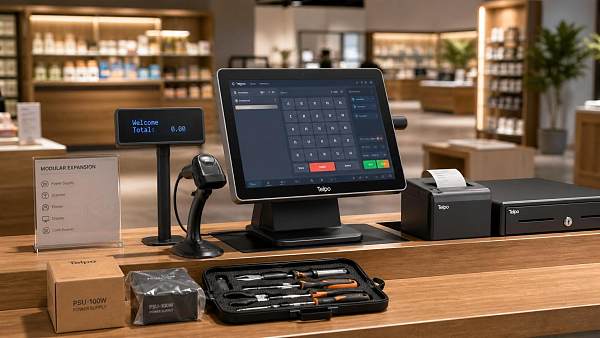
The published implementation opinion states that AI technologies should be embedded more deeply into retail endpoints and commercial display systems. It specifically supports scaled deployment of smart POS devices, AI visual recognition shelves, and dynamic digital signage. Based on the event summary provided, the policy is also expected to speed up bulk purchasing by overseas chain retailers, hotel groups, and distributors for Chinese AIoT commercial hardware, with particular relevance for suppliers that have edge computing capabilities and localized SDK support.
Where the impact is most likely to appear first
Procurement teams at overseas chains and hotel groups
From an industry perspective, these buyers may be affected first because the policy directly names device categories tied to in-store operations and customer-facing commercial display. The impact is likely to be felt in procurement planning, product evaluation, and rollout timing, especially where buyers are comparing standard hardware with AI-capable terminal equipment.
Distributors and channel operators handling commercial hardware
Analysis shows that distributors may need to pay closer attention to changes in product mix and delivery readiness. If demand shifts toward AI-enabled POS and signage systems, channel businesses will likely see the impact in inventory selection, solution packaging, and communication with downstream customers about deployment capability rather than hardware alone.
Manufacturers and solution providers of AIoT devices
Observably, suppliers linked to retail terminals and commercial display systems may see the clearest commercial relevance. The summary specifically highlights an advantage for vendors with edge computing capacity and localized SDK capability, suggesting that product competitiveness may increasingly be judged by local processing and integration readiness in addition to device supply.
What companies should watch now
Track how official wording translates into buying criteria
What deserves closer attention is the gap between policy direction and actual purchasing specifications. Companies should monitor whether customer inquiries increasingly emphasize AI functions at the device level, especially in POS, shelf recognition, and digital signage scenarios.
Prioritize categories named in the policy signal
For suppliers and channel players, the most immediate practical focus is on the categories explicitly referenced in the policy summary. Attention should center on whether smart POS, AI visual shelf solutions, and dynamic signage move from optional upgrades to baseline requirements in ongoing discussions.
Prepare for questions on integration and local deployment
Analysis shows that localized SDK capability is not just a technical detail in this context; it may become a key part of customer evaluation. Companies involved in sales, pre-sales, or delivery should be ready to explain how their products support local integration, deployment workflows, and application adaptation.
Review delivery and coordination readiness
Where bulk purchasing accelerates, operational pressure may shift to fulfillment cycles, documentation readiness, and cross-team coordination. This is especially relevant for suppliers serving overseas chains, hotel groups, or distribution partners that may require clearer delivery schedules and implementation communication.
Why this reads as a policy signal, not a finished outcome
Observably, this development is best understood as a strong directional signal rather than a completed market result. The confirmed facts show policy support for broader AI deployment in retail and commercial display hardware, but the pace and scale of real procurement conversion still depend on how buyers turn policy language into product requirements and rollout decisions. That is why the industry should continue to watch customer-side execution, not just the headline.
How to read the development at this stage
At this stage, it is more appropriate to understand the June 18 policy as a meaningful near-term procurement cue with longer-term strategic implications. It does not by itself guarantee a fixed market outcome, but it does indicate where attention in retail technology and AIoT commercial hardware is likely to intensify. For industry participants, the practical value lies in recognizing which product capabilities and delivery conditions may now move closer to the center of purchasing decisions.
Basis of this article and points for continued verification
This article is generated from the user-provided news title, event date, and event summary. Information of this type is commonly cross-checked against official notices, company announcements, industry association updates, authoritative media coverage, and standards-related documents. A specific official source link was not provided in the input, so the exact document link still requires continued verification. Further observation should focus on subsequent official wording, procurement-side implementation signals, and whether the named device categories gain clearer purchasing specifications in practice.
News Recommendations
 What affects the lead time for custom retail counter displays?
![51a6ab95581761cc26f4318be6520c15]()
Aris Katos
Future of Carbide Coatings
 What consumer packaging USA importers need to verify before ordering
![51a6ab95581761cc26f4318be6520c15]()
Aris Katos
Future of Carbide Coatings
 How commercial spaces interiors shape customer dwell time
![51a6ab95581761cc26f4318be6520c15]()
Aris Katos
Future of Carbide Coatings
 How LED commercial lighting design reduces glare in retail spaces
![51a6ab95581761cc26f4318be6520c15]()
Aris Katos
Future of Carbide Coatings
 How industrial technology information improves RFID inventory accuracy
![51a6ab95581761cc26f4318be6520c15]()
Aris Katos
Future of Carbide Coatings
 When drip garden watering systems make more sense than sprinklers
![51a6ab95581761cc26f4318be6520c15]()
Aris Katos
Future of Carbide Coatings
 When category comparison improves sourcing for industrial applications
![51a6ab95581761cc26f4318be6520c15]()
Aris Katos
Future of Carbide Coatings
 Industrial application guidance for selecting the right LED lighting
![51a6ab95581761cc26f4318be6520c15]()
Aris Katos
Future of Carbide Coatings
 Which commercial architecture standards apply to European retail fit-outs?
![51a6ab95581761cc26f4318be6520c15]()
Aris Katos
Future of Carbide Coatings
 How to verify FDA requirements for maternity care products
![51a6ab95581761cc26f4318be6520c15]()
Aris Katos
Future of Carbide Coatings
 How to verify BPA-free claims for food-contact products
![51a6ab95581761cc26f4318be6520c15]()
Aris Katos
Future of Carbide Coatings
 When does a European wholesale supplier suit modular office projects?
![51a6ab95581761cc26f4318be6520c15]()
Aris Katos
Future of Carbide Coatings
 When consumer ecosystem solutions improve the in-store shopping journey
![51a6ab95581761cc26f4318be6520c15]()
Aris Katos
Future of Carbide Coatings
 How a commercial developers network can reduce site selection risk
![51a6ab95581761cc26f4318be6520c15]()
Aris Katos
Future of Carbide Coatings
 How clear purchasing specifications prevent costly supplier deviations
![51a6ab95581761cc26f4318be6520c15]()
Aris Katos
Future of Carbide Coatings
 What an ISTA drop test lab checks before your packaging ships
![51a6ab95581761cc26f4318be6520c15]()
Aris Katos
Future of Carbide Coatings
 Which commercial furniture standards apply to workplace seating?
![51a6ab95581761cc26f4318be6520c15]()
Aris Katos
Future of Carbide Coatings
 How to evaluate smart lighting module OEM compatibility before sampling
![51a6ab95581761cc26f4318be6520c15]()
Aris Katos
Future of Carbide Coatings
 How to assess whether sustainable technology delivers real impact
![51a6ab95581761cc26f4318be6520c15]()
Aris Katos
Future of Carbide Coatings
 How to assess an OEM supplier’s quality control before ordering
![51a6ab95581761cc26f4318be6520c15]()
Aris Katos
Future of Carbide Coatings
 How consumer ecosystem solutions data can improve retail personalization
![51a6ab95581761cc26f4318be6520c15]()
Aris Katos
Future of Carbide Coatings
 When does consumer packaging design justify a higher product price?
![51a6ab95581761cc26f4318be6520c15]()
Aris Katos
Future of Carbide Coatings
 Supermarket Fixture Installation: Planning Layouts, Wiring, and Handover
![51a6ab95581761cc26f4318be6520c15]()
Aris Katos
Future of Carbide Coatings
 Automated Lighting and Smart Lighting Control in Bergerac: Key Project Considerations
![51a6ab95581761cc26f4318be6520c15]()
Aris Katos
Future of Carbide Coatings
 Segment Streetlight Controllers: Choosing Control Modes for Urban Roads
![51a6ab95581761cc26f4318be6520c15]()
Aris Katos
Future of Carbide Coatings
 IEC 62471-2 Explained: How to Assess Photobiological Risks in LED Lighting
![51a6ab95581761cc26f4318be6520c15]()
Aris Katos
Future of Carbide Coatings
 Food Grade Packaging Requirements by Product Type, Temperature, and Contact Risk
![51a6ab95581761cc26f4318be6520c15]()
Aris Katos
Future of Carbide Coatings
 Food Packaging Compliance Checklist: Tests, Records, and Labeling Before Shipment
![51a6ab95581761cc26f4318be6520c15]()
Aris Katos
Future of Carbide Coatings
 NSF Food Packaging Standards: When Certification Matters for Commercial Food Use
![51a6ab95581761cc26f4318be6520c15]()
Aris Katos
Future of Carbide Coatings
 FDA Food Grade Compliance: Which Materials and Documents Do Buyers Need?
![51a6ab95581761cc26f4318be6520c15]()
Aris Katos
Future of Carbide Coatings
 What Should a Food Grade Declaration Include for Packaging Compliance?
![51a6ab95581761cc26f4318be6520c15]()
Aris Katos
Future of Carbide Coatings
 Housewares Importing: How to Evaluate Suppliers, Costs, and Compliance Risks
![51a6ab95581761cc26f4318be6520c15]()
Aris Katos
Future of Carbide Coatings
 Why Freeze-Dried Fruit Ingredients Lose Crispness—and How to Prevent It
![51a6ab95581761cc26f4318be6520c15]()
Aris Katos
Future of Carbide Coatings
 What industry veterans look for before choosing a new supplier
![51a6ab95581761cc26f4318be6520c15]()
Aris Katos
Future of Carbide Coatings
 How material fatigue can shorten the service life of retail shelving
![51a6ab95581761cc26f4318be6520c15]()
Aris Katos
Future of Carbide Coatings
 What makes a global sourcing platform reliable for supplier verification?
![51a6ab95581761cc26f4318be6520c15]()
Aris Katos
Future of Carbide Coatings
 When are double platinum spark plugs a better choice than iridium?
![51a6ab95581761cc26f4318be6520c15]()
Aris Katos
Future of Carbide Coatings
 How to assess a POS terminal manufacturer in Europe for long-term support
![51a6ab95581761cc26f4318be6520c15]()
Aris Katos
Future of Carbide Coatings
 How data transparency in retail helps prevent inventory discrepancies
![51a6ab95581761cc26f4318be6520c15]()
Aris Katos
Future of Carbide Coatings