Retail Technology Trends Shaping Store Operations in 2026
Time
Click Count
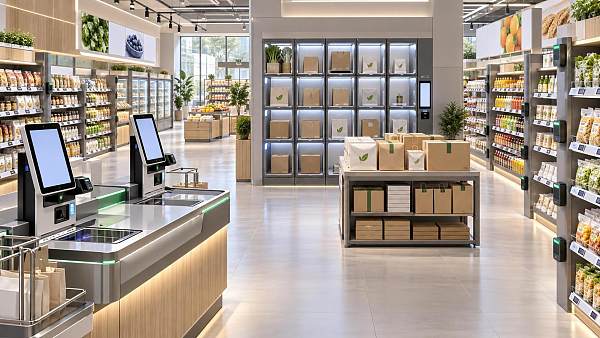
Retail technology trends are redefining how stores operate in 2026, from AI-enabled checkout and real-time inventory visibility to connected fixtures and sustainable infrastructure. For researchers tracking the future of physical retail, understanding these shifts is essential to evaluating operational efficiency, customer experience, and global sourcing decisions in an increasingly data-driven commercial landscape.
A checklist-based approach is the most effective way to study retail technology trends because store modernization is no longer driven by one device or one software layer. It is shaped by interdependent systems: point-of-sale, shelf intelligence, lighting, fixtures, security, packaging, logistics, and compliance. For information researchers, the first priority is not to collect every innovation headline, but to identify which signals have operational impact, which technologies are scalable across formats, and which sourcing decisions can influence total cost, resilience, and customer experience over several years.
Start Here: The First Questions to Ask When Reviewing Retail Technology Trends
Before comparing solutions, clarify the operational problem the technology is meant to solve. In 2026, many retail technology trends look impressive in demos but generate limited value if they are disconnected from store workflows. Researchers should first assess whether a trend improves labor productivity, inventory accuracy, fixture performance, shopper convenience, energy efficiency, or supply chain visibility. This early filtering step helps distinguish strategic infrastructure from short-lived experimentation.
- Does the technology solve a recurring store operations issue such as stockouts, long checkout queues, shrink, replenishment delays, or inconsistent merchandising execution?
- Can it integrate with existing systems including ERP, POS, WMS, CRM, digital signage, and store planning platforms?
- Does it scale across multiple store types, from flagship locations to smaller urban formats or franchise environments?
- What hardware dependencies exist, such as sensors, edge devices, smart fixtures, power infrastructure, or network upgrades?
- Are there measurable KPIs attached to adoption, including basket conversion, labor hours saved, energy reduction, or replenishment speed?
- What standards, certifications, and durability benchmarks support deployment in real commercial settings?
This method aligns especially well with the priorities of global operators and benchmarking platforms such as G-BCE, where commercial hardware quality, system interoperability, and international compliance all matter alongside digital intelligence.
Core Checklist: The Retail Technology Trends with the Strongest Operational Impact in 2026
Among all retail technology trends, a smaller group is most likely to shape day-to-day store performance in 2026. These are the trends researchers should monitor first because they affect multiple functions at once.
1. AI-assisted checkout and frictionless payment
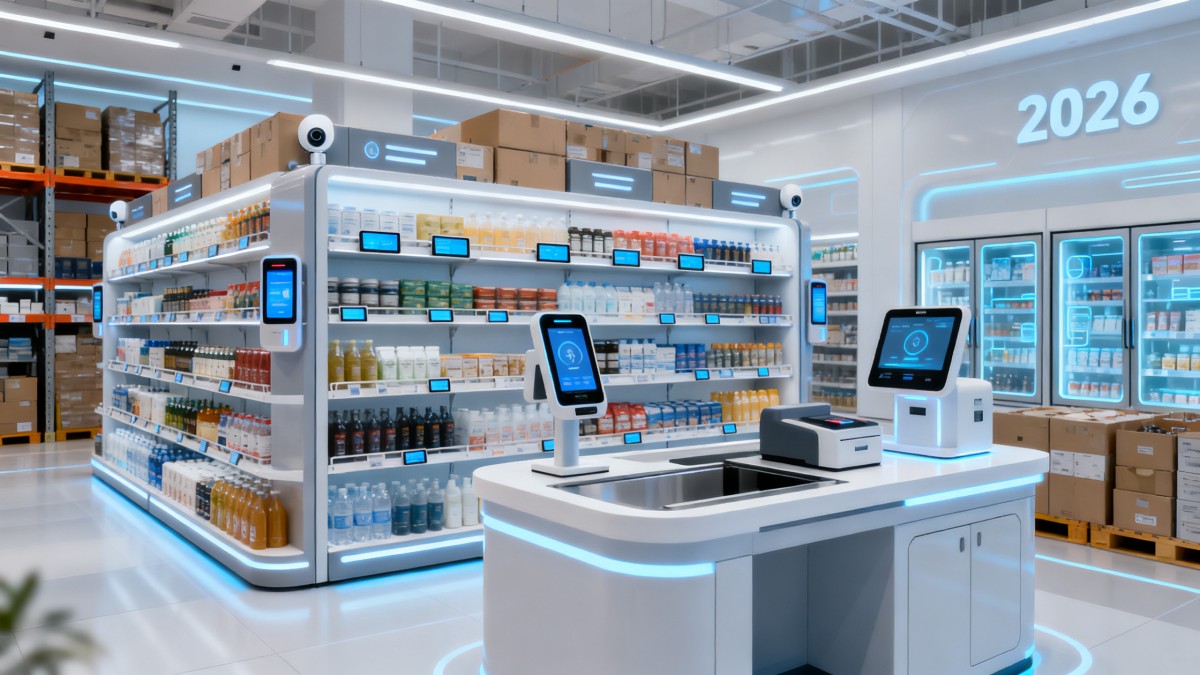
The main question is not whether checkout becomes more automated, but how far retailers can reduce transaction time without increasing exception handling. AI-enabled self-checkout, computer vision verification, mobile payment orchestration, and hybrid assisted lanes are increasingly replacing traditional fixed cashier models. The key evaluation points are false alert rates, theft mitigation, training requirements, payment compatibility, and the ease of updating software across regions.
2. Real-time inventory visibility
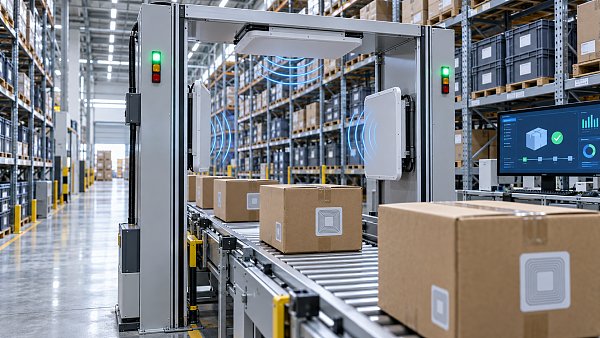
One of the most practical retail technology trends is the shift toward store-level inventory transparency. RFID, smart shelves, shelf-edge sensors, and computer vision are helping operators detect stockouts, pricing mismatches, and replenishment gaps faster than manual audits. Researchers should check data accuracy rates, read consistency in dense merchandise environments, and whether the technology supports both store operations and omnichannel fulfillment.
3. Connected fixtures and intelligent store hardware
Fixtures are no longer passive display elements. Shelving, cabinets, counters, digital kiosks, and display units are becoming connected assets that collect usage data, support embedded lighting, integrate with planograms, and improve maintenance planning. This trend is highly relevant in commercial environments where furniture, signage, and technology must work together. Researchers should examine durability, cable management, modularity, service access, and compatibility with international safety requirements such as UL, CE, and in some categories BIFMA-related performance expectations.
4. Edge computing for in-store decision speed
As more sensors and cameras enter stores, retail technology trends increasingly depend on local processing. Edge computing reduces latency for analytics, queue monitoring, computer vision, and security workflows. The operational checklist should include uptime under unstable connectivity, cybersecurity controls, device lifecycle planning, and whether updates can be deployed remotely without disrupting store hours.
5. Energy-aware infrastructure and sustainable operations
Retail technology trends in 2026 are also shaped by sustainability targets. Smart lighting controls, occupancy-responsive systems, efficient digital signage, and energy-monitoring platforms help stores reduce operating costs while supporting ESG reporting. The most useful research angle is whether sustainability claims are tied to measurable operational outcomes, not just marketing language. Look for maintenance intervals, material durability, end-of-life planning, and packaging efficiency across the supply chain.
A Practical Evaluation Table for Researchers
The table below can be used as a fast reference when comparing retail technology trends across vendors, store formats, or sourcing regions.
What to Check by Store Type and Business Scenario
Not all retail technology trends matter equally in every environment. The same technology can perform very differently depending on assortment complexity, traffic patterns, store footprint, and operating model. Researchers should segment findings by scenario instead of assuming universal relevance.
For high-volume grocery and convenience formats
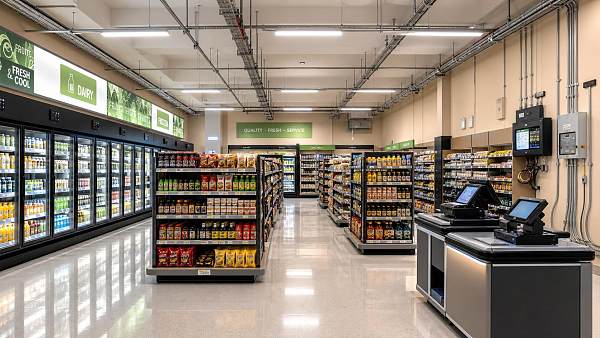
Priority should go to checkout speed, fresh inventory tracking, shelf availability, loss prevention, and refrigeration or energy controls. Here, operational continuity matters more than visual novelty. Systems must also handle rapid SKU movement and frequent replenishment cycles.
For fashion, beauty, and premium consumer brands
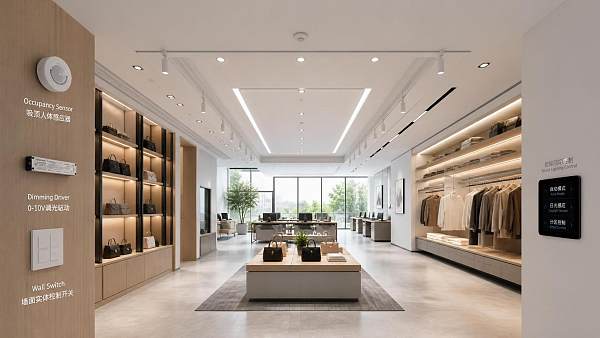
Retail technology trends should be judged partly by their ability to support brand presentation. Smart mirrors, clienteling tools, mobile POS, digital signage, and connected display fixtures can enhance service, but only if industrial design, lighting quality, and fixture materials match the aesthetic standard of the space.
For omnichannel chain operators
The key requirement is data continuity across channels. Researchers should verify whether store systems support buy online pick up in store, ship from store, returns processing, and unified inventory logic. Many retail technology trends fail at scale because in-store tools are selected without considering upstream supply chain integration.
Commonly Overlooked Risks in Retail Technology Trends Research
- Ignoring fixture and infrastructure compatibility. A strong software layer can still fail if power routing, mounting methods, or space planning are poorly designed.
- Overlooking serviceability. Devices that are difficult to repair or replace create hidden operating costs across multi-site networks.
- Focusing only on pilot performance. Many retail technology trends look efficient in a controlled flagship environment but weaken in legacy stores with staffing constraints.
- Underestimating data governance. Computer vision, payment tools, and shopper analytics all require careful privacy, storage, and access control review.
- Treating sustainability as separate from technology. In 2026, sustainable packaging, efficient lighting, durable fixtures, and lower-energy hardware are part of operational modernization, not side topics.
Execution Guide: How to Turn Trend Research into Actionable Comparison
If a company wants to move from trend monitoring to structured evaluation, the most effective process is to organize findings into operational decision layers. First, define the business objective: labor savings, faster replenishment, improved shopper flow, stronger compliance, or lower energy use. Second, map each technology to the required hardware, software, fixture, and supplier capabilities. Third, compare solutions using standard benchmarks, especially where product safety, electrical performance, material durability, and international market readiness are involved.
For global sourcing teams, it is also important to compare vendor maturity beyond price. Ask whether suppliers can support technical documentation, certification pathways, customization, spare parts planning, and deployment across multiple geographies. This is especially relevant when commercial furniture, smart retail technology, lighting, signage, and packaging must be coordinated as one ecosystem rather than purchased as isolated components.
FAQ: Quick Answers Researchers Often Need
Which retail technology trends deserve immediate attention in 2026?
Start with AI checkout, real-time inventory visibility, connected fixtures, edge-enabled analytics, and energy-aware infrastructure because these trends directly influence store operations and long-term sourcing strategy.
How can researchers separate hype from practical value?
Use a checklist centered on measurable KPIs, systems integration, store compatibility, maintenance needs, and compliance readiness. If these items are unclear, the trend may still be immature for scaled deployment.
Why do fixtures and materials matter in retail technology trends?
Because physical retail technology does not operate in isolation. Mounting, durability, cable routing, ergonomics, lighting interaction, and sustainable material choices all affect reliability and customer experience.
Final Research Checklist and Next-Step Questions
The most useful way to study retail technology trends in 2026 is to treat them as operational systems, not standalone gadgets. Prioritize technologies that improve checkout flow, inventory accuracy, fixture intelligence, energy performance, and data continuity across the store and supply chain. Then validate each trend through clear benchmarks, commercial durability, standards alignment, and implementation fit.
If you need to move from research to deeper evaluation, the best next step is to clarify five points with potential partners or internal stakeholders: required technical parameters, store-format compatibility, deployment timeline, budget range, and support model across regions. For organizations comparing retail technology trends at scale, these questions create a stronger basis for selecting solutions that are not only innovative, but also resilient, serviceable, and appropriate for the modern commercial ecosystem.
News Recommendations
 How to choose an ultra bright waterproof window display for storefronts
![51a6ab95581761cc26f4318be6520c15]()
Aris Katos
Future of Carbide Coatings
 How to verify suppliers on a trade portal for global sourcing
![51a6ab95581761cc26f4318be6520c15]()
Aris Katos
Future of Carbide Coatings
 How RoHS requirements should be stated in product specifications
![51a6ab95581761cc26f4318be6520c15]()
Aris Katos
Future of Carbide Coatings
 What affects the lead time for custom retail counter displays?
![51a6ab95581761cc26f4318be6520c15]()
Aris Katos
Future of Carbide Coatings
 What consumer packaging USA importers need to verify before ordering
![51a6ab95581761cc26f4318be6520c15]()
Aris Katos
Future of Carbide Coatings
 How commercial spaces interiors shape customer dwell time
![51a6ab95581761cc26f4318be6520c15]()
Aris Katos
Future of Carbide Coatings
 How LED commercial lighting design reduces glare in retail spaces
![51a6ab95581761cc26f4318be6520c15]()
Aris Katos
Future of Carbide Coatings
 How industrial technology information improves RFID inventory accuracy
![51a6ab95581761cc26f4318be6520c15]()
Aris Katos
Future of Carbide Coatings
 When drip garden watering systems make more sense than sprinklers
![51a6ab95581761cc26f4318be6520c15]()
Aris Katos
Future of Carbide Coatings
 When category comparison improves sourcing for industrial applications
![51a6ab95581761cc26f4318be6520c15]()
Aris Katos
Future of Carbide Coatings
 Industrial application guidance for selecting the right LED lighting
![51a6ab95581761cc26f4318be6520c15]()
Aris Katos
Future of Carbide Coatings
 Which commercial architecture standards apply to European retail fit-outs?
![51a6ab95581761cc26f4318be6520c15]()
Aris Katos
Future of Carbide Coatings
 How to verify FDA requirements for maternity care products
![51a6ab95581761cc26f4318be6520c15]()
Aris Katos
Future of Carbide Coatings
 How to verify BPA-free claims for food-contact products
![51a6ab95581761cc26f4318be6520c15]()
Aris Katos
Future of Carbide Coatings
 When does a European wholesale supplier suit modular office projects?
![51a6ab95581761cc26f4318be6520c15]()
Aris Katos
Future of Carbide Coatings
 When consumer ecosystem solutions improve the in-store shopping journey
![51a6ab95581761cc26f4318be6520c15]()
Aris Katos
Future of Carbide Coatings
 How a commercial developers network can reduce site selection risk
![51a6ab95581761cc26f4318be6520c15]()
Aris Katos
Future of Carbide Coatings
 How clear purchasing specifications prevent costly supplier deviations
![51a6ab95581761cc26f4318be6520c15]()
Aris Katos
Future of Carbide Coatings
 What an ISTA drop test lab checks before your packaging ships
![51a6ab95581761cc26f4318be6520c15]()
Aris Katos
Future of Carbide Coatings
 Which commercial furniture standards apply to workplace seating?
![51a6ab95581761cc26f4318be6520c15]()
Aris Katos
Future of Carbide Coatings
 How to evaluate smart lighting module OEM compatibility before sampling
![51a6ab95581761cc26f4318be6520c15]()
Aris Katos
Future of Carbide Coatings
 How to assess whether sustainable technology delivers real impact
![51a6ab95581761cc26f4318be6520c15]()
Aris Katos
Future of Carbide Coatings
 How to assess an OEM supplier’s quality control before ordering
![51a6ab95581761cc26f4318be6520c15]()
Aris Katos
Future of Carbide Coatings
 How consumer ecosystem solutions data can improve retail personalization
![51a6ab95581761cc26f4318be6520c15]()
Aris Katos
Future of Carbide Coatings
 When does consumer packaging design justify a higher product price?
![51a6ab95581761cc26f4318be6520c15]()
Aris Katos
Future of Carbide Coatings
 Supermarket Fixture Installation: Planning Layouts, Wiring, and Handover
![51a6ab95581761cc26f4318be6520c15]()
Aris Katos
Future of Carbide Coatings
 Automated Lighting and Smart Lighting Control in Bergerac: Key Project Considerations
![51a6ab95581761cc26f4318be6520c15]()
Aris Katos
Future of Carbide Coatings
 Segment Streetlight Controllers: Choosing Control Modes for Urban Roads
![51a6ab95581761cc26f4318be6520c15]()
Aris Katos
Future of Carbide Coatings
 IEC 62471-2 Explained: How to Assess Photobiological Risks in LED Lighting
![51a6ab95581761cc26f4318be6520c15]()
Aris Katos
Future of Carbide Coatings
 Food Grade Packaging Requirements by Product Type, Temperature, and Contact Risk
![51a6ab95581761cc26f4318be6520c15]()
Aris Katos
Future of Carbide Coatings
 Food Packaging Compliance Checklist: Tests, Records, and Labeling Before Shipment
![51a6ab95581761cc26f4318be6520c15]()
Aris Katos
Future of Carbide Coatings
 NSF Food Packaging Standards: When Certification Matters for Commercial Food Use
![51a6ab95581761cc26f4318be6520c15]()
Aris Katos
Future of Carbide Coatings
 FDA Food Grade Compliance: Which Materials and Documents Do Buyers Need?
![51a6ab95581761cc26f4318be6520c15]()
Aris Katos
Future of Carbide Coatings
 What Should a Food Grade Declaration Include for Packaging Compliance?
![51a6ab95581761cc26f4318be6520c15]()
Aris Katos
Future of Carbide Coatings
 Housewares Importing: How to Evaluate Suppliers, Costs, and Compliance Risks
![51a6ab95581761cc26f4318be6520c15]()
Aris Katos
Future of Carbide Coatings
 Why Freeze-Dried Fruit Ingredients Lose Crispness—and How to Prevent It
![51a6ab95581761cc26f4318be6520c15]()
Aris Katos
Future of Carbide Coatings
 What industry veterans look for before choosing a new supplier
![51a6ab95581761cc26f4318be6520c15]()
Aris Katos
Future of Carbide Coatings
 How material fatigue can shorten the service life of retail shelving
![51a6ab95581761cc26f4318be6520c15]()
Aris Katos
Future of Carbide Coatings
 What makes a global sourcing platform reliable for supplier verification?
![51a6ab95581761cc26f4318be6520c15]()
Aris Katos
Future of Carbide Coatings