How Retail Technology Cuts Checkout Delays
Time
Click Count
Retail technology cuts checkout delays when it removes friction at the exact points where transactions slow down: item identification, payment authorization, queue management, and inventory confirmation. For researchers and store operators, the practical takeaway is simple: the best retail technology does not just add screens or automation—it shortens each step of the checkout journey while making stores easier to run. In modern commercial environments, that usually means smarter POS systems, better barcode and RFID capture, integrated payment options, real-time stock visibility, and clear digital signage that guides both staff and shoppers.
For retailers under pressure to improve customer experience without increasing labor costs, checkout speed has become a measurable business issue rather than a minor operational inconvenience. Delays affect conversion, staffing efficiency, shopper satisfaction, and even brand perception. The most effective technology investments are the ones that reduce waiting time in visible, repeatable ways while fitting existing store layouts, product flows, and service models.
Why checkout delays happen in the first place
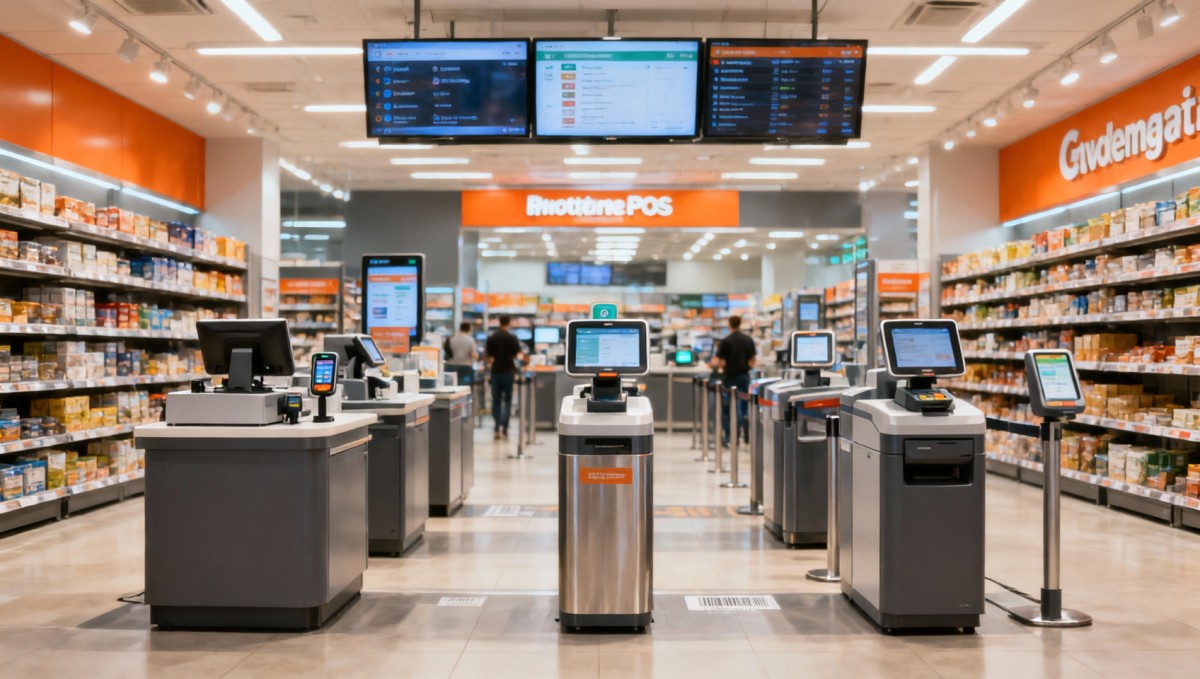
To understand how retail technology improves checkout speed, it helps to identify where delays actually come from. In many stores, long lines are not caused by one major failure but by several small interruptions that stack together.
Common sources of checkout delay include:
- Slow barcode scanning or damaged labels
- Manual price checks
- Disconnected inventory and POS data
- Payment terminal lag or failed transactions
- Cash handling and receipt issues
- Staff switching between systems during one transaction
- Poor queue guidance that creates customer confusion
For operators, this means that reducing checkout time is not only about replacing the register. It often requires improving the entire transaction environment, including hardware, software, connectivity, and store communication. For information researchers evaluating options, this is an important distinction: not all retail technology creates the same operational value, and tools should be judged by the specific delay points they solve.
Which retail technologies have the biggest impact on checkout speed
The most useful retail technologies are the ones that remove repetitive manual tasks and reduce transaction uncertainty. Several categories consistently deliver results across different retail formats.
Smart POS terminals
Modern POS terminals process transactions faster because they combine scanning, pricing, promotions, payment acceptance, and receipt management in one interface. AI-assisted or cloud-connected POS systems can also reduce staff decision time by surfacing product data, inventory status, and upsell prompts without forcing employees to switch screens.
This matters especially in stores with high SKU counts, changing promotions, or mixed payment preferences. A good POS setup reduces clicks, minimizes training time, and keeps checkout moving during peak hours.
Contactless and integrated payment systems
Payment is often one of the last major bottlenecks in the checkout process. NFC, mobile wallets, QR payments, and integrated card readers reduce handling time and lower the chance of failed re-entry or manual processing. When payment hardware and software are tightly connected to the POS platform, staff can complete transactions with fewer interruptions.
For high-end retail environments, integrated payment systems also support a smoother brand experience by making checkout feel more seamless and less transactional.
Barcode, RFID, and machine-vision capture
Faster item recognition directly reduces queue time. Traditional barcode scanning remains effective, but retailers dealing with damaged packaging, large baskets, or fast-moving inventory may benefit from RFID or vision-assisted recognition. These technologies help identify items more reliably and reduce manual overrides.
In some retail categories, they also improve inventory accuracy, which prevents another common problem: customers reaching checkout with items that are mislabeled, unavailable, or incorrectly priced in the system.
Self-checkout and assisted self-service
Self-checkout can reduce delays when it matches the store’s traffic pattern and basket size. It works best in environments with smaller transactions, repeat shoppers, and clearly labeled products. However, self-checkout is not automatically the best solution for every retailer. If the interface is confusing or shrink risk is high, assisted self-service may be more effective than fully independent checkout.
Operators should evaluate whether self-checkout will genuinely increase throughput or simply move labor from cashiering to troubleshooting.
Digital signage and queue guidance
Many retailers underestimate the role of signage in checkout efficiency. Digital signage can direct customers to open lanes, explain payment options, promote self-checkout usage, and reduce hesitation at the point of sale. In busy commercial spaces, even small improvements in wayfinding can reduce perceived waiting time and keep lines organized.
From a commercial design perspective, signage should be treated as part of the transaction system, not as a separate branding layer.
How real-time data reduces hidden checkout friction
One of the most important ways retail technology cuts checkout delays is by connecting transaction activity with upstream product and supply chain data. A customer-facing line problem is often the visible symptom of a back-end information problem.
Examples include:
- Inventory data not synced with store stock levels
- Promotional pricing not updated in time
- Product variants entered inconsistently across channels
- Delayed replenishment causing shelf and system mismatch
When retailers have real-time visibility into stock, pricing, and product movement, checkout becomes more predictable. Staff spend less time verifying product details, correcting errors, or calling for assistance. This is especially valuable for chain operators and commercial developers managing multiple store formats or high-volume product flows.
For organizations that source globally and operate across different compliance environments, technical benchmarking also matters. Hardware compatibility, network reliability, software integration, and adherence to relevant standards all influence whether checkout technology performs well under daily store conditions.
What store operators should evaluate before investing
Not every technology upgrade will solve checkout delays. The most useful evaluation framework focuses on operational fit, not just feature lists.
Before making a decision, operators should ask:
- Where exactly do delays happen in the current checkout journey?
- Are problems caused by payment, scanning, staffing, layout, or data sync?
- What is the average transaction time during peak periods?
- How much staff intervention does each transaction require?
- Will the new system integrate with inventory, ERP, loyalty, and pricing tools?
- Can the hardware withstand real commercial usage levels?
- How much training will frontline staff need?
For information researchers comparing solutions, these questions help separate meaningful innovation from superficial modernization. A sleek device does not necessarily produce faster checkouts if it introduces new steps, weakens system integration, or increases maintenance demands.
How checkout speed improves more than just customer wait time
Faster checkout has a wider business effect than many retailers initially expect. In addition to reducing visible lines, it can improve labor productivity, basket completion rates, and customer confidence. Shoppers are less likely to abandon purchases when the final stage of the journey feels efficient and predictable.
There are also brand-level benefits. Premium brands and well-designed commercial spaces are increasingly judged by how smoothly physical and digital systems work together. A slow, inconsistent checkout undermines the quality signaled by store architecture, lighting, merchandising, and product presentation.
That is why retail technology should be evaluated as part of the broader commercial ecosystem. POS terminals, signage, fixtures, supply chain visibility, and packaging readiness all contribute to how easily products move from shelf to payment to fulfillment.
Conclusion
Retail technology cuts checkout delays most effectively when it addresses the real causes of friction: slow item capture, disconnected systems, payment inefficiencies, poor queue guidance, and weak inventory visibility. For operators, the goal is not simply to digitize checkout, but to build a faster and more reliable transaction flow. For researchers and implementation teams, the best solutions are those that combine technical performance, commercial durability, and integration with wider store operations.
In practical terms, smarter POS systems, integrated payment tools, accurate product identification, real-time data visibility, and well-planned signage usually deliver the strongest results. When these elements work together, checkout becomes faster, staff work more efficiently, and the overall retail experience becomes more resilient, scalable, and customer-friendly.
News Recommendations
 How to choose an ultra bright waterproof window display for storefronts
![51a6ab95581761cc26f4318be6520c15]()
Aris Katos
Future of Carbide Coatings
 How to verify suppliers on a trade portal for global sourcing
![51a6ab95581761cc26f4318be6520c15]()
Aris Katos
Future of Carbide Coatings
 How RoHS requirements should be stated in product specifications
![51a6ab95581761cc26f4318be6520c15]()
Aris Katos
Future of Carbide Coatings
 What affects the lead time for custom retail counter displays?
![51a6ab95581761cc26f4318be6520c15]()
Aris Katos
Future of Carbide Coatings
 What consumer packaging USA importers need to verify before ordering
![51a6ab95581761cc26f4318be6520c15]()
Aris Katos
Future of Carbide Coatings
 How commercial spaces interiors shape customer dwell time
![51a6ab95581761cc26f4318be6520c15]()
Aris Katos
Future of Carbide Coatings
 How LED commercial lighting design reduces glare in retail spaces
![51a6ab95581761cc26f4318be6520c15]()
Aris Katos
Future of Carbide Coatings
 How industrial technology information improves RFID inventory accuracy
![51a6ab95581761cc26f4318be6520c15]()
Aris Katos
Future of Carbide Coatings
 When drip garden watering systems make more sense than sprinklers
![51a6ab95581761cc26f4318be6520c15]()
Aris Katos
Future of Carbide Coatings
 When category comparison improves sourcing for industrial applications
![51a6ab95581761cc26f4318be6520c15]()
Aris Katos
Future of Carbide Coatings
 Industrial application guidance for selecting the right LED lighting
![51a6ab95581761cc26f4318be6520c15]()
Aris Katos
Future of Carbide Coatings
 Which commercial architecture standards apply to European retail fit-outs?
![51a6ab95581761cc26f4318be6520c15]()
Aris Katos
Future of Carbide Coatings
 How to verify FDA requirements for maternity care products
![51a6ab95581761cc26f4318be6520c15]()
Aris Katos
Future of Carbide Coatings
 How to verify BPA-free claims for food-contact products
![51a6ab95581761cc26f4318be6520c15]()
Aris Katos
Future of Carbide Coatings
 When does a European wholesale supplier suit modular office projects?
![51a6ab95581761cc26f4318be6520c15]()
Aris Katos
Future of Carbide Coatings
 When consumer ecosystem solutions improve the in-store shopping journey
![51a6ab95581761cc26f4318be6520c15]()
Aris Katos
Future of Carbide Coatings
 How a commercial developers network can reduce site selection risk
![51a6ab95581761cc26f4318be6520c15]()
Aris Katos
Future of Carbide Coatings
 How clear purchasing specifications prevent costly supplier deviations
![51a6ab95581761cc26f4318be6520c15]()
Aris Katos
Future of Carbide Coatings
 What an ISTA drop test lab checks before your packaging ships
![51a6ab95581761cc26f4318be6520c15]()
Aris Katos
Future of Carbide Coatings
 Which commercial furniture standards apply to workplace seating?
![51a6ab95581761cc26f4318be6520c15]()
Aris Katos
Future of Carbide Coatings
 How to evaluate smart lighting module OEM compatibility before sampling
![51a6ab95581761cc26f4318be6520c15]()
Aris Katos
Future of Carbide Coatings
 How to assess whether sustainable technology delivers real impact
![51a6ab95581761cc26f4318be6520c15]()
Aris Katos
Future of Carbide Coatings
 How to assess an OEM supplier’s quality control before ordering
![51a6ab95581761cc26f4318be6520c15]()
Aris Katos
Future of Carbide Coatings
 How consumer ecosystem solutions data can improve retail personalization
![51a6ab95581761cc26f4318be6520c15]()
Aris Katos
Future of Carbide Coatings
 When does consumer packaging design justify a higher product price?
![51a6ab95581761cc26f4318be6520c15]()
Aris Katos
Future of Carbide Coatings
 Supermarket Fixture Installation: Planning Layouts, Wiring, and Handover
![51a6ab95581761cc26f4318be6520c15]()
Aris Katos
Future of Carbide Coatings
 Automated Lighting and Smart Lighting Control in Bergerac: Key Project Considerations
![51a6ab95581761cc26f4318be6520c15]()
Aris Katos
Future of Carbide Coatings
 Segment Streetlight Controllers: Choosing Control Modes for Urban Roads
![51a6ab95581761cc26f4318be6520c15]()
Aris Katos
Future of Carbide Coatings
 IEC 62471-2 Explained: How to Assess Photobiological Risks in LED Lighting
![51a6ab95581761cc26f4318be6520c15]()
Aris Katos
Future of Carbide Coatings
 Food Grade Packaging Requirements by Product Type, Temperature, and Contact Risk
![51a6ab95581761cc26f4318be6520c15]()
Aris Katos
Future of Carbide Coatings
 Food Packaging Compliance Checklist: Tests, Records, and Labeling Before Shipment
![51a6ab95581761cc26f4318be6520c15]()
Aris Katos
Future of Carbide Coatings
 NSF Food Packaging Standards: When Certification Matters for Commercial Food Use
![51a6ab95581761cc26f4318be6520c15]()
Aris Katos
Future of Carbide Coatings
 FDA Food Grade Compliance: Which Materials and Documents Do Buyers Need?
![51a6ab95581761cc26f4318be6520c15]()
Aris Katos
Future of Carbide Coatings
 What Should a Food Grade Declaration Include for Packaging Compliance?
![51a6ab95581761cc26f4318be6520c15]()
Aris Katos
Future of Carbide Coatings
 Housewares Importing: How to Evaluate Suppliers, Costs, and Compliance Risks
![51a6ab95581761cc26f4318be6520c15]()
Aris Katos
Future of Carbide Coatings
 Why Freeze-Dried Fruit Ingredients Lose Crispness—and How to Prevent It
![51a6ab95581761cc26f4318be6520c15]()
Aris Katos
Future of Carbide Coatings
 What industry veterans look for before choosing a new supplier
![51a6ab95581761cc26f4318be6520c15]()
Aris Katos
Future of Carbide Coatings
 How material fatigue can shorten the service life of retail shelving
![51a6ab95581761cc26f4318be6520c15]()
Aris Katos
Future of Carbide Coatings
 What makes a global sourcing platform reliable for supplier verification?
![51a6ab95581761cc26f4318be6520c15]()
Aris Katos
Future of Carbide Coatings