Commercial Lighting Solutions for Modern Facades: What Works Best
Time
Click Count
Selecting the right commercial lighting solutions for modern facades is no longer just about visibility—it directly affects energy performance, brand perception, and project efficiency. For project managers and engineering leads, the best approach balances design impact, durability, compliance, and smart control integration. This guide explores what works best in today’s commercial environments and how to make informed facade lighting decisions with confidence.
In large-scale retail, mixed-use, hospitality, and corporate developments, facade lighting often sits at the intersection of architecture, engineering, procurement, and operations. A visually striking building envelope may fail in practice if the luminaires are difficult to maintain, poorly sealed against weather, incompatible with controls, or misaligned with local code requirements. That is why commercial lighting solutions for facades should be evaluated as a performance system rather than a decorative afterthought.
For project teams working across international supply chains, the challenge is even more complex. Fixture quality, beam precision, driver stability, ingress protection, installation tolerances, and commissioning timelines all influence the final result. Platforms such as G-BCE help decision-makers compare technical benchmarks across suppliers and standards, which is increasingly important when sourcing from multiple regions while maintaining consistent quality expectations.
Why Facade Lighting Has Become a Core Project Decision
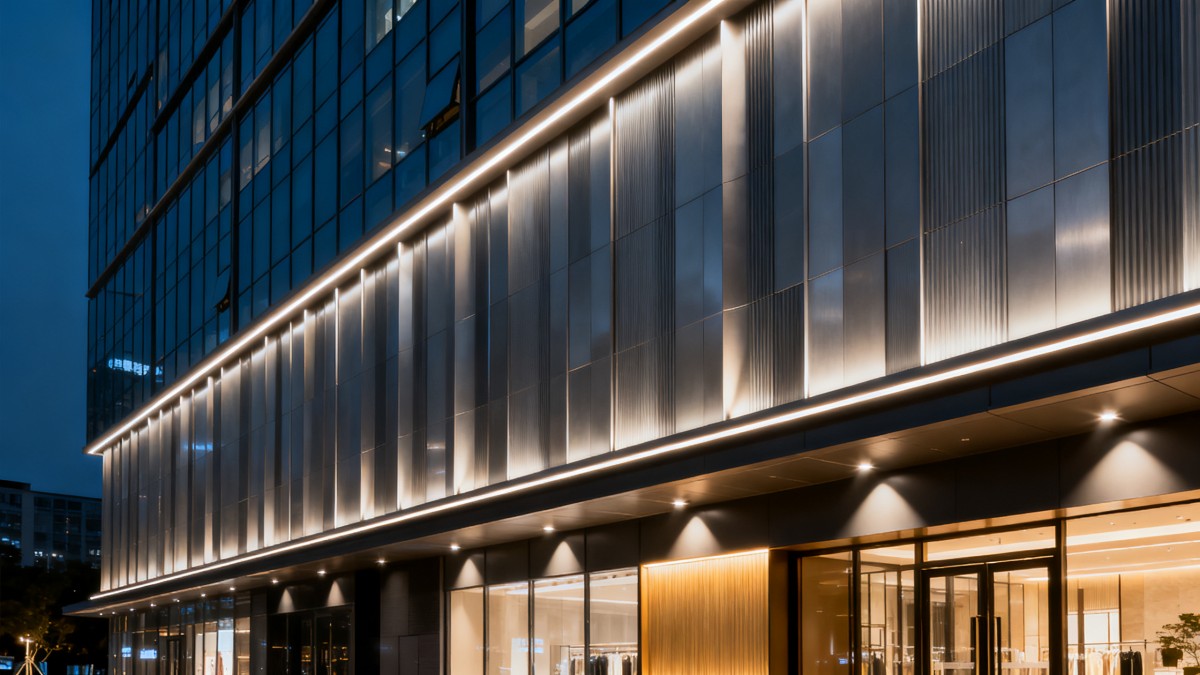
Modern facades are expected to do more than illuminate building edges. They support nighttime identity, improve wayfinding, reinforce tenant branding, and contribute to perceived asset value. In many commercial projects, the facade is visible for 10 to 14 hours per day, which means lighting performance affects both customer impression and energy consumption over a long operating cycle.
For project managers, the cost implications begin early. A facade lighting package that seems economical at tender stage can create 15% to 30% higher lifecycle costs if it requires frequent access equipment, premature driver replacement, or fragmented control integration. The best commercial lighting solutions reduce rework, simplify installation sequencing, and maintain visual consistency across elevations, corners, canopies, and signage interfaces.
What stakeholders usually prioritize
- Architects focus on beam quality, concealment, and facade rhythm.
- Engineering leads prioritize electrical load, surge protection, and heat management.
- Operations teams look at maintenance intervals, spare part availability, and control reliability.
- Procurement teams compare lead time, certification alignment, and total installed cost.
These priorities can conflict unless the specification is clear. For example, a narrow 10° beam may be ideal for vertical accenting, but if fixture placement tolerance on site is more than ±5 mm, visual inconsistency becomes likely. Similarly, RGBW systems can create dramatic effects, yet they add commissioning complexity compared with fixed white systems at 3000K or 4000K.
Typical risks when facade lighting is under-specified
Performance risk
Insufficient beam testing, poor optical control, or weak driver quality can produce hot spots, color inconsistency, and early lumen depreciation. In exterior commercial applications, a practical target is to review not only initial output but projected maintenance after 30,000 to 50,000 operating hours.
Installation risk
Facade access is often constrained by cladding details, glazing, structural brackets, and signage elements. If fixture mounts are not coordinated during the shop drawing stage, field adjustments can extend installation by 1 to 3 weeks, especially on high elevations or phased openings.
Compliance risk
Cross-border projects may require alignment with UL, CE, or other market-specific expectations, alongside ingress protection and electrical safety requirements. Teams should verify these items before order placement rather than during customs review or site acceptance.
Which Commercial Lighting Solutions Work Best on Modern Facades
The most effective commercial lighting solutions depend on facade material, mounting depth, visual objective, and operating pattern. There is no single best fixture family for every project. Instead, successful schemes usually combine 3 to 5 fixture types to balance uniformity, accent, and maintenance practicality.
Common solution types and where they perform well
The table below outlines the most common facade lighting approaches used in commercial environments and how they align with project requirements.
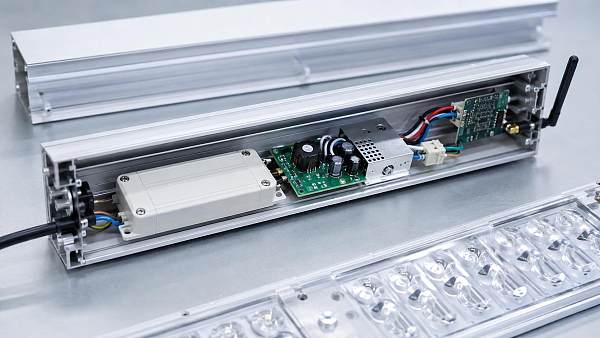
In practice, linear grazers and wall washers are often the most efficient starting point for modern facades because they create consistent architectural definition with fewer visual interruptions. Projectors are effective for focal points, but overuse can make a facade look fragmented. RGBW should usually be reserved for brand-led or programmable environments rather than specified by default.
Fixed white or dynamic color?
For many corporate offices, shopping centers, healthcare buildings, and mixed-use developments, fixed white at 3000K, 3500K, or 4000K remains the most practical option. It offers simpler controls, lower commissioning effort, and more predictable visual output. Dynamic color systems work best when there is a clear operating plan, such as seasonal campaigns, events, or tenant branding schedules that justify the extra control layer.
A useful decision rule is this: if the building will run more than 80% of the year in one color temperature, fixed white commercial lighting solutions usually deliver stronger cost-to-value performance. If the property depends on regular visual activation, dynamic systems may provide greater marketing value despite higher setup demands.
Technical Criteria Project Teams Should Evaluate Before Specifying
The visual concept matters, but technical screening determines whether the installation will succeed over 3, 5, or 10 years. Project managers should standardize a review checklist before releasing drawings or requesting supplier quotations. This avoids comparing fixtures only by wattage or unit price.
Six critical checks before procurement
- Ingress protection suitable for exposure level, usually IP65 minimum for general facade use and higher where water jets or severe exposure are expected.
- Corrosion resistance for coastal, polluted, or humid environments, including housing finish and fastener quality.
- Driver and surge protection performance, especially in regions with unstable power or frequent storms.
- Optical consistency across batches, including color tolerance and beam uniformity.
- Mounting adjustability and tolerance compatibility with facade substrate conditions.
- Control protocol fit, such as on/off, 0-10V, DALI, or DMX, depending on operational goals.
Color consistency deserves special attention. A premium facade can appear patchy if different batches vary too much. Many professional teams target a tighter binning expectation for visible elevations, particularly where long linear runs or repeated fixture modules are installed side by side.
Recommended evaluation framework
The table below can help engineering and procurement teams compare commercial lighting solutions using project-relevant criteria rather than marketing language alone.
A structured matrix like this helps separate high-performing commercial lighting solutions from options that only look competitive on paper. It also creates a clearer basis for supplier discussions, especially when technical submittals come from different manufacturing regions.
Implementation Strategy: From Design Intent to Site Handover
Even the best specified fixture can underperform if the implementation process is weak. Successful facade lighting projects usually move through 5 stages: concept alignment, technical detailing, mock-up validation, installation coordination, and night commissioning. Compressing these stages too aggressively often increases change orders later.
A practical 5-step process
1. Define the lighting objective
Clarify whether the facade should emphasize texture, brand presence, vertical scale, entry drama, or visual calm. One primary objective and one secondary objective are usually enough. Trying to achieve 4 or 5 effects at once often leads to clutter.
2. Coordinate with facade and signage packages
Mounting interfaces, service clearances, and cable routes should be locked before cladding closeout. This is especially important where commercial lighting solutions interact with aluminum profiles, glass mullions, or illuminated signage. Early coordination can save multiple site revisions.
3. Build a night mock-up
A mock-up covering at least 1 facade bay or a representative corner condition allows the team to test beam spread, glare, brightness hierarchy, and mounting concealment. This stage often reveals whether output should be reduced by 10% to 20% or whether fixture spacing needs adjustment.
4. Commission controls by scene logic
Controls should be programmed around real operating scenarios such as daily opening, late-night dimming, event mode, and maintenance override. If the building management team cannot understand the interface within a short training session, the system is probably too complex.
5. Plan for maintenance before handover
Replacement access, spare quantities, aiming records, and driver location maps should be included in the handover pack. On multi-elevation buildings, even a 2% failure rate can become operationally disruptive if access equipment is required each time.
Lead time and project scheduling considerations
For standard exterior fixtures, production and logistics may take 4 to 8 weeks. Custom lengths, special finishes, or integrated control systems can push that to 8 to 12 weeks or more depending on region and quantity. Project managers should also reserve time for sample approval, mock-up review, and nighttime commissioning, not just physical delivery.
How to Balance Design Impact, Energy Use, and Long-Term Value
The strongest facade lighting strategy is rarely the brightest one. Good commercial lighting solutions create visual hierarchy, avoid waste, and align with operating schedules. In many cases, selective illumination of key architectural lines delivers better perception than flooding the entire facade uniformly.
Where teams often overspend
- Using dynamic RGBW on every elevation when only entrance and feature zones require programmability.
- Choosing inaccessible in-ground fixtures where surface-mounted alternatives would simplify service.
- Ignoring dimming schedules, leading to full-output operation long after peak business hours.
- Splitting procurement between incompatible suppliers without a unified control strategy.
A practical energy strategy is to zone the facade into primary, secondary, and accent layers. For example, the primary architectural layer may run from dusk to midnight, the secondary layer to 10 p.m., and accent or event scenes only on selected dates. This tiered logic can reduce unnecessary run time while preserving the intended identity of the building.
Questions procurement and operations teams should ask
Before final approval, ask whether the proposed commercial lighting solutions can be serviced with standard tools, whether spare drivers or modules will remain available for several years, and whether the control system can be adjusted without specialist intervention for every change. These questions often reveal hidden operating costs that are not visible in the initial quotation.
For cross-border commercial projects, benchmark-driven sourcing is especially valuable. G-BCE’s role in comparing fixture quality, hardware standards, and technical documentation helps commercial developers and sourcing directors reduce ambiguity between design intent and delivered product. That becomes critical when bridging manufacturing efficiency with premium global facade expectations.
What Works Best in Today’s Commercial Environment
In most modern facade applications, the best-performing commercial lighting solutions share four characteristics: controlled optics, exterior durability, compatible smart controls, and maintainable installation design. Linear architectural fixtures and wall washers typically provide the most dependable base layer, while projectors and color-changing systems should be used selectively where they support a clear visual or brand objective.
Project managers and engineering leads achieve better outcomes when they evaluate facade lighting as part of the broader commercial ecosystem, not as a last-minute add-on. That means considering sourcing consistency, compliance readiness, installation coordination, service access, and long-term operational logic from the start. If you are planning a new development, renovation, or multi-site rollout, now is the right time to review your options, compare benchmarked specifications, and obtain a facade lighting strategy that fits both performance goals and procurement realities. Contact us to discuss your project, request a tailored recommendation, or explore more commercial lighting solutions for modern facades.
News Recommendations
 How to choose an ultra bright waterproof window display for storefronts
![51a6ab95581761cc26f4318be6520c15]()
Aris Katos
Future of Carbide Coatings
 How to verify suppliers on a trade portal for global sourcing
![51a6ab95581761cc26f4318be6520c15]()
Aris Katos
Future of Carbide Coatings
 How RoHS requirements should be stated in product specifications
![51a6ab95581761cc26f4318be6520c15]()
Aris Katos
Future of Carbide Coatings
 What affects the lead time for custom retail counter displays?
![51a6ab95581761cc26f4318be6520c15]()
Aris Katos
Future of Carbide Coatings
 What consumer packaging USA importers need to verify before ordering
![51a6ab95581761cc26f4318be6520c15]()
Aris Katos
Future of Carbide Coatings
 How commercial spaces interiors shape customer dwell time
![51a6ab95581761cc26f4318be6520c15]()
Aris Katos
Future of Carbide Coatings
 How LED commercial lighting design reduces glare in retail spaces
![51a6ab95581761cc26f4318be6520c15]()
Aris Katos
Future of Carbide Coatings
 How industrial technology information improves RFID inventory accuracy
![51a6ab95581761cc26f4318be6520c15]()
Aris Katos
Future of Carbide Coatings
 When drip garden watering systems make more sense than sprinklers
![51a6ab95581761cc26f4318be6520c15]()
Aris Katos
Future of Carbide Coatings
 When category comparison improves sourcing for industrial applications
![51a6ab95581761cc26f4318be6520c15]()
Aris Katos
Future of Carbide Coatings
 Industrial application guidance for selecting the right LED lighting
![51a6ab95581761cc26f4318be6520c15]()
Aris Katos
Future of Carbide Coatings
 Which commercial architecture standards apply to European retail fit-outs?
![51a6ab95581761cc26f4318be6520c15]()
Aris Katos
Future of Carbide Coatings
 How to verify FDA requirements for maternity care products
![51a6ab95581761cc26f4318be6520c15]()
Aris Katos
Future of Carbide Coatings
 How to verify BPA-free claims for food-contact products
![51a6ab95581761cc26f4318be6520c15]()
Aris Katos
Future of Carbide Coatings
 When does a European wholesale supplier suit modular office projects?
![51a6ab95581761cc26f4318be6520c15]()
Aris Katos
Future of Carbide Coatings
 When consumer ecosystem solutions improve the in-store shopping journey
![51a6ab95581761cc26f4318be6520c15]()
Aris Katos
Future of Carbide Coatings
 How a commercial developers network can reduce site selection risk
![51a6ab95581761cc26f4318be6520c15]()
Aris Katos
Future of Carbide Coatings
 How clear purchasing specifications prevent costly supplier deviations
![51a6ab95581761cc26f4318be6520c15]()
Aris Katos
Future of Carbide Coatings
 What an ISTA drop test lab checks before your packaging ships
![51a6ab95581761cc26f4318be6520c15]()
Aris Katos
Future of Carbide Coatings
 Which commercial furniture standards apply to workplace seating?
![51a6ab95581761cc26f4318be6520c15]()
Aris Katos
Future of Carbide Coatings
 How to evaluate smart lighting module OEM compatibility before sampling
![51a6ab95581761cc26f4318be6520c15]()
Aris Katos
Future of Carbide Coatings
 How to assess whether sustainable technology delivers real impact
![51a6ab95581761cc26f4318be6520c15]()
Aris Katos
Future of Carbide Coatings
 How to assess an OEM supplier’s quality control before ordering
![51a6ab95581761cc26f4318be6520c15]()
Aris Katos
Future of Carbide Coatings
 How consumer ecosystem solutions data can improve retail personalization
![51a6ab95581761cc26f4318be6520c15]()
Aris Katos
Future of Carbide Coatings
 When does consumer packaging design justify a higher product price?
![51a6ab95581761cc26f4318be6520c15]()
Aris Katos
Future of Carbide Coatings
 Supermarket Fixture Installation: Planning Layouts, Wiring, and Handover
![51a6ab95581761cc26f4318be6520c15]()
Aris Katos
Future of Carbide Coatings
 Automated Lighting and Smart Lighting Control in Bergerac: Key Project Considerations
![51a6ab95581761cc26f4318be6520c15]()
Aris Katos
Future of Carbide Coatings
 Segment Streetlight Controllers: Choosing Control Modes for Urban Roads
![51a6ab95581761cc26f4318be6520c15]()
Aris Katos
Future of Carbide Coatings
 IEC 62471-2 Explained: How to Assess Photobiological Risks in LED Lighting
![51a6ab95581761cc26f4318be6520c15]()
Aris Katos
Future of Carbide Coatings
 Food Grade Packaging Requirements by Product Type, Temperature, and Contact Risk
![51a6ab95581761cc26f4318be6520c15]()
Aris Katos
Future of Carbide Coatings
 Food Packaging Compliance Checklist: Tests, Records, and Labeling Before Shipment
![51a6ab95581761cc26f4318be6520c15]()
Aris Katos
Future of Carbide Coatings
 NSF Food Packaging Standards: When Certification Matters for Commercial Food Use
![51a6ab95581761cc26f4318be6520c15]()
Aris Katos
Future of Carbide Coatings
 FDA Food Grade Compliance: Which Materials and Documents Do Buyers Need?
![51a6ab95581761cc26f4318be6520c15]()
Aris Katos
Future of Carbide Coatings
 What Should a Food Grade Declaration Include for Packaging Compliance?
![51a6ab95581761cc26f4318be6520c15]()
Aris Katos
Future of Carbide Coatings
 Housewares Importing: How to Evaluate Suppliers, Costs, and Compliance Risks
![51a6ab95581761cc26f4318be6520c15]()
Aris Katos
Future of Carbide Coatings
 Why Freeze-Dried Fruit Ingredients Lose Crispness—and How to Prevent It
![51a6ab95581761cc26f4318be6520c15]()
Aris Katos
Future of Carbide Coatings
 What industry veterans look for before choosing a new supplier
![51a6ab95581761cc26f4318be6520c15]()
Aris Katos
Future of Carbide Coatings
 How material fatigue can shorten the service life of retail shelving
![51a6ab95581761cc26f4318be6520c15]()
Aris Katos
Future of Carbide Coatings
 What makes a global sourcing platform reliable for supplier verification?
![51a6ab95581761cc26f4318be6520c15]()
Aris Katos
Future of Carbide Coatings