How to Choose a Commercial Lighting Manufacturer for Large-Scale Builds
Time
Click Count
Choosing the right commercial lighting manufacturer can determine whether a large-scale build stays on schedule, meets compliance standards, and delivers a consistent user experience across every space. For project managers and engineering leads, the decision goes far beyond product catalogs—it requires evaluating technical capability, customization, quality control, and long-term supply reliability.
What a Commercial Lighting Manufacturer Really Provides
A commercial lighting manufacturer does far more than assemble luminaires. In large-scale builds such as retail chains, office campuses, hospitality projects, healthcare facilities, and mixed-use developments, the manufacturer often becomes a technical partner that influences design feasibility, installation efficiency, energy performance, and ongoing maintenance. For project leaders, this means the selection process should be based on systems thinking rather than unit price alone.
At the most practical level, a qualified commercial lighting manufacturer supports product engineering, optical performance, material consistency, certification alignment, production planning, and after-sales continuity. In modern projects, that support may also include smart controls compatibility, custom housing dimensions, emergency lighting integration, and sustainability documentation. This broader role matters because lighting is no longer only about illumination. It affects wayfinding, brand experience, safety, visual comfort, and operational efficiency across the entire built environment.
Why the Industry Pays Close Attention to Manufacturer Selection
Commercial spaces are becoming more demanding. Global developers and chain operators now expect lighting systems to support energy targets, digital integration, fast rollout schedules, and consistent aesthetics across multiple locations. At the same time, compliance requirements remain strict, especially when projects involve cross-border procurement or must meet standards such as UL and CE. As a result, choosing the right commercial lighting manufacturer has become a strategic decision rather than a routine sourcing task.
This shift is especially relevant in ecosystems like those tracked by G-BCE, where commercial hardware, retail technology, fixtures, and sustainable material choices are interconnected. Lighting must coordinate with ceilings, signage, display systems, controls, and maintenance plans. A weak manufacturer can create delays in mockups, inconsistent color temperature between batches, documentation gaps during inspection, or procurement instability during expansion phases. A strong one can reduce these risks by aligning production precision with architectural and operational expectations.
Core Value for Project Managers and Engineering Leads
For project managers, the right commercial lighting manufacturer creates predictability. Predictability means fewer schedule disruptions, fewer change orders, clearer communication between design and site teams, and better control over installation sequencing. For engineering leads, value comes from technical reliability: stable drivers, verified thermal management, realistic photometric data, and documented performance under real operating conditions.
In large-scale builds, even small inconsistencies can become expensive when multiplied across hundreds or thousands of fixtures. A manufacturer with disciplined quality systems helps ensure that dimensions remain consistent, mounting details match approved drawings, and output does not drift across production runs. That kind of consistency protects both the project timeline and the end-user experience.
Industry Overview: What to Evaluate First
Before comparing individual suppliers, it helps to organize evaluation criteria into a practical framework. The table below highlights the dimensions that matter most when selecting a commercial lighting manufacturer for large-scale builds.
Technical Capabilities That Matter in Large-Scale Projects
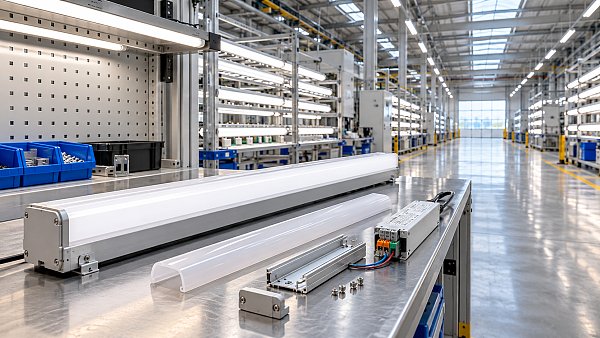
A capable commercial lighting manufacturer must translate architectural intent into repeatable production outcomes. That starts with optics. Beam distribution, glare control, color rendering, and color consistency all shape how a commercial space feels and functions. In retail, incorrect beam angles can flatten merchandise presentation. In offices, poor glare control can reduce comfort and productivity. In hospitality, inconsistent color tone can weaken the intended atmosphere.
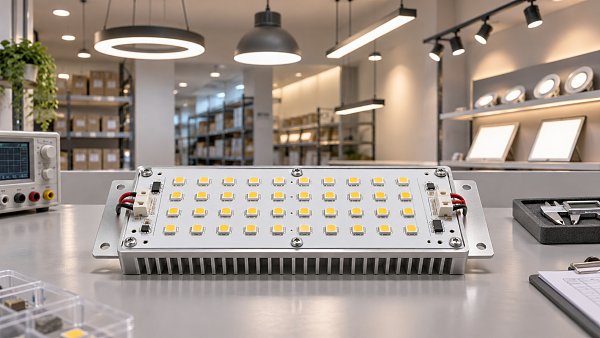
Electrical and thermal performance are just as important. Fixtures with weak driver quality or insufficient heat management may pass an initial inspection yet fail prematurely in real-world operation. For engineering teams, it is wise to request product data that goes beyond brochures: LM reports, photometric files, driver brand details, surge protection specifications, operating temperature ranges, and expected lumen maintenance. A dependable commercial lighting manufacturer should be ready to explain these numbers clearly and connect them to the project environment.
Customization Without Losing Control
Customization is often necessary in large commercial builds, but it introduces risk if not managed carefully. Architects may require special finishes, custom dimensions, integrated sensors, or unique mounting methods. A skilled commercial lighting manufacturer can support these needs while maintaining production discipline. The key question is whether customization is handled through an organized engineering process or through ad hoc adjustments on the factory floor.
Project managers should confirm how design changes are documented, how prototypes are validated, and how approved samples are locked for mass production. This is especially important when a project includes phased openings or repeat builds in multiple cities. The best manufacturers create a controlled pathway from concept drawing to pilot sample to approved batch, reducing the chance of variation between the first location and the fiftieth.
Typical Project Scenarios and Manufacturer Priorities
Different project types emphasize different manufacturer strengths. Understanding this helps teams focus their evaluation on the most relevant criteria rather than treating all commercial environments the same.
Quality Control as a Schedule Protection Tool
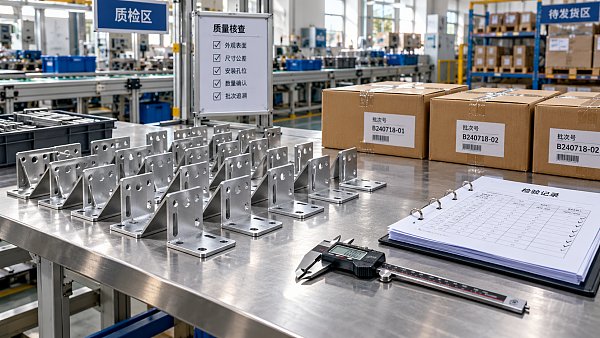
Many teams think of quality control only as a product issue, but in large-scale builds it is also a schedule issue. Rework caused by finish mismatches, missing accessories, or driver failures can disrupt ceiling closures, commissioning windows, and tenant handover. That is why the internal quality discipline of a commercial lighting manufacturer deserves close attention during evaluation.
Look for evidence of structured inspection at each stage: raw material checks, dimensional verification, electrical safety testing, burn-in procedures, and packaging validation. It is also useful to ask how nonconforming units are handled and how corrective actions are documented. Manufacturers that can show process transparency usually create fewer surprises later. In global sourcing environments, this transparency becomes even more valuable because it supports remote decision-making and technical benchmarking.
Supply Chain Stability and Long-Term Support
A commercial lighting manufacturer may deliver the first shipment successfully and still become a weak long-term partner if component continuity is poor. Large-scale builds often need phased deliveries, replacement stock, and future expansion support. If a driver, LED package, diffuser material, or finish supplier changes without control, the result can be visible inconsistency or maintenance complexity across sites.
For this reason, project managers should evaluate bill-of-material stability, approved alternate components, service part plans, and communication protocols for engineering changes. The goal is not simply to secure supply today but to maintain lighting system continuity over the life of the asset. This is especially important for chain operators that standardize customer experience across geographies.
Practical Steps for Evaluating a Commercial Lighting Manufacturer
A structured review process improves outcomes. Start by defining the project’s operational priorities: compliance, schedule speed, visual consistency, controls integration, sustainability targets, or total cost of ownership. Then assess each commercial lighting manufacturer against those priorities using the same scoring framework. This prevents decisions from being driven by isolated sample impressions or price pressure alone.
Next, request documentation that supports real verification. Typical items include certifications, test reports, photometric files, warranty terms, project references, manufacturing lead time data, and sample approval procedures. If the project is complex, factory audits or virtual process reviews can provide useful insight into production discipline. Finally, include post-installation support in the evaluation. A manufacturer that responds quickly during commissioning and warranty periods often provides greater lifecycle value than one that only competes on initial quotation.
Conclusion: Build Around Reliability, Not Just Product Selection
Choosing a commercial lighting manufacturer for large-scale builds is fundamentally about reducing uncertainty while protecting design intent. The strongest partners combine technical knowledge, manufacturing precision, certification readiness, and supply continuity. They understand that commercial lighting must perform as part of a wider ecosystem that includes architecture, retail experience, facility operations, and long-term brand consistency.
For project managers and engineering leads, the best approach is to evaluate manufacturers as system partners rather than product vendors. When that perspective guides selection, lighting decisions become more resilient, scalable, and aligned with the demands of modern commercial environments. If your team is planning a rollout, renovation, or multi-site development, use a disciplined benchmarking process to identify the commercial lighting manufacturer that can support both immediate delivery and long-term operational performance.
News Recommendations
 Report: Global Kraft Paper Market Forecast to Reach $20.5 Billion by 2033
![51a6ab95581761cc26f4318be6520c15]()
Aris Katos
Future of Carbide Coatings
 How to verify Zigbee compatibility when sourcing lighting sensors
![51a6ab95581761cc26f4318be6520c15]()
Aris Katos
Future of Carbide Coatings
 How do packaging customization options affect minimum order quantities in Europe?
![51a6ab95581761cc26f4318be6520c15]()
Aris Katos
Future of Carbide Coatings
 Transom to Acquire Cree LED in Commercial Lighting Ownership Change
![51a6ab95581761cc26f4318be6520c15]()
Aris Katos
Future of Carbide Coatings
 How to plan customer flow in commercial design planning
![51a6ab95581761cc26f4318be6520c15]()
Aris Katos
Future of Carbide Coatings
 USTR Urged to Permanently Suspend Fees on China-Linked Ships
![51a6ab95581761cc26f4318be6520c15]()
Aris Katos
Future of Carbide Coatings
 How to choose comparable stores for retail benchmarking
![51a6ab95581761cc26f4318be6520c15]()
Aris Katos
Future of Carbide Coatings
 How does anchoring affect modular building wind load resistance?
![51a6ab95581761cc26f4318be6520c15]()
Aris Katos
Future of Carbide Coatings
 Amazon Raises European FBA Surcharge to 2% in Ten Markets From November 2
![51a6ab95581761cc26f4318be6520c15]()
Aris Katos
Future of Carbide Coatings
 How to verify a BPA-free test report for baby products
![51a6ab95581761cc26f4318be6520c15]()
Aris Katos
Future of Carbide Coatings
 China's Mandatory Classroom Lighting Standard GB 7793-2025 Takes Effect November 1
![51a6ab95581761cc26f4318be6520c15]()
Aris Katos
Future of Carbide Coatings
 How order volume affects the price of wholesale poly mailers
![51a6ab95581761cc26f4318be6520c15]()
Aris Katos
Future of Carbide Coatings
 US Imposes 50% Tariff on Certain Canadian PET Resin Imports
![51a6ab95581761cc26f4318be6520c15]()
Aris Katos
Future of Carbide Coatings
 How to read the maximum ratings in a semiconductor datasheet
![51a6ab95581761cc26f4318be6520c15]()
Aris Katos
Future of Carbide Coatings
 University of Maryland Develops Bio-Based Packaging to Extend Avocado and Cucumber Shelf Life
![51a6ab95581761cc26f4318be6520c15]()
Aris Katos
Future of Carbide Coatings
 How to verify a cookware manufacturer's induction compatibility claims
![51a6ab95581761cc26f4318be6520c15]()
Aris Katos
Future of Carbide Coatings
 Omdia Forecasts 11.6% Annual Growth in LED Display Revenue Through 2030
![51a6ab95581761cc26f4318be6520c15]()
Aris Katos
Future of Carbide Coatings
 How to verify a pulp molding packaging factory's production capacity
![51a6ab95581761cc26f4318be6520c15]()
Aris Katos
Future of Carbide Coatings
 Curion Survey: Half of Consumers Frustrated by Sustainable Packaging
![51a6ab95581761cc26f4318be6520c15]()
Aris Katos
Future of Carbide Coatings
 How to assess the credibility of market insight content
![51a6ab95581761cc26f4318be6520c15]()
Aris Katos
Future of Carbide Coatings
 US Removes 50% Additional Tariff on Selected Canadian Packaging Products
![51a6ab95581761cc26f4318be6520c15]()
Aris Katos
Future of Carbide Coatings
 Will a waterproof dimmable LED driver work with your existing dimmer?
![51a6ab95581761cc26f4318be6520c15]()
Aris Katos
Future of Carbide Coatings
 Charter Next Generation Raises Film PCR Use 30%, Advances Food-Grade Applications
![51a6ab95581761cc26f4318be6520c15]()
Aris Katos
Future of Carbide Coatings
 How to choose a dog harness and leash for a dog that pulls hard
![51a6ab95581761cc26f4318be6520c15]()
Aris Katos
Future of Carbide Coatings
 How to respect local customs when negotiating with overseas suppliers
![51a6ab95581761cc26f4318be6520c15]()
Aris Katos
Future of Carbide Coatings
 RFID Recycling Challenges Bring Paper-Based and Chipless Tags Into Focus
![51a6ab95581761cc26f4318be6520c15]()
Aris Katos
Future of Carbide Coatings
 How to choose commercial lighting for offices that reduces glare
![51a6ab95581761cc26f4318be6520c15]()
Aris Katos
Future of Carbide Coatings
 Queue Launches Fully Automated Robotic Pharmacy Kiosk for 30-Second Dispensing
![51a6ab95581761cc26f4318be6520c15]()
Aris Katos
Future of Carbide Coatings
 Can your supermarket store fixtures supplier meet your opening date?
![51a6ab95581761cc26f4318be6520c15]()
Aris Katos
Future of Carbide Coatings
 Shopify POS UI Extensions 2026-10 Adds Virtual Lists and Custom Row Templates
![51a6ab95581761cc26f4318be6520c15]()
Aris Katos
Future of Carbide Coatings
 How to assess smart office furniture suppliers’ North American support
![51a6ab95581761cc26f4318be6520c15]()
Aris Katos
Future of Carbide Coatings
 Aqara Launches Smart Lighting Range to Advance AI Spatial Intelligence
![51a6ab95581761cc26f4318be6520c15]()
Aris Katos
Future of Carbide Coatings
 How to assess demand forecasts in a lighting intelligence report
![51a6ab95581761cc26f4318be6520c15]()
Aris Katos
Future of Carbide Coatings
 Billerud推出PharmaKraft纤维基医药包装材料
![51a6ab95581761cc26f4318be6520c15]()
Aris Katos
Future of Carbide Coatings
 How to assess supplier reliability in global supply chain sourcing
![51a6ab95581761cc26f4318be6520c15]()
Aris Katos
Future of Carbide Coatings
 Omdia Forecasts 11.6% CAGR for Global LED Video Display Market in 2026–2030
![51a6ab95581761cc26f4318be6520c15]()
Aris Katos
Future of Carbide Coatings
 How to verify an LFGB testing laboratory's accreditation scope
![51a6ab95581761cc26f4318be6520c15]()
Aris Katos
Future of Carbide Coatings
 How to assess a workplace interior supplier's installation scope
![51a6ab95581761cc26f4318be6520c15]()
Aris Katos
Future of Carbide Coatings
 What records are needed for an ISO 9001 furniture factory audit?
![51a6ab95581761cc26f4318be6520c15]()
Aris Katos
Future of Carbide Coatings