Stainless Steel 304 vs 316 Benchmarks for Daily Kitchen Use
Time
Click Count
Choosing the right stainless steel for everyday cooking spaces can affect durability, hygiene, and long-term value. In this guide to stainless steel 304 vs 316 benchmarks, we compare how each grade performs in daily kitchen use, from corrosion resistance and maintenance to cost and practical suitability. Whether you are upgrading a home kitchen or evaluating product quality, these benchmarks help you make a more confident buying decision.
Why stainless steel 304 vs 316 benchmarks matter in daily kitchens
Kitchen surfaces face steam, salt, acids, detergents, impact, and constant wiping. A simple label is not enough when comparing real-life performance.
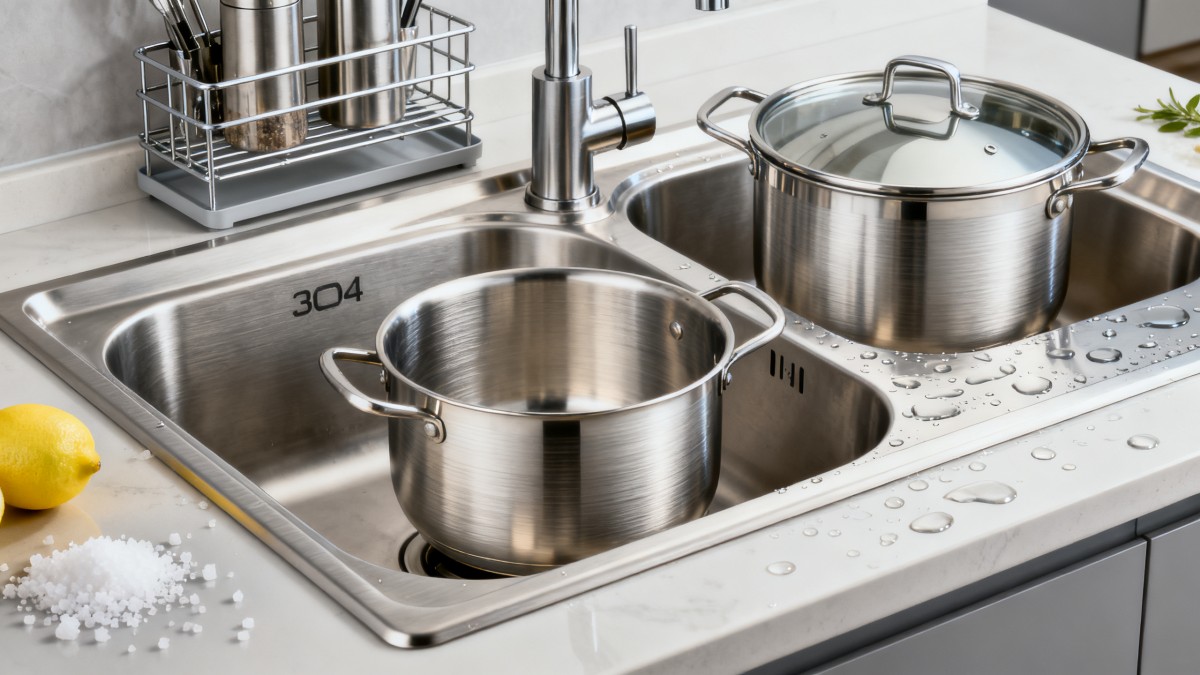
That is why stainless steel 304 vs 316 benchmarks are useful. They turn material selection into a practical checklist based on corrosion risk, cleaning habits, and value over time.
In broader commercial and consumer ecosystems, benchmark-based material choices also support product consistency, easier maintenance planning, and fewer replacement cycles.
Use this checklist to compare stainless steel 304 vs 316 benchmarks
Start with these decision points before choosing cookware, sinks, counters, racks, or food-contact accessories.
- Check chloride exposure first. If the kitchen uses salty ingredients daily or sits near a coast, 316 usually performs better against pitting and tea staining.
- Review cleaning chemistry. Frequent use of aggressive cleaners, bleach residue, or descaling products can stress stainless surfaces and expose quality differences faster.
- Inspect welds and edges, not only flat panels. Poor finishing can reduce corrosion resistance even when the base material matches stainless steel 304 vs 316 benchmarks.
- Compare contact time with moisture. Areas that stay wet, such as sink rims and drain boards, benefit more from the extra molybdenum in 316.
- Measure maintenance tolerance. If regular polishing and prompt drying are unlikely, choose the grade that better handles neglect under daily use.
- Verify surface finish. Brushed, satin, or polished finishes influence fingerprint visibility, scratch appearance, and how easily contaminants are removed.
- Balance lifespan against purchase price. 304 often wins for standard kitchens, while 316 can lower replacement risk in harsher conditions.
- Ask for grade confirmation and test documentation. Reliable products should identify alloy grade clearly and align with recognized material standards.
Key material differences behind stainless steel 304 vs 316 benchmarks
The main technical difference is composition. Grade 316 includes molybdenum, which improves resistance to chlorides and certain corrosive environments.
Grade 304 remains the most common food-safe stainless steel because it offers a strong balance of corrosion resistance, formability, availability, and cost.
For daily kitchen use, the question is rarely which grade is universally better. The better question is which grade matches the exposure profile.
Scenario benchmarks for home and light commercial kitchen use
Standard indoor home kitchen
For most indoor kitchens, 304 meets the practical benchmark. It handles routine cooking, hand washing, food preparation, and standard cleaners well.
If the space is dry between uses and spills are cleaned promptly, the premium for 316 may not deliver meaningful extra value.
Coastal or high-humidity kitchen
Near the sea, airborne salt changes the benchmark. In these conditions, stainless steel 304 vs 316 benchmarks often favor 316 for sinks, shelving, and exposed fixtures.
It is especially helpful where condensation lingers or ventilation is limited. Less visible corrosion means lower upkeep and better appearance retention.
Heavy cooking with salty or acidic ingredients
Kitchens that regularly process brines, soy-based sauces, tomato products, citrus, or vinegar increase surface stress. Here, 316 can provide a wider safety margin.
This does not mean 304 fails automatically. It means cleaning speed, residue control, and finish quality become more important to long-term results.
Decorative appliances and low-contact hardware
For handles, trim pieces, side panels, and low-moisture accessories, 304 is usually sufficient. The exposure level rarely justifies a jump to 316.
In these cases, finish consistency, gauge thickness, and fabrication quality often matter more than alloy upgrade alone.
Commonly overlooked risks when reading stainless steel 304 vs 316 benchmarks
Confusing grade with full product quality
A product stamped 316 can still perform poorly if welds are rough, edges trap moisture, or surface finishing is inconsistent. Grade is only one benchmark.
Ignoring maintenance behavior
Even strong alloys lose appeal if bleach sits too long or hard water deposits remain for weeks. Maintenance habits directly affect benchmark outcomes.
Overlooking finish direction and scratch visibility
A brushed finish can hide wear better than a mirror finish in busy kitchens. Aesthetic durability is part of real daily-use evaluation.
Assuming all food-contact claims mean the same thing
Food-safe use depends on context, fabrication, and hygiene practice. Ask how the product is built, cleaned, and tested, not only what alloy is listed.
Practical buying and maintenance advice
- Map the wettest and saltiest zones first. Upgrade only those areas where 316 provides measurable durability benefits.
- Request clear grade labeling for sinks, worktops, cookware, and racks before comparing price differences.
- Choose non-abrasive cleaners and rinse thoroughly, especially after acidic cooking or strong chemical use.
- Dry seams, corners, and drain areas regularly to reduce staining and mineral buildup on either grade.
- Inspect the complete construction package, including thickness, weld finishing, edge treatment, and surface uniformity.
Conclusion: how to act on stainless steel 304 vs 316 benchmarks
The most useful stainless steel 304 vs 316 benchmarks are not abstract lab comparisons. They are daily-use checks tied to salt, moisture, cleaners, and expected maintenance.
Choose 304 for most standard kitchens where value and reliable all-around performance matter most. Choose 316 where chloride exposure, humidity, or demanding cleaning conditions raise corrosion risk.
Before buying, compare the alloy grade with finish quality, fabrication details, and how the product will actually be used. That approach delivers better durability, cleaner surfaces, and smarter long-term value.
News Recommendations
 When commercial aluminum storefronts make sense for a retail renovation
![51a6ab95581761cc26f4318be6520c15]()
Aris Katos
Future of Carbide Coatings
 What makes LED lights durable in high-use commercial spaces?
![51a6ab95581761cc26f4318be6520c15]()
Aris Katos
Future of Carbide Coatings
 Which industry categories offer the strongest export potential in Latin America?
![51a6ab95581761cc26f4318be6520c15]()
Aris Katos
Future of Carbide Coatings
 How to choose an ultra bright waterproof window display for storefronts
![51a6ab95581761cc26f4318be6520c15]()
Aris Katos
Future of Carbide Coatings
 How to verify suppliers on a trade portal for global sourcing
![51a6ab95581761cc26f4318be6520c15]()
Aris Katos
Future of Carbide Coatings
 How RoHS requirements should be stated in product specifications
![51a6ab95581761cc26f4318be6520c15]()
Aris Katos
Future of Carbide Coatings
 What affects the lead time for custom retail counter displays?
![51a6ab95581761cc26f4318be6520c15]()
Aris Katos
Future of Carbide Coatings
 What consumer packaging USA importers need to verify before ordering
![51a6ab95581761cc26f4318be6520c15]()
Aris Katos
Future of Carbide Coatings
 How commercial spaces interiors shape customer dwell time
![51a6ab95581761cc26f4318be6520c15]()
Aris Katos
Future of Carbide Coatings
 How LED commercial lighting design reduces glare in retail spaces
![51a6ab95581761cc26f4318be6520c15]()
Aris Katos
Future of Carbide Coatings
 How industrial technology information improves RFID inventory accuracy
![51a6ab95581761cc26f4318be6520c15]()
Aris Katos
Future of Carbide Coatings
 When drip garden watering systems make more sense than sprinklers
![51a6ab95581761cc26f4318be6520c15]()
Aris Katos
Future of Carbide Coatings
 When category comparison improves sourcing for industrial applications
![51a6ab95581761cc26f4318be6520c15]()
Aris Katos
Future of Carbide Coatings
 Industrial application guidance for selecting the right LED lighting
![51a6ab95581761cc26f4318be6520c15]()
Aris Katos
Future of Carbide Coatings
 Which commercial architecture standards apply to European retail fit-outs?
![51a6ab95581761cc26f4318be6520c15]()
Aris Katos
Future of Carbide Coatings
 How to verify FDA requirements for maternity care products
![51a6ab95581761cc26f4318be6520c15]()
Aris Katos
Future of Carbide Coatings
 How to verify BPA-free claims for food-contact products
![51a6ab95581761cc26f4318be6520c15]()
Aris Katos
Future of Carbide Coatings
 When does a European wholesale supplier suit modular office projects?
![51a6ab95581761cc26f4318be6520c15]()
Aris Katos
Future of Carbide Coatings
 When consumer ecosystem solutions improve the in-store shopping journey
![51a6ab95581761cc26f4318be6520c15]()
Aris Katos
Future of Carbide Coatings
 How a commercial developers network can reduce site selection risk
![51a6ab95581761cc26f4318be6520c15]()
Aris Katos
Future of Carbide Coatings
 How clear purchasing specifications prevent costly supplier deviations
![51a6ab95581761cc26f4318be6520c15]()
Aris Katos
Future of Carbide Coatings
 What an ISTA drop test lab checks before your packaging ships
![51a6ab95581761cc26f4318be6520c15]()
Aris Katos
Future of Carbide Coatings
 Which commercial furniture standards apply to workplace seating?
![51a6ab95581761cc26f4318be6520c15]()
Aris Katos
Future of Carbide Coatings
 How to evaluate smart lighting module OEM compatibility before sampling
![51a6ab95581761cc26f4318be6520c15]()
Aris Katos
Future of Carbide Coatings
 How to assess whether sustainable technology delivers real impact
![51a6ab95581761cc26f4318be6520c15]()
Aris Katos
Future of Carbide Coatings
 How to assess an OEM supplier’s quality control before ordering
![51a6ab95581761cc26f4318be6520c15]()
Aris Katos
Future of Carbide Coatings
 How consumer ecosystem solutions data can improve retail personalization
![51a6ab95581761cc26f4318be6520c15]()
Aris Katos
Future of Carbide Coatings
 When does consumer packaging design justify a higher product price?
![51a6ab95581761cc26f4318be6520c15]()
Aris Katos
Future of Carbide Coatings
 Supermarket Fixture Installation: Planning Layouts, Wiring, and Handover
![51a6ab95581761cc26f4318be6520c15]()
Aris Katos
Future of Carbide Coatings
 Automated Lighting and Smart Lighting Control in Bergerac: Key Project Considerations
![51a6ab95581761cc26f4318be6520c15]()
Aris Katos
Future of Carbide Coatings
 Segment Streetlight Controllers: Choosing Control Modes for Urban Roads
![51a6ab95581761cc26f4318be6520c15]()
Aris Katos
Future of Carbide Coatings
 IEC 62471-2 Explained: How to Assess Photobiological Risks in LED Lighting
![51a6ab95581761cc26f4318be6520c15]()
Aris Katos
Future of Carbide Coatings
 Food Grade Packaging Requirements by Product Type, Temperature, and Contact Risk
![51a6ab95581761cc26f4318be6520c15]()
Aris Katos
Future of Carbide Coatings
 Food Packaging Compliance Checklist: Tests, Records, and Labeling Before Shipment
![51a6ab95581761cc26f4318be6520c15]()
Aris Katos
Future of Carbide Coatings
 NSF Food Packaging Standards: When Certification Matters for Commercial Food Use
![51a6ab95581761cc26f4318be6520c15]()
Aris Katos
Future of Carbide Coatings
 FDA Food Grade Compliance: Which Materials and Documents Do Buyers Need?
![51a6ab95581761cc26f4318be6520c15]()
Aris Katos
Future of Carbide Coatings
 What Should a Food Grade Declaration Include for Packaging Compliance?
![51a6ab95581761cc26f4318be6520c15]()
Aris Katos
Future of Carbide Coatings
 Housewares Importing: How to Evaluate Suppliers, Costs, and Compliance Risks
![51a6ab95581761cc26f4318be6520c15]()
Aris Katos
Future of Carbide Coatings
 Why Freeze-Dried Fruit Ingredients Lose Crispness—and How to Prevent It
![51a6ab95581761cc26f4318be6520c15]()
Aris Katos
Future of Carbide Coatings